El Niño 2026 strengthens in the Pacific, with weather effects expected worldwide
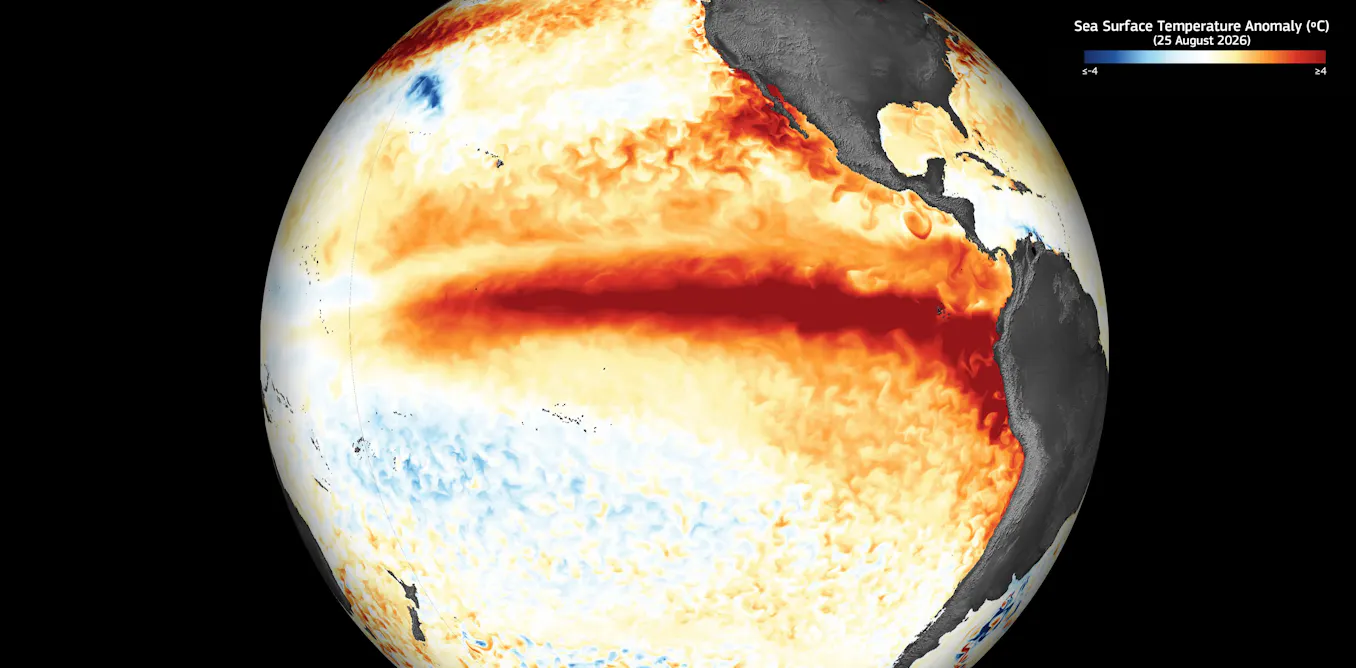
Coverage says this year's El Niño has already passed previous records and is expected to strengthen further. New Scientist previews turbulent weather across several countries, while The Conversation explains why it brings drought to some regions and floods to others.



1 / 4
The story, neutrally told
New Scientist says turbulent weather is on the way for places from Australia and California to the UK and Peru as El Niño develops. New ScientistN “From Australia to California, the UK to Peru, turbulent weather is on the way” Read at New Scientist ↗ The Conversation, in a piece by an oceanography PhD candidate at the University of Southampton, says the Pacific is warming unusually quickly and this year's El Niño has already surpassed previous records. The ConversationLC “The Pacific Ocean is warming unusually quickly, and this year’s El Niño has already surpassed previous records.” Read at The Conversation ↗ It says forecasters expect the event to strengthen further before it approaches its usual peak around December. The ConversationLC “Forecasters expect it to strengthen even further before approaching its usual peak around December.” Read at The Conversation ↗
The article explains that El Niño weakens the east-to-west trade winds, so more warm water stays in the central and eastern Pacific and the zone of heavy rainfall shifts east. The ConversationLC “The east-to-west trade winds weaken, so less warm surface water is pushed towards the western Pacific.” Read at The Conversation ↗ The result, it says, is wetter conditions in parts of the eastern Pacific such as coastal Peru, and drier conditions around Indonesia that can raise the risk of forest and peatland fires. The ConversationLC “places such as Indonesia and the surrounding region near the western Pacific can become much drier than usual” Read at The Conversation ↗ It adds that the effects reach far beyond the Pacific through atmospheric links called teleconnections, for example drier conditions in the Sahel. The ConversationLC “El Niño’s influence does not stop at the Pacific. It can affect weather thousands of kilometres away through what scientists call teleconnections.” Read at The Conversation ↗
For Britain, it says El Niño can raise the chance of wetter, stormier weather in autumn and early winter and of colder spells later in winter, but these links are less certain than many tropical impacts. The ConversationLC “But these links are less certain than many tropical impacts, because UK weather is also shaped by several other atmospheric influences.” Read at The Conversation ↗ It cautions that El Niño only shifts the odds: Bangkok saw heavy rain and flooding this September despite Thailand's usual El Niño dryness, and India's monsoon has been unusually dry overall, with some regions flooded. The ConversationLC “El Niño shifts the odds, but local weather systems can still produce extremes in the opposite direction.” Read at The Conversation ↗
Every sentence links to the reporting it rests on.
Left3 outlets
- Framing
- The Conversation, an academic-written explainer, focuses on the physical mechanism behind El Niño and why the same event brings drought in some places and floods in others.
- Emphasis
- Ocean-atmosphere science (trade winds, Walker circulation, teleconnections) and the limits of predicting local weather.
- Leaves out or plays down
- Gives no policy, economic or human-impact detail beyond fire risk in Indonesia.
- Charged language
- “super El Niño”
- For example
-
“The climate science behind 2026’s super El Niño.” — The Conversation
“El Niño shifts the odds, but local weather systems can still produce extremes in the opposite direction.” — The Conversation
Centre1 outlet
- Framing
- New Scientist frames the story as a global preview of impacts, naming several countries where weather is expected to turn turbulent.
- Emphasis
- Geographic spread of effects, from Australia and California to the UK and Peru.
- Leaves out or plays down
- The available text gives no detail on mechanisms, forecasts or uncertainty.
- Charged language
- “turbulent weather”
- For example
-
“How will El Niño affect the world?” — New Scientist
“From Australia to California, the UK to Peru, turbulent weather is on the way” — New Scientist
Right0 outlets
No right outlet in our sources has covered this story yet.
What every side reports
- An El Niño is under way in 2026 and is expected to affect weather in many parts of the world, including the UK and Peru.
Left3 articles
-
How can the same El Niño cause drought in one part of the world and floods in another?
Neutral Educational explainer of how El Niño produces contrasting droughts and floods, noting record warming and uncertainty in local outcomes.
-
-
Centre1 article
-
How will El Niño affect the world?
Neutral Forward-looking overview of El Niño's worldwide effects, with a headline question and a lede listing affected countries.
Right0 articles
No coverage yet.
- 29 Sep 15:00 First New ScientistN How will El Niño affect the world?
- 29 Sep 15:53 +53m The ConversationLC How can the same El Niño cause drought in one part of the world and floods in another?
- 30 Sep 15:00 +24h 1m The New York TimesLC See How El Niño Is Washing Ashore in California
- 30 Sep 23:55 +32h 55m The IndependentLC A giant ‘pulse wave’ is about to slam into California - here’s how it will impact the West Coast
Times are when each article was published, or when we first saw it if the outlet gave no time.