2026 Nobel Prize in medicine awarded to Deisseroth, Hegemann and Nagel for optogenetics
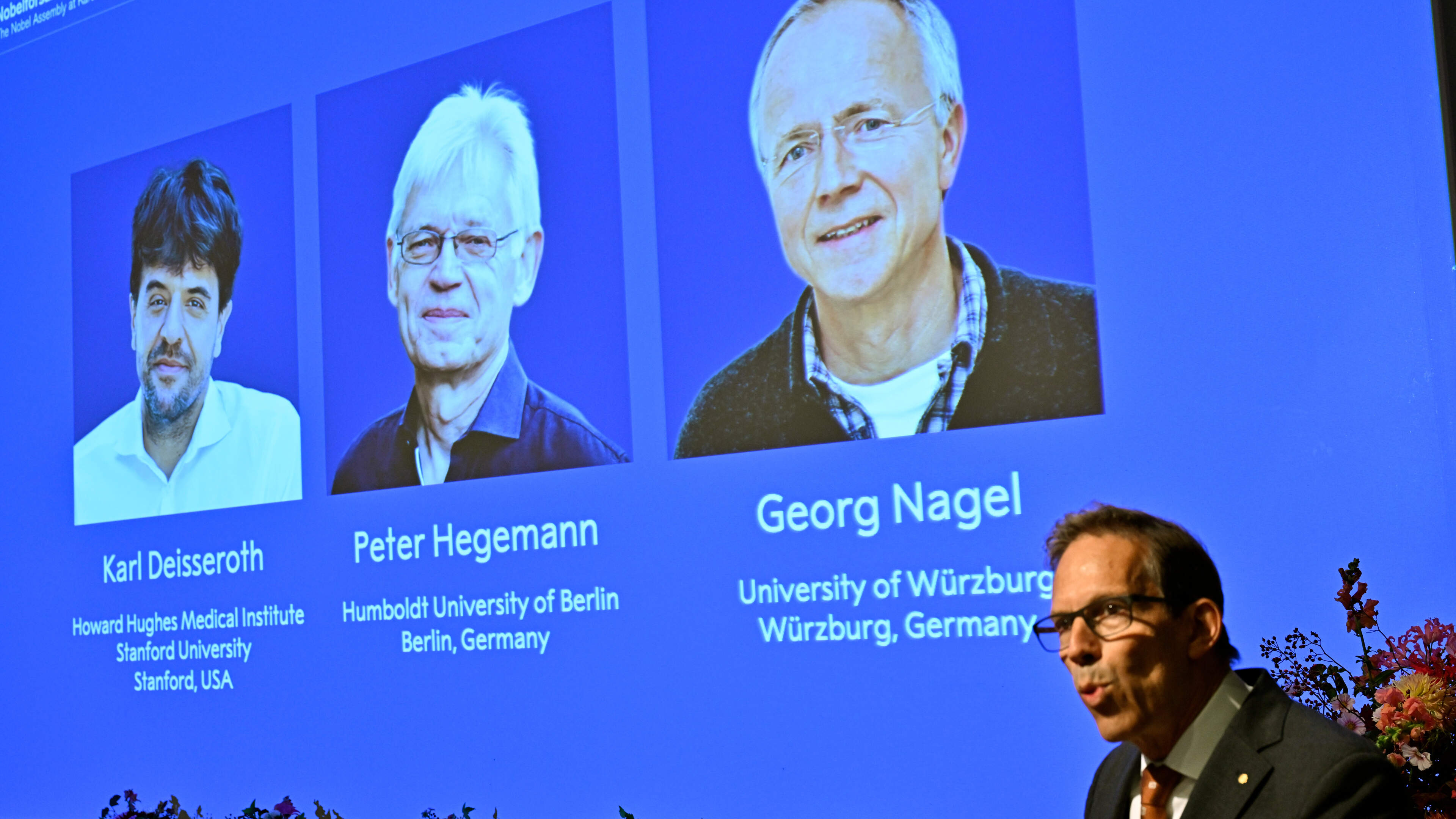
The 2026 Nobel Prize in Physiology or Medicine goes to Karl Deisseroth, Peter Hegemann and Georg Nagel for discoveries on light-gated ion channels and optogenetics, a method for switching nerve cells on or off with light.



1 / 8
The story, neutrally told
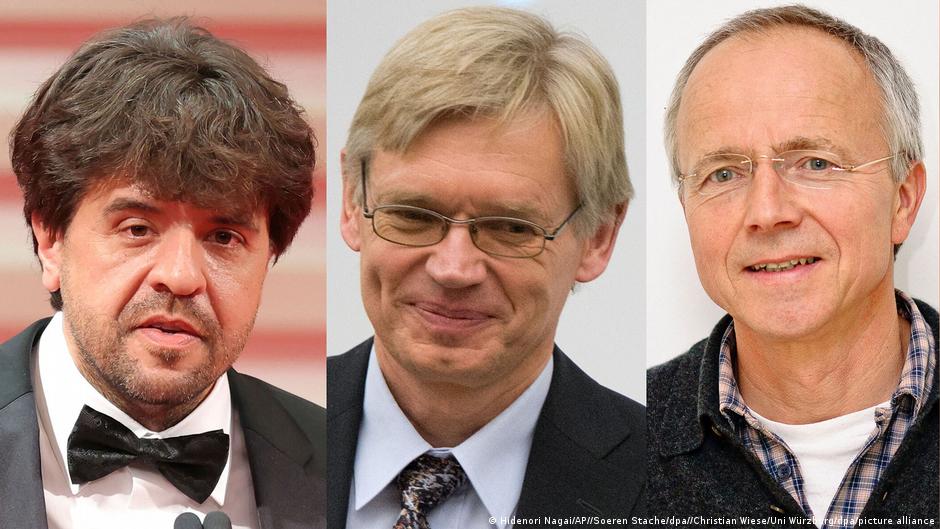
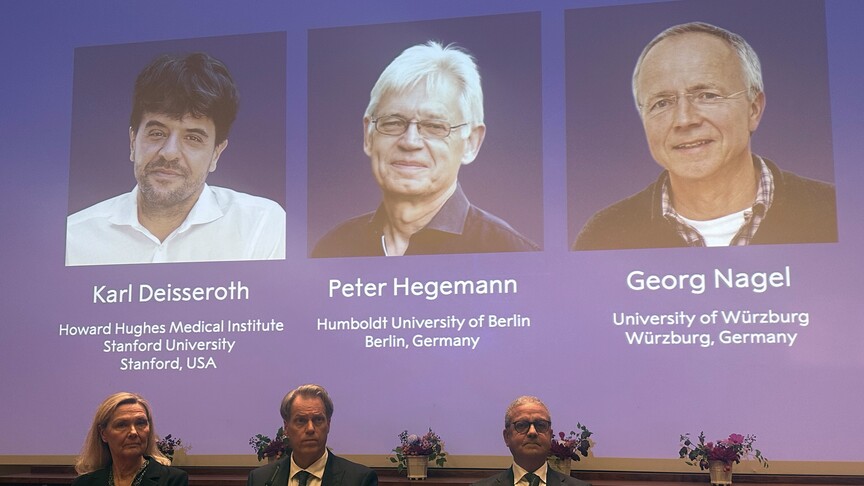
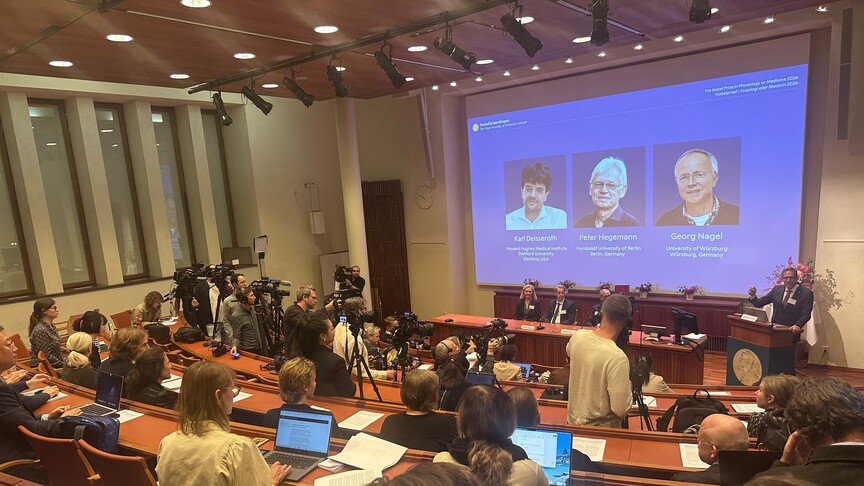
Centre · 3The 2026 Nobel Prize in Physiology or Medicine was awarded on Monday 5 October to Karl Deisseroth, Peter Hegemann and Georg Nagel "for their discoveries concerning light-gated ion channels and optogenetics". STATN “are the joint recipients of the 2026 Nobel Prize in Physiology or Medicine” Read at STAT ↗ The Straits TimesRC “Scientists Karl Deisseroth, Peter Hegemann and Georg Nagel won the 2026 Nobel Prize in Physiology or Medicine” Read at The Straits Times ↗ Deutsche WelleN “The trio won the award for their discoveries concerning light-gated ion channels and optogenetics.” Read at Deutsche Welle ↗ Centre · 1The Nobel Assembly at the Karolinska Institute in Stockholm announced the prize, which opens Nobel week and is followed by physics, chemistry, literature and peace, with economics on 12 October. France 24N “The prize was announced at the Karolinska Institute in Stockholm, kicking off Nobel week.”“After Friday’s peace prize is awarded, the Nobel Memorial Prize in Economic Sciences will be announced on Oct. 12.” Read at France 24 ↗ Mixed · 2Deisseroth, 54, is an American at Stanford University and the Howard Hughes Medical Institute; Hegemann, 71, is at Humboldt University in Berlin and Nagel, 73, at the University of Würzburg, both in Germany. The Straits TimesRC “Karl Deisseroth, a 54-year-old American, Hegemann, a 71-year-old German, and Georg Nagel, a 73-year-old German” Read at The Straits Times ↗ STATN “Deisseroth, a professor at the Howard Hughes Medical Institute and Stanford University, Hegemann, a professor at Humboldt University in Berlin and Nagel, a professor at the University of Würzburg, Germany” Read at STAT ↗
Mixed · 2The Nobel Assembly said optogenetics "makes it possible to switch on, or off, the activity of individual nerve cells in a living brain" and is used in laboratories worldwide "to reveal the brain’s mysteries". The Straits TimesRC “Optogenetics "makes it possible to switch on, or off, the activity of individual nerve cells in a living brain," the prize-givers said.” Read at The Straits Times ↗ Hindustan TimesN “This method is now being used in laboratories around the world to reveal the brain’s mysteries” Read at Hindustan Times ↗ Centre · 2Hegemann and Nagel discovered channelrhodopsin, a light-sensitive algal protein that made any cell they introduced it into sensitive to light; Deisseroth then introduced its gene into rat nerve cells and triggered nerve signals with blue light, later showing the switch could control nerve cells in living mice. Hindustan TimesN “Hegemann and Nagel discovered channelrhodopsin, a protein with unique properties.”“He subsequently demonstrated that this light-controlled switch could be used to control nerve cells in the brains of living mice.” Read at Hindustan Times ↗ STATN “The work started in the early 2000s, when Hegemann and Nagel discovered channelrhodopsin” Read at STAT ↗ Centre · 1STAT adds that the method shows how nerve cells shape memories, feelings and behaviour and is being studied as a disease treatment. STATN “This makes it possible to show how nerve cells shape memories, feelings and behavior in the brain, and is being studied as a treatment for disease.” Read at STAT ↗
Mixed · 2The prize is 12 million Swedish kronor (about $1.2 million), shared among the laureates. The Straits TimesRC “a prize sum amounting to 12 million Swedish crowns ($1.2 million), which is shared if there are multiple winners” Read at The Straits Times ↗ The GuardianLC “They will share a prize of 12m Swedish kronor (about £901,500).” Read at The Guardian ↗ Centre · 1Per Svenningsson, chair of the Nobel Committee, said optogenetics offers "opportunities for mapping the brain in a way that we could once only dream of"; committee secretary Thomas Perlmann said all three laureates were reached and were pleased to share the prize. STATN ““Optogenetics provides opportunities for mapping the brain in a way that we could once only dream of,” said Per Svenningsson”““All three said the same thing, that they thought it was absolutely wonderful to receive the prize with the other two” Read at STAT ↗ Mixed · 2This is the 117th medicine prize and there have been 235 laureates, of whom 14 are women; last year's prize went to Mary Brunkow, Fred Ramsdell and Shimon Sakaguchi for work on peripheral immune tolerance. The GuardianLC “The 2026 award is the 117th time the prize has been given. Out of the 235 laureates – including the latest winners – only 14 have been women.” Read at The Guardian ↗ Deutsche WelleN “Last year's prize was awarded jointly to Mary Brunkow and Fred Ramsdell of the United States and Shimun Sakaguchi of Japan” Read at Deutsche Welle ↗
Centre · 1Laureates will receive their awards at ceremonies in Stockholm on 10 December. Deutsche WelleN “The prizes will be presented at ceremonies in Stockholm, Sweden on December 10.” Read at Deutsche Welle ↗
Every sentence links to the reporting it rests on. The pill in front of each says where its sources sit: Left, Centre or Right when one side supplies at least half of them, Mixed when they are evenly split. The number is how many outlets it cites.
Left6 outlets
- Framing
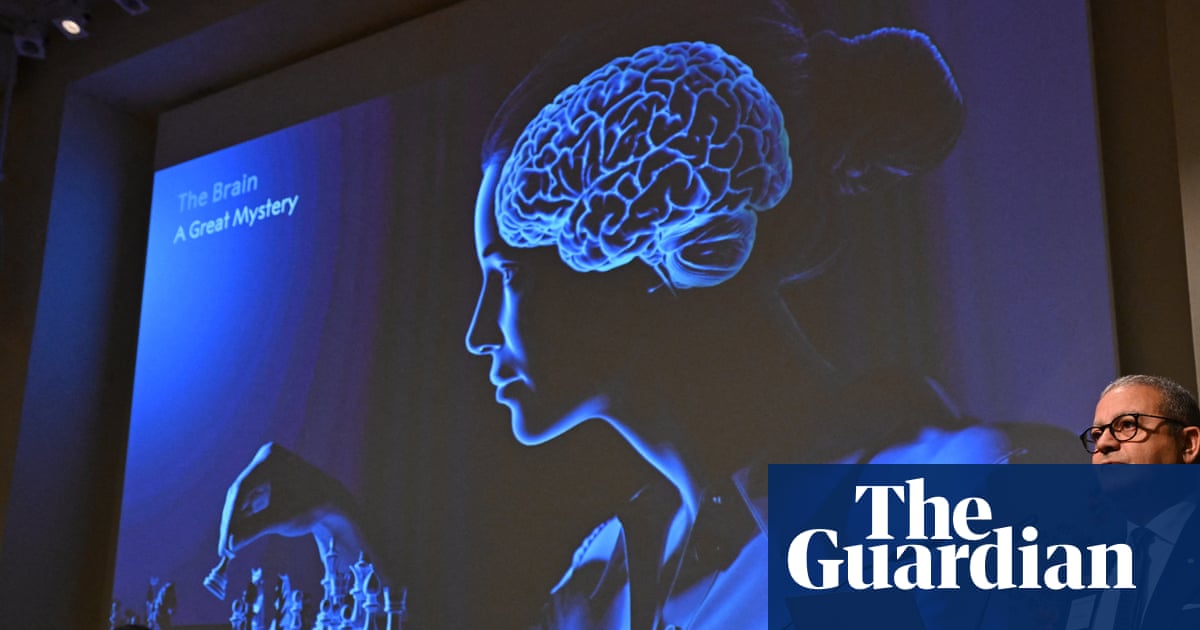
- The Guardian ran a short news item framing the prize as research on the brain's mysteries, noting the 117th award and that only 14 of 235 laureates are women.
- Emphasis
- Brain research and the gender record of the prize.
- Leaves out or plays down
- No explanation of how optogenetics works or of each laureate's contribution.
- Charged language
- “mysteries of brain”
- For example
-
“Out of the 235 laureates – including the latest winners – only 14 have been women.” — The Guardian
“has been awarded to three scientists for their work on investigating the mysteries of the brain” — The Guardian
Centre10 outlets
- Framing
- Mostly straightforward announcements naming the trio, their affiliations and the prize; STAT and Hindustan Times add the science and background.
- Emphasis
- The method's use in neuroscience, who discovered what, and prize history.
- Leaves out or plays down
- Short breaking items (DW, Gulf News) give little detail on the science.
- Charged language
- “groundbreaking”
- For example
-
“Optogenetics provides opportunities for mapping the brain in a way that we could once only dream of” — STAT
“Their discoveries have transformed neuroscience and opened new avenues for studying how the brain and nervous system function.” — Hindustan Times
“This is a developing story, more details to come...” — Deutsche Welle
Right3 outlets
- Framing
- The Straits Times ran Reuters copy, leading with nationalities ("American Deisseroth and Germans Hegemann and Nagel") and adding Nobel history.
- Emphasis
- Ages, nationalities and the tradition and history of the prizes.
- Leaves out or plays down
- Does not describe the laureates' individual discoveries.
- For example
-
“Karl Deisseroth, a 54-year-old American, Hegemann, a 71-year-old German, and Georg Nagel, a 73-year-old German” — The Straits Times
What every side reports
- Karl Deisseroth, Peter Hegemann and Georg Nagel share the 2026 Nobel Prize in Physiology or Medicine.
- The prize honours discoveries concerning light-gated ion channels and optogenetics.
- The prize is 12 million Swedish kronor (about $1.2 million).
- The Nobel Assembly at Karolinska Institute announced it on Monday 5 October.
-
The 2026 Nobel Prize in Physiology or Medicine was awarded jointly to Karl Deisseroth, Peter Hegemann and Georg Nagel for discoveries concerning light-gated ion channels and optogenetics.
Reported- Reports 5
- The Guardian, Deutsche Welle, France 24, STAT, The Straits Times
-
The prize is worth 12 million Swedish kronor (about $1.2 million), shared among the laureates.
Reported- Reports 5
- The Guardian, Deutsche Welle, France 24, STAT, The Straits Times
Left6 articles
-
-
Nobel prize in medicine 2026 awarded for research on mysteries of brain
Neutral Brief report stressing brain research and the few women laureates.
-
Centre12 articles
-
-
German and US scientists win Nobel Prize in medicine
Neutral Short developing-story report on the German and US winners.
-
-

Show 8 moreShow fewer
-
Nobel Prize in Medicine 2026 awarded to 3 scientists for work on optogenetics
Neutral Explains the discovery and recalls last year's winners.
-
-
🔴 Nobel Prize in Medicine jointly awarded to Karl Deisseroth, Peter Hegemann and Georg Nagel
Neutral Live-style report placing the prize at the start of Nobel week.

-

-
STATN ·
2026 Nobel Prize in Medicine awarded for brain research tool called optogenetics
Neutral Detailed explainer with committee quotes and prize statistics.

-

-
-
Right3 articles
-
The Straits TimesRC · · via Reuters
American Deisseroth and Germans Hegemann and Nagel win 2026 Nobel medicine prize
Neutral Reuters wire copy emphasising nationalities, ages and Nobel tradition.
-
-
- 5 Oct 02:36 First RFIN US-German trio win medicine Nobel for work on optogenetics
- 5 Oct 10:30 +7h 53m Scientific AmericanLC 2026 Nobel Prize in Physiology or Medicine awarded to Karl Deisseroth, Georg Nagel and Peter Hegemann for work on optogenetics
- 5 Oct 10:37 +8h Deutsche WelleN German and US scientists win Nobel Prize in medicine
- 5 Oct 10:37 +8h Deutsche WelleN German and US scientists win Nobel Prize in medicine for research on brain activity
- 5 Oct 10:37 +8h New ScientistN Nobel prize for medicine goes to trio who developed optogenetics
- 5 Oct 10:37 +8h 1m Hindustan TimesN Nobel Prize in Medicine 2026 awarded to 3 scientists for work on optogenetics
- 5 Oct 10:43 +8h 7m The Straits TimesRC American Deisseroth and Germans Hegemann and Nagel win 2026 Nobel medicine prize via Reuters
- 5 Oct 10:45 +8h 8m South China Morning PostN Nobel Medicine Prize awarded to 3 scientists for optogenetics development
- 5 Oct 10:47 +8h 11m France 24N 🔴 Nobel Prize in Medicine jointly awarded to Karl Deisseroth, Peter Hegemann and Georg Nagel
- 5 Oct 10:51 +8h 15m Gulf NewsN Trio wins Nobel medicine prize for optogenetics work via AFP
- 5 Oct 10:52 +8h 15m The GuardianLC Nobel prize in medicine 2026 awarded for research on mysteries of brain
- 5 Oct 10:56 +8h 20m IJRRC Trio Wins Nobel Medicine Prize for Optogenetics
- 5 Oct 11:00 +8h 23m STATN 2026 Nobel Prize in Medicine awarded for brain research tool called optogenetics
- 5 Oct 11:05 +8h 29m CBC NewsLC Nobel Prize in Medicine awarded to scientists who pioneered work in optogenetics
- 5 Oct 11:08 +8h 32m The IndependentLC Nobel prize in medicine awarded to scientists studying mysteries of the brain
- 5 Oct 11:10 +8h 34m BBC NewsN Nobel Prize awarded for showing how nerve cells shape feelings
- 5 Oct 11:11 +8h 35m NPRLC Nobel medicine prize goes to 3 scientists for research into brain activity
- 5 Oct 11:20 +8h 43m Anadolu AgencyN 2026 Nobel Prize in Physiology or Medicine awarded to US' Karl Deisseroth, Germany's Peter Hegemann, Georg Nagel
- 5 Oct 11:34 +8h 58m ABC News (Australia)LC Nobel medicine prize awarded to scientists for brain activity research
- 5 Oct 11:35 +8h 58m Irish IndependentRC Three scientists share Nobel Prize in medicine for brain research
- 5 Oct 12:07 +9h 31m Anadolu AgencyN PROFILE - Who are the winners of 2026 Nobel Medicine Prize?
Times are when each article was published, or when we first saw it if the outlet gave no time.