38 North director: North Korean denuclearisation unrealistic, 20 years after first test
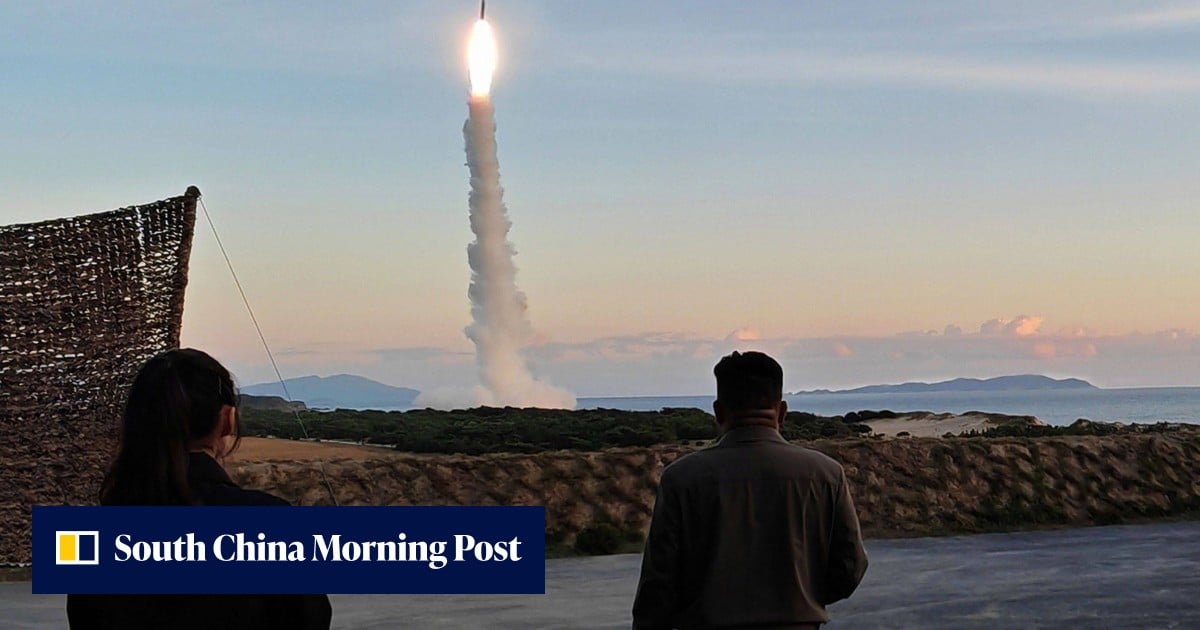
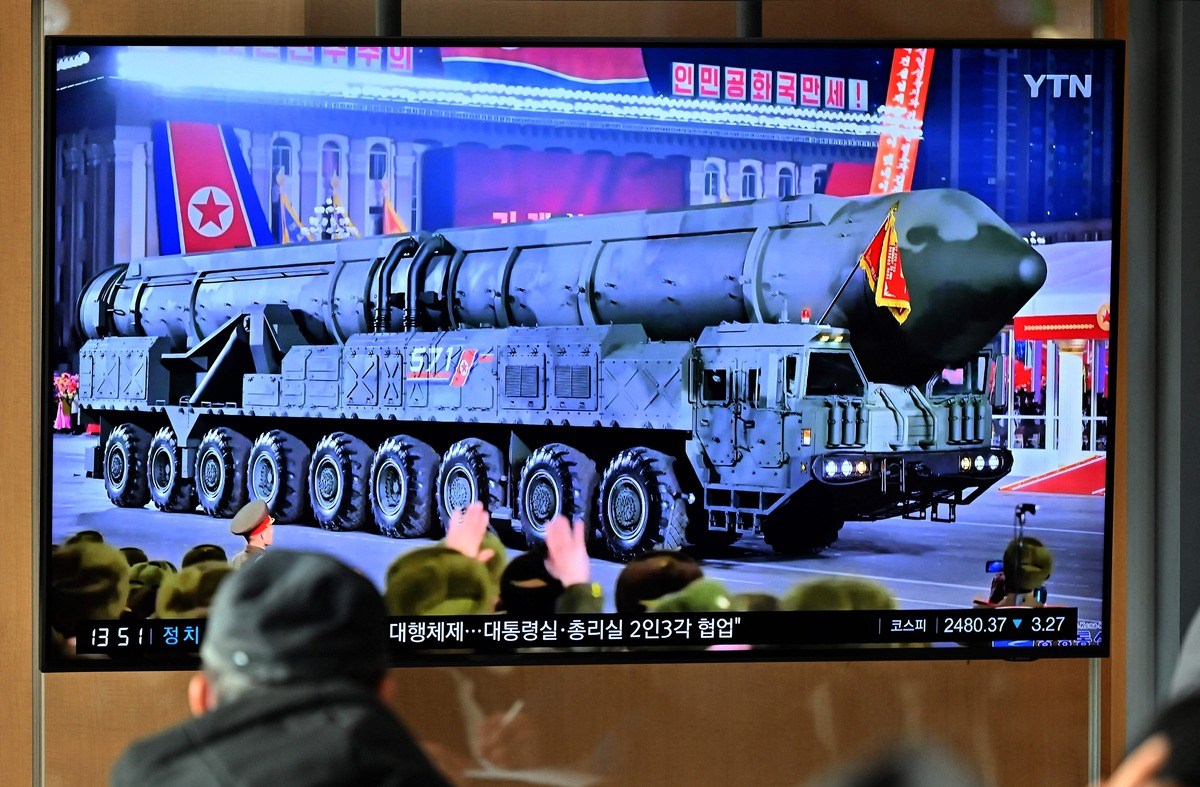
Twenty years after North Korea's first nuclear test on 9 October 2006, 38 North director Jenny Town says denuclearisation is an "increasingly improbable" goal. Newsweek's retrospective traces the growth of the arsenal and missile programme.
1 / 2
The story, neutrally told
Centre · 2North Korea carried out its first nuclear test on 9 October 2006, and 20 years on, coverage looks at how far its programme has advanced. South China Morning PostN “Recalling the 20 years since North Korea carried out its first nuclear test on October 9, 2006” Read at South China Morning Post ↗ NewsweekN “Twenty years on from North Korea's first nuclear test, its military arsenal is ballooning” Read at Newsweek ↗ Centre · 1Jenny Town, director of the US-based analysis website 38 North, said in a written interview with Kyodo that denuclearising North Korea has become an "increasingly improbable" goal. Town argued the US and its allies should move beyond it and devote diplomatic effort to arms limitations and crisis communication. South China Morning PostN “The denuclearisation of North Korea has become an “increasingly improbable” goal”“talks on arms limitations and crisis communication” Read at South China Morning Post ↗ Centre · 1Town described the 2017 first test-firing of an intercontinental ballistic missile as "a pivotal moment". Town said it changed "the nature of the threat and the way US allies viewed the credibility of US extended deterrence" and has exacerbated "decoupling fears" in South Korea. South China Morning PostN ““a pivotal moment” in Pyongyang’s weapons development came in 2017”“has exacerbated decoupling fears in South Korea” Read at South China Morning Post ↗
Centre · 1Town said Pyongyang had on several occasions shown willingness to make concessions, but that "the US simply wasn’t interested", partly out of scepticism about sincerity. Town called the October 2019 working-level talks in Stockholm, after three Trump–Kim meetings, "one of the biggest missed opportunities"; North Korea said the US came "empty-handed". South China Morning PostN ““But during many of those moments, the US simply wasn’t interested,” she said”“Pyongyang said the US side came to the negotiations “empty-handed”” Read at South China Morning Post ↗ Centre · 1Town noted that North Korea's 2022 nuclear use law declared its nuclear status "irreversible" and said Pyongyang now considers itself a "responsible nuclear weapons state". Town said no state that built a sovereign nuclear capability on this scale has voluntarily reversed course, the closest precedent being South Africa, and that expecting North Korea to do so "would defy history". South China Morning PostN “the 2022 nuclear use law making the country declare that its status as a nuclear weapons state has become “irreversible””“The closest precedent was South Africa, but it had only six nuclear weapons” Read at South China Morning Post ↗ Centre · 1Town described North Korea's preconditions for talks as a "tall order", since they require declaring the denuclearisation agenda over, and said continuing to push denuclearisation has prevented dialogue on risk reduction, crisis communication and arms limitations. South China Morning PostN “Pyongyang’s preconditions for talks are a “tall order””“has prevented “dialogues about risk reduction, crisis communication and response, arms limitations, doctrine and other things”” Read at South China Morning Post ↗
Centre · 1Newsweek's retrospective says South Korean sensors detected the 2006 test, in Gilju County, at 10:36 a.m. South Korean analysts put its yield at about 0.8 kilotons, while Russia's estimate was several times higher. UN sanctions followed but have largely failed to halt testing or missile development. NewsweekN “It was 10:36 a.m. on October 9, 2006, when South Korea's sensors first picked up the abnormal seismic waves.”“North Korea was then slapped with United Nations sanctions that have largely failed to halt Pyongyang's nuclear testing” Read at Newsweek ↗ Centre · 1North Korea conducted six nuclear tests in all; the last, in 2017, was the largest, at an estimated magnitude of 6.1. No confirmed nuclear tests have been held anywhere since 2017. North Korea is the only country to have tested in the 21st century. NewsweekN “The last test registered the largest magnitude, reaching an estimated 6.1, according to nuclear experts.”“no confirmed nuclear tests have taken place anywhere in the world since 2017” Read at Newsweek ↗ Centre · 1Newsweek reports independent estimates of about 60 North Korean warheads, with material for up to 90. Official figures differ: South Korea said in August up to 120, while Trump claimed 57 and later appeared to say 112. NewsweekN “Independent estimates put North Korea's stockpile at around 60 warheads, but the country could have enough nuclear material to make up to 90 weapons.”“In comments this month, Trump then appeared to say North Korea had 112 nuclear weapons.” Read at Newsweek ↗
Centre · 1North Korea has ICBMs able to reach the US mainland, though it is questioned whether it could reliably deliver a warhead on them. It said on 3 October it had test-launched an intermediate-range strategic missile, and has carried out nearly a dozen missile tests this year. NewsweekN “there are questions about whether Pyongyang would be able to reliably fire a nuclear warhead on these weapons”“On October 3, North Korea said it had test-launched an intermediate-range strategic missile” Read at Newsweek ↗ Centre · 1Newsweek says observers and US officials believe Russia has helped North Korea since a mid-2024 defence pact, in return for troops, ammunition and missiles for the war in Ukraine. William Alberque of the Pacific Forum said the US could currently shoot down North Korea's ICBMs, with 44 Ground-Based Interceptors deployed, though Pyongyang may one day build enough to overwhelm them. NewsweekN “North Korea has benefited from Russian help, particularly since the two countries inked a defense pact in mid-2024.”“North Korea doesn't have enough missiles to overwhelm American defenses, Alberque said.” Read at Newsweek ↗
Every sentence links to the reporting it rests on. The pill in front of each says where its sources sit: Left, Centre or Right when one side supplies at least half of them, Mixed when they are evenly split. The number is how many outlets it cites.
Left0 outlets
No left outlet in our sources has covered this story yet.
Centre2 outlets
- Framing
- Both centre outlets mark the 20th anniversary of the first test. The South China Morning Post (Kyodo byline) runs a policy-focused interview opinion piece saying denuclearisation should be set aside; Newsweek gives a descriptive retrospective on the arsenal, missiles and US defences.
- Emphasis
- SCMP: missed diplomatic opportunities, the 2019 Stockholm talks, and shifting to risk reduction. Newsweek: test yields, warhead counts, ICBM range, Russian help and US missile defences.
- Leaves out or plays down
- Newsweek does not discuss whether denuclearisation remains a viable goal. SCMP gives little on warhead numbers or missile defence, and presents Town's view without a counter-view.
- Charged language
- “increasingly improbable”“defy history”“bellicose”
- For example
-
“Denuclearisation, when North Korea is so far advanced in its deterrent development, is an increasingly improbable task.” — South China Morning Post
“South Korea's worries about its secretive but bellicose northern neighbor are anything but soothed.” — Newsweek
Right0 outlets
No right outlet in our sources has covered this story yet.
What every side reports
- North Korea carried out its first nuclear test on 9 October 2006 and six in total through 2017.
- North Korea's first ICBM test came in 2017.
- North Korea has deepened ties with Russia and the US is concerned about its growing arsenal.
38 North organisation
Its director Jenny Town says denuclearisation is increasingly improbable, past US inattention to North Korean overtures was a missed chance, and Washington should pursue arms limitation and crisis communication.
“Continuing to hold this as the heart of our diplomatic efforts limits our own agency in dealing with North Korea” — South China Morning Post
North Korea place
Pyongyang calls its nuclear status irreversible under a 2022 law and considers itself a responsible nuclear weapons state; it said in 2019 the US came to talks empty-handed.
“already considers itself a ‘responsible nuclear weapons state.’”” — South China Morning Post
“state media hailed it as a "great leap forward" and a "historic event."” — Newsweek
Left0 articles
No coverage yet.
Centre2 articles
-
South China Morning PostN · · Opinion
Denuclearising North Korea would ‘defy history’ as US, allies missed the boat
Critical Relays Town's view that the denuclearisation goal is outdated and past US policy missed chances, with no opposing voice.
-
Nuclear Blast Map Shows How North Korea’s Nuclear Weapons Have Evolved
Neutral Explanatory anniversary retrospective on the evolution of North Korea's nuclear and missile capabilities and US defences, relying on expert comment.
Right0 articles
No coverage yet.
- 11 Oct 05:00 First South China Morning PostN Denuclearising North Korea would ‘defy history’ as US, allies missed the boat Opinion
- 13 Oct 10:00 +53h NewsweekN Nuclear Blast Map Shows How North Korea’s Nuclear Weapons Have Evolved
Times are when each article was published, or when we first saw it if the outlet gave no time.
Ask about this story
Loading…