75 countries back Türkiye's 35x35 electrification target at COP31, as objections persist
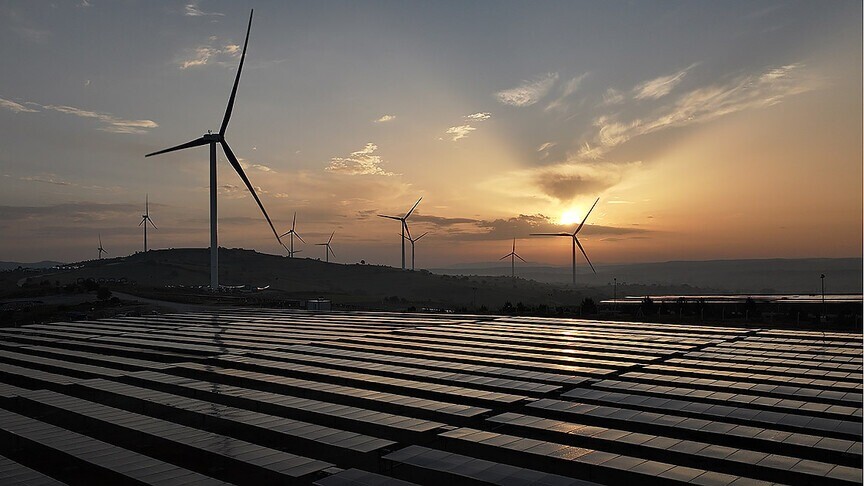
Seventy-five countries and 94 organisations back the voluntary 35x35 pledge to lift electricity to 35% of global final energy use by 2035. Several large economies object to writing it into the COP31 final deal, and African financing concerns remain.

1 / 2
The story, neutrally told
Centre · 2COP31 officials said on Wednesday 18 November that 75 countries and 94 organisations from business and civil society support Türkiye's "35x35" global electrification target. Anadolu AgencyN “75 countries have announced their support for Türkiye's 35x35 target as of 9.30 am (0630GMT).” Read at Anadolu Agency ↗ RFIN “Support for the initiative stands at 75 countries and 94 organisations, Cop31 officials said on Wednesday.” Read at RFI ↗ Centre · 2The target, announced under Türkiye's COP31 presidency, aims to raise electricity's share of global final energy consumption to 35% by 2035; Anadolu puts the current level at around 22% and RFI at around 23%. Anadolu AgencyN “raising electricity's share of global final energy consumption from the current level of around 22% to 35%” Read at Anadolu Agency ↗ RFIN “from around 23 percent currently to 35 percent by 2035” Read at RFI ↗ Centre · 1RFI says the voluntary pledge was launched in September, and that the target applies to the world as a whole rather than to individual countries. RFIN “Launched in September, the voluntary pledge is a centrepiece of Turkey's Cop31 presidency.”“The target applies to the world as a whole, not to individual countries.” Read at RFI ↗
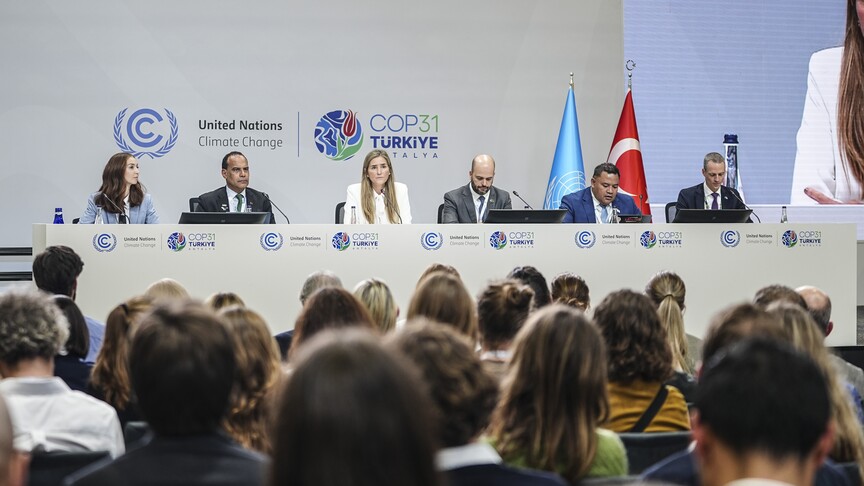
Centre · 1Supporters named include Germany, the UK, Norway, South Korea, Spain, Japan, Denmark, Canada and Kyrgyzstan, and the European Commission confirmed the EU's support. Australia, which presides over the negotiations, said earlier that it was among the first signatories. Anadolu AgencyN “Countries backing the initiative include Germany, the UK, Norway, South Korea, Spain, Japan, Denmark, Canada, and Kyrgyzstan”“Australia, which serves as president of negotiations at COP31, previously announced that it was among the first signatories” Read at Anadolu Agency ↗ Centre · 2The target appears in the first draft text released after the first week of negotiations in Antalya. RFI describes an 18-page draft "cover decision" that also calls for faster action to phase out fossil fuels. Anadolu AgencyN “Türkiye's 35x35 electrification target is also included in the first draft text released following the first week of COP31 negotiations” Read at Anadolu Agency ↗ RFIN “The goal is also part of an 18-page draft agreement released on Monday that calls for faster action to phase out fossil fuels.” Read at RFI ↗ Centre · 1European ministers told Anadolu they want the target enshrined in the final COP31 decision. Denmark's climate minister Samira Nawa said Denmark signed the pledge and hopes others will follow. Sweden's climate ambassador Mattias Frumerie said it would send a demand signal to energy markets. Luxembourg's environment minister Serge Wilmes and Portugal's deputy energy minister Jean Barroca said grid expansion must rely on clean generation. Anadolu AgencyN “Ministers from European governments expressed support for enshrining Türkiye’s “35x35” global electrification target in the final decision document”“Samira Nawa, Danish minister of climate, energy, and utilities, told Anadolu that Denmark signed on to the pledge”“Serge Wilmes, Luxembourg's minister of environment, climate, and biodiversity, said future infrastructure expansions need to rely on clean generation” Read at Anadolu Agency ↗
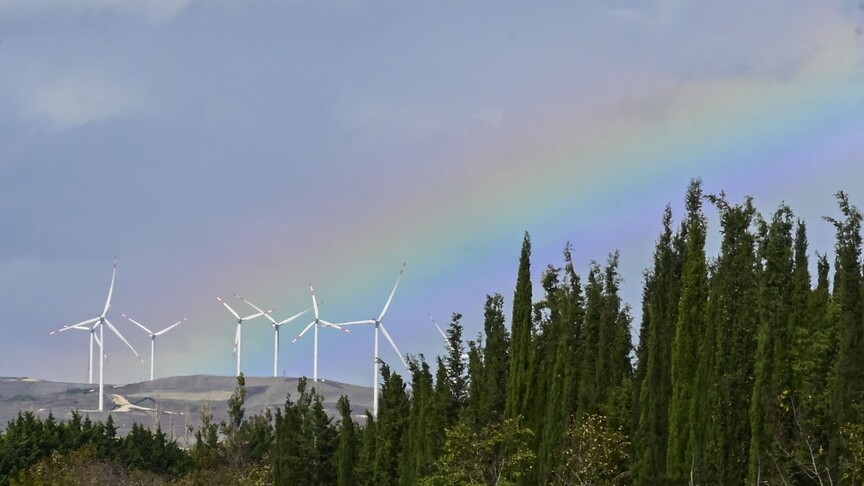
Centre · 1Laos' deputy finance minister Sitthiroth Rasphone said his country backs the target and wants to expand wind and solar beyond hydropower. He said Laos' NDC 3.0 for 2026-2035 will cost about $20.5 billion, with a quarter expected from domestic sources, and he asked for a clear pathway to $300 billion a year in climate finance by 2035. Anadolu AgencyN “Laos supports Türkiye’s proposal to increase electrification by 35% by 2035 and is seeking to expand renewable energy sources beyond hydropower”“Laos’ third Nationally Determined Contribution (NDC 3.0), covering 2026-2035, is estimated to cost approximately $20.5 billion, with a quarter of the funding expected to come from domestic sources” Read at Anadolu Agency ↗ Centre · 1RFI reports that several governments object to including the electricity target in the final deal. Russia and the Arab Group rejected the draft outright. A group of developing countries including China, India and Saudi Arabia said the text crossed its red lines on issues including the electricity target. India's environment minister Bhupender Yadav said before the summit that India will not sign the voluntary pledge. RFIN “However, several governments have objected to including the electricity target in the final deal.”“Russia and the Arab Group, which represents 22 Arab states, rejected the draft outright on Monday.”“India has also questioned the global target and will not sign Turkey's voluntary pledge, Environment Minister Bhupender Yadav said before the summit.” Read at RFI ↗ Centre · 1The EU supports the electricity goal but has criticised the wider draft. Climate commissioner Wopke Hoekstra said it "does not go in the right direction and needs significant change" and has "many of the characteristics of a shopping list". Australia's Chris Bowen, who is leading the negotiations, warned that not all parties will agree on elements of the draft. RFIN “"I think the cover decision does not go in the right direction and needs significant change," EU climate commissioner Wopke Hoekstra told reporters on Tuesday”“"There are elements in this draft that not all parties will agree on," warned Australia's Climate Change and Energy Minister, Chris Bowen” Read at RFI ↗
Centre · 1On Africa, RFI notes that the continent gets about 12% of its energy from electricity, against about a quarter in Europe. It says more than 560 million people in sub-Saharan Africa lacked electricity in 2024, citing IEA figures, and that financing large-scale clean energy projects there costs at least two to three times as much as in wealthy countries and China. African negotiators want funding that does not add to their debt. RFIN “while Europe gets around a quarter of its energy from electricity, Africa gets just 12 percent”“more than 560 million people lacked electricity in 2024”“At the Cop31 negotiations this week, African countries warned that climate funding must not push them further into debt.” Read at RFI ↗ Centre · 1A further dispute is whether the target should require clean power. The draft recognises that electrification brings benefits however the electricity is produced, but also calls for a faster shift to clean power. The EU initially wanted stronger clean-electricity wording but, according to Hoekstra, is ready to compromise, which climate campaigners such as 350.org's Fanny Petitbon criticised. Analyst Li Shuo says China already gets nearly 30% of its energy from electricity, so the target is easy for it to meet, and China may resist conditions on how electrification is done. RFIN “The draft recognises that electrification can bring benefits regardless of how electricity is produced, but also calls for a faster shift towards clean power.”“That has angered climate campaigners, who fear a target that does not specify clean electricity could allow countries to expand their use of coal and gas.”“"The target is really very easy to reach," said Li Shuo” Read at RFI ↗ Centre · 2Anadolu says the pledge is expected to support the COP28 commitments to triple renewable capacity and double energy-efficiency improvements by 2030, and to help keep warming close to 1.5C. All countries must agree on the final text for it to be adopted. Anadolu AgencyN “The pledge is expected to contribute to commitments adopted at COP28 in Dubai to triple the global renewable energy capacity and double the rate of energy efficiency improvements by 2030” Read at Anadolu Agency ↗ RFIN “All countries must agree on the final text for it to be adopted.” Read at RFI ↗
Every sentence links to the reporting it rests on. The pill in front of each says where its sources sit: Left, Centre or Right when one side supplies at least half of them, Mixed when they are evenly split. The number is how many outlets it cites.
Left0 outlets
No left outlet in our sources has covered this story yet.
Centre2 outlets
- Framing
- Anadolu, based in Türkiye, presents the pledge as a growing diplomatic success for the Turkish presidency, led by supporter counts, named backers and ministers' quotes. RFI, based in France, treats it as a test of fairness and affordability, centred on Africa and on objections from other countries.
- Emphasis
- Anadolu stresses breadth of support, European backing and the link to COP28 goals and 1.5C. RFI stresses opposition, financing costs, the clean-versus-any-electricity dispute and campaigner criticism.
- Leaves out or plays down
- The Anadolu articles do not mention objections from India, China, Saudi Arabia, Russia or the Arab Group, or the dispute over clean-power wording. RFI gives little detail on the individual supporting governments.
- Charged language
- “shopping list”“Stop taking us for fools”
- For example
-
“75 countries have announced their support for Türkiye's 35x35 target” — Anadolu Agency
“The initiative gained momentum in Antalya, where some 75 countries decided to back the pledge during the climate summit.” — Anadolu Agency
“deep divisions remain over how poorer nations can afford the transition” — RFI
Right0 outlets
No right outlet in our sources has covered this story yet.
What every side reports
- 75 countries and 94 organisations back the 35x35 pledge, according to COP31 officials.
- The goal is to raise electricity's share of global final energy consumption to 35% by 2035.
- The EU, the UK, Japan, Canada and Australia are among the supporters.
- The target appears in the draft COP31 text.
Where accounts differ
-
Whether the target should be written into the final COP31 decision
- Centre
- Anadolu reports European ministers wanting it enshrined in the final document. RFI reports objections from Russia, the Arab Group, and developing countries including China, India and Saudi Arabia, and that India will not sign the pledge.
-
Current electricity share of global final energy
- Centre
- Anadolu says around 22%; RFI says around 23%.
Türkiye place
Türkiye, as COP31 presidency holder with Australia, promotes 35x35 as an implementation-oriented goal and reports growing support. RFI notes it is a voluntary pledge.
“One of the key implementation-oriented goals announced by Türkiye under its COP31 presidency” — Anadolu Agency
“the voluntary pledge is a centrepiece of Turkey's Cop31 presidency” — RFI
Laos place
Laos backs the target but ties it to climate finance, asking for a plan to deliver $300 billion a year by 2035.
““A goal on the paper need to deliver a plan, and that’s a country like us can see and plan around,”” — Anadolu Agency
Middle East1 outlet
Anadolu emphasises support for the Turkish-led pledge from many countries and from Europe.
“Türkiye, Australia spearhead initiative” — Anadolu Agency
Anadolu Agency
Europe1 outlet
RFI stresses divisions, African financing, and opposition to the target.
“deep divisions remain over how poorer nations can afford the transition” — RFI
RFI
Left0 articles
No coverage yet.
Centre4 articles
-
75 countries back Türkiye's global electrification target at COP31 in Antalya
Celebratory Reports the 75-country tally and named backers from presidency sources, with no mention of opposition.
-
Laos backs 35% global electrification target by 2035, official says
Sympathetic Gives a Lao official's support for the target alongside his climate-vulnerability and finance asks.
-
European countries back Türkiye’s ‘35x35’ electrification pledge at COP31
Celebratory Shows European ministers backing the pledge and wanting it in the final decision, stressing clean generation.
-
RFIN ·
Africa's struggle for electricity puts Cop31 energy goal to the test
Critical Questions whether the goal is affordable and fair for Africa, and covers objections, India's refusal and the clean-power dispute.
Right0 articles
No coverage yet.
- 18 Nov 07:21 First Anadolu AgencyN 75 countries back Türkiye's global electrification target at COP31 in Antalya
- 18 Nov 10:12 +2h 51m Anadolu AgencyN Laos backs 35% global electrification target by 2035, official says
- 18 Nov 13:10 +5h 49m Anadolu AgencyN European countries back Türkiye’s ‘35x35’ electrification pledge at COP31
- 18 Nov 16:40 +9h 19m RFIN Africa's struggle for electricity puts Cop31 energy goal to the test
Times are when each article was published, or when we first saw it if the outlet gave no time.
Ask about this story
Loading…