Alberta votes Monday on separation referendum; polls show Remain far ahead
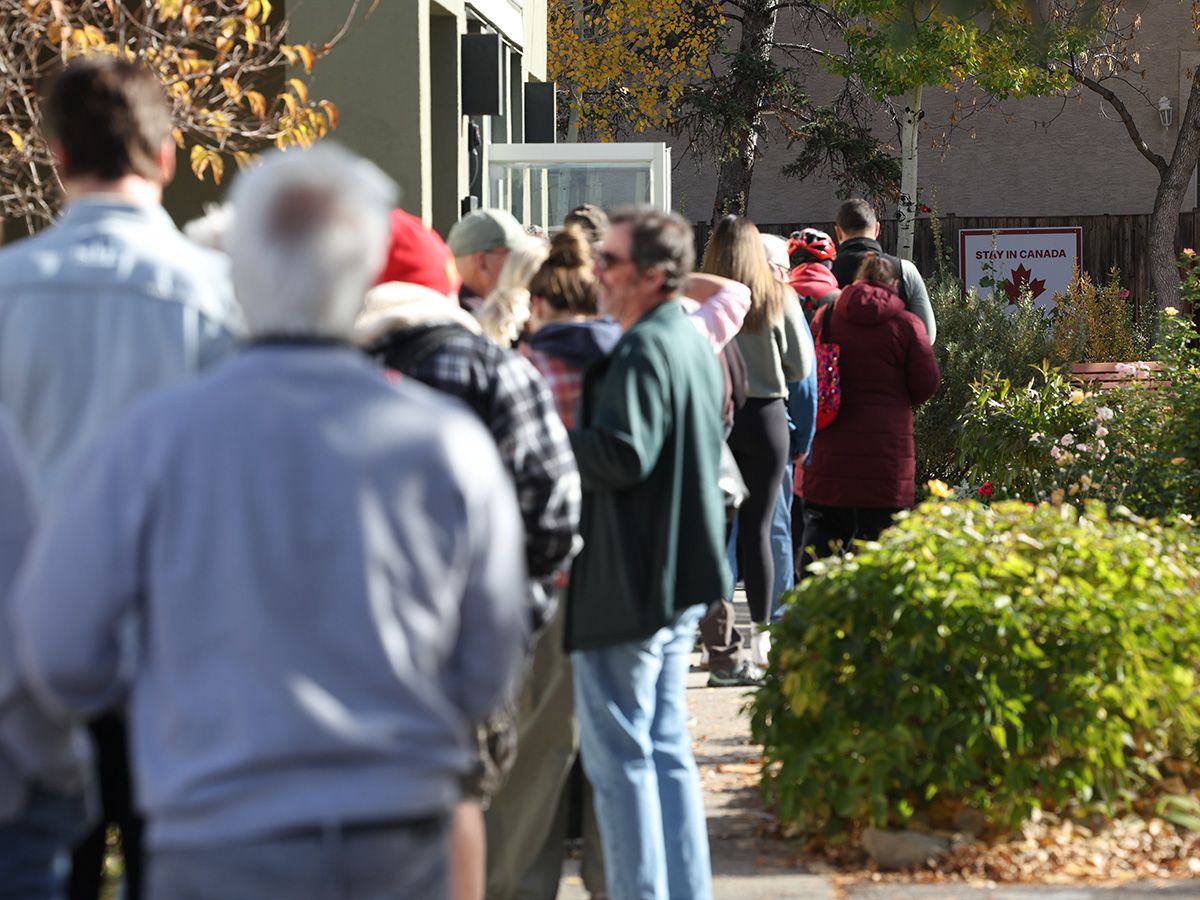
Alberta holds a nonbinding referendum on Monday asking whether to remain in Canada or begin the legal process toward a binding separation vote. Polls put Remain near 70% and Leave in the low-to-mid 20s, though the National Post says upsets have happened before.
1 / 2
The story, neutrally told
Right · 1Alberta is holding a nonbinding referendum on Monday, the first time the province has put the question of separation to the public. The Straits TimesRC “Alberta is holding a nonbinding referendum on Monday to ask residents if they want to remain part of Canada, marking the first time the oil-rich province has ever” Read at The Straits Times ↗ Right · 2Polls consistently show about 70% of Albertans want to stay in Canada and roughly a quarter support an independent Alberta; the National Post puts Remain in the high 60s and Leave in the low 20s. The Straits TimesRC “Polls have consistently shown most Albertans — about 70% — want to stay in Canada, with roughly a quarter of residents supporting an independent Alberta.” Read at The Straits Times ↗ National PostRC “Support for remaining is in the high 60s, while the leave sentiment is in the low 20s.” Read at National Post ↗ Right · 2The ballot has 10 questions. Question 10 asks whether Alberta should remain a province or whether the government should start the legal process required to hold a binding referendum on separation; the other nine are nonbinding yes/no questions on topics such as immigration, access to provincial services and voter identification. The Straits TimesRC “There are nine other nonbinding questions about immigration, access to provincial services” Read at The Straits Times ↗ National PostRC “There are also nine other questions, all of which are yes/no, on things like immigration control” Read at National Post ↗
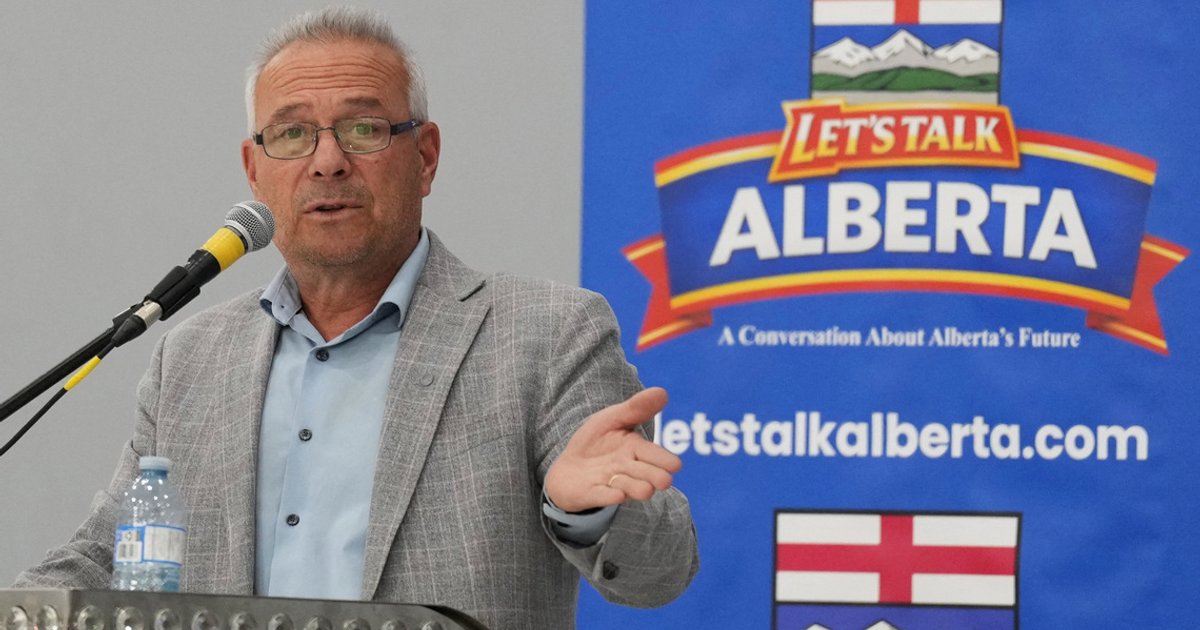
Right · 1Premier Danielle Smith announced the separation question in May, saying it was "time to have a vote, understand the will of Albertans on this subject, and move on." The Reuters explainer says this followed months of campaigning by a small but vocal group of separatists, some of whom had backed her bid for premier. The Straits TimesRC “time to have a vote, understand the will of Albertans on this subject, and move on,””“Some members of the group had backed Smith's candidacy for premier.” Read at The Straits Times ↗ Right · 2Smith says she voted to remain in advance polling. She has said she will respect a vote to begin the process and quickly start work toward a binding referendum. On Oct. 7 she urged those wanting to "send a message" to give her government a mandate on the other nine questions instead of voting for Option 2. The Straits TimesRC “Smith says she voted for Alberta to remain in Canada during advance polling”“Smith has said she will respect the result and quickly begin the process to hold a legally binding referendum.” Read at The Straits Times ↗ National PostRC “There’s a lot of people who think voting for Option 2 will give leverage.” Read at National Post ↗ Right · 2Prime Minister Mark Carney, who was largely raised in Alberta, is campaigning for Remain. In a Thanksgiving video he said Canada "can't build big things on fault lines" and framed Option 2 as a "long and uncertain process", while managing a trade war with US President Donald Trump. National PostRC “We can’t build big things on fault lines.”” Read at National Post ↗ The Straits TimesRC “Carney has campaigned for Alberta to remain in Canada.” Read at The Straits Times ↗
Right · 2Polls close at 8 p.m. Monday. Elections Alberta will count ballots by hand, with question 10 counted and reported first, and expects unofficial results within 48 hours. The Straits TimesRC “Polls are scheduled to close at 8 p.m. on Monday” Read at The Straits Times ↗ National PostRC “will be counted and reported first, followed by the other nine, with a deadline of 48 hours, according to Elections Alberta.” Read at National Post ↗ Right · 1A simple majority for Option 2 could trigger the process, but separation would not be imminent. The 2000 Clarity Act says secession talks require a clear majority without specifying a threshold, and that a constitutional amendment negotiated by provincial, territorial and federal governments is needed. The Straits TimesRC “a constitutional amendment negotiated by provincial, territorial and federal governments is required.” Read at The Straits Times ↗ Right · 1First Nations groups object to an independent Alberta because their treaties predate Alberta's entry into Confederation. In May an Alberta judge ruled the chief electoral officer was wrong to let separatists collect signatures without Indigenous consultation; Alberta has appealed. The Straits TimesRC “Alberta has appealed the decision.” Read at The Straits Times ↗
Right · 1The National Post argues an upset is possible because pollsters have been wrong on separatist votes before. It cites Quebec's 1995 referendum, which Remain won by about a percentage point, and says low turnout could make polls a less reliable guide. Remain campaigner Thomas Lukaszuk warned that "fervent separatists will crawl across broken glass to make their vote count." National PostRC “Pollsters have been wrong before, even on separatist votes.”“Fervent separatists will crawl across broken glass to make their vote count,”” Read at National Post ↗ Right · 1The Post also notes that more than 3,000 ballot packages have been invalidated for reasons such as missing declaration forms or identification problems, though these can still be fixed. It describes the central question as wordy, and says the nine other questions could affect how voters engage. National PostRC “More than 3,000 ballot packages have been invalidated”“It is a rambling offer of two numbered options.” Read at National Post ↗ Right · 2Quebec's Parti Québécois won a minority government on October 5 and has pledged a third referendum, but only after Trump has left office and if it holds a majority. The Post says the two movements' fortunes could affect each other. The Straits TimesRC “The PQ was elected with a minority government on October 5” Read at The Straits Times ↗ National PostRC “So the successes of one could boost the fortunes of the other, even without actual cooperation.” Read at National Post ↗
Every sentence links to the reporting it rests on. The pill in front of each says where its sources sit: Left, Centre or Right when one side supplies at least half of them, Mixed when they are evenly split. The number is how many outlets it cites.
Left0 outlets
No left outlet in our sources has covered this story yet.
Centre0 outlets
No centre outlet in our sources has covered this story yet.
Right2 outlets
- Framing
- The National Post (opinion/analysis) asks how a comfortable Remain lead could still produce an upset; the Reuters explainer, carried by the Straits Times, gives neutral background on the vote.
- Emphasis
- Post: polling error, turnout, confusing ballot, invalidated ballots, Trump factor, Quebec and Brexit precedents. Reuters: procedure, Clarity Act, Indigenous objections, Quebec history.
- Leaves out or plays down
- Neither carries views from separatist leaders at length; the Reuters piece does not discuss polling risk, and the Post gives little on legal process or Indigenous objections.
- Charged language
- “October surprise”“rambling offer”“Fervent separatists”
- For example
-
“But it could go differently. Pollsters have been wrong before” — National Post
“Polls have consistently shown most Albertans — about 70% — want to stay in Canada” — The Straits Times
What every side reports
- Alberta holds a nonbinding referendum on Monday.
- Polls show Remain at roughly 70% and Leave in the low-to-mid 20s.
- Question 10 is the separation question; there are nine other questions.
- Elections Alberta will hand count ballots, reporting question 10 first, within 48 hours.
- Prime Minister Mark Carney backs Remain.
Alberta place
Premier Smith says the vote will settle the question and she will respect the result; she voted Remain and urges voters seeking leverage to use the other nine questions.
“Smith has said she will respect the result and quickly begin the process to hold a legally binding referendum.” — The Straits Times
“give us a mandate on the other nine questions.” — National Post
Canada place
Prime Minister Carney says national unity is critical amid the US trade war and has campaigned for Alberta to stay.
“Carney has campaigned for Alberta to remain in Canada.” — The Straits Times
Left0 articles
No coverage yet.
Centre0 articles
No coverage yet.
Right2 articles
-
National PostRC · · Opinion
All the ways the Alberta referendum could result in an October surprise
Mixed Analytical, slightly wry piece exploring scenarios in which polls could miss, while noting the Remain lead is safe.
-
The Straits TimesRC · · via Reuters
Explainer-What does Alberta's referendum on separation from Canada mean?
Neutral Reuters wire explainer in Q&A format covering the question, process, history and legal hurdles.
- 15 Oct 13:00 First National PostRC All the ways the Alberta referendum could result in an October surprise Opinion
- 15 Oct 17:11 +4h 11m The Straits TimesRC Explainer-What does Alberta's referendum on separation from Canada mean? via Reuters
Times are when each article was published, or when we first saw it if the outlet gave no time.
Ask about this story
Loading…