Amazon plans "World Product Graph" to hold data on every product, document shows
An internal Amazon document reviewed by Reuters describes "World Product Graph", a plan to gather data on nearly every item for sale worldwide and counter AI shopping agents. Amazon says the document is a draft brainstorm that doesn't necessarily reflect its current plans.

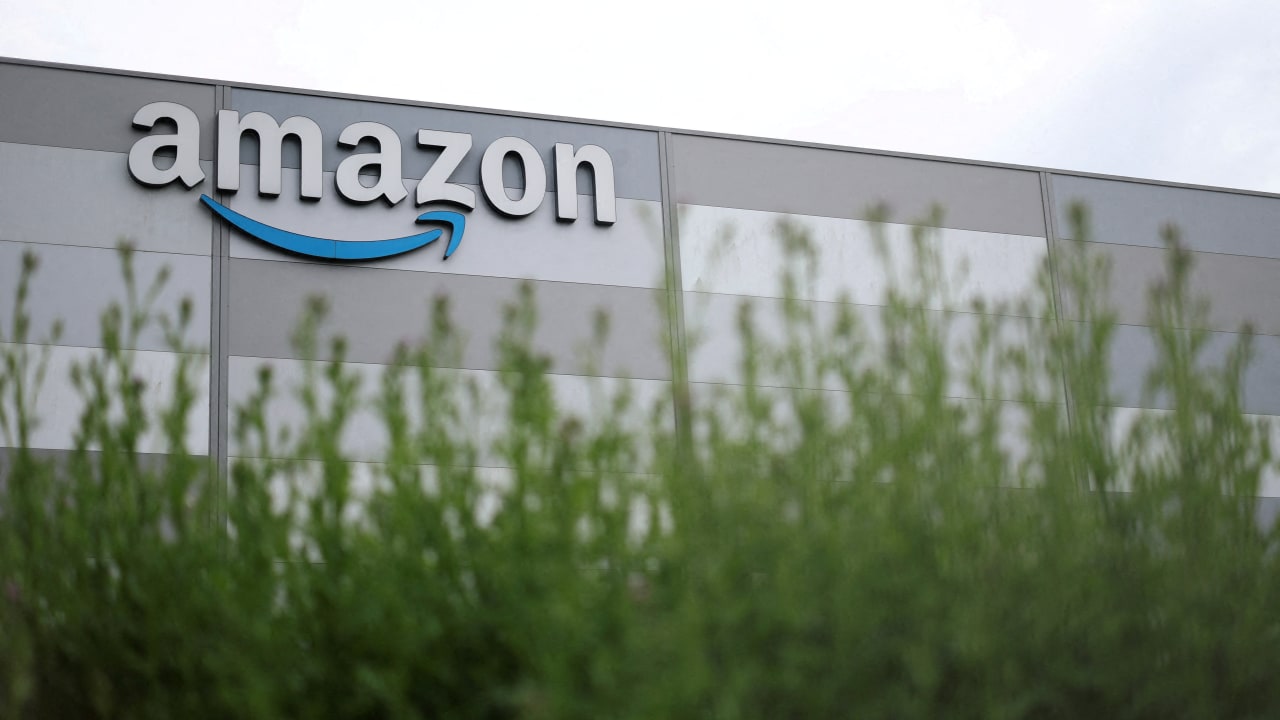
1 / 2
The story, neutrally told
Mixed · 2Amazon has an internal plan called World Product Graph that aims to collect data on virtually every item for sale worldwide, whether or not Amazon stocks it, according to an internal document reviewed by Reuters and people familiar with the matter. CNAN “Called World Product Graph, the initiative seeks to hoover up data on virtually every item for sale on Earth, whether Amazon stocks it or not” Read at CNA ↗ The Jerusalem PostRC “Called World Product Graph, the initiative seeks to hoover up data on virtually every item for sale on Earth, whether Amazon stocks it or not” Read at The Jerusalem Post ↗ Mixed · 2The document argues Amazon cannot be the go-to destination for every shopping mission if customers must leave to research product relationships on Google, brand websites and review sites, and the plan is meant to keep shoppers on Amazon. CNAN “Amazon cannot be the go-destination for every shopping mission if customers must leave to research product relationships on Google, brand websites, and review sites,” Read at CNA ↗ The Jerusalem PostRC “Amazon has a secret plan to ensure shoppers never need to leave its site: own the world's product information.” Read at The Jerusalem Post ↗ Mixed · 2The document is a PR/FAQ, typically a six-page internal narrative memo, written like a press release with an aspirational release date of October 1, 2027. Reuters could not determine whether or when the plan will be implemented, and people familiar said it could be modified or aborted due to financial or other concerns. CNAN “Reuters could not determine if or when this plan may be implemented, though the document, written like a press release, has an aspirational future release date of October 1, 2027.” Read at CNA ↗ The Jerusalem PostRC “Not all PR/FAQs lead to a service being introduced and, the people said, World Product Graph could be modified or aborted due to financial or other concerns.” Read at The Jerusalem Post ↗
Mixed · 2Amazon said in a statement that "draft, outdated documents often paint an incomplete picture and the existence of a brainstorming document such as this one doesn't necessarily reflect our current plans", adding that it is constantly working on ideas to make its product catalog comprehensive, accurate and helpful. CNAN “"Draft, outdated documents often paint an incomplete picture and the existence of a brainstorming document such as this one doesn't necessarily reflect our current plans," said Amazon, in a statement.” Read at CNA ↗ The Jerusalem PostRC “We're constantly working on new ideas and technologies to make Amazon's product catalog comprehensive, accurate, and helpful for customers.” Read at The Jerusalem Post ↗ Mixed · 2The data would come partly from brands and retailers contributing product data continuously and partly from Amazon independently crawling other retailers' websites; Reuters could not determine how the crawling would work or whether permission would always be sought. CNAN “That will entail some brands and retailers contributing product data continuously to Amazon, but also Amazon independently crawling other retailers' websites.” Read at CNA ↗ The Jerusalem PostRC “Reuters could not determine how Amazon planned to crawl the sites or whether it would need to seek permission in all cases.” Read at The Jerusalem Post ↗ Mixed · 2According to the document, Amazon has already signed up Coca-Cola and Bayer, among others, to contribute data, and held a "CEO-level P&G/Amazon summit" for a trial with Procter & Gamble; the companies did not respond to requests for comment. CNAN “Amazon has already signed up Coca-Cola and Bayer, among others, to contribute product data, the document says.” Read at CNA ↗ The Jerusalem PostRC “The companies didn't respond to requests for comment.” Read at The Jerusalem Post ↗
Mixed · 2The project sits in Amazon's Selection & Catalog Systems unit and is organised under Robert Tekiela, a vice president in that division, who did not respond to a request for comment. One source said Amazon is shuffling staff internally to get it started. CNAN “is being organized under Robert Tekiela, a vice president in the division. He did not respond to a request for comment.” Read at CNA ↗ The Jerusalem PostRC “Amazon is shuffling staff internally to get the project off the ground, according to one of the people” Read at The Jerusalem Post ↗ Mixed · 2The plan is also meant to fix problems with Amazon's AI shopping assistant Rufus, renamed "Alexa for Shopping" in May. The document says many Rufus answers are factually wrong or incomplete, and that about 83 million weekly searches are "expensive" to run; more data would allow cheaper models. Amazon said the usage figures are significantly outdated and that Alexa for Shopping is roughly 97% accurate globally. CNAN ““Many Rufus answers are factually wrong or incomplete, but customers lack expertise to detect these errors,” the document says.”“the usage figures are significantly outdated" and that its data shows that Alexa for Shopping is roughly 97 per cent accurate globally.” Read at CNA ↗ The Jerusalem PostRC “users conduct about 83 million searches weekly using Rufus, and running them is “expensive,” according to the document.” Read at The Jerusalem Post ↗ Mixed · 2People familiar said the plan would also counter third-party AI shopping agents that could send traffic to sites with more complete data, and by making Amazon the richest data source would draw such agents to Amazon.com and help protect its advertising business. CEO Andy Jassy told the third-quarter earnings call that "few customers are doing much shopping this way yet". CNAN “Amazon executives have grown wary of AI shopping agents that may send customer traffic to other sites that have greater or more complete data” Read at CNA ↗ The Jerusalem PostRC “That would also help protect Amazon's growing advertising business.”“few customers are doing much shopping this way yet” Read at The Jerusalem Post ↗
Mixed · 2Meta's Muse agent has more than 10 million users in the US and Canada since launching in September; Amazon blocked it that month, and last year sued Perplexity over similar access, a case still ongoing. Elon Musk wrote on X, after a post saying xAI's Grok agent was blocked on Amazon: "Maybe we should start a competitor to Amazon." CNAN “Amazon in the same month blocked Muse from its retail site and last year sued AI firm Perplexity to prevent similar access, a case that is still ongoing.” Read at CNA ↗ The Jerusalem PostRC ““Maybe we should start a competitor to Amazon.” Read at The Jerusalem Post ↗ Mixed · 2Context from a 2025 Morgan Stanley report: 16% of online shoppers start product research on Amazon versus 57% on Google, but when shoppers know what they want, 41% of searches start on Amazon, compared with 23% for Google and 18% for Walmart. CNAN “the 16 per cent of online shoppers who do so on Amazon is dwarfed by Google’s 57 per cent.” Read at CNA ↗ The Jerusalem PostRC “41% of searches starting there, compared with 23% for Google and 18% for Walmart.” Read at The Jerusalem Post ↗ Mixed · 2Employees describe the project as the start of an effort to make the site a one-stop shop, expanding the existing "Buy for Me" and "Shop Direct" services that list products sold on other sites with Amazon as intermediary. CNAN “an expansion of existing services known as “Buy for Me” and “Shop Direct,”” Read at CNA ↗ The Jerusalem PostRC “allowing customers to buy them with Amazon as an intermediary.” Read at The Jerusalem Post ↗
Every sentence links to the reporting it rests on. The pill in front of each says where its sources sit: Left, Centre or Right when one side supplies at least half of them, Mixed when they are evenly split. The number is how many outlets it cites.
Left0 outlets
No left outlet in our sources has covered this story yet.
Centre1 outlet
- Framing
- Reuters exclusive carried under CNA's byline, leading with Amazon's "secret plan" to own product data and fight AI shopping agents.
- Emphasis
- The competitive threat from AI agents, Amazon's own Rufus accuracy problems, and Amazon's rebuttal.
- Leaves out or plays down
- No reporting beyond the Reuters story; unresolved questions (crawling permissions, timing) are noted as unknown.
- Charged language
- “secret plan”“hoover up”
Right1 outlet
- Framing
- Reuters copy run by The Jerusalem Post with a headline stressing Amazon amassing data on every item worldwide to fight AI shopping agents, plus added subheads.
- Emphasis
- Scale of the data collection and the crawling of retailers' sites; subheads on crawling and on pushing AI agents to Amazon's store.
- Leaves out or plays down
- No added reporting or local angle; the text matches the Reuters wording.
- Charged language
- “secret plan”“hoover up”“amass data”
- For example
-
“Amazon seeks to amass data on every item for sale worldwide to fight AI shopping agents” — The Jerusalem Post
“Amazon document plans to crawl retailers' websites for product data” — The Jerusalem Post
What every side reports
- Amazon's internal document describes World Product Graph, a plan to gather data on virtually every item for sale worldwide.
- The document has an aspirational release date of October 1, 2027, and Reuters could not determine whether or when it will be implemented.
- Amazon says the document is a draft, outdated brainstorming document that may not reflect its current plans.
- Coca-Cola and Bayer are named as contributors; a trial with Procter & Gamble is mentioned.
- The project is organised under Amazon vice president Robert Tekiela.
Where accounts differ
-
Accuracy and usage of Amazon's AI shopping assistant
- Centre
- The document says many Rufus answers are factually wrong or incomplete; Amazon says its usage figures are outdated and accuracy is about 97%.
- Right
- The same account is reported, including the document's claim and Amazon's rebuttal.
-
Whether the document reflects Amazon's plans
- Centre
- Amazon says it is a brainstorming document that doesn't necessarily reflect current plans; sources say staff are being shuffled to start the project.
- Right
- Same account: Amazon's caveat alongside a source saying staff are being shuffled.
Amazon organisation
Amazon calls the document a draft, outdated brainstorming paper that doesn't necessarily reflect current plans, says its usage figures are outdated, and says Alexa for Shopping is roughly 97% accurate globally. The document itself pitches the plan as making Amazon the destination for every shopping mission.
“the existence of a brainstorming document such as this one doesn't necessarily reflect our current plans,” — CNA
“Alexa for Shopping is roughly 97 per cent accurate globally.” — CNA
World Product Graph product
Described in the document as a PR/FAQ-style initiative to build the most extensive product data store, drawing on brand contributions and crawling, with a target date of October 1, 2027; it could be modified or aborted.
“World Product Graph could be modified or aborted due to financial or other concerns.” — The Jerusalem Post
“depends on discovering how brands organize their products on their own websites” — The Jerusalem Post
Left0 articles
No coverage yet.
Centre1 article
-
CNAN ·
Exclusive-Amazon’s plan to own the world’s product data and fight AI shopping agents
Neutral Reuters exclusive via CNA presenting the leaked plan, with Amazon's response included.
Right1 article
-
Amazon seeks to amass data on every item for sale worldwide to fight AI shopping agents
Neutral Reuters story run by The Jerusalem Post with subheads on crawling and steering AI agents to Amazon.
- 13 Nov 11:02 First CNAN Exclusive-Amazon’s plan to own the world’s product data and fight AI shopping agents
- 13 Nov 12:26 +1h 24m The Jerusalem PostRC Amazon seeks to amass data on every item for sale worldwide to fight AI shopping agents
Times are when each article was published, or when we first saw it if the outlet gave no time.
Ask about this story
Loading…