Araghchi tells US there is no military solution, warns of stronger Iranian response
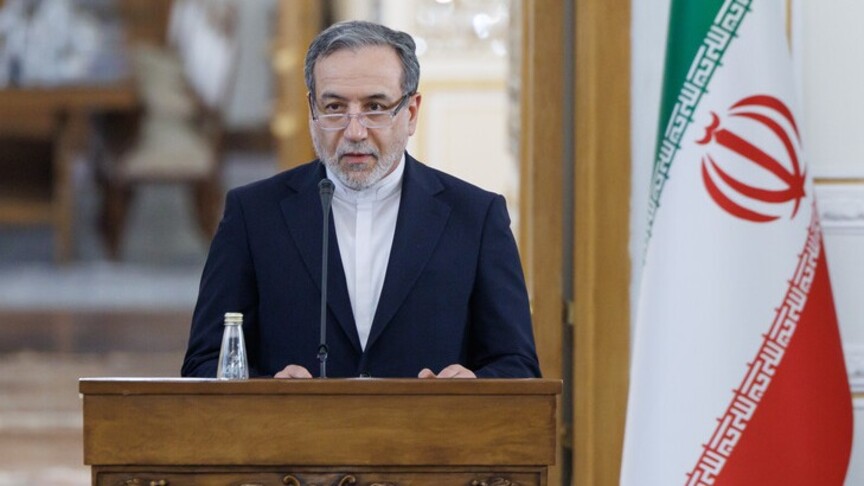
Iran's foreign minister told foreign ambassadors in Tehran on 4 October that the war with the US cannot be ended militarily or by new sanctions, and warned of a stronger response to any renewed attack. Talks appear stalled over the Strait of Hormuz.
Updated (version 2). New coverage since the last version from The Straits Times.

1 / 4
The story, neutrally told
Mixed · 2Iranian Foreign Minister Abbas Araghchi said on Sunday 4 October 2026 that there was no military solution to Iran's conflict with the United States, with talks on ending the war apparently at an impasse. The HinduLC “Iranian Foreign Minister Abbas Araghchi said Sunday (October 4, 2026) that there was no military solution to his country's conflict with the United States” Read at The Hindu ↗ CNAN “Iran's top diplomat insisted on Sunday (Oct 4) that there would be no military solution” Read at CNA ↗ Mixed · 2Speaking to foreign ambassadors, he warned: "If our enemies again choose the path of military confrontation, our response will be stronger than before, and we will defend ourselves with even more force." The HinduLC “"If our enemies again choose the path of military confrontation, our response will be stronger than before, and we will defend ourselves with even more force,"” Read at The Hindu ↗ Anadolu AgencyN “in an address to foreign ambassadors based in Tehran, according to the state-run IRNA news agency” Read at Anadolu Agency ↗ Mixed · 2He added that there was no solution based on new sanctions and that only negotiations based on justice and fairness could end the conflict; Anadolu, citing IRNA, quoted him calling the war "unlawful aggression" against Iran. The HinduLC “"only negotiations based on justice and fairness" could end the conflict” Read at The Hindu ↗ Anadolu AgencyN “the unlawful aggression that has been launched against the Islamic Republic of Iran” Read at Anadolu Agency ↗
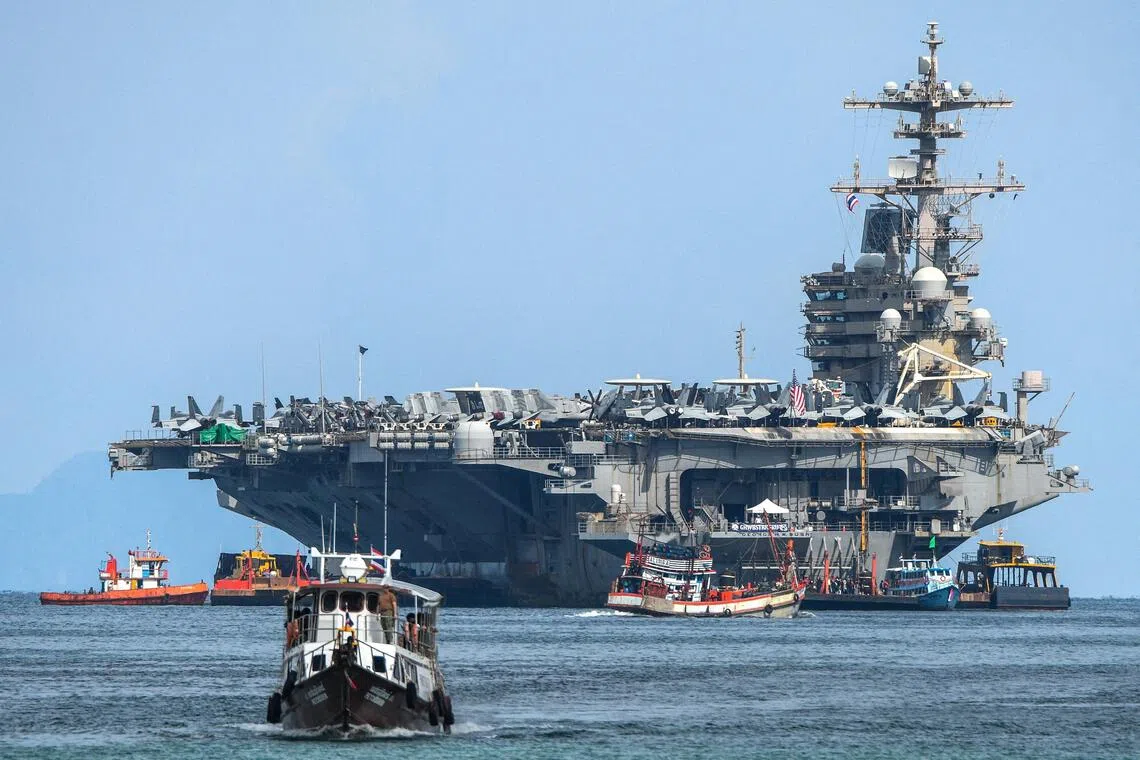
Mixed · 2The war was launched by the US and Israel in late February (Anadolu gives 28 February); heavy bombardment did not bring it to a decisive close, and Washington has recently dialled back military operations in favour of economic pressure. The HinduLC “A campaign of heavy bombardment failed to bring a decisive close to the war launched by the U.S. and Israel in late February” Read at The Hindu ↗ Anadolu AgencyN “The US and Israel launched a war against Iran on Feb. 28.” Read at Anadolu Agency ↗ Centre · 1The US has not struck Iran since 1 September, though CNA, citing Axios, reports a fresh buildup including extra Patriot batteries in Saudi Arabia and Qatar and the USS Theodore Roosevelt carrier group heading to the region. CNAN “The United States has not struck Iran since September 1, but it has recently pursued a fresh military buildup in the region.”“the USS Theodore Roosevelt aircraft carrier and its strike group were heading to the Middle East” Read at CNA ↗ Right · 1Axios also reported that the Theodore Roosevelt group could join two other US carrier strike groups already in the region; AFP, carried by the Straits Times, noted the US and Israel framed the war as preventing Iran from acquiring nuclear weapons, which Iran has long denied pursuing, before the focus shifted to reopening Hormuz. The Straits TimesRC “where they could join two other US carrier strike groups already in the region”“though the focus soon shifted to reopening the Hormuz after its closure sent shockwaves through world energy markets” Read at The Straits Times ↗
Centre · 3The two sides agreed a framework deal in June (Anadolu gives 18 June) meant to lead to a permanent settlement; The Hindu says it collapsed largely over the Strait of Hormuz, while CNA says Iranian attacks on vessels there prompted a return to US military operations. The HinduLC “the deal collapsed, largely due to disagreements over the Strait of Hormuz” Read at The Hindu ↗ CNAN “Iranian attacks on vessels in the Hormuz prompted a return to US military operations” Read at CNA ↗ Anadolu AgencyN “since a June 18 framework deal” Read at Anadolu Agency ↗ Mixed · 2Iran has sought to control the Strait of Hormuz since the war began and has struck vessels transiting without its authorisation; the US has imposed a counterblockade of Iranian ports and struck vessels it accuses of violating it. CNAN “The US has imposed its own counterblockade of Iranian ports, and has also struck vessels it accuses of violating it.” Read at CNA ↗ The HinduLC “has attacked vessels that attempt to transit without its authorisation” Read at The Hindu ↗ Mixed · 2Indirect US-Iran talks were held last week on the sidelines of the UN General Assembly, where Tehran says it presented seven conditions for reopening the strait; President Trump rejected the proposal while leaving open further talks or renewed military operations. The HinduLC “Tehran saying it presented seven conditions for reopening the strait” Read at The Hindu ↗ CNAN “Trump, however, rejected the proposal, while leaving the door open both to further talks or renewed military operations.” Read at CNA ↗
Centre · 1According to CNA, Iran's demands include a Middle East-wide ceasefire, unfreezing of assets abroad, lifting of oil sanctions and an end to the US naval blockade; spokesman Esmaeil Baqaei called the latest US counterproposal "in line with their previous proposals concerning nuclear issues". CNAN “a ceasefire across the Middle East, the unfreezing of its assets abroad, the lifting of sanctions on its oil sector and an end to the US naval blockade”“"in line with their previous proposals concerning nuclear issues"” Read at CNA ↗ Right · 1Baqaei added that Tehran was focused on the Strait of Hormuz and that reopening it required "an end to the disruptions to Iranian commercial maritime traffic and the lifting of sanctions". The Straits TimesRC “reopening the waterway required “an end to the disruptions to Iranian commercial maritime traffic and the lifting of sanctions”” Read at The Straits Times ↗ Centre · 1On Sunday the UK maritime agency UKMTO reported a tanker in the Hormuz struck by an unknown projectile, damaging its engine room; the crew were safe and no environmental impact was recorded. CNAN “reported being struck by an unknown projectile, causing damage to the engine room” Read at CNA ↗
Mixed · 2Axios reported that top Trump cabinet members met on Friday 2 October to discuss the Iran war and the Yemen conflict. The HinduLC “top Trump cabinet members met Friday (October 2) to discuss the war in Iran” Read at The Hindu ↗ CNAN “Axios reported that top Trump cabinet members met Friday to discuss the war in Iran” Read at CNA ↗
Every sentence links to the reporting it rests on. The pill in front of each says where its sources sit: Left, Centre or Right when one side supplies at least half of them, Mixed when they are evenly split. The number is how many outlets it cites.
Left1 outlet
- Framing
- Concise report leading with Araghchi's warning and the apparent impasse, with context on the failed June deal and Trump's rejection of Iran's proposal.
- Emphasis
- Araghchi's quotes, Hormuz as the cause of the deal's collapse, the pause in US strikes.
- Leaves out or plays down
- Omits Iran's listed demands, the tanker incident and the US military buildup reported by CNA.
- For example
-
“If our enemies again choose the path of military confrontation, our response will be stronger than before, and we will defend ourselves with even more force,” — The Hindu
Centre2 outlets
- Framing
- CNA gives a detailed account with Hormuz incidents, Iran's demands and the US buildup; Anadolu stresses Araghchi's words as relayed by IRNA, using his framing of 'unlawful aggression'.
- Emphasis
- CNA: Hormuz tension, the US counterblockade, military buildup. Anadolu: Iran's call for negotiations and the sanctions reference.
- Leaves out or plays down
- Anadolu omits the talks at the UN, Trump's rejection and the pause in US strikes; CNA does not note Araghchi's 'unlawful aggression' wording.
- For example
-
“Iran's top diplomat insisted on Sunday (Oct 4) that there would be no military solution to the United States' war against the Islamic Republic” — CNA
“Iranian foreign minister says war cannot be resolved through further sanctions, calls for negotiations” — Anadolu Agency
Right1 outlet
- Framing
- The Straits Times ran AFP's wire report, which matches CNA's detailed account: Araghchi's warning, the Hormuz stalemate, Iran's demands and the US buildup.
- Emphasis
- Hormuz as the main point of contention, the tanker incident, Iran's seven conditions and the US buildup.
- Leaves out or plays down
- The wire copy does not carry Anadolu's IRNA-based "unlawful aggression" wording.
- Charged language
- “blockade the Strait of Hormuz”
- For example
-
“The main point of contention remains Iran’s attempt to blockade the Strait of Hormuz” — The Straits Times
What every side reports
- Araghchi said on 4 October there is no military solution and no solution through new sanctions.
- He warned Iran's response to renewed military action would be stronger.
- The war was launched by the US and Israel in late February.
- A June framework deal was agreed between the two sides.
- Iran has sought to control the Strait of Hormuz.
Where accounts differ
-
Why the June framework deal broke down
- Left
- The Hindu: it collapsed largely over disagreements about the Strait of Hormuz.
- Centre
- CNA: Iranian attacks on vessels in the Hormuz prompted a return to US military operations. Anadolu says only that efforts continue since the deal.
-
There is no military solution to the US-Iran war.
Reported- Reports 4
- The Hindu, Anadolu Agency, CNA, The Straits Times
-
The United States has not struck Iran since September 1.
Reported- Reports 3
- The Hindu, CNA, The Straits Times
-
The US and Iran agreed a framework deal in June meant to lead to a permanent settlement.
Reported- Reports 4
- The Hindu, Anadolu Agency, CNA, The Straits Times
Abbas Araghchi person
Says military action and new sanctions cannot end the war, that only negotiations based on justice can, and that Iran would respond more forcefully to renewed attack.
“"There is no military solution, nor any solution based on new sanctions,"” — The Hindu
“Tehran is ready to take all necessary measures” — Anadolu Agency
Left1 article
-
Iran's Foreign Minister tells U.S. there is no military solution to their conflict
Neutral Straight report of Araghchi's speech with background on the stalled talks and the Hormuz dispute.
Centre2 articles
-
CNAN ·
Iran tells US there is no military solution to Middle East war
Neutral Detailed report adding Hormuz incidents, Iran's demands, Baqaei's comments and the US buildup.
-
‘There is no military solution’ to end war, Iran tells US
Neutral Short report relaying Araghchi's remarks via IRNA, including his description of the war as unlawful aggression.
Right1 article
-
The Straits TimesRC · · via AFP
Iran warns US: More firepower will not end Mid-East war
Neutral AFP wire copy run by the Straits Times; a detailed, even-handed account centred on the Hormuz impasse and the US buildup.
- 4 Oct 10:28 First The HinduLC Iran's Foreign Minister tells U.S. there is no military solution to their conflict
- 4 Oct 11:12 +44m CNAN Iran tells US there is no military solution to Middle East war
- 4 Oct 11:20 +52m Anadolu AgencyN ‘There is no military solution’ to end war, Iran tells US
- 4 Oct 11:41 +1h 14m The Straits TimesRC Iran warns US: More firepower will not end Mid-East war via AFP
Times are when each article was published, or when we first saw it if the outlet gave no time.