NASA releases Artemis II lunar data and images, informing moon base planning
NASA has published roughly 800 GB to 1 TB of data, photographs, audio and reports from the April Artemis II lunar flyby. Scientists say the material, including five meteoroid-impact flashes, will inform plans for future landings and a south-pole base.
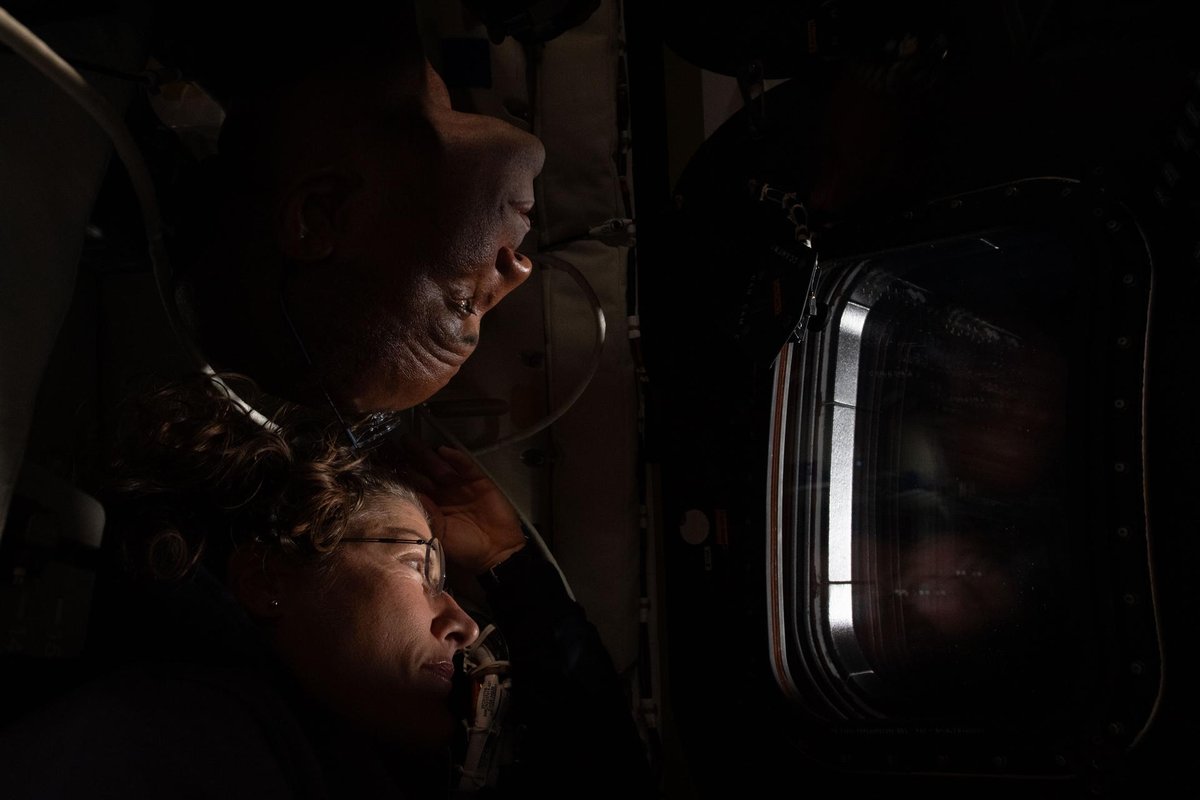
.jpg)
1 / 2
The story, neutrally told
Left · 2NASA has released a large public archive of science data from Artemis II, the crewed lunar flyby that carried four astronauts around the moon in April, the first crewed lunar mission in more than 50 years. Scientific AmericanLC “The first crewed lunar mission in more than a half-century brought back more than 800 gigabytes of data on colorful craters, flashing meteoroids, and much more” Read at Scientific American ↗ WiredLC “The data drop includes photographs, audio, video, and astronauts’ notes that will be used to study the moon and prepare for future human missions.” Read at Wired ↗ Left · 2Scientific American reports the crew captured 814 gigabytes of lunar science data between April 1 and 10 using digital cameras and iPhones, while Wired describes the release as nearly 1 terabyte. Scientific AmericanLC “between April 1 and 10, they captured 814 gigabytes of lunar science data” Read at Scientific American ↗ WiredLC “NASA Just Made Nearly 1 TB of Artemis II Data Available to the Public” Read at Wired ↗ Left · 2The release includes more than eight hours of crew audio, videos of the return to Earth, hand-annotated images and mission transcripts, and NASA presented preliminary findings at a press conference. Scientific AmericanLC “The release also includes more than eight hours of audio from the crew, videos of their nail-biting return to Earth, hand-annotated images, and much more” Read at Scientific American ↗ WiredLC “some of the most accessible materials include mission transcripts and lunar photographs annotated by the astronauts themselves” Read at Wired ↗
Left · 1NASA also published three reports: the Artemis II Preliminary Lunar Science Report, the Lunar Science Operations Report and the Lunar Science Data User Guide. The data sit in NASA's Planetary Data System, and Wired says the release is primarily intended for the scientific community. WiredLC “These are the Artemis II Preliminary Lunar Science Report, the Artemis II Lunar Science Operations Report, and the Artemis II Lunar Science Data User Guide.”“Anyone can access the near terabyte of data, though the release is primarily intended for the scientific community.” Read at Wired ↗ Left · 2The clearest finding is the detection of five small meteoroid impact flashes on the lunar farside, seen during roughly 54 minutes of observation in darkness. WiredLC “The most clear-cut finding is the detection of five small meteoroid impacts on the lunar surface during the 54-minute eclipse observed by the Orion crew.” Read at Wired ↗ Scientific AmericanLC “five flashes of light, each in a different location on the lunar farside” Read at Scientific American ↗ Left · 1Scientific American says scientists estimate each meteoroid had a mass of about 8.5 grams and, because the crew flew outside major meteoroid streams, the rate is likely typical background. NASA put the chance of a similar strike on a future moon base at about one in 10,000 per decade, and project scientist Jen Heldmann said, "We’re probably safe going forward." Scientific AmericanLC “scientists think each meteoroid was around 8.5 grams in mass—about as much as two dice”“about a one-in-10,000 chance per decade. “We’re probably safe going forward,” Heldmann says.” Read at Scientific American ↗
Left · 1The crew saw no hazes of lofted lunar dust like those some Apollo astronauts reported, which Scientific American says suggests the phenomenon may be transient. Scientific AmericanLC “the Artemis II crew didn’t see any, suggesting that this strange phenomenon may be a transient problem rather than a persistent one.” Read at Scientific American ↗ Left · 2Images also showed colour differences across the surface, which NASA's analysis links to different types of ancient volcanism, and captured wrinkle ridges in Oceanus Procellarum. Photographs near the terminator show how terrain and visibility change under low sun, conditions common near the south pole where later Artemis missions are planned. Scientific AmericanLC “Each of these hues, NASA’s analysis confirms, correspond to different types of ancient volcanism” Read at Scientific American ↗ WiredLC “These conditions will be common near the south pole, where NASA plans to conduct the next Artemis missions.” Read at Wired ↗ Left · 1NASA's Marie Henderson, Artemis II deputy lunar science lead, said the findings would "help shape future Artemis mission architectures". In late September NASA announced three new science payloads for near-future landings, including one to monitor micrometeorite impacts at the south pole and one to search for lava tubes. Scientific AmericanLC ““These findings are going to help shape future Artemis mission architectures,” said Marie Henderson”“In late September, NASA also announced three new science payloads for near-future landings” Read at Scientific American ↗
Left · 1Scientific American adds a caveat that "nothing in NASA’s report is especially revelatory" and that unlocking the moon's secrets requires closer, surface-level crewed and robotic investigation. It notes the October 7 release date matches the anniversary of Luna 3's 1959 first images of the farside. Scientific AmericanLC “in truth nothing in NASA’s report is especially revelatory”“on this day, back in 1959, the Soviet Union’s Luna 3 space probe beamed back the first-ever images of the Moon’s farside” Read at Scientific American ↗
Every sentence links to the reporting it rests on. The pill in front of each says where its sources sit: Left, Centre or Right when one side supplies at least half of them, Mixed when they are evenly split. The number is how many outlets it cites.
Left2 outlets
- Framing
- Both outlets present the release as a useful scientific and practical step toward future landings and a moon base; Scientific American frames it as boosting base plans, Wired as a guide to accessing the data.
- Emphasis
- Scientific American stresses meteoroid and dust hazards, geology and base-safety odds, with NASA scientist quotes. Wired stresses how the public and researchers can access the data and which specialists may use it.
- Leaves out or plays down
- Wired does not give the 814 GB figure, the one-in-10,000 impact-risk estimate or the dust finding. Scientific American gives little on how to access the repository and does not name the three reports.
- Charged language
- “unequivocal success”“space bullets”“space piranhas”
- For example
-
“was an unequivocal success” — Scientific American
“these impactors are akin to space bullets” — Scientific American
“Anyone can access the near terabyte of data” — Wired
Centre0 outlets
No centre outlet in our sources has covered this story yet.
Right0 outlets
No right outlet in our sources has covered this story yet.
What every side reports
- NASA released a large public archive of Artemis II data, images, audio and reports.
- Five small meteoroid impact flashes were detected on the lunar surface during the crew's observation in darkness.
- The data are expected to inform future Artemis missions and risk assessment for south-pole bases.
Where accounts differ
-
Size of the data release
- Left
- Scientific American cites 814 GB captured; Wired says nearly 1 TB released (different measures may be involved).
NASA organisation
NASA presents the release as the first planetary science data gathered beyond Earth largely directly by humans in over 50 years, and says the findings will shape future Artemis mission architectures.
“The space agency describes this effort as the first set of planetary science data obtained outside Earth and—for the most part—directly by humans in more than half a century.” — Wired
““These findings are going to help shape future Artemis mission architectures,” said Marie Henderson” — Scientific American
Left2 articles
-
Artemis II images boost NASA’s moon base plans
Celebratory Enthusiastic science feature presenting Artemis II data as supporting moon-base safety and site choice, while noting the report is not especially revelatory.
-
WiredLC ·
NASA Just Made Nearly 1 TB of Artemis II Data Available to the Public
Neutral Explanatory piece, translated from Spanish, on what NASA released, where to find it and the first concrete findings.
Centre0 articles
No coverage yet.
Right0 articles
No coverage yet.
- 8 Oct 16:00 First Scientific AmericanLC Artemis II images boost NASA’s moon base plans
- 9 Oct 19:30 +27h 30m WiredLC NASA Just Made Nearly 1 TB of Artemis II Data Available to the Public
Times are when each article was published, or when we first saw it if the outlet gave no time.