Assassin(s) film row: Lee Min-ho's Busan event cancelled, protest filing against Yoo Hae-jin alleged
The South Korean film Assassin(s), about the 1974 shooting that killed Park Chung-hee's wife, has drawn a police complaint, calls for a boycott and online abuse of its cast. Lee Min-ho's Busan festival event was cancelled, and an unverified protest filing against Yoo Hae-jin is circulating.

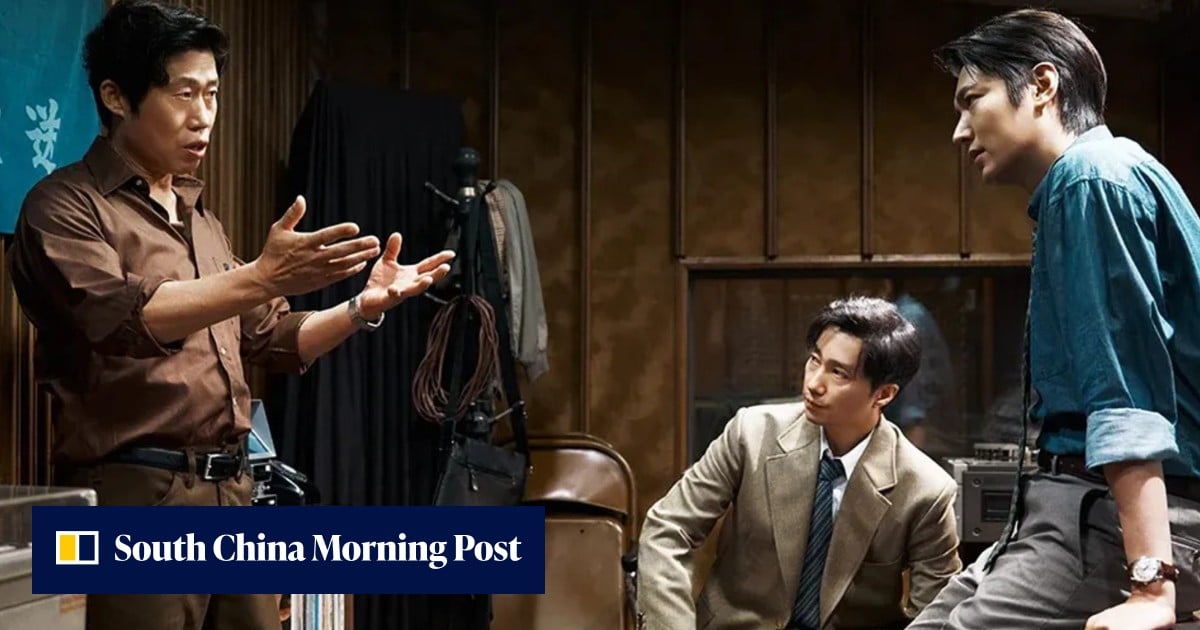
1 / 2
The story, neutrally told
Centre · 2Assassin(s), directed by Hur Jin-ho and starring Yoo Hae-jin, Park Hae-il and Lee Min-ho, opened on September 23 and led the box office over the Chuseok holiday, selling more than a million tickets in its first four days. Gulf NewsN “It opened on September 23 and led the box office during the Chuseok holiday.” Read at Gulf News ↗ South China Morning PostN “selling more than a million tickets in its first four days.” Read at South China Morning Post ↗ Centre · 2The film is based on the 1974 attempt to shoot then-President Park Chung-hee at a Liberation Day ceremony. The shooter, Mun Se-gwang, missed and killed first lady Yuk Young-soo. The film does not name accomplices but raises the possibility that people in the presidential office or intelligence authorities were involved. South China Morning PostN “While the film does not identify accomplices, it raises the possibility that people within the presidential office or intelligence authorities may have been involved.” Read at South China Morning Post ↗ Gulf NewsN “The film revolves around the shooting of Yuk Young Soo, wife of then-President Park Chung Hee, during a Liberation Day ceremony on August 15, 1974.” Read at Gulf News ↗ Centre · 1Park loyalists and conservative politicians say the film distorts history and defames Park. Park's son, Park Ji-man, asked the President Park Chung Hee Memorial Foundation to demand that screenings be halted. The foundation issued a joint statement calling on the production company to apologise formally and pull the film from theatres. South China Morning PostN “Park loyalists and conservative politicians are claiming the film, directed by acclaimed filmmaker Hur Jin-ho, distorts history and defames Park and his administration.”“The foundation issued a joint statement on Thursday calling for the film's production company to formally apologise and take down the movie from theatres.” Read at South China Morning Post ↗
Centre · 2Lee Jong-bae, a former People Power Party member of the Seoul Metropolitan Council, filed a police complaint against Hur and the producers on September 29. It accuses them of criminal defamation and of spreading false information by implying Park was involved in his wife's death. Some lawmakers have called for screenings to be halted and for a boycott, and letters have reportedly gone to regional education offices asking about school group viewings. Gulf NewsN “filed a complaint with the Seoul Metropolitan Police Agency on September 29.”“Letters have also reportedly been sent to regional education offices seeking information about school group viewings.” Read at Gulf News ↗ South China Morning PostN “accusing them of defamation and spreading false information by implying that Park was involved in his wife's assassination.” Read at South China Morning Post ↗ Centre · 1The production team denied political intent. It said the film used cinematic imagination rather than trying to "prove a new historical conclusion". South China Morning PostN “The production team denied having political intentions, saying the film used cinematic imagination rather than attempting to “prove a new historical conclusion”.” Read at South China Morning Post ↗ Centre · 1On October 1, the Busan International Film Festival (BIFF) announced that 'Actors House: Lee Min-ho', set for October 7, was cancelled for "unavoidable circumstances". Ticket holders will get automatic refunds. The 31st BIFF opens on October 6, and Lee's was the only Actors House session dropped. His agency, MYM Entertainment, confirmed he would not attend and apologised to fans. Gulf NewsN “the Busan International Film Festival (BIFF) announced on its official social media that 'Actors House: Lee Min-ho,' scheduled for October 7 at 6:50 p.m., had been cancelled.”“His agency, MYM Entertainment, confirmed that he would not be attending the event and apologised to fans” Read at Gulf News ↗
Centre · 2Neither BIFF nor the agency has said the controversy was the reason. Many online commenters have linked the two, and some called it censorship. Reports, including from AllKpop and Zapzee, say a planned citywide public screening of the film in Busan has also been called off. The South China Morning Post describes Lee as having "abruptly called off" the appearance. Gulf NewsN “Still, neither BIFF nor the agency has said the controversy was the reason for the cancellation.” Read at Gulf News ↗ South China Morning PostN “abruptly called off a public appearance at next week’s Busan International Film Festival” Read at South China Morning Post ↗ Centre · 2Several actors have cancelled audience greetings. Gulf News reports that three supporting actors withdrew from second-week stage greetings in Seoul and Gyeonggi, while Hur, Yoo, Park Hae-il and Lee remain listed. Cast members and stars who praised the film, including Lee Young-ae, Kim Go-eun and Park Byung-eun, have received thousands of critical comments. Advertisements featuring cast members have also been targeted. Gulf NewsN “Three supporting actors have withdrawn from the film's second-week stage greetings in Seoul and Gyeonggi.”“Lee Young-ae, Kim Go-eun and Park Byung-eun attended the VIP premiere and spoke positively about the movie.” Read at Gulf News ↗ South China Morning PostN “Actors have faced a wave of online abuse” Read at South China Morning Post ↗ Centre · 1On October 1, a post spread on Korean online communities claiming someone had filed to hold a protest outside Yoo Hae-jin's home. According to AllKpop, the rally was titled as a condemnation of Yoo and the production company, listed 20 participants and ran from October 3 to October 30. Neither the filing nor the form's details have been independently verified. Gulf NewsN “It listed 20 participants and a protest period running from October 3 to October 30.Neither the filing nor the details on the form have been independently verified.” Read at Gulf News ↗
Centre · 1The South China Morning Post places the row in a long-running dispute over Park's legacy. Park came to power in a 1961 coup, and his rule combined rapid industrialisation with political repression. It reports that cast and crew have been labelled "communists" and "North Korean sympathisers". Past cases are cited: courts upheld the filmmakers' freedom of expression over Silmido, and allowed The President's Last Bang with three documentary-footage scenes removed. South China Morning PostN “Park, who came to power after a 1961 military coup, remains one of the most divisive figures in South Korean history.”“the court upheld the filmmakers’ freedom of expression. The President’s Last Bang was also given the go-ahead but with three scenes using documentary footage removed.” Read at South China Morning Post ↗ Centre · 1Academics quoted by the SCMP say the dispute is about interpreting history rather than facts. Park Hye-eun, chief editor of The Screen, criticises a major party leader for singling out the film and filing criminal complaints, calling it political power intervening in culture. Viewers quoted take differing positions: one says the film resembles North Korean propaganda, and another says it is being used for political purposes. South China Morning PostN ““It’s not really about facts, but the difference in interpreting the events that took place. This is the nature of looking at history,” he said.”“That seems less like the exercise of an audience member’s right to criticise and more like political power intervening in the cultural sphere.” Read at South China Morning Post ↗
Every sentence links to the reporting it rests on. The pill in front of each says where its sources sit: Left, Centre or Right when one side supplies at least half of them, Mixed when they are evenly split. The number is how many outlets it cites.
Left0 outlets
No left outlet in our sources has covered this story yet.
Centre2 outlets
- Framing
- Both outlets are centre-labelled. Gulf News runs an entertainment news roundup of the fallout: the cancellation, the unverified protest filing, online backlash and the police complaint. The SCMP runs a longer explainer on the political and historical divisions behind the row.
- Emphasis
- Gulf News stresses fan and celebrity impact and flags what is unverified. The SCMP stresses Park's legacy, precedent court cases and expert and viewer voices.
- Leaves out or plays down
- Gulf News gives little on Park's legacy or the foundation's demands. The SCMP does not mention the Yoo Hae-jin protest filing and gives the Busan cancellation only a passing line.
- Charged language
- “war with itself”“North Korean sympathisers”“censorship”
- For example
-
“Some online commenters described the moves as censorship.” — Gulf News
“The backlash has reignited a much older argument over how South Korea should remember the Park era” — South China Morning Post
Right0 outlets
No right outlet in our sources has covered this story yet.
What every side reports
- Assassin(s) opened in late September and topped the box office over Chuseok.
- A former People Power Party city councillor filed a police complaint against director Hur Jin-ho and the producers.
- Lee Min-ho's appearance at the Busan International Film Festival was cancelled.
- The cast has faced a wave of online abuse and boycott calls.
Where accounts differ
-
Why Lee Min-ho's Busan event was cancelled
- Centre
- BIFF cited only "unavoidable circumstances" and neither it nor the agency linked it to the controversy (Gulf News). The SCMP describes it as an abrupt cancellation by Lee as part of the fallout.
-
Whether the protest filing against Yoo Hae-jin is real
- Centre
- Gulf News says neither the filing nor the form's details have been independently verified. The SCMP does not mention it.
Assassin(s) other
The production team denies political intent and says the film uses cinematic imagination, not a new historical conclusion.
“The production team denied having political intentions, saying the film used cinematic imagination rather than attempting to “prove a new historical conclusion”.” — South China Morning Post
Park Chung-hee person
Park's son and the memorial foundation, with conservative politicians, say the film defames Park and demand an apology and withdrawal from theatres.
“The foundation issued a joint statement on Thursday calling for the film's production company to formally apologise and take down the movie from theatres.” — South China Morning Post
Lee Min-ho person
Lee's agency, MYM Entertainment, confirmed he would not attend the Busan event and apologised to fans, without giving a reason.
“His agency, MYM Entertainment, confirmed that he would not be attending the event and apologised to fans” — Gulf News
Yoo Hae-jin person
Yoo Hae-jin is the subject of an unverified protest filing and of critical comments on advertisements featuring him. No statement from him is reported.
“Advertisements featuring cast members including Yoo Hae Jin have also been hit with waves of malicious comments.” — Gulf News
Middle East1 outlet
Gulf News covers the row as celebrity and K-entertainment news, centred on the cast's fallout.
“The backlash has also hit stars who were not in the film.” — Gulf News
Gulf News
East and Southeast Asia1 outlet
The SCMP treats it as a political and cultural story about South Korea's divided memory of Park Chung-hee.
“The controversy is ultimately about how South Koreans interpret their past” — South China Morning Post
South China Morning Post
Left0 articles
No coverage yet.
Centre2 articles
-
Neutral Roundup of fallout from the film, with explicit caveats that the protest filing and any link to the cancellation are unverified.
-
Why a film about a dictator has South Korea at war with itself
Mixed Explainer presenting the row as a clash over how to remember Park Chung-hee, with expert voices and some sympathy for the film's right to ask questions.
Right0 articles
No coverage yet.
- 2 Oct 04:35 First Gulf NewsN Assassin(s)' controversy: Lee Min-ho's Busan event cancelled, alleged protest filing against Yoo Hae-jin emerges
- 3 Oct 02:30 +21h 55m South China Morning PostN Why a film about a dictator has South Korea at war with itself
Times are when each article was published, or when we first saw it if the outlet gave no time.