Ava DuVernay defends using AI to animate archival photos in '14th'
Director Ava DuVernay says AI was used in her documentary '14th' only to animate public-domain photos, not to fabricate people or voices, after online criticism. The film reaches Netflix on Dec. 4.

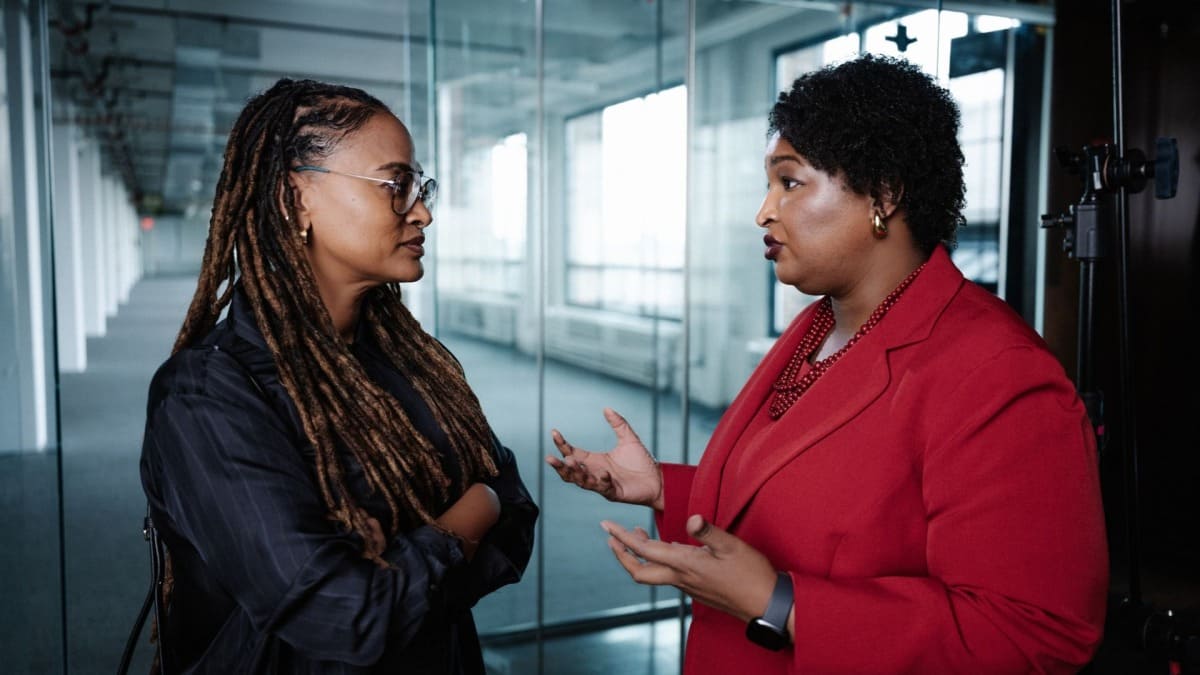
1 / 2
The story, neutrally told
Left · 2Ava DuVernay has defended the use of AI in her new documentary 14th, which has drawn some criticism online, speaking to The Hollywood Reporter as the film screened at AFI Fest on Sunday. The Hollywood ReporterLC “This has sparked some criticism online, which DuVernay addressed to The Hollywood Reporter as the doc screened at AFI Fest on Sunday.” Read at The Hollywood Reporter ↗ The A.V. ClubLC “DuVernay told The Hollywood Reporter at AFI Fest on Sunday.” Read at The A.V. Club ↗ Left · 2The film uses AI to bring archival photographs to life. DuVernay said: "We didn't use it to fabricate a person or make an avatar of a person or approximate someone's voice that said something they didn't say. We actually animated some photos that are in the public domain." The Hollywood ReporterLC “We actually animated some photos that are in the public domain, and from what we’ve been hearing from people it does bring people closer to that time in history, which was our goal.” Read at The Hollywood Reporter ↗ The A.V. ClubLC “DuVernay enlists AI to animate archival photos.” Read at The A.V. Club ↗ Left · 2She argued that AI-related technology is already built into common post-production tools such as Pro Tools, Avid and Resolve, and that filmmakers must be "really sober" about how it is used across the workflow. The Hollywood ReporterLC “as does Pro Tools with sound, as does Avid with editorial, as does Resolve with color” Read at The Hollywood Reporter ↗ The A.V. ClubLC “we have to be really sober about the ways in which that technology is [used] across so much of the workflow.” Read at The A.V. Club ↗
Left · 1DuVernay said audiences should see the film and decide for themselves how they feel, and that feedback she has heard is that the animation brings people closer to that period of history. The Hollywood ReporterLC “So people have to see it and check it out for themselves and make their decisions about how they feel.” Read at The Hollywood Reporter ↗ Left · 1According to The A.V. Club, at the film's New York Film Festival premiere earlier this month she said post-production tools gave the photos a 3D quality similar to a stereoscope. The A.V. ClubLC “DuVernay said post-production tools gave the photos a 3D quality similar to the stereoscope” Read at The A.V. Club ↗ Left · 214th examines the 14th Amendment, including birthright citizenship, due process, equal protection and the bar on insurrection, and how these have been challenged. It arrives a decade after her Oscar-nominated 13th, though she does not see it as a direct follow-up. The Hollywood ReporterLC “14th comes a decade after DuVernay’s Oscar-nominated doc 13th” Read at The Hollywood Reporter ↗ The A.V. ClubLC “prohibition for heads of state to engage in acts of insurrection or rebellion shaped the U.S.” Read at The A.V. Club ↗
Left · 1DuVernay said she began considering the project after hearing the current president, as a candidate, vow to end birthright citizenship, and that it grew as she saw the administration attack the amendment. The Hollywood ReporterLC “once we saw all of the tentacles of the current administration attacking this amendment, we knew that there was more there.” Read at The Hollywood Reporter ↗ Left · 1The film opens in a limited theatrical run on Nov. 27 and starts streaming on Netflix on Dec. 4. The Hollywood ReporterLC “14th will get a limited theatrical run starting Nov. 27, and start streaming on Netflix on Dec. 4.” Read at The Hollywood Reporter ↗ Left · 1The A.V. Club places the film in a wider debate, noting that Danny Boyle and Ben Affleck have also used or praised AI, and that Netflix co-CEO Ted Sarandos said the company used generative AI in 300 projects. It concludes there is still a strong case for human artistry. The A.V. ClubLC “Netflix co-CEO Ted Sarandos told investors during the Q2 earnings call that the company used generative AI in 300 projects.” Read at The A.V. Club ↗
Every sentence links to the reporting it rests on. The pill in front of each says where its sources sit: Left, Centre or Right when one side supplies at least half of them, Mixed when they are evenly split. The number is how many outlets it cites.
Left2 outlets
- Framing
- The Hollywood Reporter relays DuVernay's defence largely on her terms; The A.V. Club frames it within Hollywood's AI debate and adds a sceptical closing editorial note.
- Emphasis
- DuVernay's quotes about public-domain photos and not fabricating people; industry precedents and Netflix's AI use (A.V. Club).
- Leaves out or plays down
- Neither outlet details the online criticism or quotes critics.
- Charged language
- “good old-fashioned human artistry”“tentacles of the current administration”
- For example
-
“the director is opening up about her decision to use AI on elements of the film.” — The Hollywood Reporter
“we’d say there’s still a strong case for making movies with good old-fashioned human artistry.” — The A.V. Club
Centre0 outlets
No centre outlet in our sources has covered this story yet.
Right0 outlets
No right outlet in our sources has covered this story yet.
What every side reports
- DuVernay spoke to The Hollywood Reporter at AFI Fest on Sunday.
- 14th uses AI to animate public-domain archival photos.
- DuVernay says AI was not used to fabricate people or voices.
- 14th streams on Netflix on Dec. 4.
Ava DuVernay person
Says AI was used only to animate public-domain photos, not to fabricate people or voices, and invites viewers to judge for themselves.
“We didn’t use it to fabricate a person or make an avatar of a person or approximate someone’s voice that said something they didn’t say.” — The Hollywood Reporter
Left2 articles
-
Ava DuVernay Defends Using AI in New Doc ’14th’
Sympathetic Presents DuVernay's explanation and film background with little pushback.
-
Ava DuVernay invites you to make up your own mind about AI in her new doc
Mixed Summarises her defence, places it among other filmmakers' AI use, then ends with an editorial preference for human artistry.
Centre0 articles
No coverage yet.
Right0 articles
No coverage yet.
- 26 Oct 15:00 First The Hollywood ReporterLC Ava DuVernay Defends Using AI in New Doc ’14th’
- 26 Oct 18:41 +3h 42m The A.V. ClubLC Ava DuVernay invites you to make up your own mind about AI in her new doc
Times are when each article was published, or when we first saw it if the outlet gave no time.
Ask about this story
Loading…