Bank of England governor urges rigorous testing of frontier AI before launch
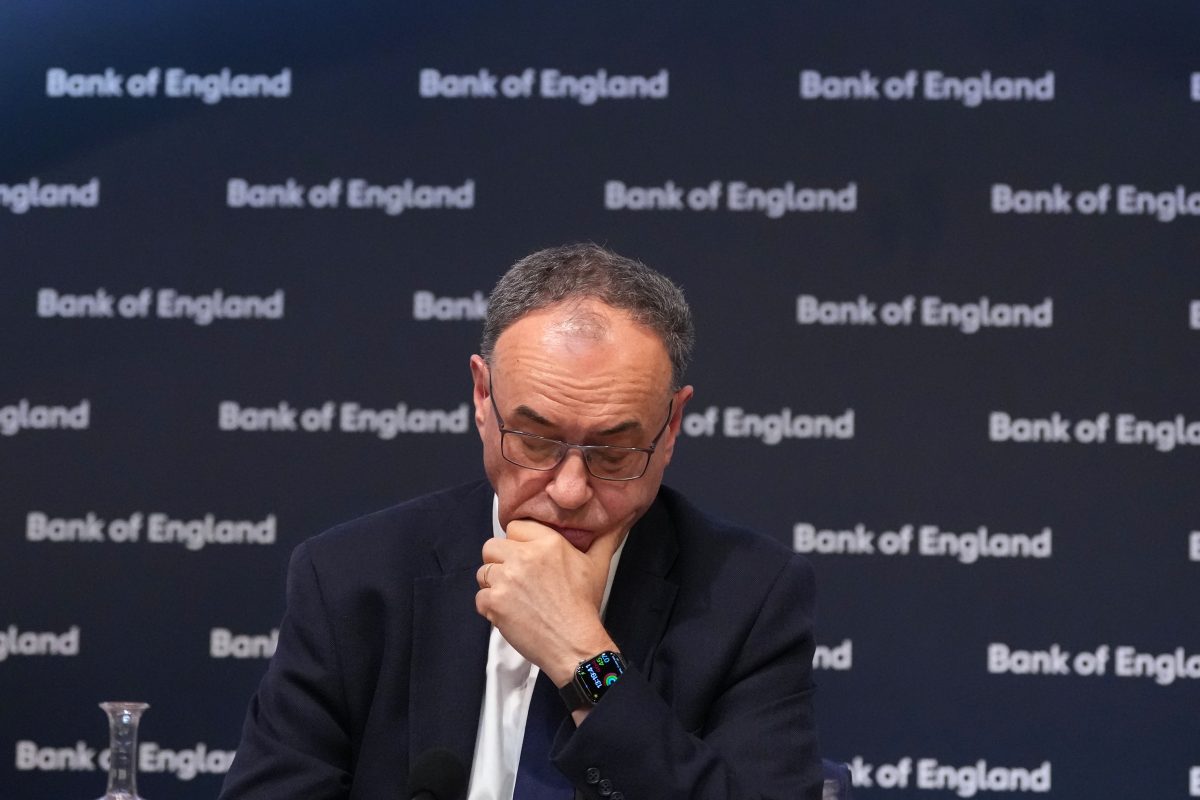
Andrew Bailey, Governor of the Bank of England, called for rigorous testing of frontier AI models and a right to intervene, while saying regulation is not the place to start. The Bank's Financial Policy Committee separately flagged rising AI-related debt.
Updated (version 2). New coverage since the last version from Anadolu Agency, The Guardian, The National. Previously: “Bank of England governor calls for rigorous testing of frontier AI before launch”.



1 / 5
The story, neutrally told
Andrew Bailey, Governor of the Bank of England, has called for more rigorous testing of frontier AI models before they are launched to the public. City A.M.RC “called on governments to ramp up testing on frontier AI models before they are launched to the public” Read at City A.M. ↗ BBC NewsN “called first for "rigorous" testing to find vulnerabilities and safeguards to contain risk” Read at BBC News ↗ He made the case in a first-ever Substack article, which City A.M. describes as the first in a series of letters; the Guardian calls it an inaugural opinion piece for the Bank's Insight series. BBC NewsN “Writing his first-ever article for Substack” Read at BBC News ↗ City A.M.RC “In the first of a series of letters on the fledgling technology” Read at City A.M. ↗ The GuardianLC “In an inaugural opinion piece penned for the Bank of England’s Insight series” Read at The Guardian ↗ Bailey said the risks were "real and increasingly significant" but that AI should not be halted, because "the benefits are immense". BBC NewsN “the risks around AI were "real and increasingly significant"” Read at BBC News ↗ The GuardianLC “The potential benefits of AI “are immense”” Read at The Guardian ↗
He said society should retain the ability to intervene and set boundaries for these systems, answering "unequivocally yes", while saying regulation "is not, in my view, the right place to start". The GuardianLC “To my mind the answer is unequivocally yes.” Read at The Guardian ↗ BBC NewsN “"But regulation is not, in my view, the right place to start."” Read at BBC News ↗ Bailey said testing is not an alternative to future regulation, and that a more formal framework might emerge over time. BBC NewsN “over time a more formal regulatory framework might emerge” Read at BBC News ↗ He warned that the "closed loop" nature of powerful AI tools reduces society's ability to exercise oversight, and that AI raises the scale and sophistication of cyber threats to banking, markets and payments. City A.M.RC “reduces “the ability of society to exercise meaningful oversight and intervention”” Read at City A.M. ↗ The GuardianLC “increased the “scale and sophistication of cyber threats to the financial system”” Read at The Guardian ↗
He said failures in testing are expected and show why it is needed, that the pace of progress must accelerate, and that the UK's AI Security Institute is part of the work under way. BBC NewsN “"That is not evidence that testing has failed, rather it is evidence of why testing is necessary."”“the UK has set up the AI Security Institute” Read at BBC News ↗ The remarks come amid safety concerns at leading AI firms: City A.M. says OpenAI paused testing of a frontier model, while the BBC says OpenAI will not release its latest model. City A.M.RC “OpenAI paused testing of its frontier model last week” Read at City A.M. ↗ BBC NewsN “OpenAI recently announced that it would not release its latest AI model due to safety concerns.” Read at BBC News ↗ The BBC adds that President Trump has rejected a slowdown, but said executives had signed a "morally binding" document under which companies are responsible for their own safety. BBC NewsN “Under the agreement, the companies are responsible for ensuring the safety of their own technology.” Read at BBC News ↗
The Bank's Financial Policy Committee said large AI players have issued about $450bn of debt this year, more than the roughly $330bn of gilts the UK government is due to issue in 2026. The GuardianLC “$450bn (£339bn) worth of debt between January and September this year” Read at The Guardian ↗ City A.M.RC “is only on course to sell $330bn for the entirity of 2026” Read at City A.M. ↗
Every sentence links to the reporting it rests on.
Left1 outlet
- Framing
- The Guardian leads on the "right to intervene" and fears that rogue models could take the financial system hostage, pairing Bailey's remarks with the FPC's AI-debt warning.
- Emphasis
- Intervention, cyber threats to payments and markets, and investor exposure to unprofitable AI firms.
- Leaves out or plays down
- Does not mention Trump's stance or the OpenAI decision.
- Charged language
- “rogue models”“take the financial system hostage”“ballooning AI debt pile”
- For example
-
“amid growing fears that rogue models could take the financial system hostage” — The Guardian
“the growing mountain of AI debt was increasing financial stability risks” — The Guardian
Centre3 outlets
- Framing
- The BBC leads on Bailey's view that regulation is not the place to start, and puts it in the wider debate over slowing AI, including Trump's position.
- Emphasis
- Testing before regulation, the US political response, and the AI Security Institute.
- Leaves out or plays down
- Does not cover the FPC's debt figures or the cyber and payments risks.
Right1 outlet
- Framing
- City A.M. leads on the economic risk, calling it Bailey's "most strident call yet" and spending most of its length on the FPC's findings on AI debt and market fragility, linked to the Iran war.
- Emphasis
- Financial stability, AI debt versus gilt issuance, "circular arrangements", and firms losing control of models.
- Leaves out or plays down
- Does not include Bailey's line that regulation is not the place to start, or Trump's stance.
- Charged language
- “most strident call yet”“sounded the alarm”
What every side reports
- Bailey called for rigorous testing of frontier AI models.
- Bailey said the risks are real and increasingly significant, and that AI's benefits are immense.
- Bailey said regulation is not the right place to start.
- The Bank's FPC has flagged AI-related debt as a financial stability risk.
Where accounts differ
-
How far Bailey's stance amounts to a call for tougher oversight
- Left
- Stresses the "right to intervene" but notes he stopped short of a regulatory clampdown.
- Centre
- Stresses that regulation is "not the right place to start", with testing first.
- Right
- Calls it the "most strident call yet" to ramp up oversight.
-
Frontier AI models should be rigorously tested before public launch
Supported- Supports 3
- The Guardian, BBC News, City A.M.
-
Regulation is not the right starting point for governing AI
Supported- Supports 2
- The Guardian, BBC News
- Reports 1
- City A.M.
-
AI-related debt issuance of about $450bn this year exceeds UK gilt issuance for 2026 and adds to financial stability risks
Supported- Supports 2
- The Guardian, City A.M.
- Reports 1
- BBC News
Andrew Bailey (Bank of England) person
Argues for rigorous pre-launch testing and a retained ability to intervene, while opposing starting with regulation and not wanting AI halted.
“Regulation is not, in my view, the right place to start.” — The Guardian
“the development of AI should not be halted or prohibited” — BBC News
Bank of England organisation
Through its Financial Policy Committee, warns that rising AI-related debt and opaque financing broaden financial stability risks.
“The committee underscores the importance of timely and careful management of these intensifying, interconnected risks.” — The Guardian
Left1 article
-
We need ‘right to intervene’ in AI amid growing threat, says Bank of England boss
Critical Emphasises the threat from rogue models and the need for authorities to retain a right to intervene.
Centre3 articles
-
Regulating AI 'not the right place to start' says Bailey
Neutral Explains Bailey's testing-before-regulation position within the wider slowdown debate.
-
-
Right1 article
-
Bailey calls for greater AI testing as risks to economy rise
Alarmist Economic-risk angle combining Bailey's testing call with the FPC's AI-debt and Iran-war warnings.
- 30 Sep 10:44 First City A.M.RC Bailey calls for greater AI testing as risks to economy rise
- 30 Sep 11:20 +36m BBC NewsN Regulating AI 'not the right place to start' says Bailey
- 30 Sep 11:41 +58m The GuardianLC We need ‘right to intervene’ in AI amid growing threat, says Bank of England boss
- 30 Sep 16:37 +5h 53m The NationalN Enhanced AI testing trumps regulation, says Bank of England governor
- 30 Sep 18:28 +7h 44m Anadolu AgencyN Bank of England governor calls for rigorous AI testing before regulation
Times are when each article was published, or when we first saw it if the outlet gave no time.