Beirut's $13 "Chic Taouk" sandwich fuels debate over Lebanon's economic divide
A Beirut health restaurant's roughly $13 chicken wrap drew online outrage yet sold more than 20,000 in 11 days. Reuters uses the row to illustrate the gap between affluent consumers and the many Lebanese struggling since the 2019 collapse.
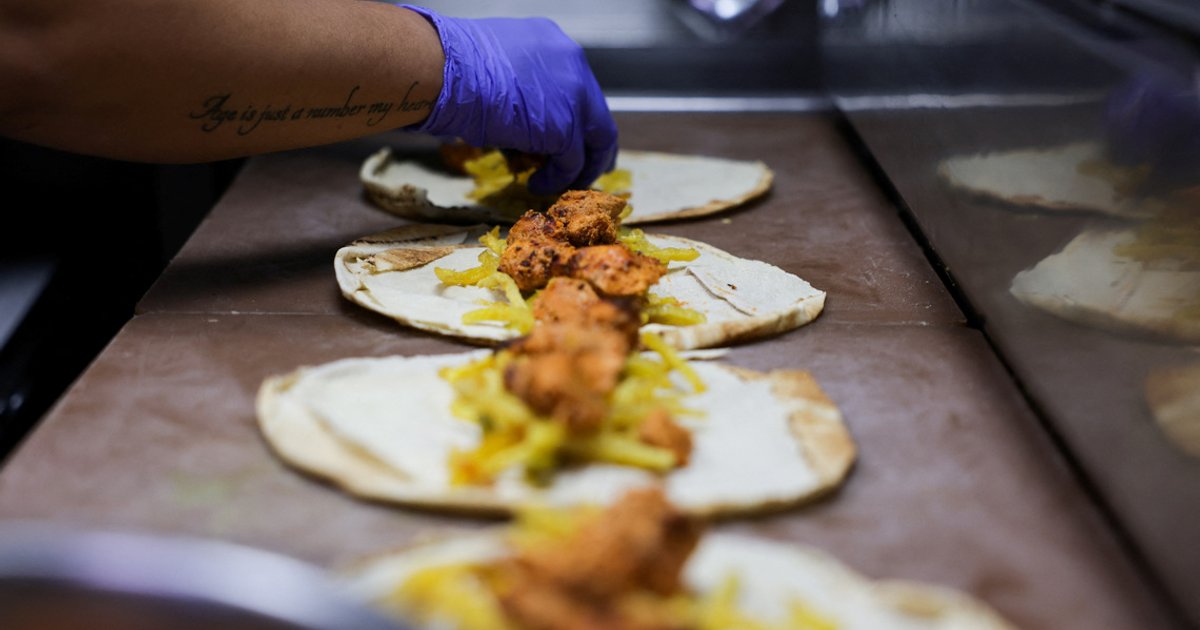
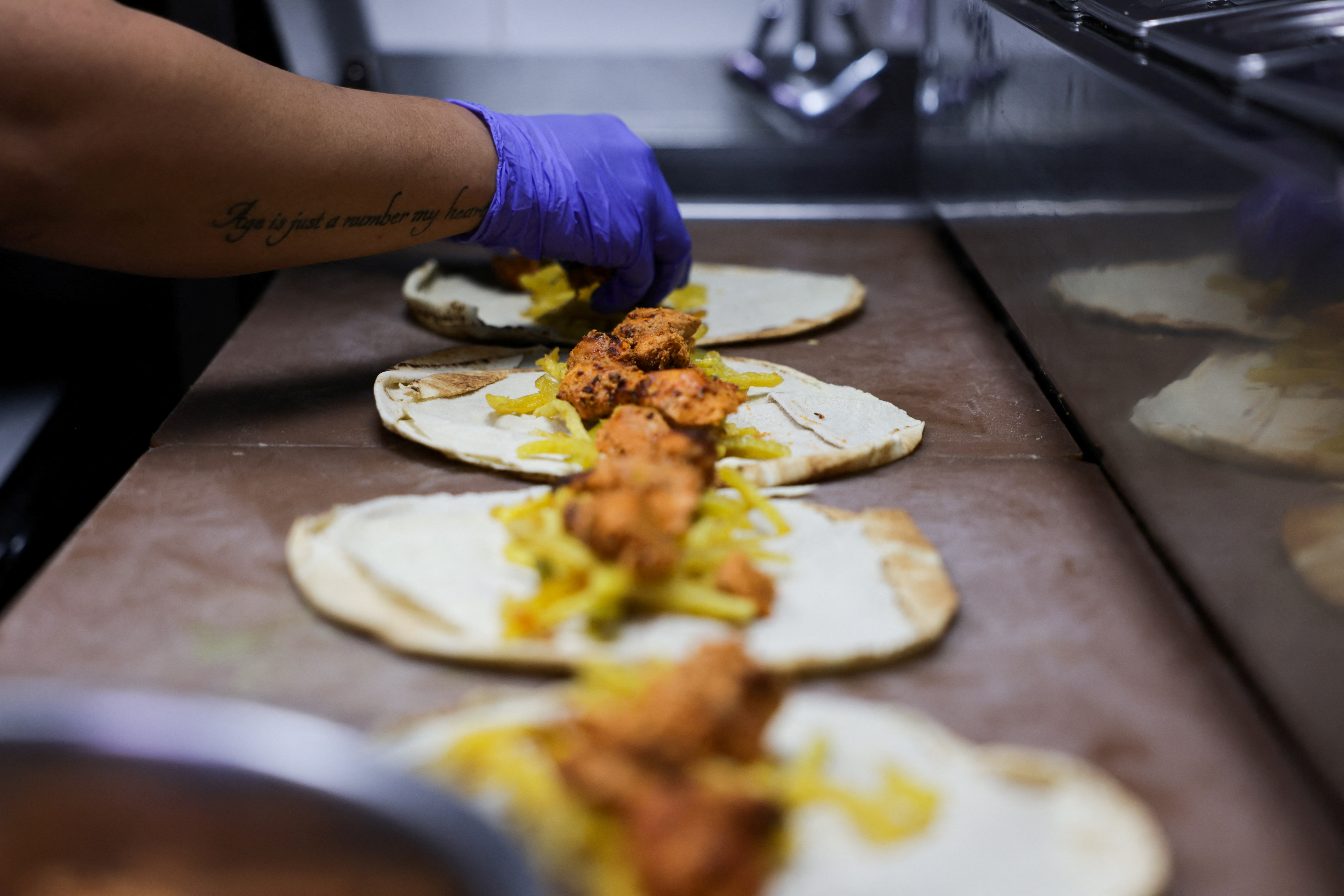
1 / 2
The story, neutrally told
Right · 2The Glow Paradise, a health-focused restaurant in Beirut, launched a lighter take on the shish taouk chicken wrap called the "Chic Taouk", priced at around $13, nearly double the usual price of a standard chicken sandwich in the city (Reuters). The Straits TimesRC “pricing it at around $13 -- nearly double what an un-chic chicken sandwich typically goes for in Beirut.” Read at The Straits Times ↗ Arab NewsRC “pricing it at around $13 — nearly double what an un-chic chicken sandwich typically goes for in Beirut.” Read at Arab News ↗ Right · 2Critics on social media accused the restaurant of overcharging in a country where many households struggle to afford necessities, while others said the sandwich was meant for people who could afford it. The Straits TimesRC “Lebanon’s Instagram-active community was split between those accusing the restaurant of theft and others saying the sandwich was intended for those who could afford it.” Read at The Straits Times ↗ Arab NewsRC “a country where many households struggle to afford necessities.” Read at Arab News ↗ Right · 2Despite the controversy, the restaurant sold more than 20,000 Chic Taouk sandwiches in 11 days, according to managing partner Hrag Jeghalian, who called the online exchanges "natural marketing". The Straits TimesRC “sold more than 20,000 Chic Taouk sandwiches in just 11 days, according to managing partner Hrag Jeghalian” Read at The Straits Times ↗ Arab NewsRC “who described the online exchanges as "natural marketing."” Read at Arab News ↗
Right · 2Sami Nader, an economist at Saint Joseph University of Beirut, said the crowds at the restaurant hid another reality, noting that 22 restaurants closed last month, and that the country's middle class has "disappeared" after the 2019 financial collapse, the 2020 Beirut Port explosion and two wars in under two years. The Straits TimesRC ““So you see people in the restaurant, but what you don't see is that 22 restaurants closed last month,” Nader told Reuters.” Read at The Straits Times ↗ Arab NewsRC “The country’s middle class has “disappeared,” Nader said” Read at Arab News ↗ Right · 1According to the World Bank, GDP has fallen by nearly 40% since 2019 and inflation is expected to rise to 17.5% because of higher global energy and shipping prices, more than four times the global headline rate flagged by the IMF in July. The Straits TimesRC “GDP has declined by nearly 40% since 2019 and inflation is expected to rise to 17.5% due to rising global energy and shipping prices” Read at The Straits Times ↗ Right · 1UNICEF said in September that four in five households in Lebanon struggle to afford basic necessities. The Straits TimesRC “Four in five households in Lebanon struggle to afford basic necessities, the UN children’s agency said in September.” Read at The Straits Times ↗
Right · 1Private generator bills rose nearly 20% in August 2026 alone and are nearly 60% higher than in February, based on energy ministry kilowatt-hour prices, so round-the-clock electricity now costs several hundred dollars a month against a $400 minimum wage. The Straits TimesRC “jumped by nearly 20% in August 2026 alone, bringing rates nearly 60% higher than they were in February of this year” Read at The Straits Times ↗ Right · 1Fouad Fakhreddine, a 53-year-old restaurant worker from Hamra, said "Everything has become expensive, and people can’t keep up" and that people get paid and then fall into debt just to get by. The Straits TimesRC ““Everything has become expensive, and people can’t keep up,” said Fouad Fakhreddine, a 53-year-old restaurant worker from nearby Hamra.” Read at The Straits Times ↗ Right · 1Some Lebanese questioned whether the row itself reflected misplaced priorities amid problems such as Israel's occupation of large parts of the south and chronic electricity and water shortages. The Straits TimesRC “Some questioned whether the dispute itself reflected misplaced priorities in a country grappling with urgent crises, from Israel’s occupation of large swaths of the country’s south to the endemic electricity and water crises.” Read at The Straits Times ↗
Every sentence links to the reporting it rests on. The pill in front of each says where its sources sit: Left, Centre or Right when one side supplies at least half of them, Mixed when they are evenly split. The number is how many outlets it cites.
Left0 outlets
No left outlet in our sources has covered this story yet.
Centre0 outlets
No centre outlet in our sources has covered this story yet.
Right2 outlets
- Framing
- Both outlets ran the same Reuters feature, framing a restaurant-pricing row as a symbol of a widening divide between affluent consumers and a hollowed-out middle class.
- Emphasis
- Economic indicators (GDP, inflation, generator bills, minimum wage) and the contrast between sales success and public anger.
- Leaves out or plays down
- The Arab News copy leaves out the Nader quote about 22 restaurant closures, the paragraph on the split among Instagram users and the reference to Israel's occupation of the south; the Straits Times copy includes them. Neither includes a response from authorities.
- Charged language
- “devastating financial meltdown”“hard to swallow”
- For example
-
“a debate over a chicken sandwich has exposed an increasingly stark divide between those who can still spend freely and those struggling to get by.” — The Straits Times
“The pricey pun proved hard to swallow” — Arab News
What every side reports
- The Glow Paradise priced its Chic Taouk at around $13, nearly double a typical Beirut chicken sandwich.
- The restaurant says it sold more than 20,000 in 11 days.
- GDP is down nearly 40% since 2019 and inflation is expected to reach 17.5%, per the World Bank.
- Four in five Lebanese households struggle to afford basic necessities, per UNICEF.
Left0 articles
No coverage yet.
Centre0 articles
No coverage yet.
Right2 articles
-
The Straits TimesRC · · via Reuters
Beirut's $13 chicken sandwich becomes symbol of Lebanon divide
Sympathetic Reuters copy carried by The Straits Times; uses the sandwich row to show economic hardship, in full form including the restaurant-closure figure and Israel's occupation.
-
Arab NewsRC · · via Reuters
Beirut's $13 chicken sandwich becomes symbol of Lebanon divide
Sympathetic Reuters copy carried by Arab News, slightly shortened; same economic-divide angle, spelled "Chich Taouk" in the lede.
- 25 Oct 10:10 First The Straits TimesRC Beirut's $13 chicken sandwich becomes symbol of Lebanon divide via Reuters
- 25 Oct 14:32 +4h 22m Arab NewsRC Beirut's $13 chicken sandwich becomes symbol of Lebanon divide via Reuters
Times are when each article was published, or when we first saw it if the outlet gave no time.
Ask about this story
Loading…