Bessent presses China's He Lifeng to honor Busan trade commitments ahead of Trump-Xi summit
On a Friday call, US Treasury Secretary Scott Bessent and Trade Representative Jamieson Greer urged Chinese Vice Premier He Lifeng to fully and immediately implement the Busan trade arrangement. The call came as both sides prepare for a Trump-Xi meeting in Shenzhen later this month.
Updated (version 3). New coverage since the last version from CNA, Deutsche Welle, The Straits Times, The Times of India.

1 / 7
The story, neutrally told
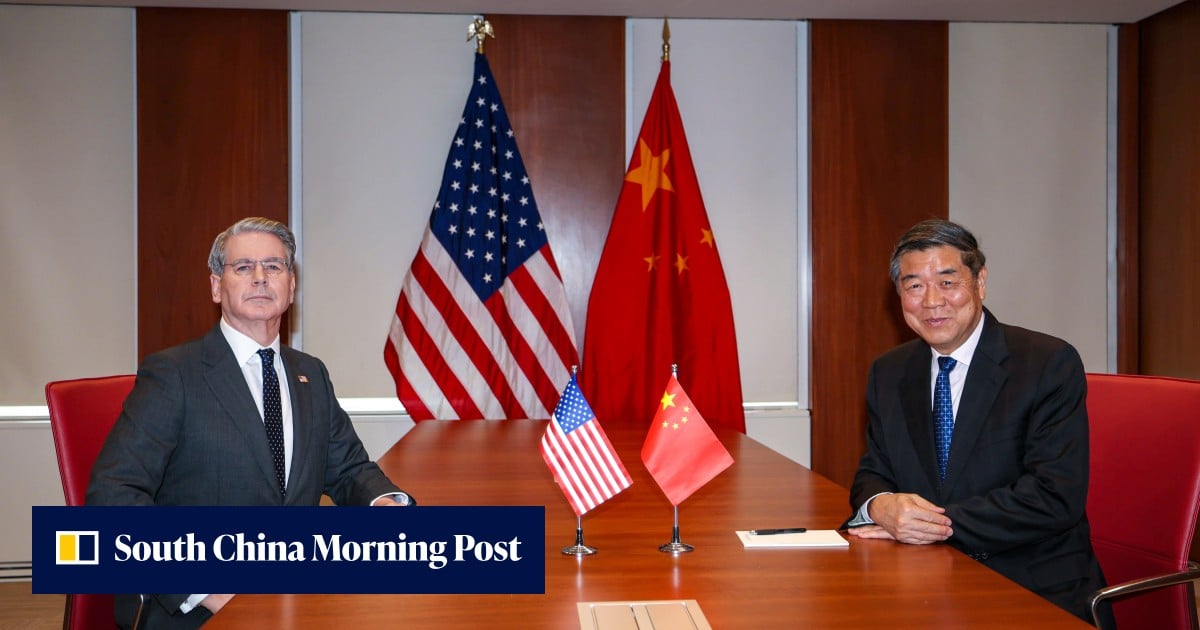
Centre · 2US Treasury Secretary Scott Bessent and Trade Representative Jamieson Greer held a phone call with Chinese Vice Premier He Lifeng on Friday 6 November, urging Beijing to fully implement its commitments under the Busan trade arrangement. Anadolu AgencyN “US Treasury Secretary Scott Bessent and Trade Representative Jamieson Greer on Friday urged Chinese Vice Premier He Lifeng to “fully” implement the commitments Beijing made under the 2025 Busan trade arrangement.” Read at Anadolu Agency ↗ South China Morning PostN “held a phone call with Chinese Vice-Premier He Lifeng on Friday” Read at South China Morning Post ↗ Centre · 1Bessent wrote on X that he "emphasized the importance of China fully and immediately honoring its commitments, raised concerns about recent Chinese actions and underscored that progress depends on concrete results." Anadolu AgencyN ““I emphasized the importance of China fully and immediately honoring its commitments, raised concerns about recent Chinese actions and underscored that progress depends on concrete results,” Bessent said” Read at Anadolu Agency ↗ Centre · 2According to the Treasury readout, the officials discussed the bilateral economic relationship and Busan implementation and reaffirmed the value of direct and candid communication, while Bessent said the US would closely assess China's implementation. Anadolu AgencyN ““reaffirmed the value of maintaining direct and candid communication.”” Read at Anadolu Agency ↗ South China Morning PostN “the United States will closely assess China’s implementation of the arrangement.” Read at South China Morning Post ↗
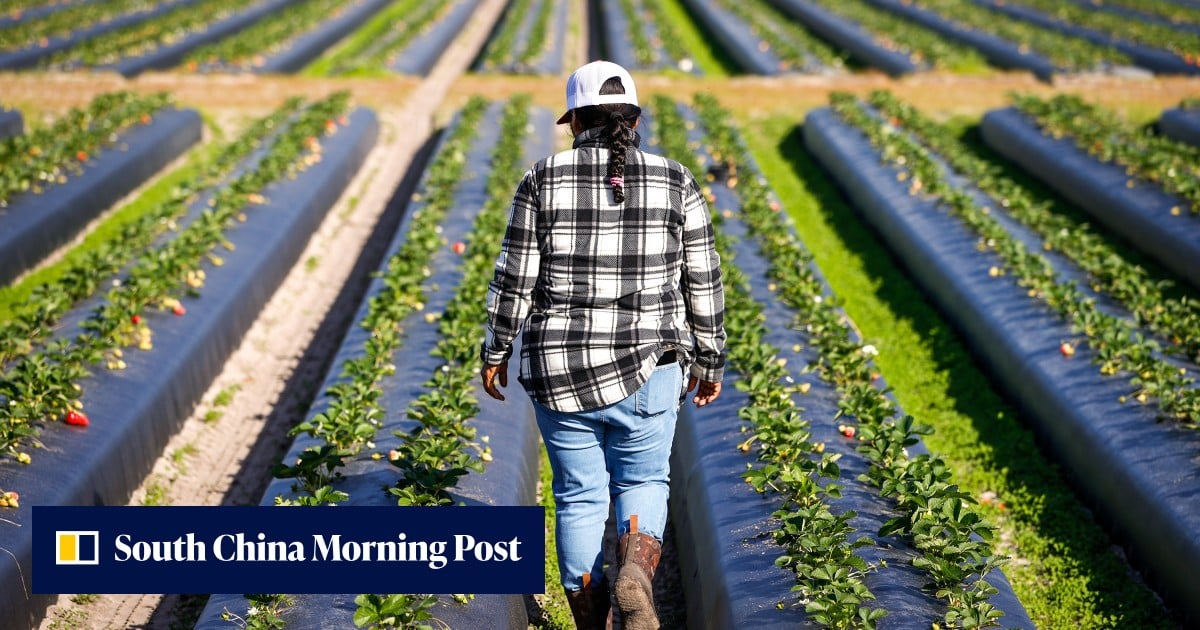
Centre · 1The readout did not specify the "recent Chinese actions"; the South China Morning Post noted Washington has previously raised concerns over rare earth exports and urged faster approvals of shipments. South China Morning PostN “The readout did not elaborate on the “recent Chinese actions” Bessent had raised. Washington has previously voiced concerns over rare earth exports” Read at South China Morning Post ↗ Mixed · 2The USTR statement said Greer stressed the critical importance of China taking concrete actions to fully implement past commitments, particularly on agricultural purchases, rare earths and other critical minerals. CNAN “particularly as they relate to agricultural purchases, rare earths and other critical minerals” Read at CNA ↗ The Straits TimesRC “specifically on “agricultural purchases, rare earths, and other critical minerals.”” Read at The Straits Times ↗ Mixed · 2China's Xinhua news agency reported that Beijing raised "serious concerns" about recent US trade and economic restrictions, but that the two sides held "frank, in-depth, and constructive exchanges" and agreed to keep consulting for stable and positive trade ties. The Straits TimesRC “The two sides held “frank, in-depth, and constructive exchanges” and agreed to strengthen cooperation and manage their differences” Read at The Straits Times ↗ CNAN “agreed with his US counterparts to continue using consultation for "stable and positive" development of trade ties” Read at CNA ↗
Centre · 2The Busan arrangement is the trade truce Presidents Donald Trump and Xi Jinping reached in South Korea in October 2025; the US agreed to reduce tariffs on certain Chinese imports and suspend additional restrictions, while China paused some rare earth export controls and committed to buy US soybeans and curb exports of fentanyl-precursor chemicals. Anadolu AgencyN “The Busan arrangement is the trade truce that US President Donald Trump and Chinese President Xi Jinping reached in South Korea in October 2025.” Read at Anadolu Agency ↗ South China Morning PostN “Beijing, in turn, paused some rare earth export controls and committed to buying US soybeans and curbing exports of chemicals used to make fentanyl.” Read at South China Morning Post ↗ Centre · 1Bessent and He last met shortly before Xi's September state visit to Washington and agreed to extend the one-year deal, which was due to expire on 10 November 2026, until 10 January 2027. South China Morning PostN “agreed to extend the trade agreement reached in South Korea by two months, until January 10, 2027. The one-year agreement was due to expire on November 10, 2026.” Read at South China Morning Post ↗ Centre · 1A day earlier, China's Commerce Ministry spokeswoman Huang Ling said Beijing remained open to buying more US agricultural products provided the agreed reciprocal tariff cuts covering $30 billion of goods on each side are implemented. South China Morning PostN ““China has always maintained an open attitude towards expanding agricultural imports from the United States, provided that the agreed-upon reciprocal tariff reduction arrangement – covering $30 billion on each side – is implemented,” Huang Ling” Read at South China Morning Post ↗
Centre · 1The Times of India reported that US officials told the FT in September China was meeting only about two-thirds of its rare earth commitments, which China rejects; Washington is also concerned about yttrium export curbs to Japan, and believes China has met its soybean pledge but not other farm purchases. The Times of IndiaN “China has rejected the US claims that it is not meeting its promises on rare earth supplies.”“The US believes China has met its commitment to buy soyabeans but has not fulfilled its promises on other agricultural products.” Read at The Times of India ↗ Right · 1Bloomberg, carried by the Straits Times, noted that tariff exclusions for certain Chinese products expire on 10 November with no US signal on extension, and that the Trump administration has sought to avoid confrontation after midterm elections. The Straits TimesRC “Tariff exclusions for certain Chinese products are set to expire on Nov 10, and US officials have not yet signalled whether they would extend the exclusions as part of the truce.” Read at The Straits Times ↗ Left · 1Al Jazeera adds that the White House proposed $60bn in cuts after a September Trump-Xi meeting, including $17bn of US farm goods, and that in May it said Beijing agreed to buy $17bn of US agricultural goods annually from 2026, on top of an October 2025 soybean commitment. Al JazeeraLC “The move follows a September meeting between Trump and Xi, when the White House proposed $60bn in cuts, including $17bn worth of US farm goods.”“In May, the White House said Beijing agreed to buy $17bn of US agricultural goods annually from 2026, with this year’s target adjusted on a prorated basis.” Read at Al Jazeera ↗
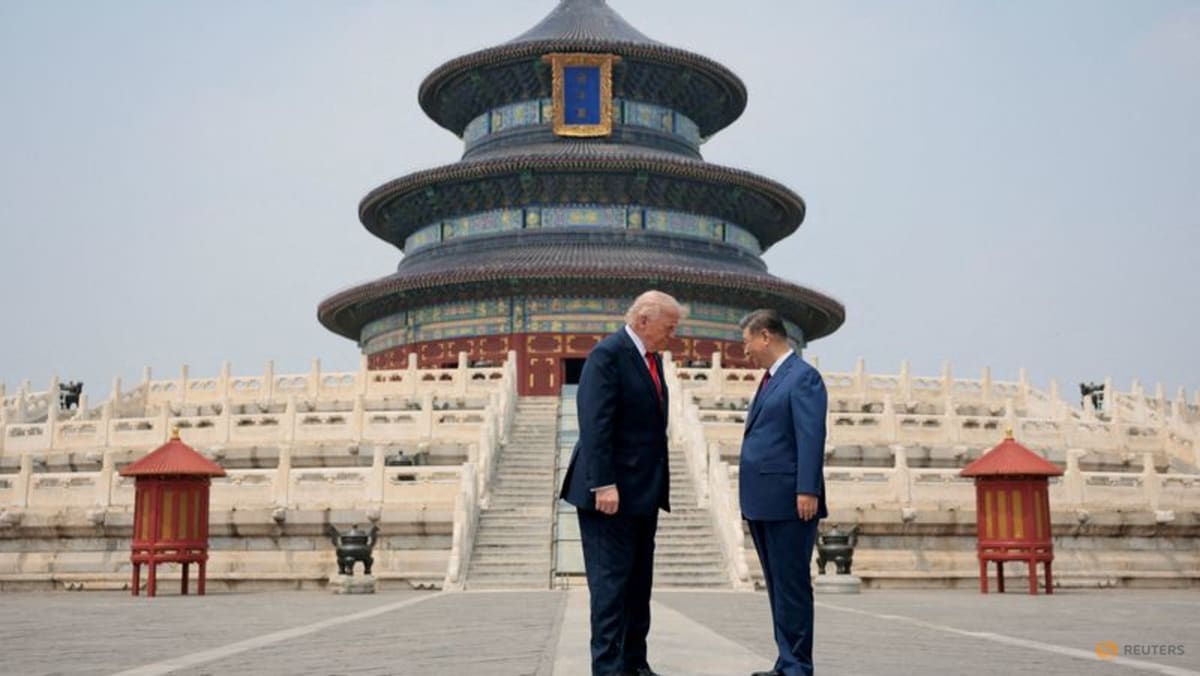
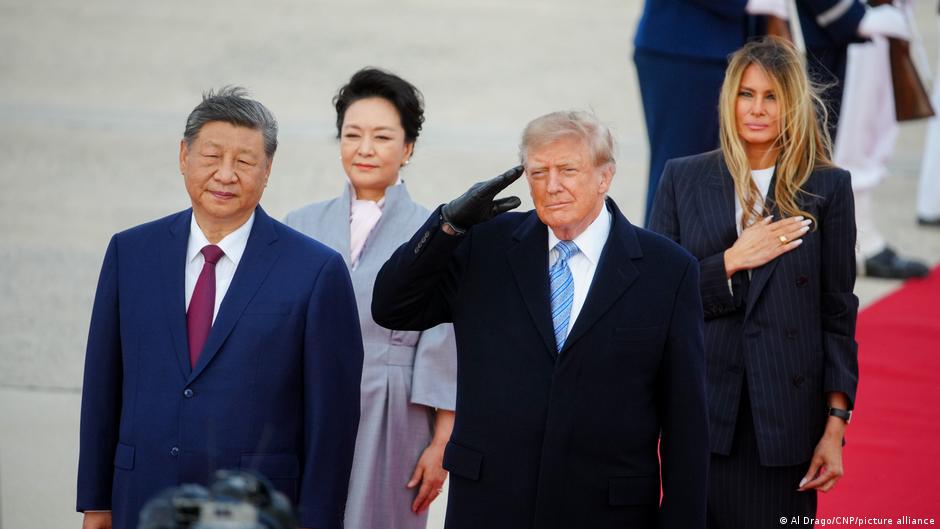
Centre · 1Trump is scheduled to meet Xi on the sidelines of the APEC summit in Shenzhen on 18-19 November, their third face-to-face meeting this year, with a G20 summit in Miami on 14-15 December also expected. CNAN “Shenzhen, China, on Nov 18 and 19, and the Group of 20 summit in Miami on Dec 14 and 15.” Read at CNA ↗
Every sentence links to the reporting it rests on. The pill in front of each says where its sources sit: Left, Centre or Right when one side supplies at least half of them, Mixed when they are evenly split. The number is how many outlets it cites.
Left1 outlet
- Framing
- Al Jazeera relays the Treasury statement and frames it as the US urging China to 'honour' the Busan deal, with farm-purchase detail.
- For example
-
“US urges China to honour Busan trade deal commitments” — Al Jazeera
Centre5 outlets
- Framing
- Anadolu and SCMP relay the Treasury readout; CNA and the Times of India add the USTR statement, Xinhua's account of China's 'serious concern', and rare earth and farm disputes.
- For example
-
“China expressed "serious concern" over recent US trade restrictions targeting Beijing” — CNA
“China has rejected the US claims that it is not meeting its promises on rare earth supplies.” — The Times of India
Right1 outlet
- Framing
- The Straits Times (Bloomberg copy) leads with China's 'serious concerns' and market risk, adding tariff-exclusion expiry and midterm politics.
- For example
-
“Any inaction or destabilising of the agreement by the US or Beijing risks reviving uncertainty” — The Straits Times
What every side reports
- Bessent and Greer spoke by phone with He Lifeng on 6 November 2026.
- Bessent said continued progress depends on concrete results and that the US will closely assess China's implementation.
- The Busan arrangement was reached by Trump and Xi in October 2025.
Where accounts differ
-
Format of the exchange with He Lifeng
- Left
- Al Jazeera says the US officials 'met' He Lifeng, though it refers to discussions announced by the Treasury.
- Centre
- Anadolu and the SCMP describe a phone call.
-
Bessent urged China to fully and immediately honor its Busan commitments and raised concerns about recent Chinese actions.
Reported- Reports 6
- Al Jazeera, Anadolu Agency, CNA, South China Morning Post, The Times of India, The Straits Times
-
The Busan trade arrangement was reached by Trump and Xi in October 2025 as a truce.
Reported- Reports 6
- Al Jazeera, Anadolu Agency, CNA, South China Morning Post, The Times of India, The Straits Times
-
China raised serious concern over recent US trade restrictions during the call.
Reported- Reports 3
- CNA, The Times of India, The Straits Times
Scott Bessent person
Says China must fully and immediately honor its Busan commitments and that progress depends on concrete results.
“I emphasized the importance of China fully and immediately honoring its commitments” — Anadolu Agency
He Lifeng person
No statement from He Lifeng or Beijing on the call is reported; China's Commerce Ministry said a day earlier it is open to more US farm purchases if the $30 billion reciprocal tariff cuts are implemented.
“provided that the agreed-upon reciprocal tariff reduction arrangement – covering $30 billion on each side – is implemented” — South China Morning Post
Left1 article
-
US urges China to honour Busan trade deal commitments
Neutral Relays the Treasury statement and China's Commerce Ministry conditions, adding farm-purchase background; says the officials 'met' He Lifeng.
Centre6 articles
-
US presses China to ‘immediately’ honor Busan trade commitments
Neutral Short report built on Bessent's X post and the Treasury readout, emphasising the US demand for immediate compliance.
-
US, China trade chiefs hold call ahead of Trump-Xi summit in Shenzhen
Neutral Places the call in the run-up to the Shenzhen summit, with background on the deal, rare earths and China's tariff-reduction condition.
-
US-China trade talks to continue as Washington presses Beijing to honour Busan deal
Critical Emphasises US complaints over rare earths, yttrium and farm purchases, noting China's denial.
-
CNAN ·
Ahead of Trump-Xi meetings, US presses China on trade pledges
Neutral Relays US statements and Xinhua's response with deal terms and upcoming summits.
Right1 article
-
The Straits TimesRC · · via Bloomberg
US raises concerns on China trade deal compliance
Mixed Bloomberg copy balancing both readouts with market and political risk context.
- 6 Nov 18:20 First Anadolu AgencyN US presses China to ‘immediately’ honor Busan trade commitments
- 6 Nov 18:34 +14m South China Morning PostN US, China trade chiefs hold call ahead of Trump-Xi summit in Shenzhen
- 6 Nov 23:00 +4h 40m Al JazeeraLC US urges China to honour Busan trade deal commitments
- 7 Nov 01:53 +7h 33m The Times of IndiaN US-China trade talks to continue as Washington presses Beijing to honour Busan deal
- 7 Nov 02:28 +8h 7m CNAN Ahead of Trump-Xi meetings, US presses China on trade pledges
- 7 Nov 02:30 +8h 9m The Straits TimesRC US raises concerns on China trade deal compliance via Bloomberg
- 7 Nov 04:44 +10h 23m Deutsche WelleN US asks China to uphold Busan trade deal commitments
- 11 Nov 02:34 +104h 14m South China Morning PostN Deal vs Deal? US, China trade calls to honour commitments before Trump-Xi summit
Times are when each article was published, or when we first saw it if the outlet gave no time.
Ask about this story
Loading…