Bessent says Iran cannot pay troops or get dollars as proxy funding is cut
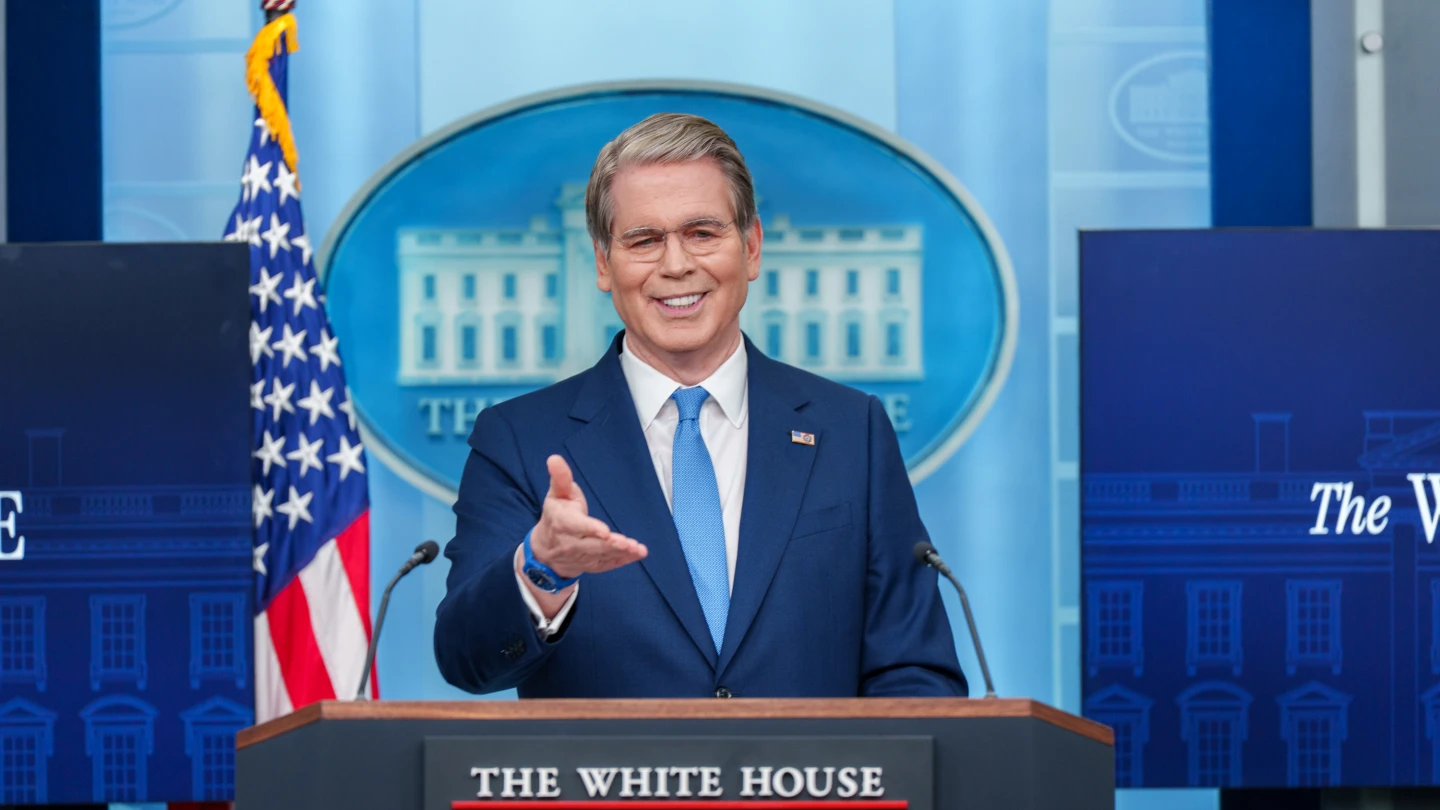
US Treasury Secretary Scott Bessent told CNBC that sanctions under "Operation Economic Outcast" leave Iran unable to pay its troops or obtain dollars and are cutting funding to its proxies. A Reuters report carried by the Jerusalem Post says Hezbollah has nonetheless received more cash from Iran.

1 / 2
The story, neutrally told
Right · 2US Treasury Secretary Scott Bessent said in a CNBC interview that Iran is unable to pay its troops or obtain dollars. JNSR ““They’re not able to pay their troops. Importantly, they’re not able to get dollars,” he said. “So they’re not able to replenish.”” Read at JNS ↗ The Jerusalem PostRC “they're not able to pay their troops," Bessent said. "Importantly, they're not able to get dollars, so they're not able to replenish."” Read at The Jerusalem Post ↗ Right · 2He said funding Iran provides to proxies including the Houthis, Hamas and Hezbollah is being cut off, calling that "kind of the tip of the spear when that money starts going down". The Jerusalem PostRC “That's kind of the tip of the spear when that money starts going down," he said.” Read at The Jerusalem Post ↗ JNSR “funding for its proxies, including the Houthis, Hamas and Hezbollah, is being cut off” Read at JNS ↗ Right · 1Bessent attributed this to "Operation Economic Outcast", a US sanctions campaign announced on 24 August that aims to cut Tehran's funding for the war, missile construction, cyberattacks and the Islamic Revolutionary Guard Corps (IRGC). The Jerusalem PostRC “The operation, which was announced August 24, aims to cut Tehran's funding for the war, missile construction, cyberattacks, and the Islamic Revolutionary Guard Corps (IRGC).” Read at The Jerusalem Post ↗
Right · 1He described the operation as "the toughest operation ever to isolate a single economy in the history of the world" and said internal US estimates show Iran's economy may contract by as much as 25 percent from March 2026 to March 2027, measured from when the blockade or conflict began. JNSR “He described “Operation Economic Outcast” as “the toughest operation ever to isolate a single economy in the history of the world.””“the economy may contract by as much as 25 percent” Read at JNS ↗ Right · 1Bessent said the pressure makes Iranian forces "unattentive to what's happening" and leaves the Ayatollah isolated. The Jerusalem PostRC “"It makes them unattentive to what's happening, and then the Ayatollah is isolated.” Read at The Jerusalem Post ↗ Right · 1In a post on X, Bessent also said Tehran is struggling to move money, that the IRGC is reportedly failing to pay its own troops, and that the US is cutting the regime's ability to fund the Houthis, Hamas and Hizballah. The Jerusalem PostRC “We are cutting the regime's ability to fund the Houthis, Hamas, and Hizballah.” Read at The Jerusalem Post ↗
Right · 1The Jerusalem Post noted that, despite Bessent's comments, two Lebanese security sources told Reuters that Hezbollah has spent three months preparing for a possible resumption of hostilities with Israel after receiving tens of millions of dollars from Iran, on top of about $200 million Reuters reported earlier this month. The Jerusalem PostRC “one of the sources, and another close to Hezbollah, said the group had received tens of millions of dollars from Iran to help boost its military capabilities.”“That is in addition to around $200 million that the terror group previously received from Tehran, which Reuters reported earlier this month.” Read at The Jerusalem Post ↗ Right · 1The paper also recalled an earlier assessment by two Washington Institute for Near East Policy experts, who said the operation falls short of its potential without greater coordination with international partners, alongside the ongoing blockade of the Strait of Hormuz. The Jerusalem PostRC “Operation Economic Outcast is falling short of its full potential without greater coordination with international partners” Read at The Jerusalem Post ↗ Right · 2The two outlets differ on the day of the interview: JNS says Wednesday and the Jerusalem Post says Thursday. Bessent's claims about Iran's finances are his own and were not independently verified in the coverage. JNSR “told CNBC on Wednesday that Iran is unable to pay its troops” Read at JNS ↗ The Jerusalem PostRC “said in a Thursday interview with CNBC” Read at The Jerusalem Post ↗
Every sentence links to the reporting it rests on. The pill in front of each says where its sources sit: Left, Centre or Right when one side supplies at least half of them, Mixed when they are evenly split. The number is how many outlets it cites.
Left0 outlets
No left outlet in our sources has covered this story yet.
Centre0 outlets
No centre outlet in our sources has covered this story yet.
Right2 outlets
- Framing
- Both Israeli right-leaning outlets relay Bessent's claims as the main news, with little independent verification. The Jerusalem Post adds context that complicates the claim.
- Emphasis
- Bessent's statements on troop pay, dollar access and proxy funding; the JNS piece adds the 25 percent contraction estimate; the Jerusalem Post adds Hezbollah's rearmament and expert criticism of the sanctions.
- Leaves out or plays down
- Neither outlet quotes Iranian officials or independent economists. JNS omits the Hezbollah cash reports.
- Charged language
- “Iranian regime”“terror organization”“campaign of terror”
- For example
-
“Iran is unable to pay its troops or obtain dollars, while funding for its proxies, including the Houthis, Hamas and Hezbollah, is being cut off.” — JNS
“However, despite Bessent's comments, Hezbollah has reportedly spent three months preparing for a possible resumption of hostilities with Israel” — The Jerusalem Post
What every side reports
- Bessent told CNBC Iran is unable to pay its troops or get dollars.
- He said funding to the Houthis, Hamas and Hezbollah is being cut off.
- The pressure campaign is called Operation Economic Outcast.
Where accounts differ
-
Whether Iran's funding of proxies is actually being cut
- Right
- Bessent says proxy funding is being cut off; the Jerusalem Post adds Reuters reporting that Hezbollah received tens of millions of dollars from Iran recently.
-
Day of the CNBC interview
- Right
- JNS says Wednesday; the Jerusalem Post says Thursday.
Scott Bessent person
Presents Operation Economic Outcast as working: Iran cannot pay troops or get dollars, proxy funding is falling, and the economy could shrink by up to 25 percent.
“the economy may contract by as much as 25 percent” — JNS
“We will not allow Tehran to continue financing their campaign of terror.” — The Jerusalem Post
Iran place
No Iranian response is given in the coverage; Iran is described as under sanctions and a blockade, with the IRGC reportedly failing to pay troops.
“Tehran is struggling to move money, while the IRGC is reportedly failing to pay its own troops.” — The Jerusalem Post
Left0 articles
No coverage yet.
Centre0 articles
No coverage yet.
Right2 articles
-
JNSR ·
Bessent: Iran unable to pay troops, funding for proxies being cut off
Neutral Short straight report of Bessent's CNBC remarks, including his 25 percent contraction estimate and superlative description of the operation.
-
Iran unable to pay troops, fund proxies under Operation Economic Outcast, Bessent says
Mixed Reports Bessent's claims in the regime-pressure frame but adds Reuters reporting on Iranian cash to Hezbollah and expert criticism of the sanctions.
- 29 Oct 12:34 First JNSR Bessent: Iran unable to pay troops, funding for proxies being cut off
- 30 Oct 03:51 +15h 17m The Jerusalem PostRC Iran unable to pay troops, fund proxies under Operation Economic Outcast, Bessent says
Times are when each article was published, or when we first saw it if the outlet gave no time.
Ask about this story
Loading…