Blue Lights returns for a fourth series, with police-community tensions at its centre
The BBC drama Blue Lights, set in Belfast, began its fourth series on BBC One. Coverage links it to real tensions around policing in Northern Ireland and, in the Guardian's review, to race riots and current politics.
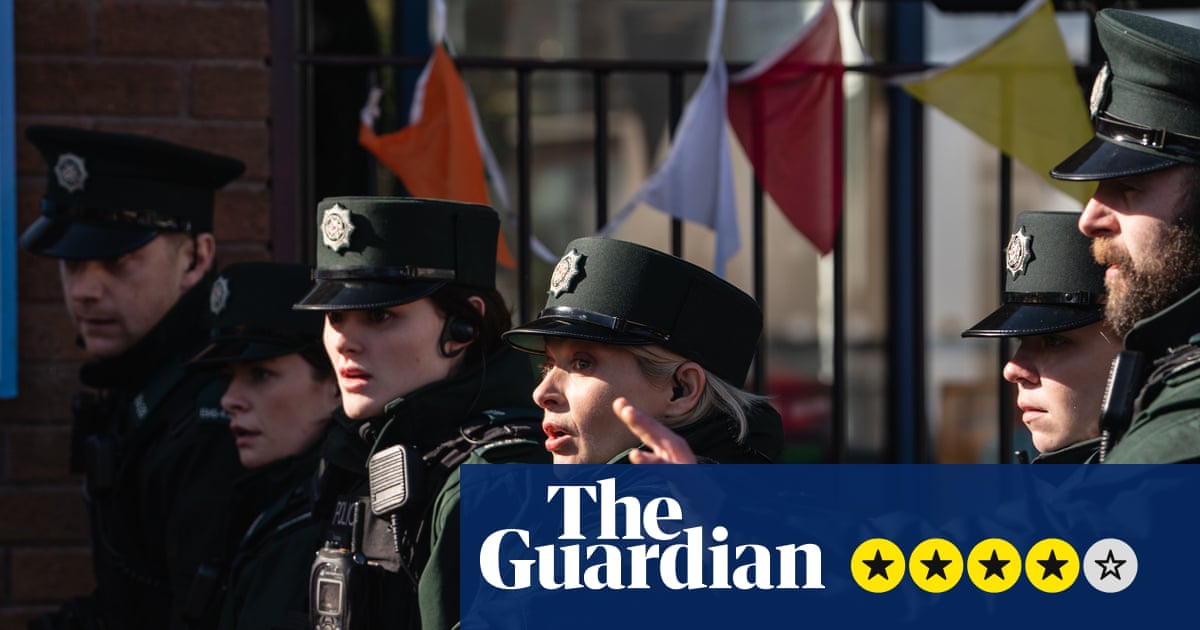
1 / 1
The story, neutrally told
The fourth series of Blue Lights, a Bafta-winning BBC drama about officers at the fictional Blackthorn Station in Belfast, started on BBC One at 21:00 BST on 29 September. BBC NewsN “Series four of Blue Lights starts at 21:00 BST on BBC One and is available to watch on iPlayer.”“The Bafta-winning series follows police officers working at the fictional Blackthorn Station in Belfast.” Read at BBC News ↗ BBC News says the show dramatises distrust of police in some communities. It ties this to a weekend when officers had to stop an Orange Order march on the disputed Garvaghy Road route. BBC NewsN “Many scenes in Blue Lights highlight the distrust of, and hostility towards, the police in some communities.”“officers had to prevent a march by Protestant Orangemen through a largely Catholic area” Read at BBC News ↗ Actor Katherine Devlin plays Annie Conlon, an officer from a Catholic family who has to leave home after death threats. Devlin says the series explores what home means to her. BBC NewsN “Devlin plays Annie Conlon, whose storyline deals with her having to move away from home as a result of death threats because she's from a Catholic family.” Read at BBC News ↗
The BBC article also reports that the Police Service of Northern Ireland had its lowest number of Catholic applicants in over a decade earlier this year. Catholic representation in the force has risen from 8% to 32% since 2001. BBC NewsN “The Police Service of Northern Ireland (PSNI) had its lowest number of Catholic applicants in more than a decade earlier this year”“At the time, only 8% of the force was from that background. It's now at 32%.” Read at BBC News ↗ Chief Constable Jon Boutcher said the PSNI is committed to being more representative. He blamed persistent criticism and dissident paramilitary views for deterring applicants, and said a new recruitment campaign would launch in the coming weeks. BBC NewsN “I am deeply concerned at persistent and often unjustified criticism and the outdated and unsupported views of dissident paramilitaries remaining as barriers to people seeing themselves having a career in the police” Read at BBC News ↗ The Guardian's review praises the series and says it now feels explicitly topical. The new run opens with police facing an anti-immigrant mob at a refugee centre fete. The GuardianLC “Our fourth visit to Blackthorn station pitches us and the police into a race riot.”“it’s never felt as if it is reading today’s national news headlines with the same appalled gaze as the rest of us. Until now.” Read at The Guardian ↗
The reviewer says the show still depicts a community with "localised hatred of the police" that has a large amount of historical justification. Other plotlines include the threatened closure of the station and the unresolved murder of a colleague from season one. The GuardianLC “the localised hatred of the police that has a large amount of historical justification on its side”“Blackthorn is threatened with closure by high-ups who claim its metrics aren’t strong enough” Read at The Guardian ↗
Every sentence links to the reporting it rests on.
Left1 outlet
- Framing
- A glowing episode-led TV review presenting the series as newly topical, with race riots and the far right as the lead.
- Emphasis
- Anti-immigrant rioting, an online far-right influencer, institutional failure and the show's strengths as a thriller and drama.
- Leaves out or plays down
- Does not mention PSNI recruitment figures, the Garvaghy Road dispute or official police responses.
- Charged language
- “neo-fascists”“racist influencer”“TV’s most thrilling cop show”
- For example
-
“Pitting the police against neo-fascists – to be clear, Blue Lights is set in a world where these two groups are entirely in opposition” — The Guardian
“Blue Lights finds one of its most disturbing antagonists yet in racist influencer Katie” — The Guardian
Centre1 outlet
- Framing
- A news feature linking the drama to real-world policing issues in Northern Ireland, using cast interviews, recruitment data and a PSNI statement.
- Emphasis
- Police-community relations, Catholic recruitment, the Garvaghy Road march, and the cast's local roots and authenticity.
- Leaves out or plays down
- Does not discuss the series' new riot and anti-immigrant storyline or offer a critical assessment of the show.
- Charged language
- “controversial Garvaghy Road parade route”
Right0 outlets
No right outlet in our sources has covered this story yet.
What every side reports
- Blue Lights is a BBC drama set around a Belfast police station and is back for a fourth series.
- The series portrays hostility towards police in parts of Northern Ireland.
Blue Lights other
In the BBC piece the show is presented as authentic, reflecting how people in Northern Ireland relate to police. The Guardian presents it as a sharp, gripping drama that has moved into current politics.
“It's really lovely just to see the amount of people who see themselves in the characters,” — BBC News
“And, as Blue Lights pivots to deal with awfulness that’s bang up to date, it’s sharp enough.” — The Guardian
Left1 article
-
The GuardianLC · · Opinion
Blue Lights review – TV’s most thrilling cop show turns up the heat
Celebratory Enthusiastic review saying the new series is at its most topical, confronting riots and far-right agitation.
Centre1 article
-
Blue Lights: The police drama hitting home in Northern Ireland
Sympathetic Cast-led feature that connects the drama to real policing tensions and recruitment challenges in Northern Ireland.
Right0 articles
No coverage yet.
- 29 Sep 04:24 First BBC NewsN Blue Lights: The police drama hitting home in Northern Ireland
- 29 Sep 22:00 +17h 35m The GuardianLC Blue Lights review – TV’s most thrilling cop show turns up the heat Opinion
Times are when each article was published, or when we first saw it if the outlet gave no time.