BOJ's Ueda sees 'some upside risks' to inflation in IMF appearance
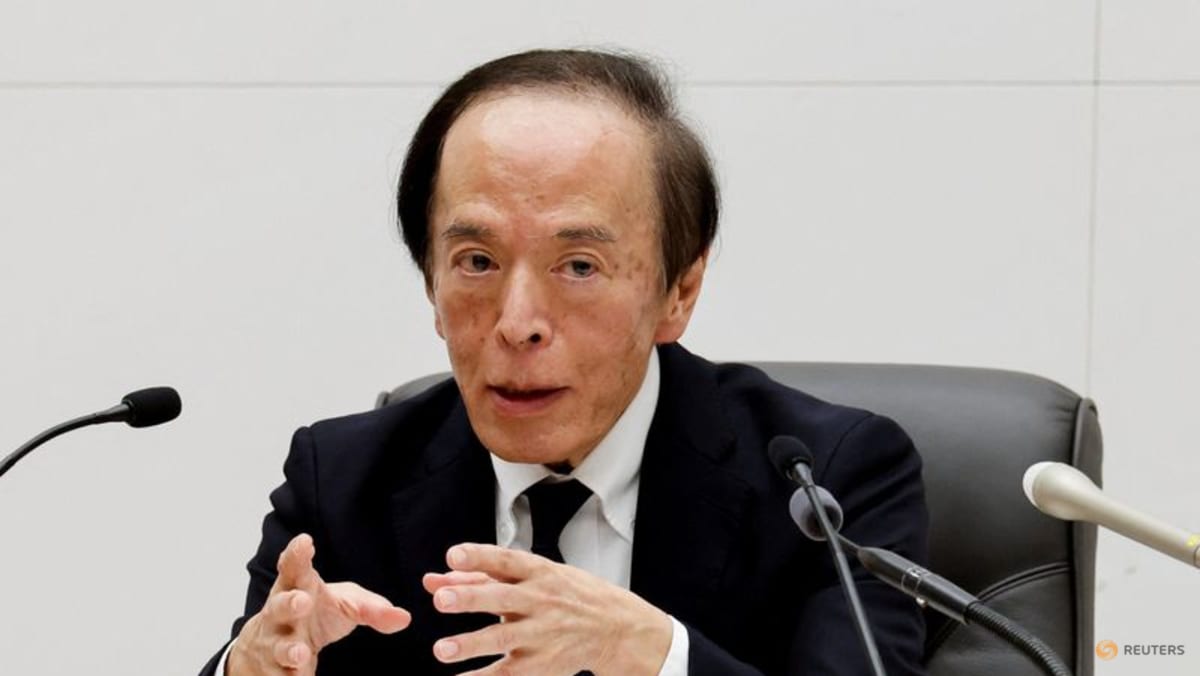
Bank of Japan Governor Kazuo Ueda told an IMF event on 6 November that underlying inflation should stay near 2%, with some upside risks, and that moderate inflation is reviving corporate investment.
1 / 2
The story, neutrally told
Centre · 1Bank of Japan Governor Kazuo Ueda said on Friday 6 November that the central bank expects underlying inflation to stay around its 2 per cent target but sees "some upside risks." CNAN “Bank of Japan Governor Kazuo Ueda said on Friday the central bank expects underlying inflation to stay around its 2 per cent target but recognizes there are "some upside risks."” Read at CNA ↗ Centre · 2He spoke at an International Monetary Fund event in Washington; CNA described it as a seminar, and Anadolu Agency as the Michel Camdessus Central Banking Lecture. CNAN “"We are in an equilibrium with wages growing at a level consistent with 2 per cent inflation," Ueda said at a seminar hosted by the International Monetary Fund.” Read at CNA ↗ Anadolu AgencyN “Delivering the Michel Camdessus Central Banking Lecture at the International Monetary Fund, Ueda highlighted” Read at Anadolu Agency ↗ Centre · 1Ueda said rising energy-related prices were beginning to hit consumer inflation, with price growth seen accelerating further into early next year, and that wages are growing at a level consistent with 2 per cent inflation. CNAN “The rise in prices of energy-related products was beginning to hit consumer inflation with price growth seen accelerating further into early next year, Ueda said.” Read at CNA ↗
Centre · 1He said 2 per cent inflation has yet to become a social norm in Japan, and that the BOJ's goal now is to anchor underlying inflation around the target. CNAN “But the BOJ's 2 per cent inflation has yet to become a social norm in Japan, Ueda said, adding that the central bank's goal now was to anchor underlying inflation around its target.” Read at CNA ↗ Centre · 1Ueda said the BOJ is watching other central banks' actions "very, very carefully" because they affect asset prices, including exchange rates and interest rates, and reveal how those banks view their economies. CNAN “He also said the BOJ was looking at the actions of other central banks "very, very carefully," as they affect asset prices including foreign exchange rates and interest rates.” Read at CNA ↗ Centre · 1On unconventional policy tools, he said they had some positive effects but were not perfect substitutes for cutting rates from positive territory, and that the BOJ may have to use them again depending on the severity of an economic shock, while trying to minimise negative effects including on market functioning. CNAN “The BOJ may be obliged to deploy unconventional policy tools again depending on the severity of the economic shock that may hit Japan, Ueda said.” Read at CNA ↗
Centre · 1Anadolu Agency focused on the lecture's investment theme: Ueda said the return of moderate inflation is reawakening corporate risk appetite and driving domestic investment, with post-pandemic business fixed investment surpassing its early-1990s peak. Anadolu AgencyN “Bank of Japan Governor Kazuo Ueda said on Friday that the return of moderate inflation is reawakening corporate risk appetite and driving domestic investment.” Read at Anadolu Agency ↗ Centre · 1He said bank lending has grown by more than 5% recently, the fastest pace in three decades, and that a BOJ survey found more than 70% of firms invested more actively at home in 2023–2024, mainly because of acute labour shortages that push firms toward automation, decarbonisation and digital transformation. Anadolu AgencyN “According to a Bank of Japan survey, more than 70% of firms reported investing more actively at home in 2023–2024, driven primarily by acute labor shortages.” Read at Anadolu Agency ↗ Centre · 1Ueda said stronger domestic investment could help realise a long-held vision of domestic demand-led adjustment by narrowing the corporate saving surplus, while net primary income from foreign investments, above 6% of GDP, will remain a lasting pillar of Japan's external accounts. Anadolu AgencyN “However, he stressed that net primary income from foreign investments, which exceeds 6% of gross domestic product, will remain an enduring pillar of Japan's external accounts.” Read at Anadolu Agency ↗
Every sentence links to the reporting it rests on. The pill in front of each says where its sources sit: Left, Centre or Right when one side supplies at least half of them, Mixed when they are evenly split. The number is how many outlets it cites.
Left0 outlets
No left outlet in our sources has covered this story yet.
Centre2 outlets
- Framing
- Both centre outlets report Ueda's IMF remarks straight, CNA leading on the inflation outlook and policy risks, Anadolu on corporate investment and savings.
- Emphasis
- CNA: upside risks, energy prices, other central banks, unconventional tools. Anadolu: investment, bank lending, labour shortages, saving-investment balance.
- Leaves out or plays down
- CNA omits the investment and lending data; Anadolu omits the inflation-risk and policy-tool remarks.
- For example
-
“recognizes there are "some upside risks."” — CNA
“the return of moderate inflation is reawakening corporate risk appetite and driving domestic investment.” — Anadolu Agency
Right0 outlets
No right outlet in our sources has covered this story yet.
What every side reports
- Ueda spoke at an International Monetary Fund event on Friday 6 November.
- Ueda spoke about moderate inflation in Japan and the BOJ's 2% goal.
Kazuo Ueda person
Says underlying inflation should stay near 2% with some upside risks, and that moderate inflation is reviving corporate investment.
“recognizes there are "some upside risks."” — CNA
“the return of moderate inflation is reawakening corporate risk appetite and driving domestic investment.” — Anadolu Agency
Left0 articles
No coverage yet.
Centre2 articles
-
CNAN ·
BOJ chief Ueda sees 'some upside risks' to inflation
Neutral Straight report of Ueda's remarks on inflation risks, other central banks and unconventional tools.
-
Moderate inflation revives Japan's corporate risk appetite, BoJ governor says
Neutral Reports the lecture's optimistic investment angle, with lending and survey figures.
Right0 articles
No coverage yet.
- 6 Nov 17:25 First CNAN BOJ chief Ueda sees 'some upside risks' to inflation
- 6 Nov 19:47 +2h 22m Anadolu AgencyN Moderate inflation revives Japan's corporate risk appetite, BoJ governor says
Times are when each article was published, or when we first saw it if the outlet gave no time.
Ask about this story
Loading…