Boots launches private SureLeaf medical cannabis service amid debate over evidence and risks
Boots has launched SureLeaf, a private medical cannabis service for adults aged 25 and over. Coverage focuses on the thin evidence for pain, anxiety and insomnia, the cost, and the risks of THC.
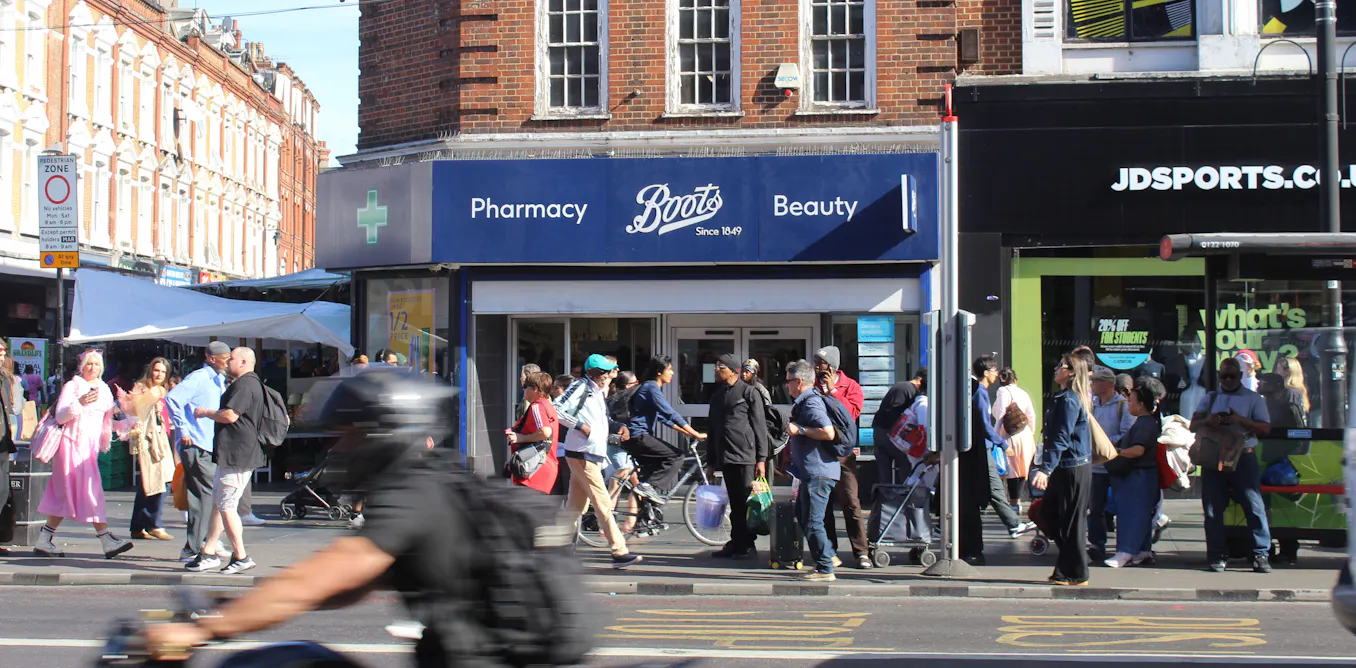

1 / 2
The story, neutrally told
Mixed · 2Boots has launched a private medical cannabis service called SureLeaf, offering assessments to adults aged 25 and over. The ConversationLC “In November 2026, the pharmacy chain launched its SureLeaf clinic, which offers private assessments to adults aged 25 and over.” Read at The Conversation ↗ Daily MailR “The online-only service, called SureLeaf, will be available to people aged 25 and over” Read at Daily Mail ↗ Left · 1It covers conditions including generalised anxiety disorder, insomnia and chronic pain such as fibromyalgia, arthritis, cancer-related pain and endometriosis, and patients must have tried conventional treatments without enough relief. The ConversationLC “It covers conditions including generalised anxiety disorder, insomnia and chronic pain, such as fibromyalgia, arthritis, cancer-related pain and endometriosis.”“Patients must have tried conventional treatments without getting enough relief.” Read at The Conversation ↗ Right · 1The Daily Mail reports the service is online-only and requires people to have found no help from at least two conventional treatments, followed by an online assessment and a video consultation with a consultant. Daily MailR “who have found no help from at least two conventional treatments for their condition”“they have a video consultation with a consultant in the relevant speciality” Read at Daily Mail ↗
Right · 1According to the Daily Mail, patients may be prescribed cannabis flower, inhaled with a vapouriser, or an oil, and any prescription is reviewed by a multidisciplinary team. Daily MailR “either cannabis flower (which is inhaled using a ‘medically approved vapouriser’) or an oil, which is placed on the tongue”“Any prescription issued will be reviewed by a multidisciplinary team.” Read at Daily Mail ↗ Right · 1The Daily Mail gives the price of an initial month trial as £89, covering the assessment, a 10ml starter dose and an end-of-month check, and a further £99 for an annual package with four follow-up appointments; the medicine itself costs extra. Daily MailR “The price for an initial month trial is £89, which covers the assessment, 10ml starter dose and end-of-month check.”“Further checks are available, although this comes at an extra cost – as does the medicine itself.” Read at Daily Mail ↗ Left · 1Medical cannabis has been legal on prescription in the UK since 2018, but it remains mostly a private treatment. Private prescribing rose from about 350,000 prescriptions in 2023–24 to more than 830,000 in 2024–25, while the NHS issued just 70 CBD prescriptions in 2025. The ConversationLC “Private prescribing has risen rapidly, from about 350,000 prescriptions in 2023–24 to more than 830,000 in 2024–25. In 2025, the NHS issued just 70 prescriptions for CBD.” Read at The Conversation ↗
Left · 1NICE guidance recommends cannabis-based medicines on the NHS for only a few specific conditions, and The Conversation's author, Kingston University's Dipa Kamdar, says the Boots service does not change national clinical guidance or guarantee wider NHS access. The ConversationLC “guidance from the National Institute for Health and Care Excellence recommends cannabis-based medicines for only a few specific conditions.”“its launch does not change national clinical guidance or guarantee wider NHS access.” Read at The Conversation ↗ Left · 1On the evidence, Kamdar says the clearest benefit is in some severe forms of epilepsy and, for nabiximols, in multiple sclerosis spasticity, while evidence for chronic pain is weaker and evidence for anxiety and insomnia is limited. The ConversationLC “The clearest benefit is in some severe forms of treatment-resistant epilepsy.”“recent reviews have found little evidence that medical cannabis improves sleep quality or duration.” Read at The Conversation ↗ Right · 1The Daily Mail reports a UK study in Rheumatology found 60% of 240 patients with hypermobility-related pain had clinically meaningful pain reductions after two years, but a JAMA review this year found evidence does not support cannabis 'for most conditions for which it is promoted'. Daily MailR “found 60 per cent of 240 patients with pain associated with hypermobility who took medical cannabis experienced ‘clinically meaningful pain reductions’ after two years of use.”“the evidence from trials does not support the use of cannabis ‘for most conditions for which it is promoted’.” Read at Daily Mail ↗
Right · 1King's College London researchers quoted by the Daily Mail warn about THC. Sir Robin Murray says some private formulations 'are even more potent than the street skunk', and Prof Marta di Forti says high doses can worsen anxiety and that private clinics on average prescribe 22% THC, against about 16% in skunk. Daily MailR “some formulations prescribed within the UK at private clinics ‘are even more potent than the street skunk’”“private clinics on average issue prescriptions for medical cannabis that is 22 per cent THC” Read at Daily Mail ↗ Right · 1The experts also raise psychosis, addiction and withdrawal risks. Edward Chesney challenged Boots' website claim that addiction risk is 'low', citing research that 60% of medical cannabis users have moderate to severe withdrawal problems. Daily MailR “research has shown 60 per cent of people using medical cannabis have moderate to severe withdrawal problems.”“On its website Boots says the risk is ‘low’, in fact ‘lower than many commonly prescribed pain medicines’” Read at Daily Mail ↗ Right · 1Dr Mikael Sodergren of Imperial College London, chief medical officer of Curaleaf International, which runs private clinics, welcomed Boots' involvement as likely to raise awareness, while Murray predicted other pharmacies will follow and that psychiatrists will 'pick up the pieces'. Daily MailR “‘Having a high-profile company like Boots involved is going to help change that. I think that’s a good thing,’”“other pharmacies will follow Boots’ lead” Read at Daily Mail ↗
Left · 1Kamdar notes side-effects including dizziness, drowsiness and mood changes, possible dependence with THC, and interactions of CBD with other medicines, and says a high-street name may prompt more conversations but cannot close the gap between those who can pay and those who cannot. The ConversationLC “Common side-effects include dizziness, drowsiness, vomiting, impaired concentration and changes in mood.”“What it cannot do, on its own, is close the gap between those who can pay and those who cannot.” Read at The Conversation ↗
Every sentence links to the reporting it rests on. The pill in front of each says where its sources sit: Left, Centre or Right when one side supplies at least half of them, Mixed when they are evenly split. The number is how many outlets it cites.
Left1 outlet
- Framing
- An explanatory academic piece asking whether pharmacies will make medical cannabis mainstream, centred on evidence and equity of access.
- Emphasis
- Weak evidence for pain, anxiety and insomnia, the NHS-private gap in prescribing, cost as a barrier, and the fact that the launch changes no NHS guidance.
- Leaves out or plays down
- Gives no prices, no details of the online-only format or product types, and none of the psychosis and potency concerns.
- Charged language
- “huge gap”
- For example
-
“The result is a huge gap.” — The Conversation
“Could Boots help bring these medicines into mainstream healthcare, or will they stay out of reach for anyone who cannot pay?” — The Conversation
Centre0 outlets
No centre outlet in our sources has covered this story yet.
Right1 outlet
- Framing
- A consumer-health warning piece using expert voices on who could be harmed by medical cannabis as Boots launches its service.
- Emphasis
- THC potency compared with street skunk, psychosis, addiction and withdrawal risks, plus practical details such as price and how the service works.
- Leaves out or plays down
- Does not mention the NHS-private prescribing gap or NICE guidance, and gives limited space to the evidence for epilepsy and spasticity.
- Charged language
- “street skunk”“hook you in”“pick up the pieces”
- For example
-
“‘If it contains THC then it has the potential to hook you in.” — Daily Mail
“we psychiatrists will be left to pick up the pieces with more patients with more anxiety, more depression and more psychosis” — Daily Mail
What every side reports
- Boots has launched a private medical cannabis service called SureLeaf for adults aged 25 and over.
- It targets chronic pain, anxiety and insomnia in patients who have not found relief from conventional treatments.
- Medical cannabis has been legal on prescription in the UK since 2018.
- The evidence for cannabis in pain, anxiety and insomnia is limited, and THC carries risks.
Where accounts differ
-
Whether the Boots launch is positive or worrying
- Left
- The Conversation's author treats it as a visible step that may prompt more conversations, but says it cannot close the access gap between those who can pay and those who cannot.
- Right
- The Daily Mail quotes psychiatrists warning of psychosis, addiction and 'more patients with more anxiety', alongside an industry doctor who calls Boots' involvement 'a good thing'.
Boots organisation
Boots presents SureLeaf as a clinician-led service with specialist assessment, independent review and regular check-ups; its website says the addiction risk is 'low'.
“On its website Boots says the risk is ‘low’, in fact ‘lower than many commonly prescribed pain medicines’” — Daily Mail
“Those who qualify are assessed by a specialist, have their case reviewed independently” — The Conversation
NHS England organisation
NHS England is not quoted; the coverage notes the NHS issued only 70 CBD prescriptions in 2025 and that the launch does not change NHS access.
“In 2025, the NHS issued just 70 prescriptions for CBD.” — The Conversation
Left1 article
-
Boots is moving into medical cannabis – will pharmacies make it mainstream?
Neutral Measured expert explainer weighing the limited evidence against rising private demand and unequal access.
Centre0 articles
No coverage yet.
Right1 article
-
Alarmist Warning-led health feature foregrounding psychosis and addiction risks, with some balancing views from a clinic-linked doctor.
- 23 Nov 14:58 First The ConversationLC Boots is moving into medical cannabis – will pharmacies make it mainstream?
- 24 Nov 01:14 +10h 16m Daily MailR What's really inside medical cannabis: As Boots launches its service, experts reveal whether taking the drug medically can really ease your pain... and the people who could be left with psychiatric and addiction problems
Times are when each article was published, or when we first saw it if the outlet gave no time.
Ask about this story
Loading…