Brazil-China trade hits record as China buys half of Brazil's crude exports
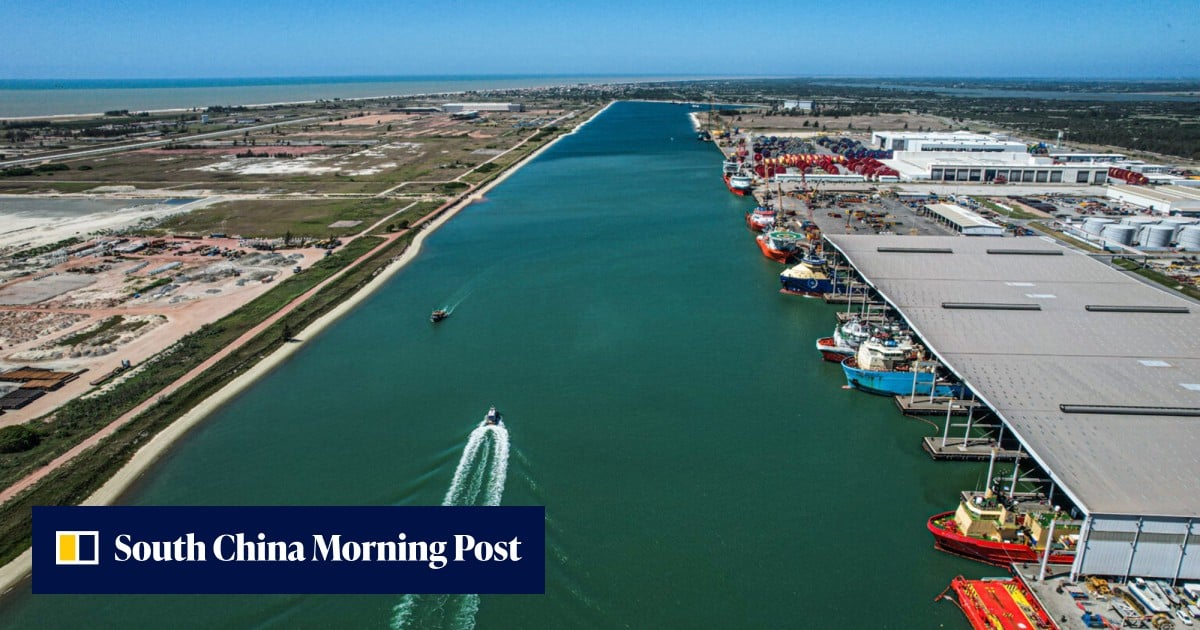
Brazil-China trade reached a record of about US$142-143 billion in the first nine months of 2026, according to the Brazil-China Business Council, driven by Brazilian crude sales after the Iran war disrupted Gulf supply through the Strait of Hormuz.
1 / 2
The story, neutrally told
Mixed · 2Trade between Brazil and China reached a record of about US$143 billion in the first nine months of 2026, according to a report by the Brazil-China Business Council (Breitbart gives the figure as $142 billion). South China Morning PostN “Trade between Brazil and China reached a record US$143 billion in the first nine months of the year” Read at South China Morning Post ↗ BreitbartR “the trade volume between Brazil and China hit a record $142 billion by September 2026” Read at Breitbart ↗ Mixed · 2Brazilian exports to China rose 12 per cent to US$84.7 billion and imports from China grew 9.9 per cent to US$58.6 billion, leaving a US$26.1 billion surplus for Brazil, equal to 42 per cent of its surplus with the world. South China Morning PostN “Brazilian exports to China rose 12 per cent to US$84.7 billion between January and September, while imports from China grew 9.9 per cent to US$58.6 billion” Read at South China Morning Post ↗ BreitbartR “Brazil is running a $26.1 billion trade surplus with China” Read at Breitbart ↗ Mixed · 2Crude oil accounted for most of the gain: sales to China jumped 49 per cent to a record US$21.8 billion, as volumes rose 27 per cent and prices 16.8 per cent. South China Morning PostN “sales to China jumping 49 per cent to a record US$21.8 billion as shipments rose 27 per cent by volume and prices climbed 16.8 per cent” Read at South China Morning Post ↗ BreitbartR “a record $21.8 billion in oil sales, a 49-percent increase over the previous year” Read at Breitbart ↗
Mixed · 2China took half of all the crude Brazil exported, far ahead of India, the next-largest buyer (SCMP says nearly seven times India's share); Breitbart puts Chinese purchases at over a million barrels a day against about 238,000 barrels a day for India. South China Morning PostN “China took half of all the crude Brazil exported, nearly seven times the share of India, the next-largest buyer.” Read at South China Morning Post ↗ BreitbartR “China is buying over a million barrels of Brazilian crude a day, sometimes surging to over 1.6 million, while India takes about 238,000 barrels per day (bpd).” Read at Breitbart ↗ Centre · 1The council said Middle East tensions and the risk to flows through the Strait of Hormuz increased the search for more stable suppliers, favouring Brazil; SCMP reports that Tehran effectively closed the strait after US and Israeli strikes on Iran began in late February, cutting a route that carried more than half of China's seaborne crude imports, according to Kpler. South China Morning PostN “increased the search for more stable suppliers, favouring Brazil, an important exporter of the commodity”“Tehran effectively closed the strait after US and Israeli strikes on Iran began in late February” Read at South China Morning Post ↗ Mixed · 2Oil is now 25.8 per cent of Brazilian exports to China, second only to soybeans at 35.4 per cent, and Rio de Janeiro state supplied 89 per cent of the crude sold to China. South China Morning PostN “Oil now makes up 25.8 per cent of Brazilian exports to China, up 6.3 percentage points from a year earlier and second only to soybeans at 35.4 per cent.” Read at South China Morning Post ↗ BreitbartR “Soybeans currently comprise 35.4 percent of Brazil’s exports to China, while oil has grown to 25.8 percent.” Read at Breitbart ↗
Mixed · 2Brazil's crude exports to all markets grew 28.7 per cent to US$43 billion, with sales to India up 165 per cent. South China Morning PostN “Brazil’s crude exports to all markets grew 28.7 per cent to US$43 billion, with sales to India up 165 per cent.” Read at South China Morning Post ↗ BreitbartR “growing by 165 percent so far this year, as part of an overall 28.7 percent increase in Brazilian oil exports to all buyers” Read at Breitbart ↗ Mixed · 2Both outlets say the boom is slowing: the council had reported in July that China took 54 per cent of Brazil's crude, and Gulf exports excluding Iran recovered to more than 81 per cent of pre-war levels in September after a June US-Iran agreement, though Iranian attacks on tankers have intensified this month; Breitbart says it remains to be seen whether renewed attacks will swing China back to Brazil. South China Morning PostN “Gulf oil exports excluding Iran recovered to more than 81 per cent of pre-war levels in September after a US-Iran agreement in June” Read at South China Morning Post ↗ BreitbartR “It remains to be seen if renewed Iranian attacks on commercial shipping in the strait will swing China’s oil interest back to Brazil as a dominant supplier.” Read at Breitbart ↗ Mixed · 2Beef was the biggest drag: sales to China fell 8.5 per cent to US$5.5 billion after Brazil filled its 1.1 million tonne quota under a Chinese safeguard, and shipments above it have paid a 55 per cent surtax since the start of October; Breitbart describes the measures as caps and punitive tariffs designed to protect China's domestic suppliers. South China Morning PostN “Shipments above it have paid a 55 per cent surtax since the start of this month” Read at South China Morning Post ↗ BreitbartR “due to Chinese caps and punitive tariffs on beef imports, designed to protect China’s domestic suppliers” Read at Breitbart ↗
Centre · 1On the import side, SCMP reports plug-in hybrid purchases from China up 89 per cent to US$2.87 billion and battery electric cars up 341 per cent to about US$2.4 billion, with imports collapsing in July when Brazil raised the duty to 35 per cent before recovering by September; it also notes new sorghum sales of US$170 million and a 339 per cent rise in spodumene exports. South China Morning PostN “purchases of plug-in hybrids up 89 per cent to US$2.87 billion and battery electric cars up 341 per cent to about US$2.4 billion”“Exports of spodumene, a lithium-bearing mineral, rose 339 per cent to US$172.3 million” Read at South China Morning Post ↗ Right · 1Breitbart adds that analysts said Brazil lacks the capacity to fully replace lost Gulf supply, that Brazilian crude suits Asian refineries, and that Japan and South Korea have expressed interest in buying more. BreitbartR “Japan and South Korea have also expressed interest in buying more Brazilian crude, and the Brazilian government has actively pursued them as customers.” Read at Breitbart ↗
Every sentence links to the reporting it rests on. The pill in front of each says where its sources sit: Left, Centre or Right when one side supplies at least half of them, Mixed when they are evenly split. The number is how many outlets it cites.
Left0 outlets
No left outlet in our sources has covered this story yet.
Centre1 outlet
- Framing
- Detailed trade-data report built on the council's analysis, treating oil as the main driver alongside beef, EVs and minerals.
- Emphasis
- Full breakdown of exports and imports, EV imports, beef quota, minerals and sorghum, with Kpler, Vortexa and EIA data.
- Leaves out or plays down
- Does not cover Brazil's pursuit of Japan and South Korea or analyst doubts over capacity.
- For example
-
“Tensions in the Middle East and the risk of disruption to oil flows through the Strait of Hormuz “increased the search for more stable suppliers, favouring Brazil, an important exporter of the commodity”” — South China Morning Post
Right1 outlet
- Framing
- Shorter piece presenting Brazil's oil windfall as China's loss of Gulf supply, with a geopolitical angle and a critical note on Chinese beef tariffs.
- Emphasis
- Oil volumes in barrels per day, India comparison, Japan and South Korea interest, Brazil's regional rivals.
- Leaves out or plays down
- Leaves out electric vehicle imports, the Brazilian duty increase, minerals and sorghum, and the quota detail behind the beef fall.
- Charged language
- “punitive tariffs”“Luckily for Brazil”“a shot in the arm”
- For example
-
“China’s loss of Persian Gulf oil due to the Strait of Hormuz crisis turned out to be Brazil’s gain” — Breitbart
What every side reports
- Brazil-China trade hit a record in the first nine months of 2026, per the Brazil-China Business Council.
- Brazil ran a US$26.1 billion surplus with China, with oil sales up 49 per cent to a record US$21.8 billion.
- China takes half of Brazil's oil exports, well ahead of India.
- Oil is 25.8 per cent of Brazil's exports to China, behind soybeans at 35.4 per cent.
- Beef sales to China fell 8.5 per cent.
- The oil boom is tapering as Gulf exports recover, with renewed Iranian attacks a risk.
Where accounts differ
-
Size of record trade total
- Centre
- SCMP: US$143 billion.
- Right
- Breitbart: $142 billion.
-
Cause of the beef decline
- Centre
- SCMP: Brazil filled its 1.1 million tonne quota under a Chinese safeguard, with a 55 per cent surtax above it.
- Right
- Breitbart: Chinese caps and punitive tariffs designed to protect China's domestic suppliers.
Left0 articles
No coverage yet.
Centre1 article
-
China bought half of Brazil's oil exports as Iran war shut Hormuz, driving sales to record
Neutral Data-heavy account of the council's report, with oil as the main driver and other sectors covered.
Right1 article
-
Brazil Logs Record Oil Sales to China After Strait of Hormuz Crisis
Mixed Frames the record as Brazil's gain from China's Gulf supply loss, and criticises Chinese beef tariffs as protectionist.
- 15 Oct 19:23 First South China Morning PostN China bought half of Brazil's oil exports as Iran war shut Hormuz, driving sales to record
- 16 Oct 23:04 +27h 41m BreitbartR Brazil Logs Record Oil Sales to China After Strait of Hormuz Crisis
Times are when each article was published, or when we first saw it if the outlet gave no time.
Ask about this story
Loading…