Bronze Age shipwreck up to 4,700 years old found off Turkey's Kekova Island
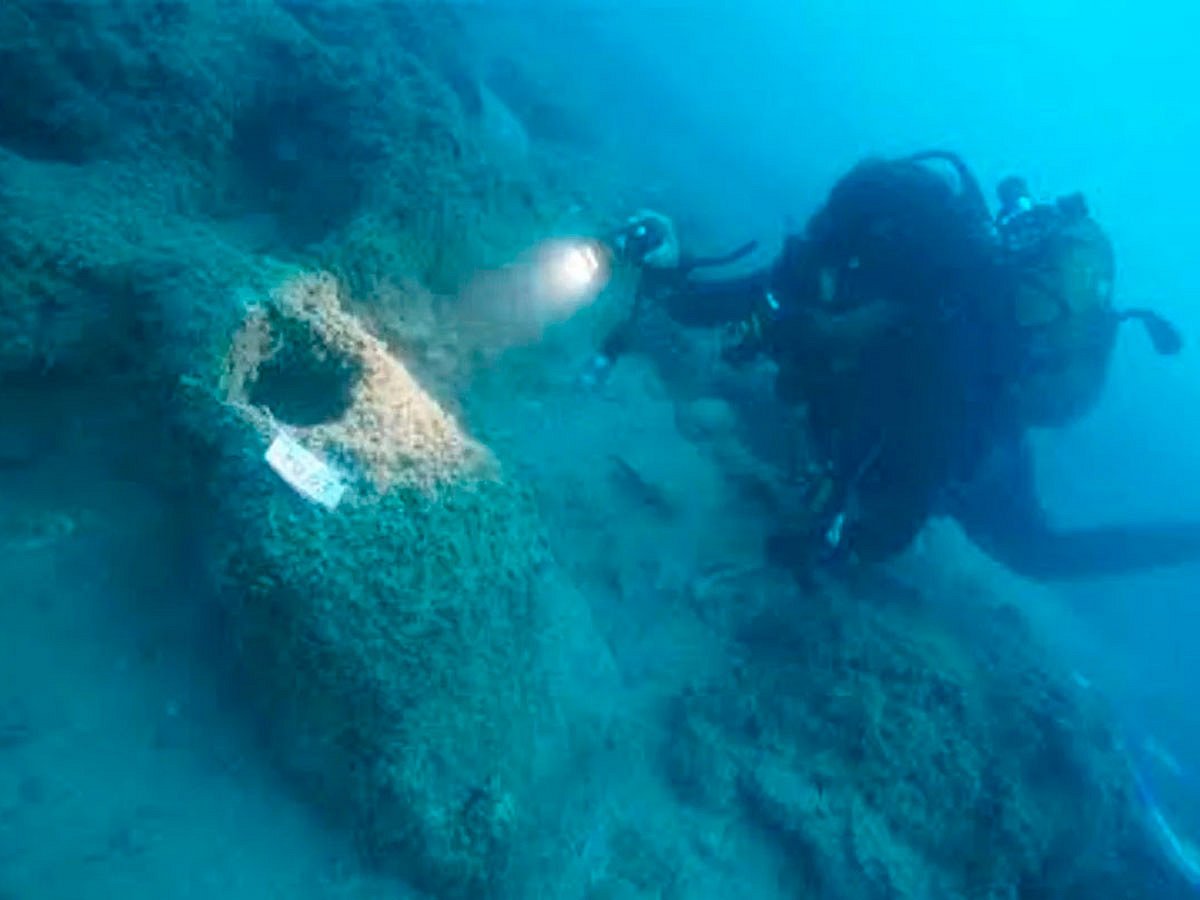
Archaeologists say a wreck near Kekova Island, Antalya, dates to 4,400–4,700 years ago, making it the oldest known shipwreck. Its age was set by the shape of its cargo jars because no wood survives.


1 / 3
The story, neutrally told
Centre · 2Archaeologists say they have found the world's oldest known shipwreck close to the shore of Kekova Island in Antalya, Turkey, and have dated it to between 4,400 and 4,700 years old, in the Early Bronze Age. BBC NewsN “They have dated it to between 4,400 and 4,700 years old, which is the Early Bronze Age” Read at BBC News ↗ Hindustan TimesN “close to the shore of Kekova Island in Antalya, Turkey” Read at Hindustan Times ↗ Centre · 2That is around the time the Great Pyramid in Egypt was being built. BBC NewsN “is around the same time that the Great Pyramid was being built” Read at BBC News ↗ Hindustan TimesN “around the same time that the Great Pyramid in Egypt was being built” Read at Hindustan Times ↗ Centre · 1The ship was about 10m long and is believed to have been a trade vessel carrying cargo across the Mediterranean. Its artefacts lie scattered across an underwater slope about 30m below the surface. BBC NewsN “it was about 10m in length and was a trade vessel carrying cargo across the Mediterranean Sea”“The artefacts lie scattered across an underwater slope, just 30m beneath the waves.” Read at BBC News ↗
Centre · 1The ship's wood has not survived, so radiocarbon dating could not be used. Instead, archaeologists compared the shape of the ceramic storage jars (amphorae), which have two handles, a ridge in the middle and a flat base, with amphorae from Egypt and the Middle East known to be 4,400–4,700 years old. BBC NewsN “The fact that none of the ship's wood remained meant techniques like radiocarbon dating”“Öniz said this design matched other amphorae unearthed in Egypt and the Middle East” Read at BBC News ↗ Centre · 2The BBC reports that three large stone anchors and more than 30 amphorae were found. Hindustan Times, citing the BBC, says about 30 pots were used for the dating. BBC NewsN “Three large stone anchors were found, as well as more than 30 ceramic storage pots” Read at BBC News ↗ Hindustan TimesN “archaeologists have instead been able to use 30 ceramic storage pots” Read at Hindustan Times ↗ Centre · 1Prof Hakan Öniz of Akdeniz University, who led the Mediterranean Archaeology Association expedition, called the wreck "a time capsule at the bottom of the sea" and said of its Early Bronze Age date: "This is 100%." BBC NewsN “"The shipwreck is a time capsule at the bottom of the sea," said Prof Hakan Öniz”“we can definitely say our wreck is Early Bronze Age. This is 100%.” Read at BBC News ↗
Centre · 1Divers brought the pots to the surface, where they are being conserved. Dr Karin Sowada of Macquarie University, Australia, examined them and found that some were intact and still held a viscous, glossy residue. She said she "nearly fainted" at how much remained. BBC NewsN “Divers from the expedition brought the pots up to the surface”“I looked inside and nearly fainted.” Read at BBC News ↗ Centre · 2The team is working to identify the contents. Sowada said it could be olive oil, wine or tree resins, or the residue could come from later reuse of the jars, since such large jars would have been emptied on arrival and used for many years. BBC NewsN “It could be olive oil, it could be wine, it could be tree resins” Read at BBC News ↗ Hindustan TimesN “It's possible that [the residue] could actually be the result of reuse of the jars.” Read at Hindustan Times ↗ Centre · 2The archaeologists say the ship set out from somewhere on the eastern Mediterranean coast and was heading either to the ancient city of Troy, in what is now north-western Turkey, or to the Minoan people on Crete. BBC NewsN “the ship started its voyage from somewhere along the eastern coast of the Mediterranean” Read at BBC News ↗ Hindustan TimesN “carrying goods either to the ancient city of Troy” Read at Hindustan Times ↗
Centre · 2Strong currents and winds around Kekova Island have claimed many ships, and the BBC says there are hundreds of wrecks in the area. BBC NewsN “There are hundreds of wrecks in the area” Read at BBC News ↗ Hindustan TimesN “Shipwrecks were a common occurrence, particularly around the Kekova Island” Read at Hindustan Times ↗ Centre · 1The find replaces a wreck off Dokos, an island in southern Greece, dated to about 4,200 years ago, as the oldest known. The oldest wreck with some preserved wood, about 2,400 years old, lies in the Black Sea off Bulgaria. BBC NewsN “Previously, the record holder was a wreck off the coast of Dokos, an island in southern Greece, which dates to about 4,200 years ago.”“It dates to about 2,400 years ago.” Read at BBC News ↗
Every sentence links to the reporting it rests on. The pill in front of each says where its sources sit: Left, Centre or Right when one side supplies at least half of them, Mixed when they are evenly split. The number is how many outlets it cites.
Left1 outlet
No left outlet in our sources has covered this story yet.
Centre3 outlets
- Framing
- Both outlets present a discovery story about the oldest known shipwreck. The BBC reports it directly and Hindustan Times rewrites the BBC report with more emphatic language.
- Emphasis
- The age, the comparison with the Great Pyramid, the pottery-based dating, the residue in the jars and the human story of the sailors.
- Leaves out or plays down
- Hindustan Times says the wood has "completely dissolved" and omits the BBC's mention of three stone anchors and its note that Sowada suggested the residue might come from reuse. It does include the reuse quote. Neither outlet gives a publication or peer-review source for the dating beyond the expedition's statements.
- Charged language
- “frenzy of delight”“time capsule at the bottom of the sea”“opened the floodgates”
- For example
-
“The Kekova discovery now tops the list of the world's oldest shipwrecks.” — BBC News
“has sparked a frenzy of delight among archaeologists” — Hindustan Times
Right0 outlets
No right outlet in our sources has covered this story yet.
What every side reports
- The wreck lies near Kekova Island, Antalya, Turkey, about 30m deep.
- It is dated to 4,400–4,700 years ago, the Early Bronze Age.
- The ship was about 10m long and no wood survives, so dating relied on the amphorae.
- Karin Sowada found residue in some of the jars; its contents are still being identified.
- The previous record holder was a wreck off Dokos, Greece, about 4,200 years old.
UK and Ireland2 outlets
The BBC gives original reporting with named researchers, dating method and trade context.
“The wreck and its cargo are also shedding light on trade in the ancient world.” — BBC News
BBC News, Metro
South Asia1 outlet
Hindustan Times relays the BBC report in a more dramatic tone and adds links to unrelated stories.
“reported BBC” — Hindustan Times
Hindustan Times
Left1 article
Centre3 articles
-
World's oldest shipwreck found off coast of Turkey
Neutral Straightforward science report built on expedition leader and Macquarie University quotes, with context on dating method and trade routes.
-
World's oldest shipwreck, as ancient as Great Pyramid, found near Turkey's Kekova Island
Celebratory Rewrite of the BBC report that stresses excitement and the record, and credits the BBC for its quotes.
-
Right0 articles
No coverage yet.
- 14 Oct 06:00 First BBC NewsN World's oldest shipwreck found off coast of Turkey
- 14 Oct 09:01 +3h 1m Hindustan TimesN World's oldest shipwreck, as ancient as Great Pyramid, found near Turkey's Kekova Island
- 14 Oct 09:57 +3h 57m Gulf NewsN World’s oldest shipwreck found off Turkey’s coast
- 14 Oct 10:00 +4h MetroLC World’s oldest shipwreck found off coast of holiday hotspot
Times are when each article was published, or when we first saw it if the outlet gave no time.
Ask about this story
Loading…