Politics · Burnham's Labour conference announcements
Burnham announces publicly owned Great British Grid body at Labour conference
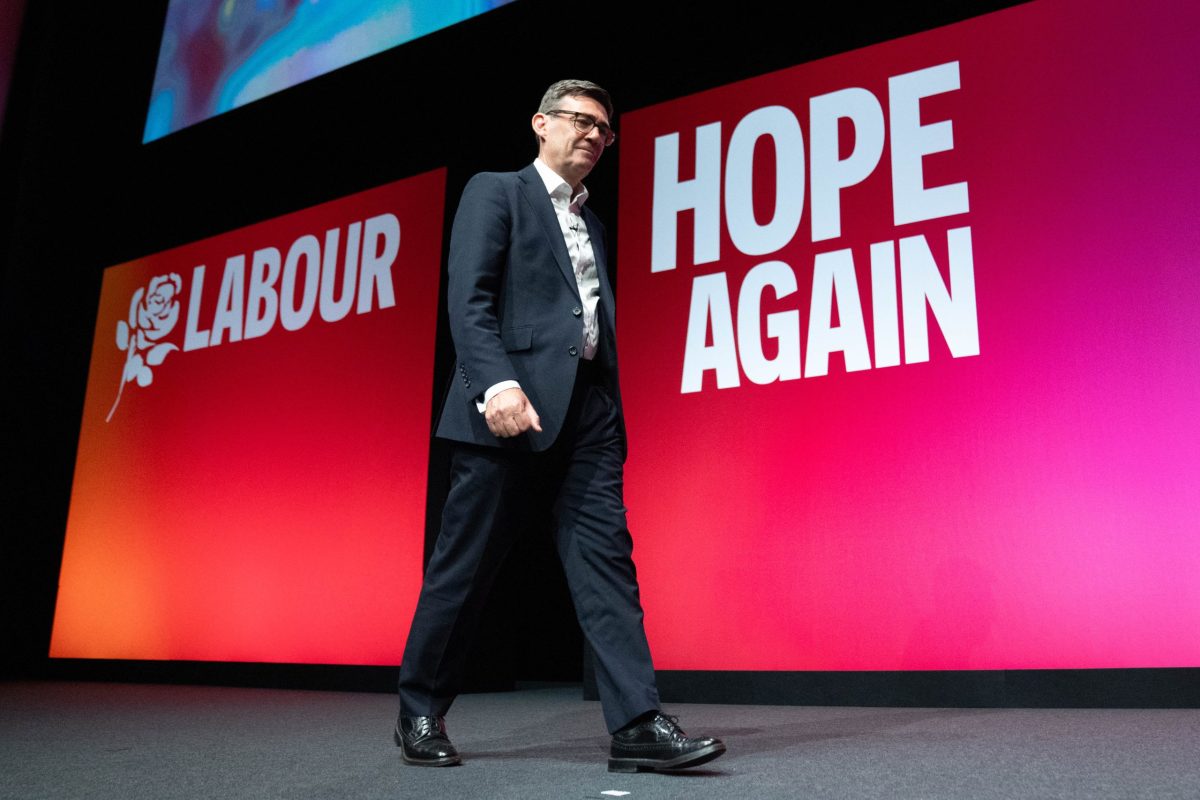
In his first Labour conference speech as prime minister, Andy Burnham announced Great British Grid, a publicly owned body to invest in the electricity grid. Outlets differ on whether it amounts to "public control", how much money it has, and what it means for bills.
Updated (version 3). Rewritten with the latest reporting. Previously: “Burnham proposes publicly owned Great British Grid body in Labour conference speech”.

1 / 3
The story, neutrally told
Andy Burnham announced Great British Grid (GB Grid), a new publicly owned company, in his first conference speech as Labour leader and prime minister, delivered in Liverpool. BBC NewsN “the new publicly owned company, branded Great British Grid, will speed up connections to the grid by driving up competition for connection projects.” Read at BBC News ↗ Labour said it would invest in and compete for transmission connection projects alongside the three private companies that own and manage the grid, and would fund it from the existing budget of GB Energy. BBC NewsN “Labour said it would invest in and compete for transmission connection projects alongside the three private companies” Read at BBC News ↗ City A.M.RC “The new initiative will be funded by the existing budget of GB Energy” Read at City A.M. ↗ Burnham said it would "increase competition, drive down costs and speed up connections", as part of a goal to bring UK energy costs in line with other European nations within 10 years. BBC NewsN “It will increase competition, drive down costs and speed up connections.” Read at BBC News ↗
Ofgem estimates £70bn of grid investment is needed between 2025 and 2031, and the National Audit Office has warned that delays to connection projects are growing. BBC NewsN “Energy regulator Ofgem has estimated that £70bn of investment is required in the grid between 2025 and 2031” Read at BBC News ↗ Conservative shadow energy secretary Andrew Bowie said Burnham wanted to "nationalise the network", while Energy UK's Dhara Vyas welcomed the investment but said "the bulk of this will be private investment". BBC NewsN “the prime minister wanted to "nationalise the network"”“the bulk of this will be private investment” Read at BBC News ↗ The Guardian's Nils Pratley argues it is not nationalisation, citing the department's statement that GB Grid will "complement, rather than replace" existing institutions, and notes competitive tendering for transmission projects dates from a 2023 law. The GuardianLC “Great British Grid will complement, rather than replace, the existing institutions responsible for Britain's energy system”“The so-called Cato (Competitively Appointed Transmission Owner) regime was established in an energy act in 2023 under the Tories.” Read at The Guardian ↗
Pratley estimates about £4bn remains in GB Energy's pot, leaving roughly £2bn if GB Grid gets half; GB News, by contrast, describes a "£4billion plan" and quotes experts warning it risks wasting public money. The GuardianLC “There is probably about £4bn left. If GBG gets half, we’re talking about £2bn of capital.” Read at The Guardian ↗ GB NewsR “Andy Burnham's £4billion plan for a state-owned electricity grid company risks wasting public money” Read at GB News ↗ The Guardian's explainer said GB Grid faces a tougher challenge than GB Energy: lowering bills and boosting the economy through public investment in the network. The GuardianLC “GB Grid faces a tougher challenge: lowering bills and supercharging the economy through public investment in the electricity network.” Read at The Guardian ↗ City A.M. reported energy shares fell in early trading, with National Grid down 1.2 per cent; the Guardian later said National Grid and SSE were down about 0.5%, in line with the wider market. City A.M.RC “The National Grid shed 1.2 per cent in early trading” Read at City A.M. ↗ The GuardianLC “were down by about 0.5%, in line with the wider market.” Read at The Guardian ↗
Separately, GB News reported that new guidance tells Ofgem to weigh British jobs and manufacturing, that a government document acknowledges a "short-term cost trade-off", and that no impact estimate has been made. GB NewsR “The Government recognises that this may come with a short-term cost trade-off.”“ministers have not estimated how much the policy could add to household energy bills” Read at GB News ↗
Every sentence links to the reporting it rests on.
Left1 outlet
- Framing
- Explanatory and analytical: what GB Grid is, its limited funding, and whether it really means public control.
- Emphasis
- Small funding pot, the 2023 competitive-tender law, and the value of giving the state cost data.
- Leaves out or plays down
- Says little about the separate 'buy British' cost trade-off or Conservative criticism.
- Charged language
- “boondoggle”
- For example
-
“The mistake is to file these initiatives under "public control".” — The Guardian
“GB Grid faces a tougher challenge: lowering bills and supercharging the economy through public investment in the electricity network.” — The Guardian
Centre1 outlet
- Framing
- Straight news report of the speech and announcement, with political and industry reaction.
- Emphasis
- Speech themes, funding source, investment need, Conservative and industry reactions.
- Leaves out or plays down
- Gives no market reaction or funding figures, and does not cover the 'buy British' cost issue.
- For example
-
“Full details of the new body are yet to be set out” — BBC News
Right2 outlets
- Framing
- Cost and value-for-money angle: City A.M. previews the announcement and market reaction; GB News stresses higher bills and waste.
- Emphasis
- Bill increases, the £4billion figure, expert criticism and share falls.
- Leaves out or plays down
- Give less weight to the argument that this is not nationalisation, or to industry welcome for faster connections.
- Charged language
- “Great British Gridlock!”“complete and utter con”“classic political distraction”“sky-high energy costs”
What every side reports
- Burnham announced Great British Grid, a publicly owned body, at Labour's conference in Liverpool.
- It will compete with private operators for grid connection and transmission projects.
- It will be funded from GB Energy's existing budget.
- The grid needs about £70bn of investment to 2031, with connection delays a problem.
Where accounts differ
-
Does the plan amount to public control or nationalisation of the grid?
- Left
- The Guardian's columnist says it is not nationalisation or control of existing assets; the state acts more as a facilitator.
- Centre
- BBC reports Burnham's pitch of greater public control and Bowie's "nationalise the network" charge, and notes Vyas saying most investment will be private.
- Right
- City A.M. frames it as greater public control of utilities; GB News calls it a state-owned company and quotes critics calling it a "classic political distraction".
-
Market reaction
- Left
- National Grid and SSE down about 0.5%, in line with the market.
- Centre
- Not covered.
- Right
- City A.M.: National Grid down 1.2%, Centrica 1%, SSE and Ithaca about 2%.
-
Effect on bills
- Left
- Gains from competition are uncertain but worth having.
- Centre
- Says subsidies to private firms for grid upgrades are added to bills.
- Right
- GB News says bills could rise from a separate "buy British" policy and calls the plan a "con".
-
Great British Grid will be a publicly owned company competing with private firms to invest in transmission connection projects.
Reported- Supports 1
- The Guardian
- Reports 3
- BBC News, City A.M., GB News
-
GB Grid will be funded from GB Energy's existing budget.
Reported- Disputes 1
- The Guardian
- Reports 2
- BBC News, City A.M.
-
The plan amounts to greater public control or nationalisation of the grid.
Reported- Disputes 1
- The Guardian
- Reports 2
- BBC News, City A.M.
Andy Burnham person
Presents GB Grid as a way to increase competition, cut costs and speed connections, part of a wider case for stronger public control of energy, water and housing.
“Energy, water, housing. Back under stronger public control,” — BBC News
Labour Party party
Labour says the body will compete with the three private operators and be funded from GB Energy's existing budget.
“Labour has said that funding for the new body will be found within the existing budget of GB Energy” — BBC News
Great British Grid organisation
The department says GB Grid will complement, not replace, existing institutions; its role is to bid for projects and co-invest.
“the role of existing network operators remains unchanged.” — The Guardian
Left2 articles
-
What is Burnham’s GB Grid plan and could it bring down energy bills?
Mixed Explainer asking whether direct state investment in grids will cut bills.
-
Burnham’s electricity grid idea is interesting – but it’s not ‘public control’
Mixed Column that sees value in GB Grid but argues it is not 'public control' and has limited funds.
Centre1 article
-
Burnham says public body will invest in electricity grid
Neutral Straight report of the speech with funding, investment need and party and industry reaction.
Right3 articles
-
GB NewsR ·
Energy bills set to rise under new 'buy British' grid plans, Labour admits
Critical Highlights that a separate 'buy British' grid policy could raise household bills with no impact assessment.
-
Burnham to announce new publicly-owned grid operator
Neutral Preview of the announcement, adding market reaction and Thames Water context.
-
GB NewsR ·
'Great British Gridlock!' Andy Burnham's £4billion grid plans branded 'complete and utter con'
Alarmist Leads with experts calling the £4billion plan a distraction and a waste of public money.

- 29 Sep 08:00 First GB NewsR Energy bills set to rise under new 'buy British' grid plans, Labour admits
- 29 Sep 08:13 +13m City A.M.RC Burnham to announce new publicly-owned grid operator
- 29 Sep 14:09 +6h 8m The GuardianLC What is Burnham’s GB Grid plan and could it bring down energy bills?
- 29 Sep 16:14 +8h 14m BBC NewsN Burnham says public body will invest in electricity grid
- 29 Sep 19:01 +11h 1m The GuardianLC Burnham’s electricity grid idea is interesting – but it’s not ‘public control’
- 30 Sep 05:01 +21h GB NewsR 'Great British Gridlock!' Andy Burnham's £4billion grid plans branded 'complete and utter con'
Times are when each article was published, or when we first saw it if the outlet gave no time.