London drivers protest at Wayve HQ as calls grow to limit robotaxi rollout
Around 20 private hire drivers protested outside Wayve's King's Cross headquarters on Saturday, as London politicians urge that Transport for London get more power over driverless taxis. Uber and Wayve say they are taking a phased, consultative approach.
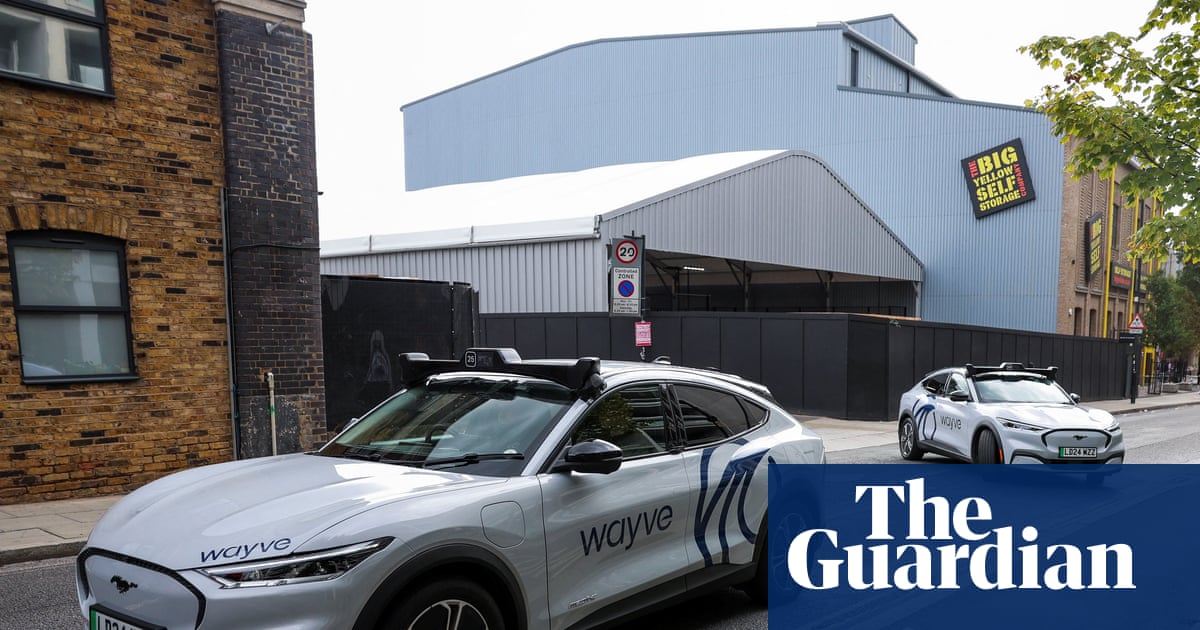

1 / 2
The story, neutrally told
Centre · 1Around 20 private hire drivers protested outside Wayve's headquarters in King's Cross, London, on Saturday 17 October, over the introduction of robotaxis they say threaten their jobs. Evening StandardN “Around 20 private hire drivers gathered in protest outside Wayve’s headquarters in King’s Cross on Saturday” Read at Evening Standard ↗ Mixed · 2The App Drivers and Couriers Union (ADCU) organised the action and said drivers are being treated as "collateral damage" and should be compensated. It followed a similar ADCU protest at Waymo's base in Park Royal in August. Evening StandardN “said drivers are being treated as “collateral damage” and called for them to be compensated” Read at Evening Standard ↗ The GuardianLC “Saturday’s protests would follow a similar action held at Waymo’s base in Park Royal in August” Read at The Guardian ↗ Mixed · 2Wayve has partnered with Uber to supply London's first autonomous cabs for hire. TfL approved the start of their limited services, which keep a human safety driver in the front seat, and the first UK services began in September. The GuardianLC “TfL has approved the start of Uber and Wayve’s limited robotaxi services, which retain a human safety driver in the front seat.” Read at The Guardian ↗ Evening StandardN “TfL granted minicab licences for use on the self-driving vehicles in August.” Read at Evening Standard ↗
Mixed · 2The Standard says a full commercial rollout is expected in 2027, subject to regulatory approval. Uber's driverless trials also expanded to Manchester this week, according to the Guardian. Evening StandardN “with a full commercial rollout expected in 2027, subject to regulatory approval” Read at Evening Standard ↗ The GuardianLC “whose driverless cars trials expanded this week to Manchester” Read at The Guardian ↗ Mixed · 2Uber driver and ADCU London chair Abdurzak Hadi said he felt "like an old car that's not needed any more", fears competing with a machine that could work 24 hours a day, and wants the rollout stopped "completely". He also asked Mayor Sadiq Khan to state his position. Evening StandardN “He wants the rollout to be stopped “completely”, and called on London Mayor Lord Sadiq Khan to make his position on the issue clear.” Read at Evening Standard ↗ The GuardianLC “Abdurzak Hadi, an Uber driver and theLondon chair of the ADCU” Read at The Guardian ↗ Left · 1Other drivers quoted by the Guardian include Florentina Ghiuzan, who said she was shocked TfL approved the service so soon, and Faisal Osman, who said robotaxis would "decimate the livelihoods of many people". The GuardianLC ““I was shocked TfL approved it so soon.”“it will decimate the livelihoods of many people including me” Read at The Guardian ↗
Mixed · 2The London Assembly transport committee, chaired by Caroline Russell, published a report this week saying it saw "considerable uncertainty around many of the claimed benefits" of autonomous passenger vehicles. It called for devolved authority over such services, and the Standard says it urged the government to let TfL cap the number of vehicles operators can deploy. The GuardianLC ““considerable uncertainty around many of the claimed benefits of autonomous passenger vehicles”” Read at The Guardian ↗ Evening StandardN “urged the Government to give Transport for London (TfL) the power to set a cap on the number of autonomous passenger vehicles operators can deploy in London” Read at Evening Standard ↗ Left · 1Under current rules TfL licenses passenger services but the government decides whether autonomous vehicles can operate. For fully driverless services the Department for Transport would issue permits, with TfL only able to grant or refuse consent. The Guardian reports that TfL is alarmed by this and wants to keep the power to intervene. The GuardianLC “Under current rules, TfL licenses passenger services, but the government decides whether autonomous vehicles can operate.”“TfL wants to retain the power to intervene” Read at The Guardian ↗ Mixed · 2Khan's spokesperson said the mayor shares "concerns about potential impacts on safety, congestion and jobs". The Standard says Khan has not come out firmly against robotaxis, according to Green councillor Amandine Alexandre, and that his office had been contacted for comment. The GuardianLC “shared “concerns about potential impacts on safety, congestion and jobs”” Read at The Guardian ↗ Evening StandardN “he hasn’t come out firmly against them when he has come out against the expansion of Heathrow Airport” Read at Evening Standard ↗
Left · 1Uber said autonomous mobility "will impact workers, riders, and the communities they live in" and that it is in talks with the government and local stakeholders. Wayve said it is taking a "deliberately phased approach" and has a constructive relationship with TfL. The GuardianLC “we shouldn’t hide that autonomous mobility will impact workers, riders, and the communities they live in.”“deliberately phased approach” Read at The Guardian ↗ Left · 1Roads minister Justin Madders told the Labour conference that autonomous vehicles could bring "opportunities for well-paid and unionised jobs" while promising to address the impact on workers. The GMB union has asked for a "just transition" for drivers, and a Centre for British Progress report estimates that more than 400,000 UK drivers, 121,000 of them in London, could see much of their work become obsolete. The GuardianLC “autonomous vehicles could bring “opportunities for well-paid and unionised jobs””“more than 400,000 UK drivers (121,000 in London) would soon find “much of this work obsolete”” Read at The Guardian ↗ Mixed · 2Demand figures differ between the two outlets. The Guardian says more than 100,000 people are on Uber's London waitlist, while the Standard says Uber reported more than 140,000 Londoners had opted in to use self-driving vehicles. The GuardianLC “more than 100,000 are on Uber’s waitlist in London” Read at The Guardian ↗ Evening StandardN “more than 140,000 Londoners have already opted in” Read at Evening Standard ↗
Every sentence links to the reporting it rests on. The pill in front of each says where its sources sit: Left, Centre or Right when one side supplies at least half of them, Mixed when they are evenly split. The number is how many outlets it cites.
Left1 outlet
- Framing
- A policy-and-power feature led by the 'mounting opposition' to the rollout: drivers' fears, a critical assembly report, and the argument that TfL needs full powers over licensing.
- Emphasis
- Regulatory gap between the DfT and TfL, comparison with Uber's earlier licensing troubles, individual driver testimony, union and thinktank job-loss estimates, and company and government responses.
- Leaves out or plays down
- Does not report the protest turnout, since it ran the day before the protest.
- Charged language
- “decimate”“mounting opposition”
- For example
-
“London’s rollout is facing mounting opposition, from drivers fearing for their future and the capital’s politicians” — The Guardian
“it will decimate the livelihoods of many people including me” — The Guardian
Centre1 outlet
- Framing
- A same-day report of the protest itself, focused on drivers' sense of being discarded and the demand that the mayor speak out.
- Emphasis
- Turnout of about 20, Hadi's 'old car' quote, the call to stop the rollout, a Green councillor's criticism of Khan, and the 2027 commercial timeline.
- Leaves out or plays down
- Gives no response from Uber or Wayve and little on the regulatory split between DfT and TfL; says the mayor's office had been contacted.
- Charged language
- “collateral damage”“an old car that’s not needed anymore”
- For example
-
“Uber drivers have warned they risk becoming “collateral damage” in the rollout of driverless taxis in London.” — Evening Standard
“it’s going to really change London for the worse” — Evening Standard
Right0 outlets
No right outlet in our sources has covered this story yet.
What every side reports
- Drivers linked to the ADCU protested at Wayve's London headquarters over robotaxis.
- TfL licensed Uber/Wayve vehicles that still carry a human safety driver.
- The London Assembly transport committee has criticised the rollout and wants TfL to have more power.
- Hadi, who has driven for Uber for over 12 years, fears competing with a machine that can work 24 hours.
Where accounts differ
-
Level of public demand for robotaxis
- Left
- More than 100,000 are on Uber's London waitlist.
- Centre
- Uber said more than 140,000 Londoners have opted in.
-
Timing of licensing
- Left
- Services began in September after TfL approval.
- Centre
- TfL granted minicab licences in August; the trial launched last month.
Uber organisation
Says drivers and autonomous vehicles will grow side by side, admits AVs will affect workers, and says it is talking to the government and local stakeholders.
“are both expected to grow side by side for quite some time” — The Guardian
Wayve organisation
Describes a phased approach with wide engagement and says its robotaxis could improve safety and connectivity, if introduced responsibly with TfL.
“We have a positive, constructive relationship with TfL” — The Guardian
Transport for London organisation
Understood to see little benefit in robotaxis and wants to keep the power to intervene, having approved the limited safety-driver services.
“TfL is understood to see little benefit in the addition of robotaxi services to its crowded city streets” — The Guardian
Left1 article
-
‘We should all be worried’: calls grow to limit London rollout of robotaxis
Sympathetic Gives extensive space to worried drivers and sceptical politicians, while including Uber, Wayve, the mayor and the minister.
Centre1 article
-
Uber drivers fear job losses as protesters rally against London's robotaxi rollout
Sympathetic Reports the protest through drivers' and a Green councillor's words, with the mayor's office yet to respond.
Right0 articles
No coverage yet.
- 16 Oct 12:00 First The GuardianLC ‘We should all be worried’: calls grow to limit London rollout of robotaxis
- 17 Oct 15:29 +27h 28m Evening StandardN Uber drivers fear job losses as protesters rally against London's robotaxi rollout
Times are when each article was published, or when we first saw it if the outlet gave no time.
Ask about this story
Loading…