Cape Verde's Neves leads with about 64% in presidential vote, partial results show
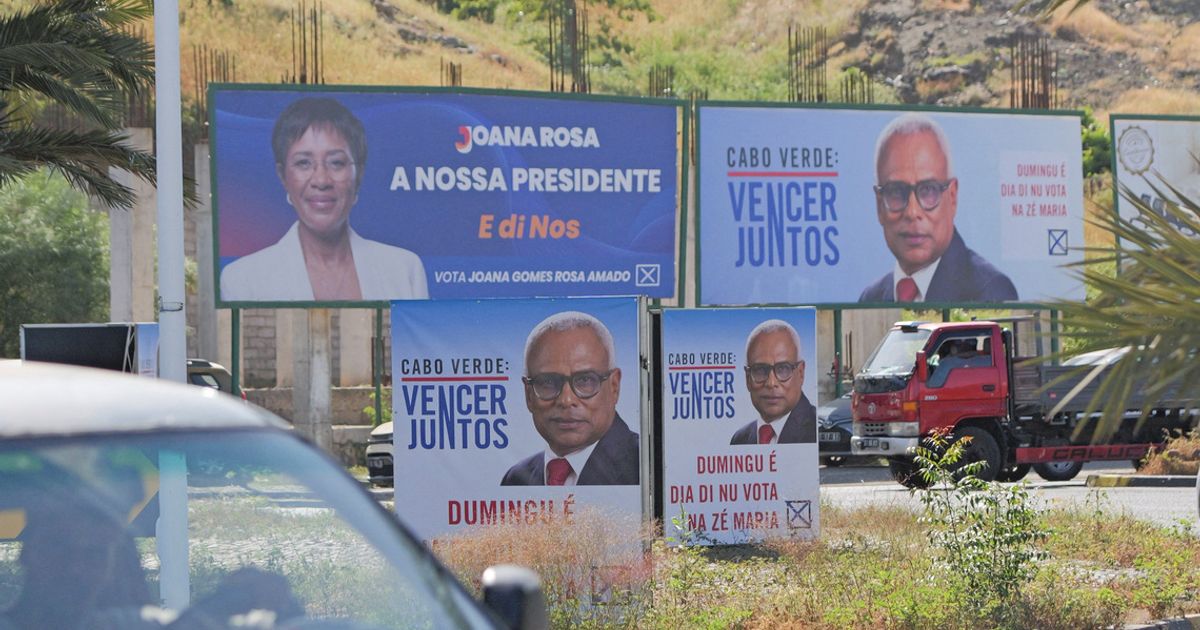
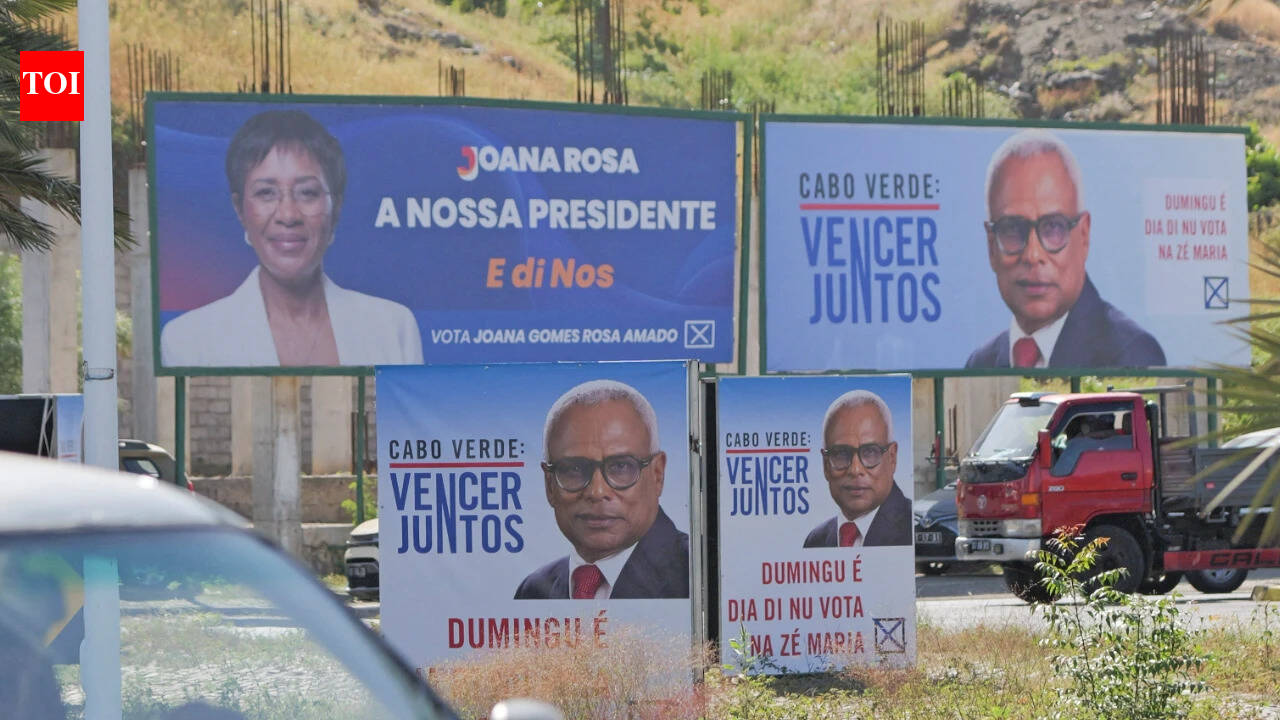
Cape Verde held a presidential election on Sunday; with 96% of polling tables counted, incumbent José Maria Neves had about 63.8% to Joana Rosa's 31.6%, per provisional figures. Final results had not been announced.
Updated (version 5). New coverage since the last version from Anadolu Agency, Deutsche Welle. Previously: “Cape Verde votes Sunday; President Neves expected to win a second term”.


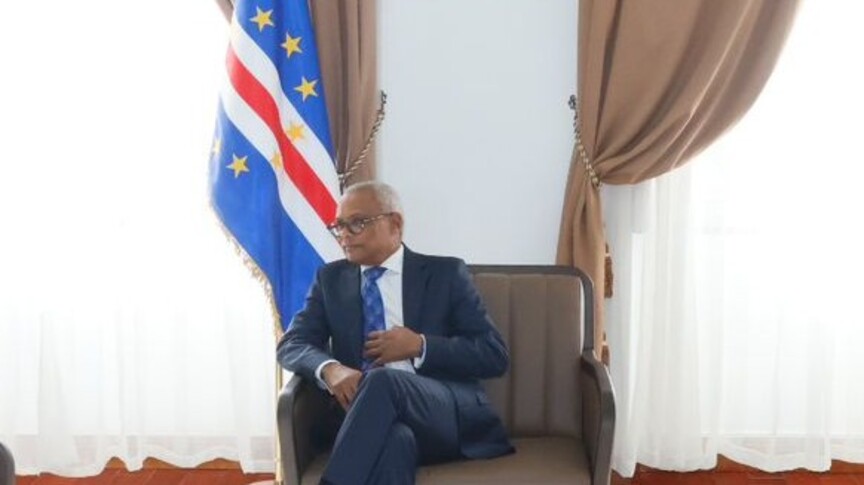
1 / 8
The story, neutrally told
Right · 2Cape Verde President José Maria Neves is expected to win a second term in the presidential election on Sunday, according to Reuters. The Straits TimesRC “Cape Verde President José Maria Neves is expected to win a second term on Sunday” Read at The Straits Times ↗ Arab NewsRC “Cape Verde President José Maria Neves is expected to secure a second term” Read at Arab News ↗ Mixed · 2Voting opened at 8:00 am (0900 GMT) on Sunday and polls close after 10 hours, at 6 p.m. (1900 GMT); AFP and RFI said provisional results were expected overnight, while Reuters said official provisional results were expected in two or three days. Hindustan TimesN “The polls will remain open for 10 hours, with provisional results expected overnight.” Read at Hindustan Times ↗ The Straits TimesRC “Polls were set to open at 8 a.m. (0900 GMT) and close at 6 p.m. (1900 GMT), with official provisional results expected in two or three days.” Read at The Straits Times ↗ Centre · 1Provisional figures on the official results portal, reported by Anadolu Agency early on Monday, showed Neves with 79,945 votes (63.8%) against 39,544 (31.6%) for Rosa, with 1,244 of 1,296 polling tables (96%) counted. Anadolu AgencyN “Neves had received 79,945 votes, or 63.8%, compared with 39,544 votes, or 31.6%, for his main challenger, former Justice Minister Joana Rosa.”“The results covered 1,244 of the country's 1,296 polling tables, with counting still incomplete.” Read at Anadolu Agency ↗
Centre · 1The portal showed 129,032 voters taking part, 32% of the 403,849 registered voters in the displayed figures; the other four candidates each received less than 2%. Counting was still incomplete, so no final result had been announced, and an outright win requires more than half of valid votes, otherwise a runoff is set for Nov. 29. Anadolu AgencyN “The official results portal showed 129,032 voters participating, representing 32% of the 403,849 registered voters included in the displayed figures.”“Six candidates contested the presidency, with the remaining four receiving less than 2% each.” Read at Anadolu Agency ↗ Right · 1A win would cement full control of government by the island nation's oldest political party, after its victory in legislative elections earlier this year. The Straits TimesRC “an outcome that would cement full control of government by the island nation’s oldest political party after its victory in legislative elections earlier this year” Read at The Straits Times ↗ Right · 2Neves is backed by the African Party for the Independence of Cape Verde (PAICV), which won 37 of 72 seats in the May legislative elections, allowing Francisco Carvalho to become prime minister. The Straits TimesRC “which won 37 out of 72 seats in legislative elections in May, allowing Francisco Carvalho to become prime minister” Read at The Straits Times ↗ Arab NewsRC “which won 37 out of 72 seats in legislative elections in May, allowing Francisco Carvalho to become prime minister” Read at Arab News ↗
Right · 2His main challenger is Joana Rosa, a former justice minister and the first woman to run for president in Cape Verde. She belongs to the Movement for Democracy party, which governed for 10 years before the legislative vote. The Straits TimesRC “Joana Rosa, a former justice minister and Cape Verde's first woman presidential candidate” Read at The Straits Times ↗ Arab NewsRC “His opponent Rosa is from the Movement for Democracy party, which had governed for 10 years prior to the legislative vote.” Read at Arab News ↗ Right · 1Analysts describe Neves as the clear favourite to win another five years in office. The race has highlighted employment and stemming outward migration. The Straits TimesRC “Analysts put Neves as the clear favourite to win another five years in office, after a race that has highlighted issues like employment and stemming outward migration.” Read at The Straits Times ↗ Centre · 1Six candidates are running; AFP names two frontrunners, Neves, 66, and Amado (Joana Rosa), 61, a lawyer and former justice minister, each backed by one of the two main parties. Another candidate, 45-year-old surgeon Gilson Alves, is promising to fight corruption, allow gun ownership and reinstate the death penalty. Hindustan TimesN “Among the six candidates in the running on Sunday, two are frontrunners: incumbent Neves, 66, and Amado, 61, a lawyer and former minister of justice.”“promising to fight corruption, allow gun ownership and reinstate the death penalty” Read at Hindustan Times ↗
Mixed · 2Six candidates are competing; if none receives more than 50% of the vote, the top two will meet in a runoff on November 29. France 24N “Six candidates are competing, with a runoff scheduled for Nov. 29 if no candidate receives more than half the votes.” Read at France 24 ↗ The Straits TimesRC “If no candidate receives more than 50% of the vote, the two top candidates will compete in a runoff on November 29.” Read at The Straits Times ↗ Centre · 1Neves won in 2021 with about 52% of the vote, and is the country's fifth president since independence from Portugal in 1975. Nearly 77,000 Cape Verdeans abroad, almost a fifth of the electorate, are registered to vote. France 24N “Neves, who won in 2021 with about 52% of the vote, has pledged to build cross-party support to improve housing, healthcare and education, create jobs and raise wages.”“Nearly 77,000 Cape Verdeans abroad are registered to vote, almost a fifth of the total electorate.” Read at France 24 ↗ Left · 1Al Jazeera says more than 300,000 people are eligible to vote at home, and that many voters feel distant from a political class they think does not understand their daily difficulties, according to political scientist Roselma Evora, speaking to the Associated Press. Al JazeeraLC “More than 300,000 people are eligible to vote on Sunday from 8am to 6pm”“many voters feel distant from the political class over concerns that it doesn’t understand their daily difficulties” Read at Al Jazeera ↗
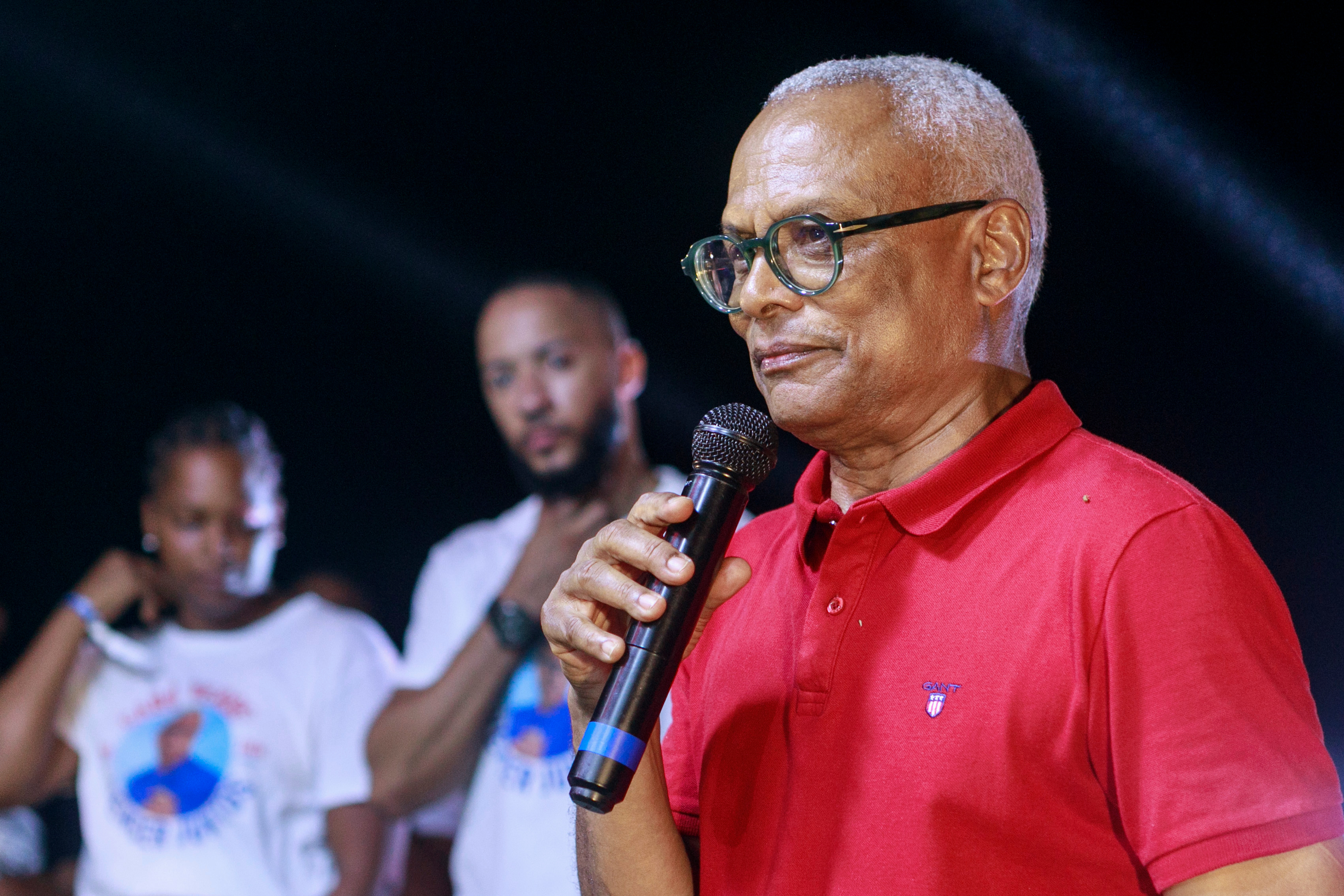
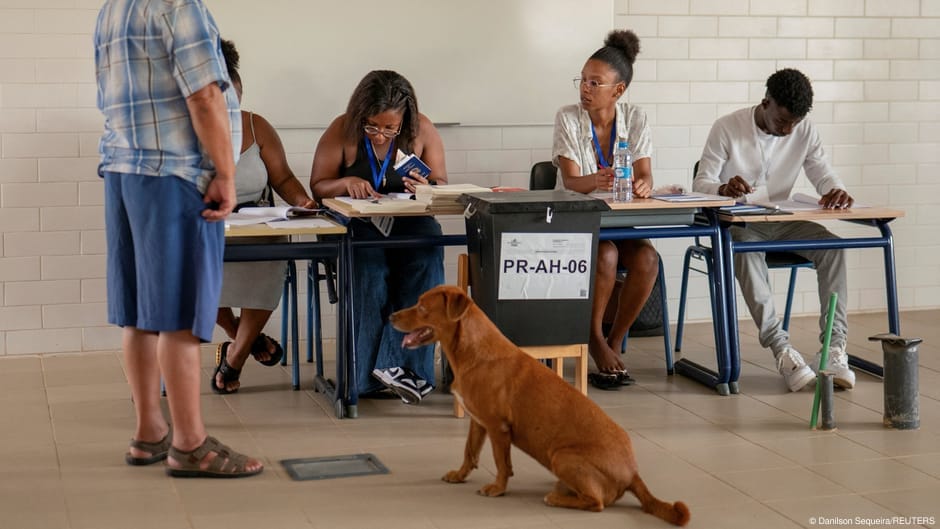
Centre · 1Deutsche Welle puts the electorate at some 420,000 people, and says about 150 observers from the Economic Community of West African States, the African Union and the European Union were watching the vote. Deutsche WelleN “Some 420,000 people are eligible to vote, with the election being watched by about 150 observers from the Economic Community of West African States, the African Union and European Union.” Read at Deutsche Welle ↗ Centre · 1France 24 reports that Rosa has centred her campaign on a balance of power, arguing the country needs a counterweight to the PAICV, which controls the government and most municipalities; a Rosa win would again put the presidency and government in rival camps. Political scientist Roselma Évora said incumbency gives Neves greater visibility, including abroad, and that Rosa's candidacy challenges expectations in a "very patriarchal" society; writer Rosário Luz said party loyalties mattered more than Rosa's gender. France 24N “A Rosa victory would again put the presidency and government in rival political camps.”“Rosário Luz, a Cape Verde-based writer, said party loyalties mattered more than Rosa’s gender.” Read at France 24 ↗ Right · 1Neves, prime minister for 15 years from 2001, said he spent his first term as president trying to reach as many Cape Verdeans as possible, "taking the presidency to the islands" and to the diaspora in Africa and the US. In a second term he would organise a "Youth Convention" on employment needs and a forum to set development priorities through 2050. The Straits TimesRC “Neves, who served as prime minister for 15 years beginning in 2001, told Reuters he had spent his first term as president trying to reach as many Cape Verdeans as possible”“His goals in a second term would include organising a "Youth Convention" focused on employment needs and a forum to identify development priorities between now and 2050” Read at The Straits Times ↗
Right · 1Neves said he wants to deliver "inclusive economic growth" along with reforms for better wages, higher incomes and an improved quality of life. The Straits TimesRC “implementing the reforms needed to deliver better wages, higher incomes and an improved quality of life” Read at The Straits Times ↗ Right · 1Rosa said she is running to "demonstrate women's capabilities", attract foreign investment and ensure a balance of power instead of total PAICV control. She also said young people must be able to build their futures at home, because continued emigration creates domestic problems and slows development. The Straits TimesRC “Rosa, for her part, said she was running to "demonstrate women's capabilities", attract foreign investment and ensure a balance of power in government instead of total control by PAICV.”“This outflow creates domestic problems and slows down our development process.” Read at The Straits Times ↗ Centre · 1Deutsche Welle quotes Rosa as saying a woman winning would show young women and girls that "no government job is barred from them." Deutsche WelleN “a woman winning the presidential race would show many young women and girls that "no government job is barred from them."” Read at Deutsche Welle ↗
Centre · 1Rosa's slogan is "Listen to Cape Verde"; Neves said this week that "it is essential that Cape Verde continues to have a patriotic, experienced president" in "times of international uncertainty", AFP reported. Hindustan TimesN “Her slogan is "Listen to Cape Verde,"”“it is essential that Cape Verde continues to have a patriotic, experienced president capable of inspiring Cape Verdeans” Read at Hindustan Times ↗ Right · 1The country has a hybrid presidential-parliamentary system in which the prime minister heads the government and the president keeps significant powers, including veto authority and a mediating role. The archipelago lies more than 600 km west of mainland Africa and has about 500,000 people. Arab NewsRC “operates under a hybrid presidential-parliamentary model. The prime minister heads the government while the president retains significant powers including veto authority and a mediating role.”“Situated more than 600 km (373 miles) west of mainland Africa” Read at Arab News ↗ Centre · 1The Times of India notes that women have held senior cabinet posts in Cape Verde, but the country has never had a woman president or prime minister; it adds that under the parliamentary-presidential system the prime minister holds most executive authority. The Times of IndiaN “While women have held senior cabinet positions, the country has never had a woman president or prime minister.”“the prime minister holds most executive authority, while the president has veto powers and a mediating role” Read at The Times of India ↗
Centre · 2Outlets differ in describing the president's weight: France 24 calls the role "largely symbolic" apart from the veto, while Reuters cites veto authority and a mediating role and RFI calls the president an arbiter who appoints the prime minister. France 24N “The president’s role is largely symbolic, although the directly elected head of state can veto legislation.” Read at France 24 ↗ RFIN “The president does not govern but acts more as an arbiter, working to guarantee unity and uphold the constitution.” Read at RFI ↗ Centre · 1AFP describes the country as known for political stability and good governance, ranked third of 54 African countries in the Mo Ibrahim Foundation's 2026 governance index. The World Bank classified it as upper-middle-income in July, citing tourism-led growth and a 16.8 percent rise in gross national income per capita between 2023 and 2024. Hindustan TimesN “Cape Verde ranks third out of 54 countries on the continent.”“a 16.8 percent increase in gross national income per capita between 2023 and 2024” Read at Hindustan Times ↗ Centre · 1Challenges include social inequality, geographic isolation and costly inter-island travel; voters' main concerns are cost of living, fuel prices and youth unemployment, and emigration of graduates has caused a labour shortage. The main candidates have promised better air and sea links between islands and new tourist accommodation. Hindustan TimesN “Among the population's major concerns are the increased cost of living, fuel prices, and youth unemployment.”“the main candidates have promised to implement measures to improve air and sea travel between the islands” Read at Hindustan Times ↗
Left · 1Al Jazeera says the archipelago has more people living abroad than the 500,000 on its islands, mostly in Portugal and the United States. Al JazeeraLC “The archipelago has more people living in the diaspora than the 500,000 people residing on its islands.” Read at Al Jazeera ↗ Right · 1Cape Verde was also in the news this year for its men's soccer team's run to the World Cup knockout stage, and for a cruise ship carrying hantavirus-infected passengers that was stranded off its coast. The Straits TimesRC “its men's soccer team embarked on a fairytale run to the World Cup knockout stage”“a cruise ship carrying hantavirus-infected passengers became stranded off its coast” Read at The Straits Times ↗
Every sentence links to the reporting it rests on. The pill in front of each says where its sources sit: Left, Centre or Right when one side supplies at least half of them, Mixed when they are evenly split. The number is how many outlets it cites.
Left1 outlet
- Framing
- Al Jazeera's voting-day piece leads on the first female presidential candidate and on emigration as the issue the vote hinges on, while calling Neves the tipped favourite.
- Emphasis
- Rosa's history-making candidacy, the diaspora, voter distance from the political class, and the country's stability.
- Leaves out or plays down
- Does not quote Rosa's balance-of-power argument against PAICV control, and predates the partial results.
- For example
-
“Joana Rosa and four other opposition candidates face off against President Jose Maria Neves, who wants a second term.” — Al Jazeera
Centre6 outlets
- Framing
- AFP copy run by Hindustan Times stresses stability and candidate profiles. France 24 and the Times of India lead on the chance of a first woman president; RFI leads on Neves being favoured. Deutsche Welle gives a voting-day explainer, and Anadolu Agency reports the partial count showing Neves with nearly 64%.
- Emphasis
- Democratic stability, the Mo Ibrahim ranking, candidate profiles, Rosa's balance-of-power argument, youth emigration, and the provisional vote totals and runoff threshold.
- Leaves out or plays down
- The Times of India and Hindustan Times give little on Neves' expected win beyond calling him favoured or incumbent. Deutsche Welle and Anadolu do not carry Rosa's balance-of-power argument.
- For example
-
“Neves had received 79,945 votes, or 63.8%, compared with 39,544 votes, or 31.6%, for his main challenger” — Anadolu Agency
“Known for its political stability and good governance” — Deutsche Welle
Right2 outlets
- Framing
- Arab News and The Straits Times run Reuters wire copy: a preview presenting Neves as the clear favourite and setting out both candidates' platforms. This is agency wording, not the outlets' own framing.
- Emphasis
- Neves' expected win, consolidation of PAICV control, employment and emigration.
- Leaves out or plays down
- No polling figures, no partial results, and no candidates beyond Rosa.
- For example
-
“Cape Verde President José Maria Neves is expected to secure a second term following his party’s legislative victory earlier this year” — Arab News
What every side reports
- Neves is expected to win a second term in Sunday's election.
- Joana Rosa, a former justice minister, is his main challenger and the first woman presidential candidate.
- PAICV won 37 of 72 seats in May's legislative elections.
- The two outlets carry the same Reuters story.
-
Neves is the clear favourite to win a second term in the presidential election.
Supported- Supports 2
- Anadolu Agency, RFI
- Reports 5
- Al Jazeera, Deutsche Welle, Hindustan Times, Arab News, The Straits Times
-
Neves is backed by the PAICV, which won the May legislative elections.
Reported- Reports 8
- Al Jazeera, Anadolu Agency, France 24, Hindustan Times, RFI, The Times of India, Arab News, The Straits Times
-
Joana Rosa is the first woman to run for president in Cape Verde.
Reported- Reports 7
- Al Jazeera, Anadolu Agency, Deutsche Welle, France 24, RFI, The Times of India, The Straits Times
José Maria Neves person
Neves presents his first term as outreach to the islands and the diaspora, and promises a second term focused on youth employment, long-term development planning and better wages.
“taking the presidency to the islands” — The Straits Times
“I want to inspire Cape Verdeans and mobilise them to accelerate progress towards inclusive economic growth” — The Straits Times
Middle East3 outlets
Al Jazeera foregrounds Rosa's candidacy and diaspora emigration; Arab News runs Reuters copy on Neves' expected win and PAICV consolidation.
“Polls open in Cape Verde in race with first female presidential candidate” — Al Jazeera
“Cape Verde president eyes new term as party builds on legislative win” — Arab News
Arab News, Al Jazeera, Anadolu Agency
South Asia2 outlets
Hindustan Times (AFP) and the Times of India both stress the stability and the possible first woman president; the Times of India explains that a Rosa win would split the presidency and government.
“A Rosa victory would place the presidency and government in opposing political camps.” — The Times of India
“Cape Verde votes for president, with incumbent Jose Maria Neves favoured to win” — Hindustan Times
Hindustan Times, The Times of India
Left1 article
-
Polls open in Cape Verde in race with first female presidential candidate
Neutral Voting-day explainer leading on the first female candidate and emigration, with Neves tipped as favourite.
Centre11 articles
-
Hindustan TimesN · · via AFP
Cape Verde votes for president, with incumbent Jose Maria Neves favoured to win
Neutral AFP voting-day explainer presenting Neves as favourite in a politically stable, well-governed country, with candidate profiles and economic context.
-
Cape Verde could make election history with first female president
Neutral Leads on the possibility of Cape Verde's first female president, with local expert voices and the balance-of-power argument.
-
RFIN ·
Cape Verde votes for president, with incumbent favoured to win
Neutral Voting-day piece stressing Cape Verde's democratic stability, governance ranking and Neves as strong favourite.
-
Cape Verde votes in election that could deliver first woman president
Neutral Short voting-day report on the possible first woman president, Rosa's balance-of-power message and youth emigration.
Show 7 moreShow fewer
-
Cape Verde goes to the polls in presidential vote
Neutral Voting-day explainer stressing Cape Verde's stability and governance ranking, Neves as favourite and Rosa's chance to be first female president.
-
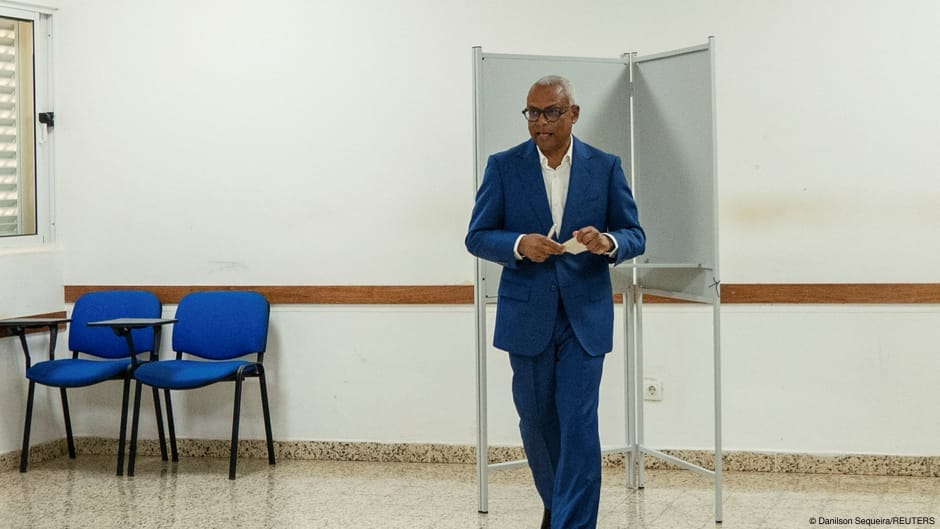
-
Cape Verde's president leads reelection bid with nearly 64% of vote
Neutral Reports the partial official count with exact vote totals and turnout, calling Neves's lead "commanding" while noting counting was incomplete.
-

-
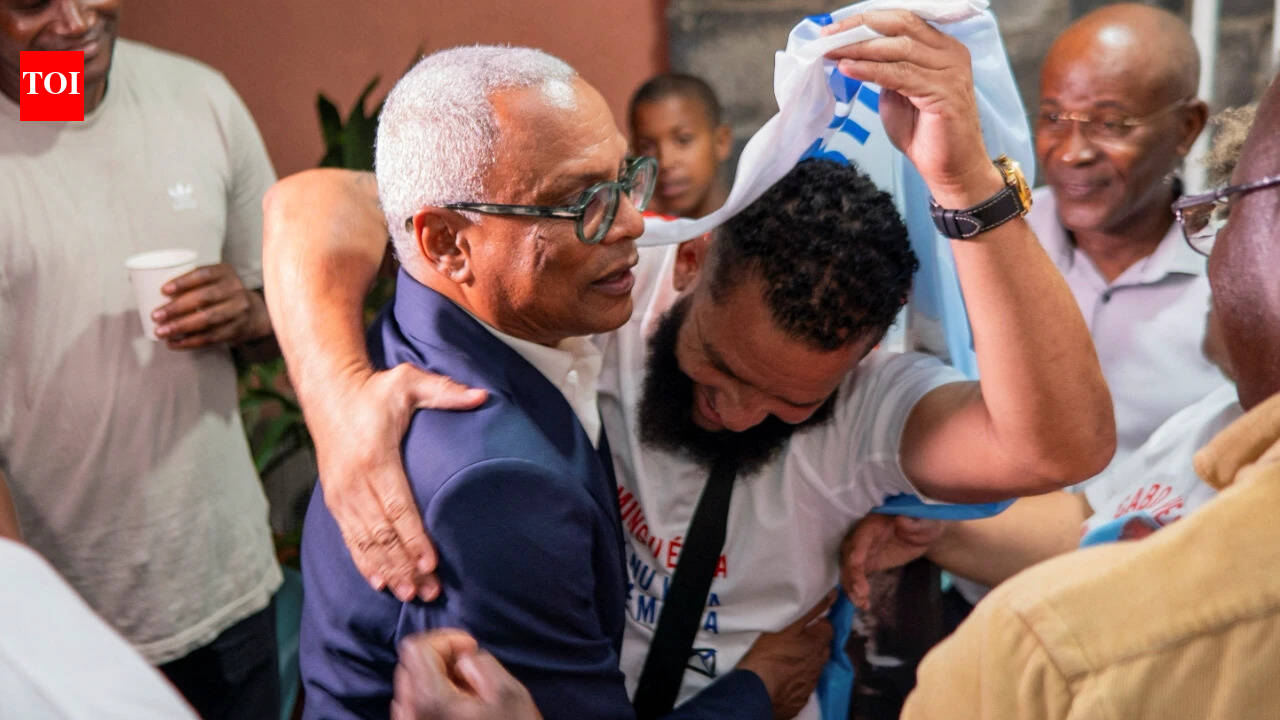
-

Right4 articles
-
The Straits TimesRC · · via Reuters
Cape Verde president eyes new term as party builds on legislative win
Neutral Reuters preview, carried by the Straits Times, presenting Neves as the clear favourite and giving both candidates' platforms.
-
Arab NewsRC · · via Reuters
Cape Verde president eyes new term as party builds on legislative win
Neutral Reuters preview, carried by Arab News with US spellings. It is the same account of Neves as the expected winner and Rosa as the challenger.
-
The Straits TimesRC · · via Reuters
Cape Verde votes for president with emigration in focus
Neutral Reuters voting-day wire in the Straits Times centres on emigration and youth jobs, with Neves tipped by analysts.
-
The Straits TimesRC · · via Reuters
Cape Verde President Neves wins second term, provisional election results show
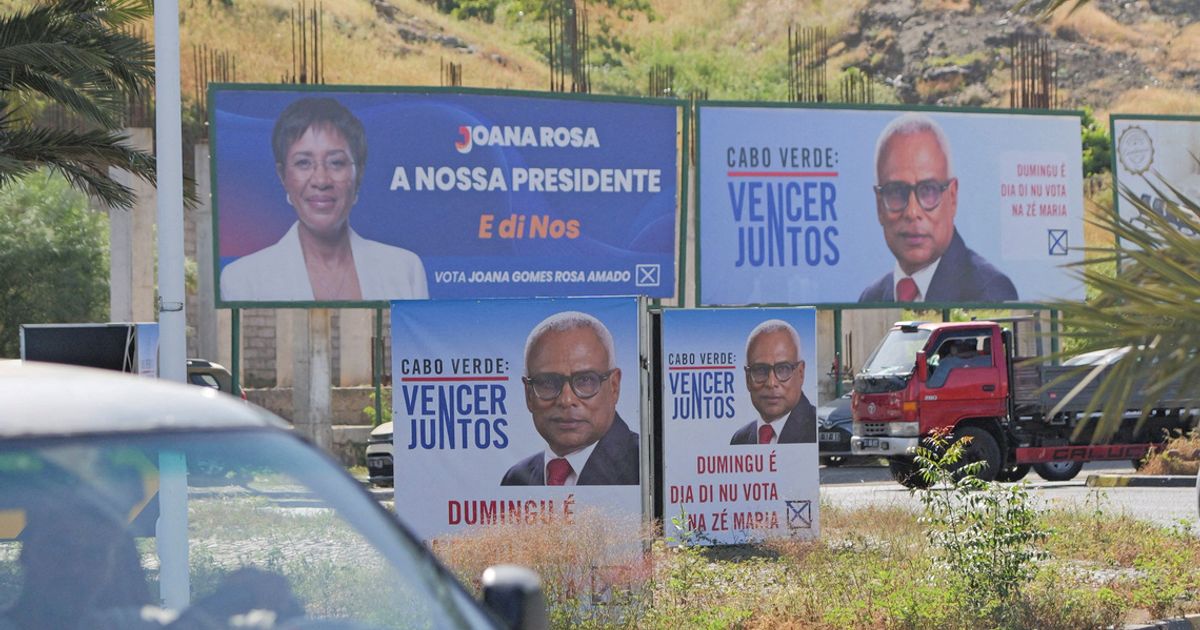

- 13 Nov 07:09 First The Straits TimesRC Cape Verde president eyes new term as party builds on legislative win via Reuters
- 13 Nov 19:46 +12h 37m Arab NewsRC Cape Verde president eyes new term as party builds on legislative win via Reuters
- 15 Nov 03:07 +43h 58m Hindustan TimesN Cape Verde votes for president, with incumbent Jose Maria Neves favoured to win via AFP
- 15 Nov 07:04 +47h 55m The Straits TimesRC Cape Verde votes for president with emigration in focus via Reuters
- 15 Nov 07:56 +48h 47m France 24N Cape Verde could make election history with first female president
- 15 Nov 10:01 +50h 53m RFIN Cape Verde votes for president, with incumbent favoured to win
- 15 Nov 10:03 +50h 54m Al JazeeraLC Polls open in Cape Verde in race with first female presidential candidate
- 15 Nov 10:23 +51h 14m The Times of IndiaN Cape Verde votes in election that could deliver first woman president
- 15 Nov 16:47 +57h 38m Deutsche WelleN Cape Verde goes to the polls in presidential vote
- 15 Nov 16:47 +57h 38m Deutsche WelleN Cape Verde election: Jose Maria Neves set to win second term
- 16 Nov 00:14 +65h 5m Anadolu AgencyN Cape Verde's president leads reelection bid with nearly 64% of vote
- 16 Nov 06:09 +71h 1m The Straits TimesRC Cape Verde President Neves wins second term, provisional election results show via Reuters
- 16 Nov 06:25 +71h 16m Hindustan TimesN José Maria Neves re-elected President of Cape Verde for second five-year term via Reuters
- 16 Nov 08:24 +73h 15m RFIN Neves wins second term as Cape Verde's president: provisional results
- 16 Nov 09:59 +74h 51m The Times of IndiaN Cape Verde president re-elected with 64% of votes, defeats first-ever woman candidate
- 16 Nov 13:12 +78h 3m France 24N Cape Verde President Neves wins second term
Times are when each article was published, or when we first saw it if the outlet gave no time.
Ask about this story
Loading…