CDC report warns drug-resistant pathogens remain an urgent US threat
A new CDC report on antimicrobial resistance identifies 19 pathogens as urgent or serious threats, with four ranked "urgent". Coverage differs on whether it stresses the four urgent threats or MRSA's regional spread.

1 / 3
The story, neutrally told
Left · 2A new report from the US Centers for Disease Control and Prevention (CDC) warns that drug-resistant pathogens remain an urgent problem in the United States. The IndependentLC “Dangerous, drug-resistant superbugs continue to be an urgent problem in the United States, according to a new report from the Centers for Disease Control and Prevention.” Read at The Independent ↗ ABC NewsLC “CDC report warns of 'urgent' threat of drug-resistant bacteria” Read at ABC News ↗ Left · 1According to The Independent, the CDC identified 19 pathogens responsible for 9.7 million infections and 50,800 deaths a year, plus six others under monitoring. The IndependentLC “The CDC identified 19 pathogens, responsible for 9.7 million infections and 50,800 deaths a year, as well as six others that are being monitored.” Read at The Independent ↗ Mixed · 2Four are classed as "urgent threats": Candida auris, carbapenem-resistant Acinetobacter, carbapenem-resistant Enterobacterales and drug-resistant Neisseria gonorrhoeae. The IndependentLC “The four superbugs deemed “urgent threats” include Candida auris, Acinetobacter and Enterobacterales and Neisseria gonorrhoeae.” Read at The Independent ↗ NewsweekN “The CDC’s four “urgent threats” are:” Read at Newsweek ↗
Left · 1The Independent reports that these spread often in medical settings and account for more than 42,000 deaths and nearly $12 billion in healthcare costs, and cites researchers projecting 317,000 annual superbug deaths in North America by 2050. The IndependentLC “accounting for more than 42,000 deaths and nearly $12 billion in healthcare costs, according to the report.”“researchers projecting 317,000 annual deaths from superbugs in North America by 2050” Read at The Independent ↗ Left · 1CDC Director Dr. Erica Schwartz said: "Antimicrobial resistance threatens modern medicine and puts millions of Americans at risk every year." The IndependentLC ““Antimicrobial resistance threatens modern medicine and puts millions of Americans at risk every year,” CDC Director Dr. Erica Schwartz said.” Read at The Independent ↗ Left · 1Per the report as relayed by The Independent, there were an estimated 9,497 CRAB cases and 817 deaths in 2023, and 14,878 CRE cases in hospitalised patients with 1,252 deaths; C. auris caused more than 6,700 infections this year, nearly tenfold the clinical cases since 2019. The IndependentLC “There were an estimated 9,497 cases and 817 deaths in 2023”“There were an estimated 14,878 cases in hospitalized patients in 2023, the new report shows, and 1,252 died due to infections”“more than 6,700 infections across the U.S. this year. Since 2019, the number of clinical cases has increased nearly tenfold.” Read at The Independent ↗
Mixed · 2The report lists 13 further "serious threats" requiring "prompt and sustained action", including MRSA, C. diff, drug-resistant tuberculosis, Salmonella and Shigella. The IndependentLC “The report also identified 13 additional pathogens as “serious threats” that require prompt and sustained action” Read at The Independent ↗ NewsweekN “MRSA is one of 13 “serious threats.”” Read at Newsweek ↗ Centre · 1Newsweek focuses on MRSA, citing CDC estimates of 220,997 hospitalised cases, 7,499 deaths and more than $1.55 billion in costs in 2023, and 2024 state counts of 540 in California, 385 in Pennsylvania and 270 in Texas. NewsweekN “It estimates that, in 2023, it caused 220,997 cases among hospitalized patients, 7,499 associated deaths, more than $1.55 billion in healthcare costs.”“with California recording 540, Pennsylvania 385 and Texas 270.” Read at Newsweek ↗ Centre · 1Newsweek adds that 84 percent of hospitalised MRSA cases in 2023 were community-onset and 16 percent hospital-onset, and said it had asked the CDC for comment. NewsweekN “16 percent were classified as hospital-onset and 84 percent as community-onset”“Newsweek has reached out to the CDC for comment.” Read at Newsweek ↗
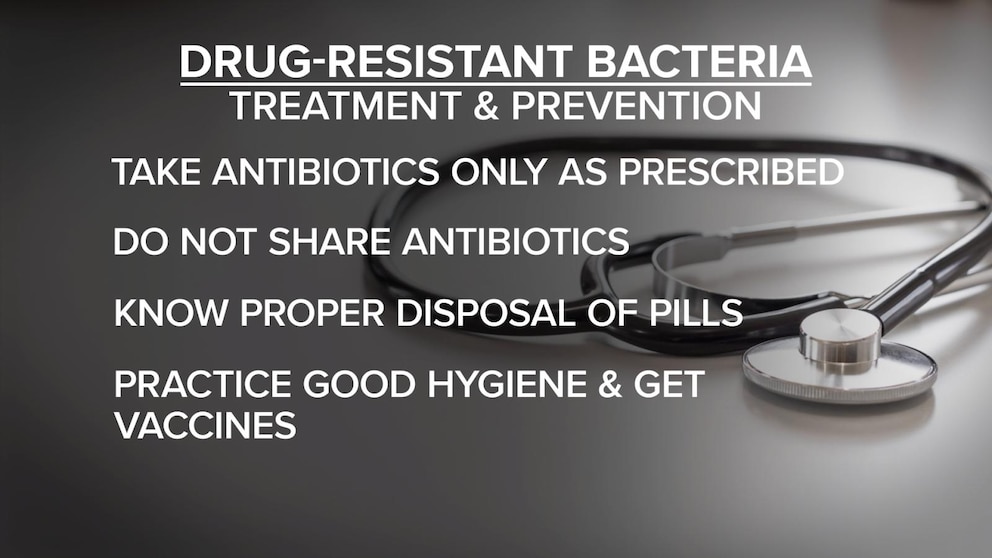
Left · 3Coverage also gives prevention advice: handwashing, disinfecting surfaces, protective equipment in care settings, condom use for gonorrhoea, keeping wounds covered for MRSA, and using antibiotics only as prescribed. ABC News ran a video segment with contributor Dr. Alok Patel on treatment and prevention. The IndependentLC “People can protect themselves from gonorrhea by using a condom during sex and talking with partners about their sexual history.” Read at The Independent ↗ NewsweekN “Antibiotics should also be used, but only as prescribed.” Read at Newsweek ↗ ABC NewsLC “ABC News contributor Dr. Alok Patel explains the report and what people can do for treatment and prevention.” Read at ABC News ↗
Every sentence links to the reporting it rests on. The pill in front of each says where its sources sit: Left, Centre or Right when one side supplies at least half of them, Mixed when they are evenly split. The number is how many outlets it cites.
Left2 outlets
- Framing
- ABC News and The Independent present the report as a public-health warning, with ABC using an expert explainer and The Independent a list of the most urgent superbugs.
- Emphasis
- The four urgent pathogens, deaths and costs, the 2050 projection and individual protection steps.
- Leaves out or plays down
- Neither gives MRSA state-level data; ABC's piece offers no figures.
- Charged language
- “superbugs”“deadly fungus”
- For example
-
“These are the 4 most urgent superbugs spreading in the US this winter” — The Independent
“WATCH: CDC report warns of 'urgent' threat of drug-resistant bacteria” — ABC News
Centre1 outlet
- Framing
- Newsweek uses the report to explain MRSA, with a state map and background, rather than the full set of urgent threats.
- Emphasis
- MRSA burden, state counts, community versus hospital onset, and CDC prevention advice.
- Leaves out or plays down
- Gives little on the headline totals (19 pathogens, 50,800 deaths) or the 2050 projection; the urgent-threat list is thin.
- Charged language
- “Serious Threat”“superbugs”
- For example
-
“Map Shows Where MRSA Most Drug-Resistant as CDC Warns ‘Serious Threat’” — Newsweek
Right0 outlets
No right outlet in our sources has covered this story yet.
What every side reports
- A new CDC report describes drug-resistant pathogens as a major threat in the US.
- The report ranks four pathogens as "urgent threats" and 13 as "serious threats".
- MRSA is among the "serious" threats.
- Coverage gives hygiene and prevention advice.
-
Drug-resistant pathogens pose an urgent threat in the United States.
Supported- Supports 2
- The Independent, Newsweek
- Reports 1
- ABC News
-
Individuals can reduce their risk of drug-resistant infections through hygiene and prevention measures.
Reported- Reports 3
- ABC News, The Independent, Newsweek
CDC organisation
The CDC says antimicrobial resistance threatens modern medicine and puts millions of Americans at risk. It ranks four pathogens as urgent and 13 as serious, and advises hygiene and prudent antibiotic use.
““Antimicrobial resistance threatens modern medicine and puts millions of Americans at risk every year,” CDC Director Dr. Erica Schwartz said.” — The Independent
“The Centers for Disease Control and Prevention (CDC) classifies MRSA as a “serious threat” requiring “prompt and sustained action.”” — Newsweek
Left2 articles
-
WATCH: CDC report warns of 'urgent' threat of drug-resistant bacteria
Neutral Video explainer by a physician contributor on the report, treatment and prevention.
-
These are the 4 most urgent superbugs spreading in the US this winter
Alarmist Lists the four urgent superbugs with deaths, costs and risk groups under a winter-spread headline.
Centre1 article
-
Map Shows Where MRSA Most Drug-Resistant as CDC Warns ‘Serious Threat’
Neutral Explanatory piece on MRSA with a state map, written with an AI assistant and edited by staff.
Right0 articles
No coverage yet.
- 28 Oct 13:24 First ABC NewsLC WATCH: CDC report warns of 'urgent' threat of drug-resistant bacteria
- 28 Oct 16:10 +2h 46m The IndependentLC These are the 4 most urgent superbugs spreading in the US this winter
- 28 Oct 16:23 +2h 59m NewsweekN Map Shows Where MRSA Most Drug-Resistant as CDC Warns ‘Serious Threat’
Times are when each article was published, or when we first saw it if the outlet gave no time.
Ask about this story
Loading…