Healey's Budget on 28 October: pressures on the Chancellor and the stakes for London
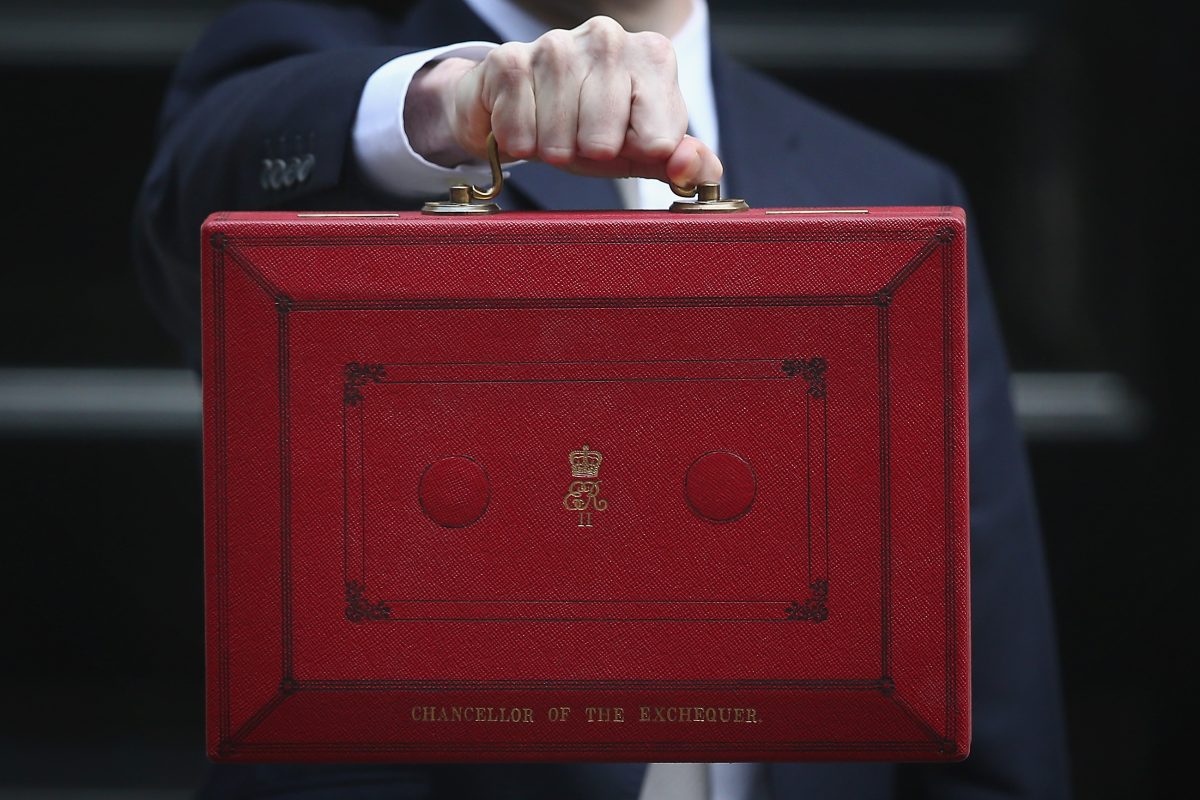
Ahead of Chancellor John Healey's Budget on Wednesday 28 October, previews describe pressure from rising inflation, weak jobs data and high debt. The Evening Standard focuses on how the Budget may affect London.


1 / 4
The story, neutrally told
Mixed · 2Chancellor John Healey is due to deliver the Budget on Wednesday 28 October 2026, and two previews published on 26 October describe a difficult backdrop. Evening StandardN “just days before the Budget on Wednesday, October 28” Read at Evening Standard ↗ City A.M.RC “Healey has to answer to major impending economic tests on the disjointed jobs market, spiralling inflation and complicated public finances on Wednesday.” Read at City A.M. ↗ Centre · 1The Evening Standard says inflation, which it links to the war in Iran, rose to 3.5% in September, and that the Institute for Fiscal Studies has warned the Chancellor must raise taxes, cut welfare, or do a combination of the two, worth £35 billion, to avoid cutting public service budgets. Evening StandardN “It rose to 3.5% in September, intensifying financial misery for millions of households”“by an eye-popping £35 billion to avoid having to take the axe to budgets for public services” Read at Evening Standard ↗ Right · 1City A.M. says Healey must balance the expectations of businesses, traders, backbenchers and voters, and has promised each of them "breathing space". City A.M.RC “John Healey faces a test in balancing expectations between different groups – businesses, traders, backbenchers and voters – and fulfilling a promise to provide “breathing space” to each.” Read at City A.M. ↗
Right · 1On jobs, City A.M. reports youth unemployment above 16 per cent for the first time in 11 years, with business groups blaming taxes and new employment regulations. It cites EY as saying a faster fall in unemployment than currently expected could bring a £40bn windfall to the public finances. City A.M.RC “With youth unemployment surpassing 16 per cent for the first time in 11 years”“he could benefit from a £40bn windfall in public finances, according to EY” Read at City A.M. ↗ Mixed · 2Both pieces highlight public debt: City A.M. says the Office for National Statistics reported gross debt took six years to rise from £2 trillion to £3 trillion, and the Evening Standard calls the £3 trillion debt a "stratospheric" figure that earlier Chancellors failed to tackle. City A.M.RC “it took just six years for gross debt to hit the £3 trillion mark from £2 trillion” Read at City A.M. ↗ Evening StandardN “Britain’s debt mountain, now at a stratospheric £3 trillion” Read at Evening Standard ↗ Right · 1City A.M. says living standards are under pressure since the Iran war, with City economists calling it "extremely likely" that workers on average would take a real pay cut, and that analysts disagree about what is driving faster GDP growth. It reports that City forecasters surveyed by the Treasury expect growth of 1.1 to 1.4 per cent next year. City A.M.RC “Since the Iran war, growth in living standards is under significant pressure.”“City forecasters surveyed by the Treasury broadly agree the UK economy will grow by between 1.1 and 1.4 per cent next year” Read at City A.M. ↗
Centre · 1The Evening Standard's commentary centres on London, describing it as the country's economic engine. It says Londoners each pay at least £5,000 more on average into Treasury coffers than the city receives in spending, and that London and the South East are the only net contributors. Evening StandardN “Londoners each paying at least £5,000 more on average into Treasury coffers than the city receives back in Government spending.”“London and the South East are the only two regions which are net contributors to the public finances.” Read at Evening Standard ↗ Centre · 1The Standard reports that Healey appears set to raise taxes rather than cut benefits. It says City banks are braced for a new £2 billion-a-year tax, that capital gains tax is not expected to rise, that the "mansion tax" threshold is not expected to fall from £2 million to £1.5 million, and that Healey is set to back Sadiq Khan's plan to open Stratford International for cross-Channel rail. It adds that the scale of the tax hit on London will only be known in the hours and days after publication. Evening StandardN “Banks in the City are already braced for a new £2 billion-a-year tax raid.”“He is set to back Lord Sadiq Khan’s plan to open up Stratford International Station for cross-Channel rail services.”“The scale of the tax hit on London, though, will only be known as the fine details of the Budget emerge in the hours and days after its publication.” Read at Evening Standard ↗ Mixed · 2Both pieces set Healey against predecessor Rachel Reeves. The Standard says Healey is wary of repeating her mistakes, including a £20 billion rise in employer National Insurance, and quotes Healey saying they want to "back business in Britain making a profit". City A.M. says some ministers and backbenchers expected Reeves's successor to sound "a little more Labour" and that businesses feel bruised after the last two budgets. Evening StandardN “I want to be a Chancellor who backs business in Britain making a profit”“targeted businesses in her first Budget with a £20 billion increase in National Insurance contributions for employers” Read at Evening Standard ↗ City A.M.RC “Businesses, who feel bruised after the last two budgets, expect Healey to help rein in their swollen cost bases.” Read at City A.M. ↗
Centre · 1The Standard also says the new Prime Minister, Andy Burnham, has lifted Labour's fortunes, that his plans for devolution, cost-of-living help, council homes and public control of utilities will need funding, and that Healey must find billions to lift defence spending to 3% of GDP by 2030. Evening StandardN “Andy Burnham has injected a mood of optimism into Britain since taking over as Prime Minister”“Mr Healey will also need to find billions to raise defence spending, an issue he resigned over, to 3% of GDP by 2030.” Read at Evening Standard ↗
Every sentence links to the reporting it rests on. The pill in front of each says where its sources sit: Left, Centre or Right when one side supplies at least half of them, Mixed when they are evenly split. The number is how many outlets it cites.
Left1 outlet
No left outlet in our sources has covered this story yet.
Centre2 outlets
- Framing
- A commentary asking how the Budget will treat London, which it casts as the economic engine funding other regions, and how Healey can balance tax rises against growth.
- Emphasis
- London's net contribution to the Treasury, a possible £2 billion-a-year bank tax, wealth taxes not expected to rise, and the cost of Andy Burnham's agenda.
- Leaves out or plays down
- Says little about the labour market, living standards or forecast disagreements.
- Charged language
- “tax raid”“enemies of the state”“stratospheric”
- For example
-
“Banks in the City are already braced for a new £2 billion-a-year tax raid.” — Evening Standard
“Among the enemies of the state is inflation, fuelled by Donald Trump’s war in Iran.” — Evening Standard
Right1 outlet
- Framing
- A market-focused explainer built around four charts on the tests Healey faces on jobs, living standards, debt and growth, and whether the Budget keeps the economy on course.
- Emphasis
- Business and investor expectations, youth unemployment, falling real pay, the OBR's warnings on borrowing and a dispute over the sources of growth.
- Leaves out or plays down
- Does not discuss London specifically or the reported tax measures (bank levy, capital gains tax, mansion tax).
- Charged language
- “voracious desire”“near-impossible task”“a problem that is at least partially of the Labour government’s own making”
What every side reports
- The Budget is due on Wednesday 28 October 2026.
- UK public debt is about £3 trillion.
- Both outlets say the Iran war and inflation have added pressure on households and the Chancellor.
- Both contrast Healey's approach with that of predecessor Rachel Reeves.
Where accounts differ
-
What the Budget will contain
- Centre
- Treats a tax-raising Budget as likely, including a £2 billion-a-year bank tax, with no rise in capital gains tax or the mansion tax threshold change.
- Right
- Says the Budget may not contain many radical measures and focuses on questions Healey must answer rather than specific tax measures.
John Healey person
Presented as a Chancellor trying to balance tax rises and growth. In the Standard he says he wants to back business, and City A.M. says he promised "breathing space".
“I want to be a Chancellor who backs business in Britain making a profit” — Evening Standard
“fulfilling a promise to provide “breathing space” to each” — City A.M.
Autumn Budget 2026 event
Seen in the previews as a test of whether the government can steady growth and public finances. Detailed measures, including the effect on London, were still unconfirmed.
“The scale of the tax hit on London, though, will only be known” — Evening Standard
“a fiscal statement, which may not contain many radical measures” — City A.M.
Left2 articles

Centre4 articles
-
-

-
Evening StandardN · · Opinion
Budget 2026: Chancellor John Healey's big London challenge to get Britain firing on all cylinders
Mixed Opinion piece that sympathises with the Chancellor's task, stresses London's fiscal importance, and warns that taxing the wealthy risks driving people out of the capital.
-

Right1 article
-
The major Budget questions facing John Healey in four charts
Critical Data-led preview that frames the Budget as a set of economic tests for Healey and attributes part of the jobs problem to Labour's taxes and regulations.
- 25 Oct 22:26 First Daily MirrorL KEVIN MAGUIRE: 'Brits wait to see what John Healey's first Budget will reveal - but moment may be overshadowed' Opinion
- 26 Oct 00:26 +2h 1m BBC NewsN Healey's Budget needs to sustain the stronger economy through gathering clouds
- 26 Oct 02:16 +3h 50m BBC NewsN What is the Budget and what could be in it?
- 26 Oct 04:00 +5h 34m City A.M.RC The major Budget questions facing John Healey in four charts
- 26 Oct 06:15 +7h 49m Evening StandardN Budget 2026: Chancellor John Healey's big London challenge to get Britain firing on all cylinders Opinion
- 26 Oct 07:14 +8h 48m Daily MirrorL 'Do five things with your cash before Wednesday' says money expert
- 26 Oct 07:33 +9h 7m Evening StandardN Budget 2026: What Chancellor must do to tackle London's housing crisis
Times are when each article was published, or when we first saw it if the outlet gave no time.
Ask about this story
Loading…