China's Golden Week: travel rises but spending per trip falls to four-year low
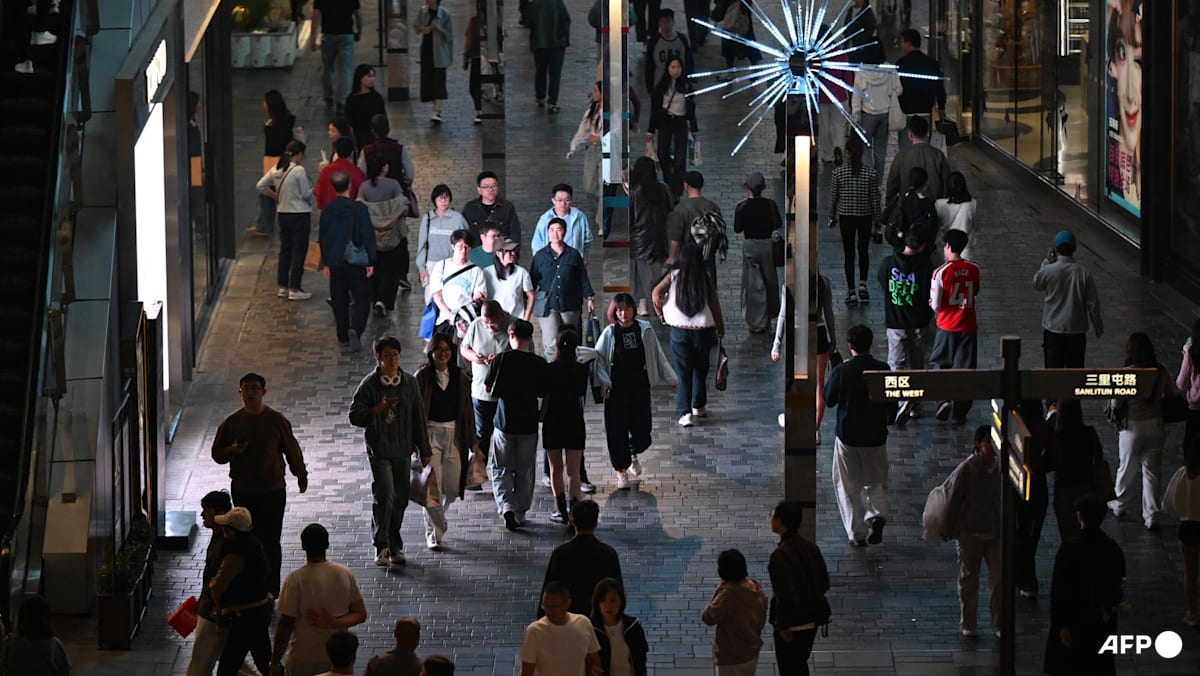
China's National Day Golden Week saw strong travel, including more overseas trips, but average domestic spending per trip fell 1.9% to a four-year low and cinema takings dropped sharply. Analysts attribute the caution to weak confidence and uncertainty over incomes.


1 / 3
The story, neutrally told
Centre · 1Average spending per domestic trip during China's seven-day National Day holiday fell 1.9% to 893.92 yuan (US$133.51) from 911.04 yuan a year earlier, the lowest since 2022, according to Reuters calculations based on government data published on 9 October. CNAN “Average spending per domestic trip during the holiday fell 1.9 per cent to 893.92 yuan (US$133.51) from 911.04 yuan a year earlier, according to Reuters calculations based on government data published on Friday (Oct 9).” Read at CNA ↗ Centre · 2Many travellers combined the holiday with the Mid-Autumn Festival (25–27 September), creating a potential 13-day break, and more of them chose overseas trips. CNAN “many travellers combined it with the Mid-Autumn Festival holiday, which fell on Sep 25 to Sep 27, creating a potential 13-day vacation that encouraged longer, more far-flung trips.” Read at CNA ↗ Deutsche WelleN “the 13-day holiday period that followed the Mid-Autumn Festival on September 25 and China's National Day on October 1.” Read at Deutsche Welle ↗ Centre · 1State media reported a record 25.204 million passenger trips on China's railway network on 1 October, but Citigroup analysts said early data showed moderate spending per traveller and broadly flat traffic, with volume up just 0.1% year on year over the first four days, against 3.5% at Labour Day. Deutsche WelleN “State media, for instance, reported a record-breaking 25.204 million passenger trips on China's railway network on October 1.”“Traffic volume during the first four days of the holiday rose just 0.1% year over year, far below the 3.5% increase seen during this year's Labor Day vacation.” Read at Deutsche Welle ↗
Centre · 1Trip.com Group said more than half of outbound overseas flight bookings were for departures before 1 October, with average trips longer than nine days; bookings for foreign hotel stays of at least seven nights rose 123% and multi-destination itineraries 84%. Spring Tour said September visa applications more than doubled from a year earlier. CNAN “Bookings for foreign hotel stays of at least seven nights rose 123 per cent from a year earlier, while multi-destination itineraries climbed 84 per cent, it added.”“visa application volumes in September more than doubled from a year earlier.” Read at CNA ↗ Centre · 1Other indicators were weak: Jefferies, citing InnHome data, said revenue per available room slipped 0.5% and average daily room rates fell about 2% over 1–5 October, and holiday box office totalled 1.16 billion yuan, down 36.6% and the lowest for the National Day period since 2014, according to Maoyan. CNAN “Average revenue per available room, a key industry measure, slipped 0.5 per cent from a year earlier over Oct1 to Oct 5, while average daily room rates fell about 2 per cent”“revenue during this year's holiday totalled just 1.16 billion yuan, according to data from Chinese film industry analysis platform Maoyan, down 36.6 per cent from a year earlier” Read at CNA ↗ Centre · 2Analysts differ on the cause. Ailsa Liao of Forthright Securities said consumers have a "strong willingness to spend, but weak confidence" amid income and job uncertainty, and Lizzi C. Lee of the Asia Society Policy Institute described a confidence problem tied to the property downturn and soft income expectations. CNAN “"strong willingness to spend, but weak confidence," said Ailsa Liao, a senior analyst at Forthright Securities.” Read at CNA ↗ Deutsche WelleN “Lee, however, saw weak spending during this Golden Week as a confidence problem.” Read at Deutsche Welle ↗
Centre · 1Guo-Chen Wang of the Chung-Hua Institution for Economic Research argued instead that Chinese consumers are "unable to spend" because of a wealth gap in which most savings are held by a small share of the population, and called the government's coupons worth more than 310 million yuan "an old solution to an old problem". Deutsche WelleN “"In fact, we think Chinese consumers are unable to spend."”“The Chinese government attempted to boost Golden Week spending by providing coupons worth more than 310 million yuan (€41.2 million).” Read at Deutsche Welle ↗ Centre · 1Travel restrictions that took effect on 15 September bar citizens deemed a risk to national, industrial or technological security from leaving the country. Wang said outbound travel is growing, though not by much, and Lee saw little evidence of a broad chilling effect on ordinary overseas tourism. Deutsche WelleN “The new restrictions ban citizens from leaving the country if they are deemed to pose a risk to national as well as industrial or technological security.”“Lee said she saw little evidence of a broad chilling effect on ordinary outbound tourism” Read at Deutsche Welle ↗ Centre · 1Travel agencies remain optimistic: Spring Tour expects outbound demand to keep gaining momentum in the fourth quarter and next year. CNAN “"Demand for outbound travel is expected to continue gaining momentum in the fourth quarter and through next year," the company said.” Read at CNA ↗
Every sentence links to the reporting it rests on. The pill in front of each says where its sources sit: Left, Centre or Right when one side supplies at least half of them, Mixed when they are evenly split. The number is how many outlets it cites.
Left0 outlets
No left outlet in our sources has covered this story yet.
Centre3 outlets
- Framing
- Both outlets present the holiday as a travel boom that has not translated into stronger domestic consumption, using Golden Week as a gauge of consumer confidence. DW leads with a traveller's budgeting and expert commentary; CNA leads with the per-trip spending figure and supporting indicators.
- Emphasis
- DW stresses structural causes (wealth gap, property downturn, ineffective coupons) and the new exit rules; CNA stresses data (spending per trip, hotel rates, box office, bookings) and a more optimistic outbound-travel outlook.
- Leaves out or plays down
- DW gives no 2026 per-trip spending figure and CNA does not mention the coupon scheme or the September travel restrictions.
- Charged language
- “stubbornly weak”“dashing hopes”
- For example
-
“Golden Week is viewed as a barometer of the Chinese economy” — Deutsche Welle
“dashing hopes that strong travel demand would spur a broader recovery in consumer spending.” — CNA
Right0 outlets
No right outlet in our sources has covered this story yet.
What every side reports
- Golden Week 2026 combined the Mid-Autumn Festival and National Day holidays into a potential 13-day break.
- Travel volumes were strong but spending per traveller was subdued.
- Last year's average spending per trip was 911.04 yuan.
- Analysts link weak spending to low consumer confidence and the property downturn.
Where accounts differ
-
Why spending is weak
- Centre
- CNA quotes Forthright Securities saying consumers are willing but lack confidence; DW's Lee agrees, while Wang says consumers are unable to spend because of the wealth gap.
-
Effect of September travel restrictions on outbound travel
- Centre
- DW: Wang expected a shift to domestic travel that did not materialise, and Lee saw no broad chilling effect. CNA reports a jump in overseas travel without mentioning the rules.
Left0 articles
No coverage yet.
Centre3 articles
-
China's Golden Week reveals cautious consumer spending despite travel surge
Mixed Human-interest opening and analyst interviews frame cautious spending as a sign of weak confidence and deeper inequality, with doubts about government stimulus.
-
CNAN ·
China Golden Week spending per trip hits four-year low amid overseas travel jump
Critical Data-led report on a four-year low in per-trip spending and weak cinema and hotel figures, balanced by travel firms' optimism on outbound demand.
-
Right0 articles
No coverage yet.
- 7 Oct 14:18 First Deutsche WelleN China's Golden Week reveals cautious consumer spending despite travel surge
- 9 Oct 10:27 +44h 9m CNAN China Golden Week spending per trip hits four-year low amid overseas travel jump
- 9 Oct 11:00 +44h 42m South China Morning PostN China’s hotel room rates disappoint during ‘golden week’ despite tourism boom
Times are when each article was published, or when we first saw it if the outlet gave no time.