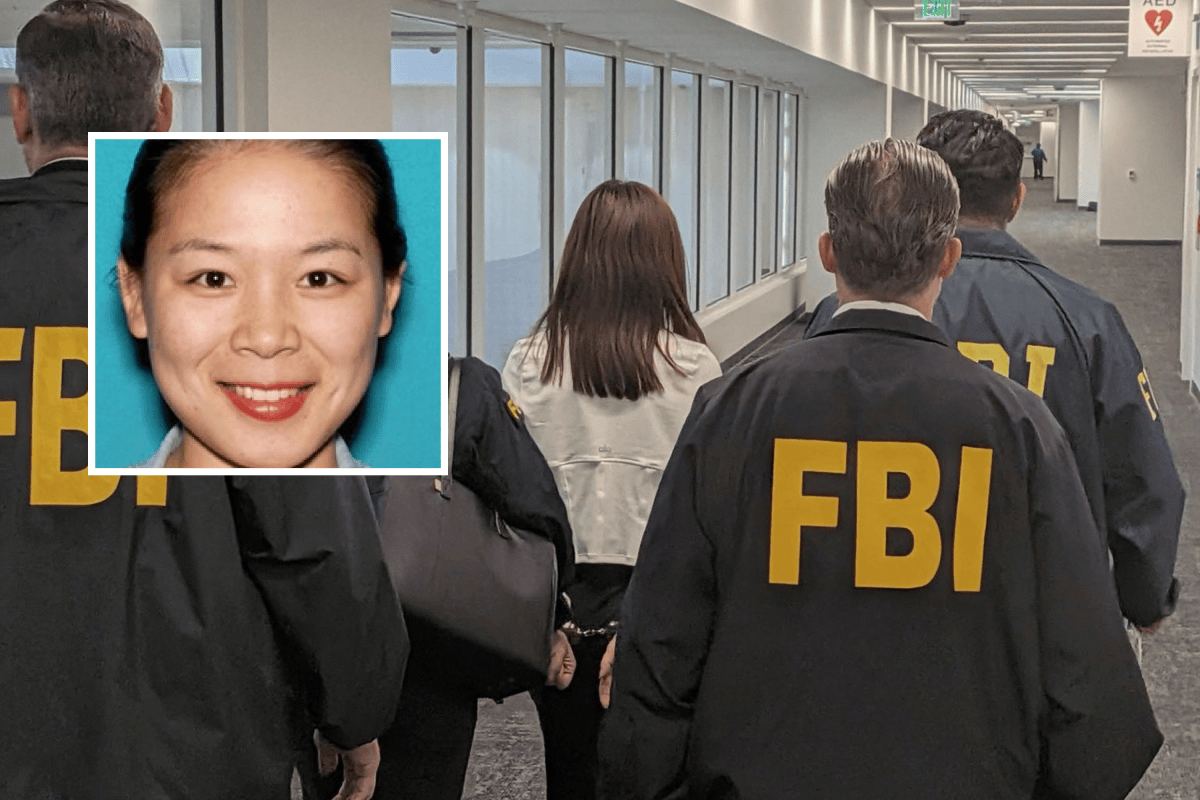
FBI arrest of realtor Wanying Zhang prompts coverage of Chinese spy recruitment in the US
After the FBI arrested Southern California realtor Wanying "Heather" Zhang for allegedly acting as an unregistered agent of China, the New York Post reports a growing Chinese recruitment drive that includes threats to families. Newsweek looks at the legal tools US authorities use against such cases.

1 / 2
The story, neutrally told
Mixed · 2The FBI arrested Wanying "Heather" Zhang, a Southern California realtor, at LAX on Sunday on allegations that Zhang spied for China. New York PostR “the jet-setting Southern California realtor who was arrested by the FBI at LAX on Sunday for allegedly spying for China” Read at New York Post ↗ NewsweekN “whom the FBI arrested last Sunday and alleges is a foreign agent for China” Read at Newsweek ↗ Centre · 1According to an FBI criminal complaint dated October 3, Zhang spied on the son of Taiwan's President Lai Ching-te, who lives in Seattle, "at the direction of officials from the People's Republic of China". Zhang is charged under 18 U.S.C. § 951, acting as an unregistered agent of a foreign government, which carries up to 10 years in prison and a $250,000 fine. NewsweekN “alleges that Zhang spied on the son of Taiwan’s President Lai Ching-te “at the direction of officials from the People’s Republic of China.””“She faces up to 10 years in prison and a fine of $250,000.” Read at Newsweek ↗ Centre · 1Newsweek notes that the Department of Justice describes a criminal complaint as merely an allegation and that defendants are presumed innocent. It adds that Zhang is a naturalized American and a resident of Irvine, California, and studied at the University of International Relations in Beijing. NewsweekN “As the Department of Justice says, a criminal complaint is merely an allegation.”“is not a Chinese citizen. She is a naturalized American and a resident of Irvine, California.” Read at Newsweek ↗
Right · 1The New York Post says the case is the tip of an iceberg and that, in the last year alone, Beijing has been accused of recruiting at least 10 people to spy in the US. It cites other recent cases, including ex-Arcadia mayor Eileen Wang, who pleaded guilty to acting as an agent of the CCP, and Thomas Weir Pauken II, sentenced to two years in Virginia last month. New York PostR “In the last year alone, Beijing has been accused of recruiting at least 10 people to spy for the regime”“pleaded guilty to illegally acting as an agent for the CCP”“was sentenced to two years in prison for acting as an agent of the Chinese government inside the US” Read at New York Post ↗ Right · 1The Post also cites former Navy sailor Jinchao Wei, sentenced to 16 years for selling ship information for $12,000, and the 2025 cases of activist Yuanjun Tang, who pleaded guilty to spying on dissidents, and of British businessman John Miller and his alleged handler Cui Guanghai. New York PostR “former US Navy sailor Jinchao Wei was sentenced to 16 years for selling sensitive ship information to the Chinese government for $12,000”“pleaded guilty to spying on fellow dissidents in New York for the Chinese government” Read at New York Post ↗ Right · 1Experts quoted by the Post say the activity is increasing. Andrew Harding of the Heritage Foundation says China spies on an "industrial scale" through its Ministry of State Security, and former acting Defense Intelligence Agency director David Shedd calls the network "very widespread". New York PostR ““We are seeing a genuine increase in Chinese espionage activity in the US,””“China’s spy network in the US is “very widespread”” Read at New York Post ↗
Right · 1The threat to families comes from human rights expert Yaqiu Wang, quoted by the Post, who says some people are "being forced to do it because their families back home are being threatened". Wang also says the US government is not doing enough to protect people. New York PostR ““There are people being forced to do it because their families back home are being threatened,””“The US government is not doing enough to protect people” Read at New York Post ↗ Centre · 1Newsweek's China Decoded newsletter, by Didi Kirsten Tatlow and John Feng, puts the case in a legal and structural context. It says China's 2017 National Intelligence Law (Article 7) obliges citizens and organisations to "support, assist and cooperate with state intelligence work". NewsweekN “Article 7 of the National Intelligence Law says all Chinese citizens and organizations including companies ought to “support, assist and cooperate with state intelligence work.”” Read at Newsweek ↗ Centre · 1Tatlow writes that Beijing makes heavy use of "hybrid" methods, such as pressuring seemingly private individuals or tasking united front organisations. Such behaviour often falls outside traditional espionage, so US authorities turn to foreign-agent statutes such as Section 951 and FARA-related laws. Tatlow says US intelligence classification rules are poorly suited to these tactics. NewsweekN “persuading, tempting or pressuring apparently private individuals to do jobs for the state”“So the authorities are turning to political influence statutes such as “951,””“intelligence classification rules are not suited to dealing with hybrid tactics” Read at Newsweek ↗
Centre · 1Tatlow also writes that women who attended Zhang's Beijing university told the author they had been asked to spy for China but did not agree to do so. The newsletter says this shows that being asked, or obliged in theory, does not mean someone complied. NewsweekN “every single one of them told me, when I pressed them, that they had been asked to spy for China. They told me they didn’t agree to do it.” Read at Newsweek ↗
Every sentence links to the reporting it rests on. The pill in front of each says where its sources sit: Left, Centre or Right when one side supplies at least half of them, Mixed when they are evenly split. The number is how many outlets it cites.
Left0 outlets
No left outlet in our sources has covered this story yet.
Centre1 outlet
- Framing
- Analytical newsletter that uses Zhang's arrest to explain China's intelligence law, hybrid methods and why US prosecutors use foreign-agent statutes.
- Emphasis
- Legal mechanics (Section 951, FARA), civil-liberties trade-offs in an open society, and the presumption of innocence.
- Leaves out or plays down
- Does not report the Post's count of at least 10 recruits in a year or the claim of threats to recruits' families.
- Charged language
- “deeply abusive”
Right1 outlet
- Framing
- Alarm-led news report that presents Zhang's arrest as the tip of a growing CCP recruitment effort, with threats to families.
- Emphasis
- A list of recent cases and warnings from Heritage Foundation, ex-DIA and human rights voices that US efforts fall short.
- Leaves out or plays down
- Does not mention that the complaint is an allegation or the legal difficulty of prosecuting hybrid espionage. The headline claim about threats to families rests on one source.
- Charged language
- “tip of the iceberg”“industrial scale”“whole party effort”“brazenness”
- For example
-
“is just the tip of the iceberg of a growing network of US-based individuals doing the Communist Party’s bidding.” — New York Post
““The brazenness of the Chinese is on the increase,”” — New York Post
What every side reports
- The FBI arrested Wanying "Heather" Zhang on Sunday on allegations of acting for China.
- Zhang's case is part of a wider pattern of Chinese espionage and influence activity in the US.
- US cases rely on charges of acting as an unregistered foreign agent.
Where accounts differ
-
Scale and nature of the threat
- Centre
- Newsweek says espionage is an ongoing flood but is cautious: a complaint is only an allegation, and being asked to spy does not mean someone agreed.
- Right
- The New York Post presents a "growing network", an "industrial scale" campaign and recruits coerced through threats to their families, with experts saying US efforts are inadequate.
Chinese Communist Party organisation
Described by the coverage as directing recruitment; the Post's expert quotes call it a "whole party effort". No response from the party is reported.
“It is a whole party effort by the CCP to undermine the American way of life” — New York Post
Left0 articles
No coverage yet.
Centre1 article
-
How China Practices the Oldest Profession
Mixed Critical of Beijing's system but cautious on the case, explaining the legal tools and noting the presumption of innocence.
Right1 article
-
Alarmist Presents the arrest as evidence of a surging Chinese recruitment campaign using family threats, relying on expert warnings.
- 7 Oct 20:54 First New York PostR China is ramping up spy recruitment across the US — and threatening people’s families if they don’t sign on
- 8 Oct 10:00 +13h 6m NewsweekN How China Practices the Oldest Profession
Times are when each article was published, or when we first saw it if the outlet gave no time.