Chinese envoy says China could "easily win" a conflict with Philippines; Manila calls it a threat
China's ambassador to Manila, Jing Quan, said Beijing could "easily win" if it used force but would not, and loves peace. Manila called the remark a "thinly veiled threat"; the Chinese embassy said it was taken out of context.
1 / 2
The story, neutrally told
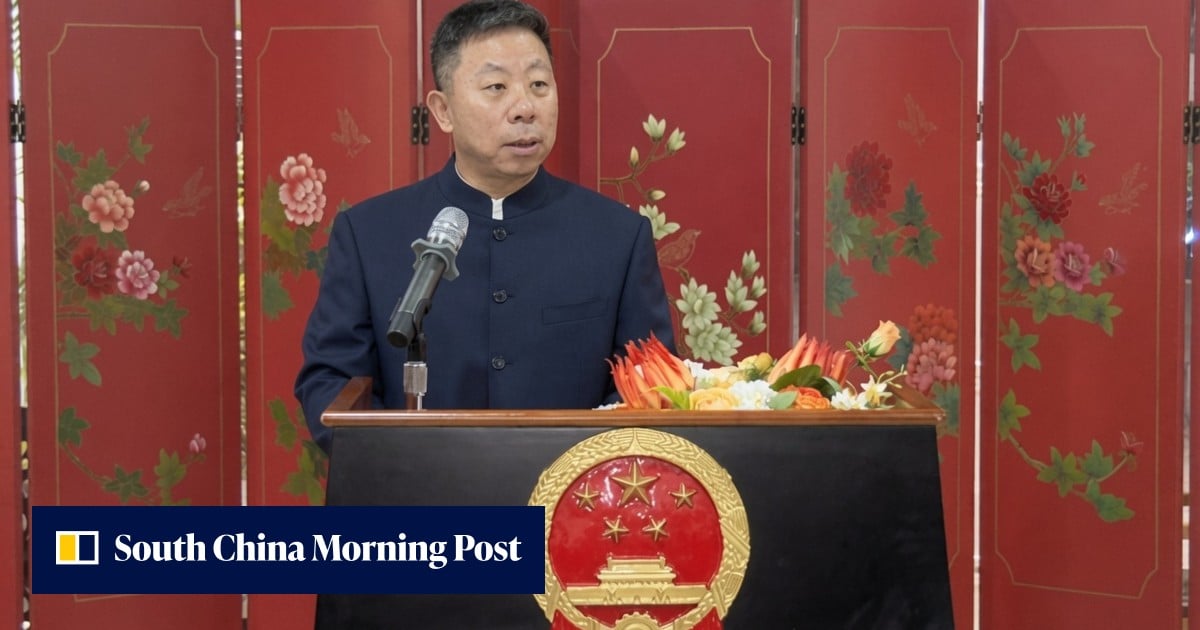
Centre · 2China's ambassador to the Philippines, Jing Quan, told reporters in Manila on Thursday 15 October that "If we want to use force, we may easily win. But no, we will not choose force, and we love peace." CNAN “"If we want to use force, we may easily win. But no, we will not choose force, and we love peace," he said” Read at CNA ↗ South China Morning PostN ““If we want to use force, we may easily win. But no, we’ll not use force. We love peace,” he told reporters.” Read at South China Morning Post ↗ Centre · 2Jing also said others should "feel fortunate enough that you have a neighbour like China in this region", and called the "troublemaker" label "nonsense". CNAN “"We should feel fortunate enough that you have a neighbour like China in this region,"” Read at CNA ↗ South China Morning PostN ““That’s nonsense. Troublemaker? Who’s the troublemaker?” Read at South China Morning Post ↗ Centre · 1The remarks came a day after Philippine defence chief Gilberto Teodoro called China a regional "troublemaker", while disputing Vice President Sara Duterte's characterisation of the Philippines as one; Teodoro cited a long-range ballistic missile test in June. CNAN “"China is the troublemaker, because as far as the South Pacific, they are interfering. They are even dropping missiles,"” Read at CNA ↗
Centre · 2Jing accused Manila of harassing Chinese workers and teachers, without giving specific examples according to CNA; the South China Morning Post said he was apparently referring to the recent departure of Chinese language teachers after security allegations by Manila. CNAN “while accusing Manila of harassing Chinese workers and teachers, without offering specific examples.” Read at CNA ↗ South China Morning PostN “in an apparent reference to the recent departure of Chinese language teachers from the country after security allegations by Manila.” Read at South China Morning Post ↗ Centre · 2The Philippine foreign ministry said late on Thursday that Jing had made "a poor choice of words that would seem to convey a thinly veiled threat of the use of force", calling it "hardly helpful" given the complicated bilateral ties; it also cautioned all accredited diplomats to choose their public words carefully. CNAN “"It is regrettable that Chinese Ambassador Jing Quan today had a poor choice of words that would seem to convey a thinly veiled threat of the use of force,"” Read at CNA ↗ South China Morning PostN “cautioned “all diplomats accredited to the Philippines” to choose their public words carefully” Read at South China Morning Post ↗ Centre · 1Philippine Coast Guard spokesman Rear Admiral Jay Tarriela called the remark a "direct threat" and said "Not using force against a country whose rights you are already violating is not peace. It is coercion by other means!" CNAN “"Not using force against a country whose rights you are already violating is not peace. It is coercion by other means!"” Read at CNA ↗
Centre · 1President Ferdinand Marcos Jnr said the remark sounded "very much to me like a threat" and was "not a very diplomatic statement", and that he sought to clarify its exact meaning. South China Morning PostN “the Chinese ambassador’s remark sounded “very much to me like a threat”, and that it was “not a very diplomatic statement”.” Read at South China Morning Post ↗ Centre · 2The Chinese embassy confirmed Jing's remarks but accused Tarriela of taking them out of context and seeking to undermine relations; in a statement on Friday it criticised Manila's "selective quotation and overinterpretation" and urged the Philippines to play a more responsible role. CNAN “accused Tarriela of taking them out of context and scheming to undermine bilateral relations.” Read at CNA ↗ South China Morning PostN “criticised Manila’s “selective quotation and overinterpretation”” Read at South China Morning Post ↗ Centre · 2In his speech, Jing described relations as at an "extremely sensitive and critical juncture" and warned of a "vicious cycle of mutual targeting and retaliation"; CNA describes the venue as a school in Manila, while the South China Morning Post places the remarks at a South China Sea conference in Quezon City. South China Morning PostN ““extremely sensitive and critical juncture””“on the sidelines of a conference on the South China Sea in Quezon City” Read at South China Morning Post ↗ CNAN “after giving a speech at a school in Manila.” Read at CNA ↗
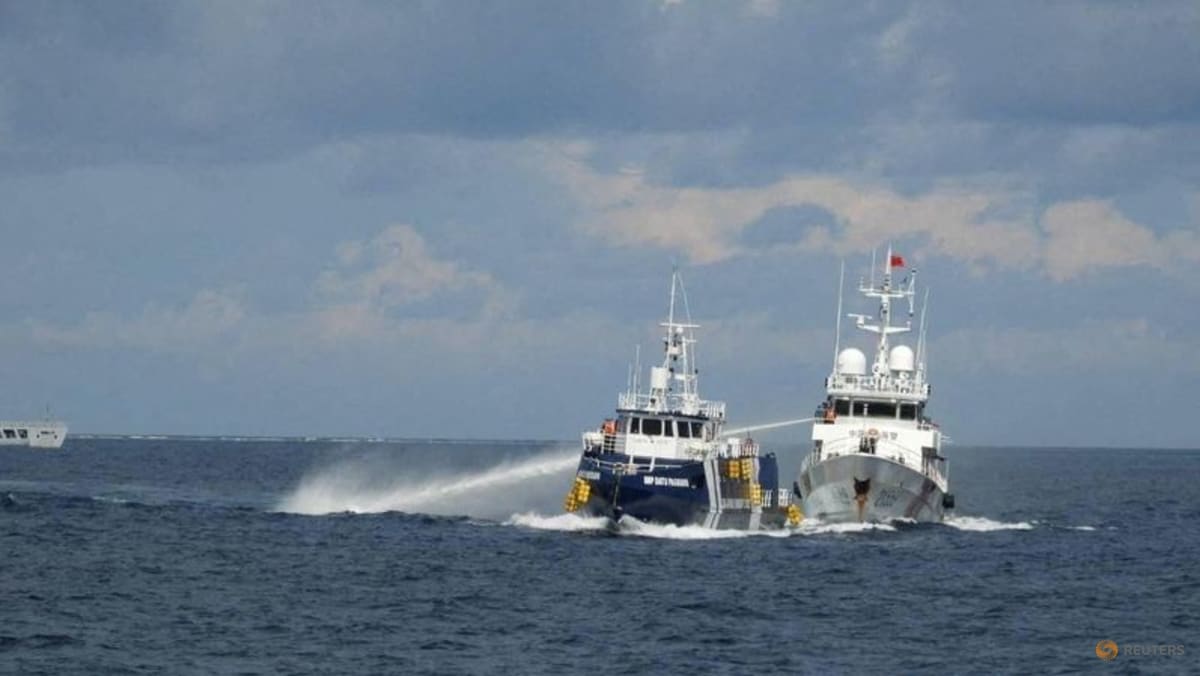
Centre · 2The exchange comes amid rising tension over Scarborough Shoal, where Beijing has repeatedly driven away Philippine aircraft, and after the Philippine Coast Guard accused China of obstructing the medical evacuation of an ailing Filipino soldier near Second Thomas Shoal; Beijing claims most of the South China Sea despite an international ruling that its claim has no legal basis. South China Morning PostN “with Beijing repeatedly driving away Philippine aircraft over the shoal in recent months” Read at South China Morning Post ↗ CNAN “Beijing claims most of the South China Sea despite an international ruling that its assertion has no legal basis”“the Philippine Coast Guard accused its Chinese counterparts of obstructing the medical evacuation of an ailing Filipino soldier” Read at CNA ↗
Every sentence links to the reporting it rests on. The pill in front of each says where its sources sit: Left, Centre or Right when one side supplies at least half of them, Mixed when they are evenly split. The number is how many outlets it cites.
Left0 outlets
No left outlet in our sources has covered this story yet.
Centre2 outlets
- Framing
- Both outlets report a diplomatic row: the ambassador's remark, Manila's rebuke, and the Chinese embassy's reply, set against South China Sea tensions.
- Emphasis
- CNA stresses Philippine officials' reactions and the legal and incident background; the SCMP adds Marcos's reaction, Jing's speech on strained ties, and Scarborough Shoal tensions.
- Leaves out or plays down
- CNA does not carry Marcos's comment or the embassy's Friday statement. The SCMP does not mention Teodoro's remarks or Tarriela's criticism.
- Charged language
- “thinly veiled threat”“troublemaker”“coercion by other means”
- For example
-
“comments the archipelago nation said could be read as a "thinly veiled threat".” — CNA
“remarks that have drawn sharp criticism from ” — South China Morning Post
Right0 outlets
No right outlet in our sources has covered this story yet.
What every side reports
- Jing Quan said on 15 October that China could 'easily win' if it used force but would not.
- The Philippine foreign ministry called the remark a 'thinly veiled threat of the use of force'.
- The Chinese embassy confirmed the remarks but said they were taken out of context or over-interpreted.
- The remarks came amid tension over disputed South China Sea features, including a medical evacuation dispute.
Where accounts differ
-
Meaning of Jing's remark
- Centre
- Manila (foreign ministry, Tarriela, Marcos) reads it as a threat or coercion; the Chinese embassy says it was taken out of context and that Jing stressed peace and friendship.
-
Where Jing spoke
- Centre
- CNA says he spoke to reporters after a speech at a school in Manila; the SCMP says he spoke on the sidelines of a South China Sea conference in Quezon City.
Jing Quan person
Says China could easily win if it used force but will not, that it loves peace, and that the troublemaker label is nonsense; he also accuses Manila of targeting Chinese teachers.
““If we want to use force, we may easily win. But no, we’ll not use force. We love peace,” he told reporters.” — South China Morning Post
Gilberto Teodoro person
Called China the regional troublemaker a day before Jing's remarks and rejected the idea that the Philippines is one.
“"China is the troublemaker, because as far as the South Pacific, they are interfering.” — CNA
Philippines place
Its foreign ministry, coast guard spokesman and president read the remark as a threat or coercion and called it undiplomatic.
““very much to me like a threat”” — South China Morning Post
“"direct threat"” — CNA
China place
The Chinese embassy says Jing's words were taken out of context, that China sees the Philippines as a friendly neighbour, and that Manila over-interpreted them.
“a friend bound to China by deep historical and cultural ties” — CNA
“criticised Manila’s “selective quotation and overinterpretation”” — South China Morning Post
Left0 articles
No coverage yet.
Centre2 articles
-
CNAN ·
China says can 'easily win' confrontation with Philippines
Neutral Reports the remark as part of a Manila-Beijing war of words, giving Philippine officials' rebuttals and the Chinese embassy's reply.
-
Envoy says China ‘could easily win’ conflict as Manila claims it is ‘thinly veiled threat’
Neutral Presents the remark and the exchange of statements, adding Jing's fuller speech on relations and Marcos's reaction.
Right0 articles
No coverage yet.
- 16 Oct 04:28 First CNAN China says can 'easily win' confrontation with Philippines
- 16 Oct 07:58 +3h 31m South China Morning PostN Envoy says China ‘could easily win’ conflict as Manila claims it is ‘thinly veiled threat’
Times are when each article was published, or when we first saw it if the outlet gave no time.
Ask about this story
Loading…