Peking University team develops self-charging toothbrush that cut plaque in trial
Researchers at Peking University made toothbrush bristles from piezoelectric plastic that generate a weak current as they bend. In a three-month trial the brush reduced plaque, gum inflammation and bleeding more than nylon brushes did; larger studies are still needed.
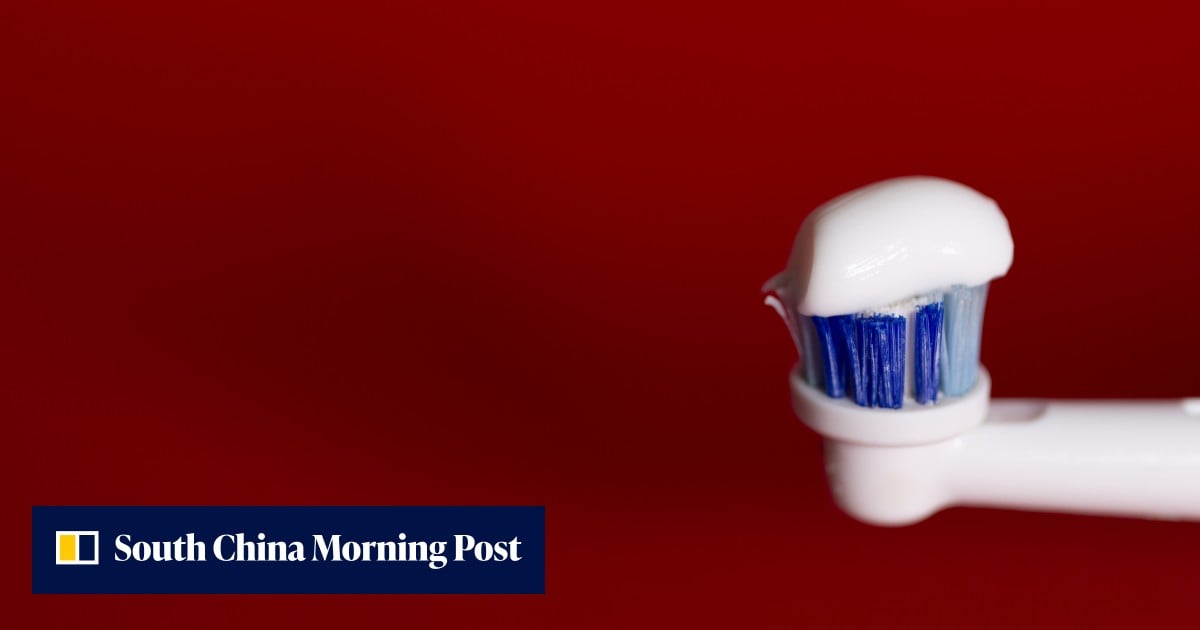

1 / 2
The story, neutrally told
Centre · 2Researchers in China have developed a toothbrush whose bristles generate their own weak electric current as they bend during brushing, and a clinical trial found it reduced plaque, gum inflammation and bleeding more than a conventional nylon brush. New ScientistN “The toothbrush uses special bristles that produce electricity as they bend, triggering the formation of molecules that damage bacterial membranes.” Read at New Scientist ↗ South China Morning PostN “In a clinical trial, those using the electric toothbrushes showed significantly greater reductions in dental plaque, gum inflammation and bleeding compared with those using regular toothbrushes.” Read at South China Morning Post ↗ Centre · 2The bristles are made from a piezoelectric plastic, which the South China Morning Post identifies as polyvinylidene fluoride (PVDF). The current drives the production of reactive oxygen species, which damage bacteria, while the bristles also remove plaque physically. South China Morning PostN “Zhang and his team used polyvinylidene fluoride (PVDF) to make bristles that generate a mild current.” Read at South China Morning Post ↗ New ScientistN “to develop toothbrush bristles made from piezoelectric plastic.” Read at New Scientist ↗ Centre · 2The work comes from Peking University and was published online in the journal Science Advances, according to the SCMP. The SCMP names Zhang Xuehui, director of the Dental Materials Laboratory at the university's School and Hospital of Stomatology, as corresponding author. New Scientist names Yanhui Lu of Peking University as the researcher leading the team. South China Morning PostN “The study was published online in the journal Science Advances.”“Zhang Xuehui, the corresponding author of the article and director of the Dental Materials Laboratory at Peking University School and Hospital of Stomatology” Read at South China Morning Post ↗ New ScientistN “Now, Yanhui Lu at Peking University in China and her colleagues have turned to studies showing that so-called piezoelectric materials fight bacteria” Read at New Scientist ↗
Centre · 1In laboratory tests, New Scientist reports, the thicker piezoelectric bristles killed about 53 per cent of Streptococcus mutans, which causes cavities, and 78 per cent of Porphyromonas gingivalis, which contributes to gum disease. Nylon bristles killed 9 and 8 per cent respectively. New ScientistN “killing about 53 per cent of Streptococcus mutans, which causes cavities, and 78 per cent of Porphyromonas gingivalis, which contributes to gum disease, compared with just 9 and 8 per cent, respectively, for nylon bristles.” Read at New Scientist ↗ Centre · 2Plaque grown from human mouths on pieces of cow enamel was brushed for 3 minutes, and the new brushes removed more than 99 per cent of it, against about 80 per cent for nylon. The SCMP also cites a cleaning efficiency of over 99 per cent and good biocompatibility in laboratory and animal experiments. New ScientistN “The new toothbrushes removed more than 99 per cent of the plaque, compared with about 80 per cent for conventional nylon brushes.” Read at New Scientist ↗ South China Morning PostN “with a cleaning efficiency of over 99 per cent and good biocompatibility, the study said.” Read at South China Morning Post ↗ Centre · 2In the human trial, volunteers were randomly assigned to the piezoelectric or a nylon brush for three months. New Scientist counts 109 adults using their brush twice daily and reports reductions of roughly 40 per cent in plaque, gum inflammation and bleeding, against around 15 per cent for conventional brushes. The SCMP counts 115 volunteers, with tooth and gum diseases such as periodontitis or dental caries, and says all received identical instructions on toothpaste and brushing. New ScientistN “109 adults with dental plaque and gum inflammation, who were randomly assigned to use either a piezoelectric or nylon toothbrush twice daily for three months.”“reductions of roughly 40 per cent in plaque build-up, gum inflammation and bleeding among those using the piezoelectric brushes, compared with around 15 per cent” Read at New Scientist ↗ South China Morning PostN “a trial involving 115 volunteers with tooth and gum diseases such as periodontitis or dental caries” Read at South China Morning Post ↗
Centre · 2The SCMP says no volunteers reported pain, numbness or electric shocks. New Scientist adds that the bristles met Chinese national standards for softness and strength, stayed soft and kept their electrical properties after three months of use, and that sequencing of plaque from the piezoelectric group showed fewer harmful bacteria and more potentially beneficial ones. South China Morning PostN “no volunteers reporting problems such as pain, numbness or electric shocks.” Read at South China Morning Post ↗ New ScientistN “Genetic sequencing of the dental plaque from the piezoelectric group also revealed a decline in the relative abundance of harmful bacteria” Read at New Scientist ↗ Centre · 2Outside researchers and the authors both call for more evidence. Nicholas Jakubovics of Newcastle University, who was not involved, called the concept "great" and "really innovative", but said larger studies must show whether the brush prevents cavities and tooth loss. Zhang said further comparisons with existing technology are needed to establish the new technique's advantages. New ScientistN “Larger studies now need to establish whether the toothbrush actually prevents issues like cavities and tooth loss, says Jakubovics.” Read at New Scientist ↗ South China Morning PostN “Zhang added that the further comparisons with existing technology would be needed to establish the advantages of the new technique.” Read at South China Morning Post ↗ Centre · 1Earlier approaches include brushes with antibacterial silver or zinc nanoparticles in the bristles, whose long-term effectiveness is uncertain, and ionic brushes that use electric currents to loosen plaque but depend on batteries. New ScientistN “Researchers have previously developed toothbrushes with antibacterial metal nanoparticles, including silver and zinc, embedded in their bristles, although their long-term effectiveness is uncertain.” Read at New Scientist ↗
Every sentence links to the reporting it rests on. The pill in front of each says where its sources sit: Left, Centre or Right when one side supplies at least half of them, Mixed when they are evenly split. The number is how many outlets it cites.
Left0 outlets
No left outlet in our sources has covered this story yet.
Centre2 outlets
- Framing
- Both outlets present the brush as a promising advance over friction-only cleaning. New Scientist leads with efficacy and an independent expert's view; the SCMP opens with the near-universal problem of bacteria returning after brushing.
- Emphasis
- New Scientist gives detailed numbers (bacterial kill rates, plaque removal, trial reductions) and an outside expert's caveat. The SCMP stresses safety, with no shocks felt, and quotes the lead author on the potential of self-charged materials.
- Leaves out or plays down
- The SCMP gives no figures for the trial's effect size and no independent expert. New Scientist does not mention PVDF or the Science Advances journal.
- Charged language
- “battle against bacteria”“silently”
- For example
-
“it led to more than twice the reduction of plaque, gum inflammation and bleeding as conventional toothbrushes.” — New Scientist
“No matter how thoroughly you brush your teeth in the morning and evening, the battle against bacteria is almost certain to be lost.” — South China Morning Post
Right0 outlets
No right outlet in our sources has covered this story yet.
What every side reports
- The toothbrush bristles generate a weak electric current as they bend, which produces reactive oxygen species that harm bacteria.
- The research comes from Peking University.
- In a three-month randomised trial against nylon brushes, the new brush reduced plaque, gum inflammation and bleeding more.
- Laboratory tests found over 99 per cent plaque removal for the new bristles.
- Further, larger or comparative studies are needed.
Where accounts differ
-
Number of trial participants
- Centre
- New Scientist reports 109 adults; the SCMP reports 115 volunteers.
-
Who is named as lead researcher
- Centre
- New Scientist names Yanhui Lu as leading the team; the SCMP names Zhang Xuehui as corresponding author and team leader.
Dental health topic
Coverage presents oral disease as widespread and brushing as incomplete at removing bacteria, so improvements to dental care could matter. Independent expert Nicholas Jakubovics welcomes the idea but wants larger studies on cavities and tooth loss.
“Oral diseases, such as tooth decay, affect nearly half the global population.” — New Scientist
“Anything that even slightly improves the way dental care works could have a benefit, because oral disease is just so widespread.” — New Scientist
UK and Ireland1 outlet
New Scientist gives quantitative detail and an independent UK academic's assessment, with a call for larger studies.
““The concept is great,” says Nicholas Jakubovics at Newcastle University, UK, who wasn’t involved in the research.” — New Scientist
New Scientist
East and Southeast Asia1 outlet
The SCMP frames it as a Chinese scientific achievement and relies on the lead author's account, with safety as a key point.
“The brushes also proved to be safe to use, with no volunteers reporting problems such as pain, numbness or electric shocks.” — South China Morning Post
South China Morning Post
Left0 articles
No coverage yet.
Centre2 articles
-
Toothbrush that emits electricity may more effectively prevent gum disease
Sympathetic Detailed science report presenting the results as promising, with an independent expert's praise and a caveat that larger studies are needed.
-
Chinese scientists make a toothbrush that uses mild electric shocks to reduce plaque
Sympathetic Accessible feature opening with the everyday problem of bacteria, then presenting the brush as a new approach, with the lead author's quote and emphasis on safety.
Right0 articles
No coverage yet.
- 4 Nov 19:00 First New ScientistN Toothbrush that emits electricity may more effectively prevent gum disease
- 4 Nov 19:00 First South China Morning PostN Chinese scientists make a toothbrush that uses mild electric shocks to reduce plaque
Times are when each article was published, or when we first saw it if the outlet gave no time.
Ask about this story
Loading…