Chinese team identifies 11,742 viruses, mostly new, in Pacific seabed nodule zone
A Chinese research team reported in Nature Communications that sediment from the Clarion-Clipperton Zone held 11,742 viruses, over 99% previously unknown. The authors present the work as a pre-mining baseline for environmental assessments.

1 / 2
The story, neutrally told
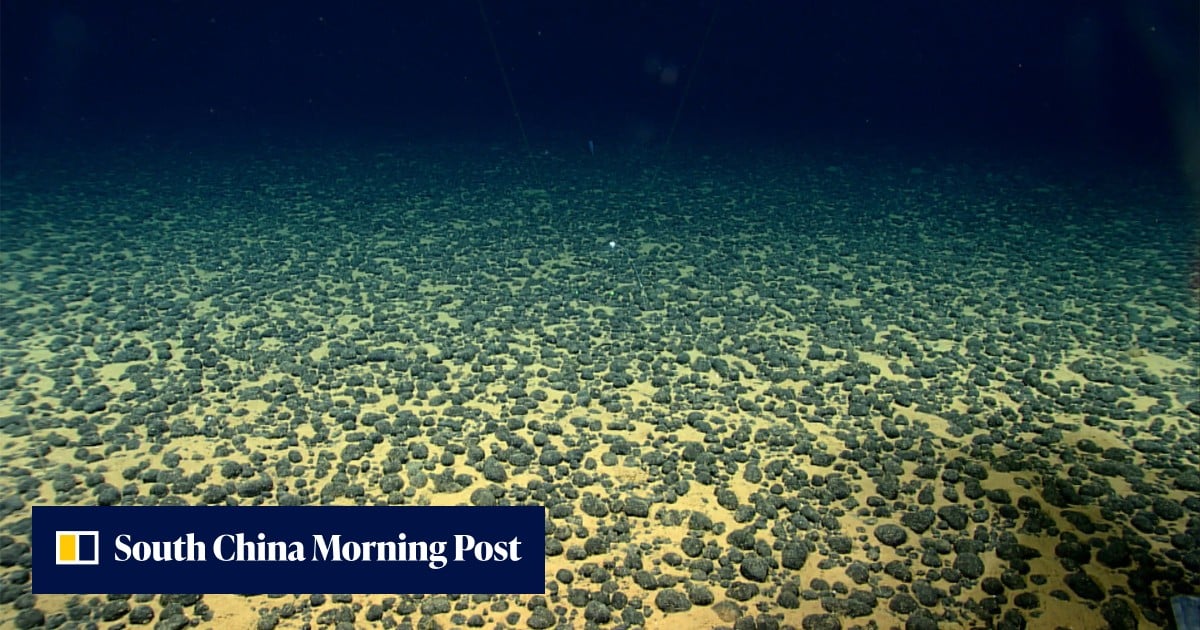
Mixed · 2A Chinese research team identified 11,742 different viruses in sediment samples from the Clarion-Clipperton Zone in the Pacific Ocean, of which 11,662, over 99 per cent, were new discoveries. South China Morning PostN “identified 11,742 different viruses.” Read at South China Morning Post ↗ Daily MirrorL “Researchers from Chongqing University in China identified 11,662 new microbes in the Clarion-Clipperton Zone” Read at Daily Mirror ↗ Mixed · 2The zone lies between Mexico and Hawaii, at depths of up to 6,000 metres, and is scattered with potato-sized, metal-rich polymetallic nodules containing nickel, cobalt and manganese. South China Morning PostN “beneath the surface of the Pacific Ocean between Mexico and Hawaii” Read at South China Morning Post ↗ Daily MirrorL “These rocks contain valuable metals such as cobalt, nickel and manganese” Read at Daily Mirror ↗ Centre · 1The study was published in Nature Communications in late September, according to the South China Morning Post; its first author, Hou Bowen, is a joint doctoral student at Chongqing University and the Second Institute of Oceanography under China's Ministry of Natural Resources. South China Morning PostN “which was published in Nature Communications late last month.” Read at South China Morning Post ↗
Mixed · 2The 60 samples were collected in 2023 and 2024 by an association holding a Chinese exploration contract in the zone, the China Ocean Mineral Resources R&D Association. South China Morning PostN “collected in 2023 and 2024” Read at South China Morning Post ↗ Daily MirrorL “researchers studied more than 60 seabed sediment samples gathered by the China Ocean Mineral Resources R&D Association” Read at Daily Mirror ↗ Mixed · 2Comparing the viruses with data from seawater, trenches and hydrothermal environments, the team found only about 4 per cent of their protein clusters matched at least one external data set, suggesting viral lineages not yet recorded by science. South China Morning PostN “Only about 4 per cent of the protein clusters of the viruses found in the zone were shared with at least one external data set.” Read at South China Morning Post ↗ Daily MirrorL “just 4% of the viruses' protein clusters matched those in global databases” Read at Daily Mirror ↗ Mixed · 2Most of the viruses belong to the class Caudoviricetes, tailed viruses that infect bacteria; both outlets say they are not believed to be dangerous to humans. South China Morning PostN “These viruses are not generally dangerous to humans; they can only target and destroy bacteria.” Read at South China Morning Post ↗ Daily MirrorL “While the deep-sea organisms are not believed to pose any threat to human health” Read at Daily Mirror ↗
Centre · 1The authors say the findings establish a pre-mining baseline of the microbial ecosystem for future environmental impact assessments. South China Morning PostN “establishing a vital pre-mining baseline of microbial ecosystem for future environmental impact assessments” Read at South China Morning Post ↗ Mixed · 2Viruses help regulate microbes that drive carbon, nitrogen, phosphorus, sulphur and metal cycles and release nutrients; the concern is that mining, by disturbing sediment and creating plumes, could disrupt these networks. Daily MirrorL “Viruses play a crucial role in regulating microbes that drive essential cycles involving carbon, nitrogen, phosphorus, sulphur and metals.” Read at Daily Mirror ↗ South China Morning PostN “Once mining disturbs the sediment, the viruses may not be able to perform their role in the seabed ecosystem” Read at South China Morning Post ↗ Mixed · 2These are potential risks, not evidence of damage: no commercial mining has yet taken place in the zone, where the International Seabed Authority has issued 17 exploration contracts, five held by China, and exploration licences differ from authorisation to mine commercially. South China Morning PostN “the International Seabed Authority has issued 17 exploration contracts for the area, five of which are held by China.” Read at South China Morning Post ↗ Daily MirrorL “These remain potential risks, rather than evidence that commercial mining has already damaged the viral communities identified in the study.” Read at Daily Mirror ↗
Every sentence links to the reporting it rests on. The pill in front of each says where its sources sit: Left, Centre or Right when one side supplies at least half of them, Mixed when they are evenly split. The number is how many outlets it cites.
Left1 outlet
- Framing
- Discovery story with a 'hidden' viruses hook, reassuring on health risk and concerned about mining threats to undersea ecosystems.
- Emphasis
- Little human understanding of the deep sea, the viruses' ecological role, mining plumes, and EV-battery demand; notes that licences are not mining permission.
- Leaves out or plays down
- Does not name the journal, the first author or the 11,742 total; attributes some content to the Daily Star.
- Charged language
- “lurking”“hiding on the Pacific Ocean floor”“Bugs”
- For example
-
“the discovery highlights just how little we understand about underwater ecosystems” — Daily Mirror
Centre1 outlet
- Framing
- Science-and-resources story led by the zone's mineral wealth and China's exploration stake, then the study's findings and the baseline for impact assessments.
- Emphasis
- Chinese institutions and contract holdings, the first author's quote, and that human activity threatens the viruses more than the reverse.
- Leaves out or plays down
- Does not stress the electric-vehicle battery demand driving interest in the metals.
- Charged language
- “mysterious viruses”
- For example
-
“future deep-sea miners will discover more than mineral wealth” — South China Morning Post
Right0 outlets
No right outlet in our sources has covered this story yet.
What every side reports
- The study found 11,742 viruses in Clarion-Clipperton Zone sediment, with 11,662 (over 99%) new.
- Only about 4% of protein clusters matched external data sets.
- The viruses mostly infect bacteria and are not believed to threaten humans.
- The International Seabed Authority has issued 17 exploration contracts/licences in the zone, five held by China.
- Samples came from the China Ocean Mineral Resources R&D Association.
Left1 article
-
Scientists discover nearly 12,000 unknown viruses hiding on the Pacific Ocean floor
Mixed Eye-catching discovery piece with an ecological-risk angle, but careful to say harms are potential and not proven.
Centre1 article
-
Chinese team finds 11,700 new viruses in world’s biggest seabed metal deposit
Neutral Explanatory report tying the findings to China's exploration contracts and pre-mining environmental baselines.
Right0 articles
No coverage yet.
- 14 Oct 05:00 First South China Morning PostN Chinese team finds 11,700 new viruses in world’s biggest seabed metal deposit
- 15 Oct 14:29 +33h 30m Daily MirrorL Scientists discover nearly 12,000 unknown viruses hiding on the Pacific Ocean floor
Times are when each article was published, or when we first saw it if the outlet gave no time.
Ask about this story
Loading…