Storm system forecast for central US on Election Day could affect turnout
Forecasters expect a storm system to cross the central US on Election Day, Tuesday, with rain, wind and possible severe weather in Texas, Kansas, Iowa and nearby states. Exact timing and track remain uncertain.
Updated (version 2). New coverage since the last version from Newsweek, The Independent.
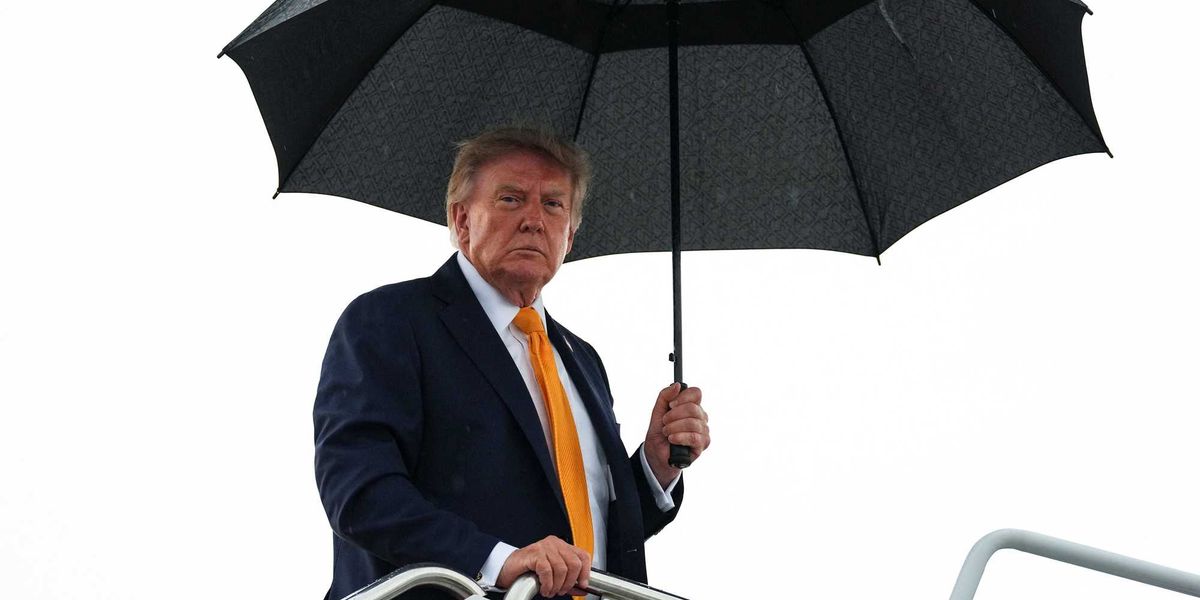

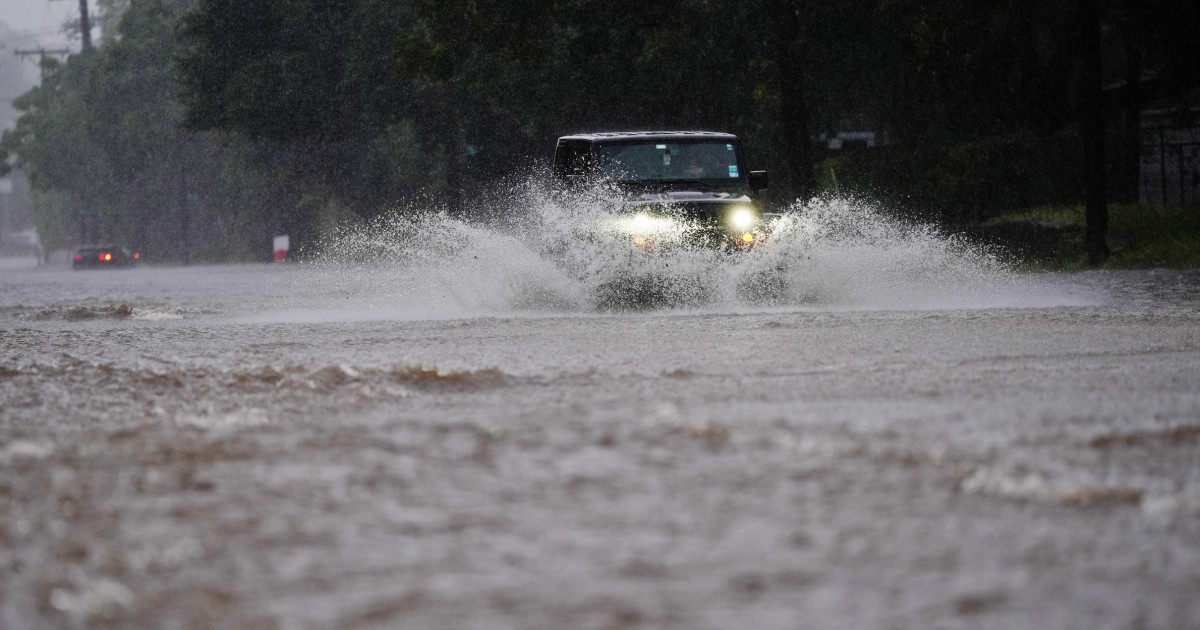
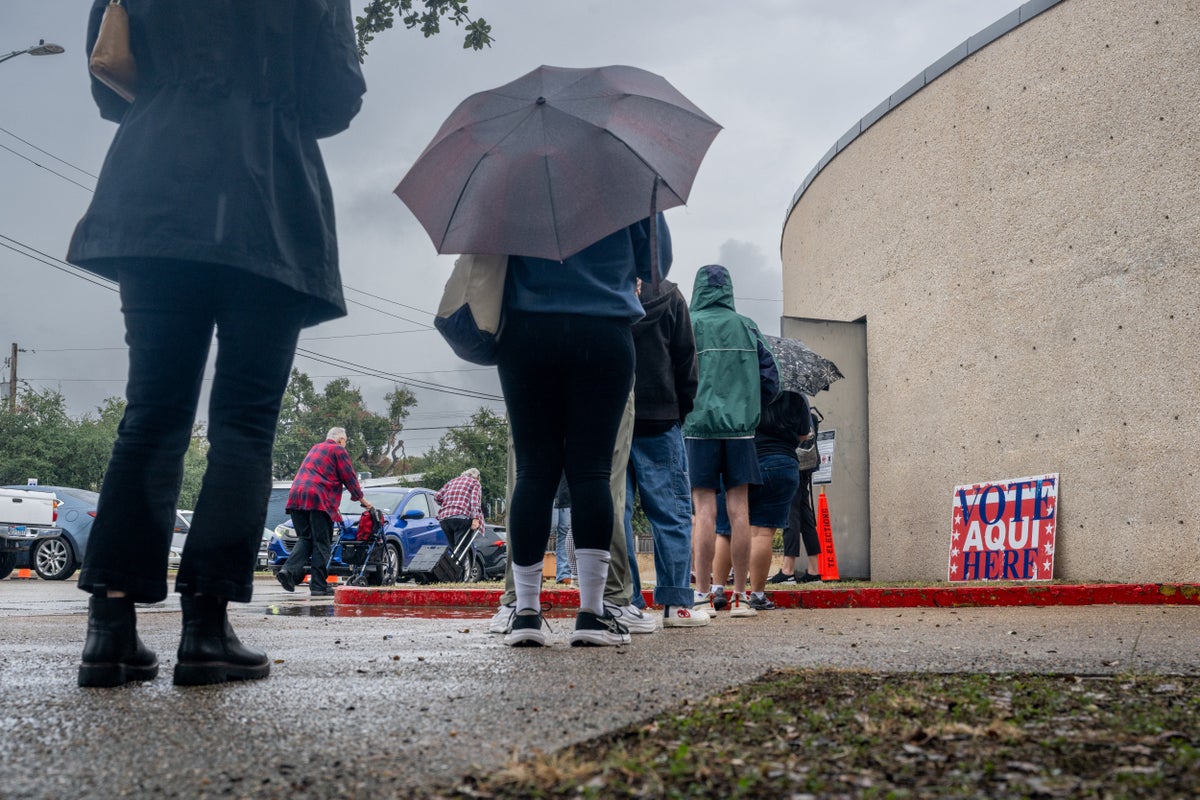
1 / 4
The story, neutrally told
Left · 1CNN Weather reported on Thursday that a storm system is expected to move through the central United States on Election Day, Tuesday, and could influence turnout in some competitive races. Raw StoryL “A storm system is shaping up to move through the central United States on Election Day, and it could influence turnout in some of the region’s competitive races, CNN Weather reported on Thursday.” Read at Raw Story ↗ Left · 1CNN meteorologist Chris Dolce said forecasters are increasingly confident of widespread rain from the Great Lakes and Upper Midwest down to the western Gulf Coast, with parts of Iowa, Kansas, Michigan and Texas, and possibly Ohio, likely to be wet. Raw StoryL “forecasters are increasingly confident in widespread rain Tuesday from the Great Lakes and Upper Midwest down to the western Gulf Coast.” Read at Raw Story ↗ Left · 1NBC News quoted National Weather Service forecasters predicting a line of thunderstorms from Texas to Missouri, rain in the upper Midwest and strong winds in the Plains. NBC NewsLC “Forecasters predict a line of thunderstorms stretching from Texas to Missouri on Tuesday, with dreary rainfall in upper Midwest states like Iowa and strong winds in plains states like Kansas.” Read at NBC News ↗
Left · 1Bob Oravec of the Weather Prediction Center said models show thunderstorms hitting north central Texas on Tuesday morning, with high winds, large hail and possibly tornadoes; that area is a key part of the Senate race between Democrat James Talarico and Republican Ken Paxton. NBC NewsLC “Oravec said forecasting models for Tuesday morning show thunderstorms hammering north central Texas, a critical battleground in the state’s U.S. Senate race, in which Democrat James Talarico faces Republican Ken Paxton.” Read at NBC News ↗ Left · 1CNN said the chance of rain in Texas is highest in the east, along and east of Interstate 35, the state's most populated part and home to a number of Republican strongholds where Election Day turnout matters more. Raw StoryL “the chance is highest in the east, especially along and east of Interstate 35, with a threat of severe storms” Read at Raw Story ↗ Left · 1In Kansas, NWS forecaster Clint Alexander expects sustained winds of 20 to 30 mph with gusts over 40 and possibly over 50 mph that could affect travel on Interstate 70; NBC described the Senate race between Republican Sen. Roger Marshall and Democrat Adam Hamilton as neck and neck. NBC NewsLC “We’re looking at sustained winds around 20 to 30 miles an hour, and we could see some gusts over 40 to maybe even over 50 miles an hour,”“polls showing Republican Sen. Roger Marshall and Democrat Adam Hamilton neck and neck.” Read at NBC News ↗
Left · 2In Iowa, which has close governor and Senate races, NWS forecaster Justin Schultz said significant rain is likely, no flooding is predicted, and moisture could be near a record for the time of year; CNN said rain looks more probable there than earlier models suggested. NBC NewsLC “It could actually be near record moisture for this time of the year,” Read at NBC News ↗ Raw StoryL “Rain looks more probable in Iowa than earlier models suggested” Read at Raw Story ↗ Left · 1CNN said Georgia, Maine, New Hampshire and North Carolina should likely stay dry, Michigan may see showers at an uncertain time, and most models keep Ohio dry. Raw StoryL “CNN says Georgia, Maine, New Hampshire and North Carolina should likely stay dry.” Read at Raw Story ↗ Left · 1Dolce noted that more than 39 million people have already voted early, so the forecast matters mainly for those still planning to vote Tuesday, and that studies have repeatedly found rain tends to lower turnout. Raw StoryL “more than 39 million people have voted early, so the forecast matters mainly for those still planning to vote Tuesday.” Read at Raw Story ↗
Left · 2Forecasters caution that details will change: Oravec said the overall west-to-east movement is well set but the timing of individual storms will shift, and both outlets say more clarity is expected by the weekend. NBC NewsLC “The individual timing of a line of thunderstorms likely will change over the next few days. But the overall idea of the storm moving from west to east is pretty well set.” Read at NBC News ↗ Raw StoryL “CNN noted the forecast will likely change as the storm’s track becomes clearer.” Read at Raw Story ↗ Centre · 1Newsweek, on Friday, drew instead on an AccuWeather forecast, which it said shows storms and rain across the central US on Election Day, with rain expected in 17 states; it singled out Iowa, Texas, Michigan and Kansas as having highly competitive Senate races. NewsweekN “four of these states are home to highly competitive Senate races: Iowa, Texas, Michigan and Kansas.”“A U.S. weather forecast published earlier this week by AccuWeather revealed that storms and rain showers will stretch across the central U.S. on Election Day.” Read at Newsweek ↗ Centre · 1By Newsweek's account, rain is likely across all of Iowa and Michigan, thunderstorms are forecast across eastern Texas with severe weather possible in Houston and Dallas, and nearly all of Kansas can expect showers or thunderstorms, mostly confined to the far east. NewsweekN “Rain is expected across the entire state on Tuesday.”“Thunderstorms will likely be confined to far eastern Kansas on Election Day, with much of the rest of the state expecting rain.” Read at Newsweek ↗
Centre · 1AccuWeather senior meteorologist Joe Lundberg said there is a risk of severe weather from the southern and central Plains late Monday to the middle and lower Mississippi Valley on Tuesday. NewsweekN “"There is the risk for severe weather from the southern and central parts of the Plains late Monday to the middle and lower parts of the Mississippi Valley on Tuesday,"” Read at Newsweek ↗ Centre · 1Newsweek named the Senate contests as Iowa (Republican Rep. Ashley Hinson v Democratic state Rep. Josh Turek), Michigan (Democrat Abdul El-Sayed v Republican Mike Rogers), plus Texas and Kansas, and reported high early turnout, including record early voting in several states, while noting that the last day of early voting has passed in Tennessee and Louisiana. NewsweekN “Democrat Abdul El-Sayed and Republican Mike Rogers are locked in a closely contested race for an open Senate seat in Michigan”“Turnout has already been high for this year's midterm, with several states setting early voting records.” Read at Newsweek ↗
Every sentence links to the reporting it rests on. The pill in front of each says where its sources sit: Left, Centre or Right when one side supplies at least half of them, Mixed when they are evenly split. The number is how many outlets it cites.
Left3 outlets
- Framing
- Both outlets frame the forecast through electoral stakes, asking how storms could affect turnout in battleground states.
- Emphasis
- Raw Story summarises CNN's state-by-state outlook and the Republican-leaning parts of Texas; NBC leads with NWS forecaster quotes and named Senate races.
- Leaves out or plays down
- Neither gives a view on how large any turnout effect would be beyond citing general studies; Raw Story's summary leaves out NWS sourcing.
- Charged language
- “hammer”“spiciest forecasts”
- For example
-
“A storm system is shaping up to move through the central United States on Election Day, and it could influence turnout in some of the region’s competitive races” — Raw Story
“Stormy, wet weather is expected to hammer the central U.S. on Election Day, with the spiciest forecasts for states with some of the hottest races” — NBC News
Centre1 outlet
- Framing
- Newsweek presents a service-style explainer on how an AccuWeather forecast could complicate in-person voting in four Senate battleground states, and suggests voters consider voting early.
- Emphasis
- A state-by-state list of rain, Senate candidates and polling closeness, early-voting records and early-vote deadlines.
- Leaves out or plays down
- Does not cite National Weather Service forecasters or CNN, and does not mention forecast uncertainty about timing and track that the other outlets stress.
Right0 outlets
No right outlet in our sources has covered this story yet.
What every side reports
- A storm system is forecast to cross the central US on Election Day, Tuesday.
- Texas, Kansas and Iowa are expected to be affected.
- Forecast timing and track remain uncertain and more should be known by the weekend.
-
Rain is expected in Iowa on Election Day.
Reported- Reports 3
- NBC News, Raw Story, Newsweek
-
Severe storms are possible in Texas on Election Day.
Reported- Reports 3
- NBC News, Raw Story, Newsweek
-
Rain is expected in parts of Kansas on Election Day.
Reported- Reports 3
- NBC News, Raw Story, Newsweek
Left4 articles
-
Storm conditions threaten to upend turnout in battleground states: report
Neutral Aggregates CNN Weather's forecast with a turnout-risk angle for battleground states.
-
Stormy weather could hit key states on Election Day, forecasters predict
Mixed Reports NWS forecasts with colloquial, dramatic wording tied to hot Senate races.
-
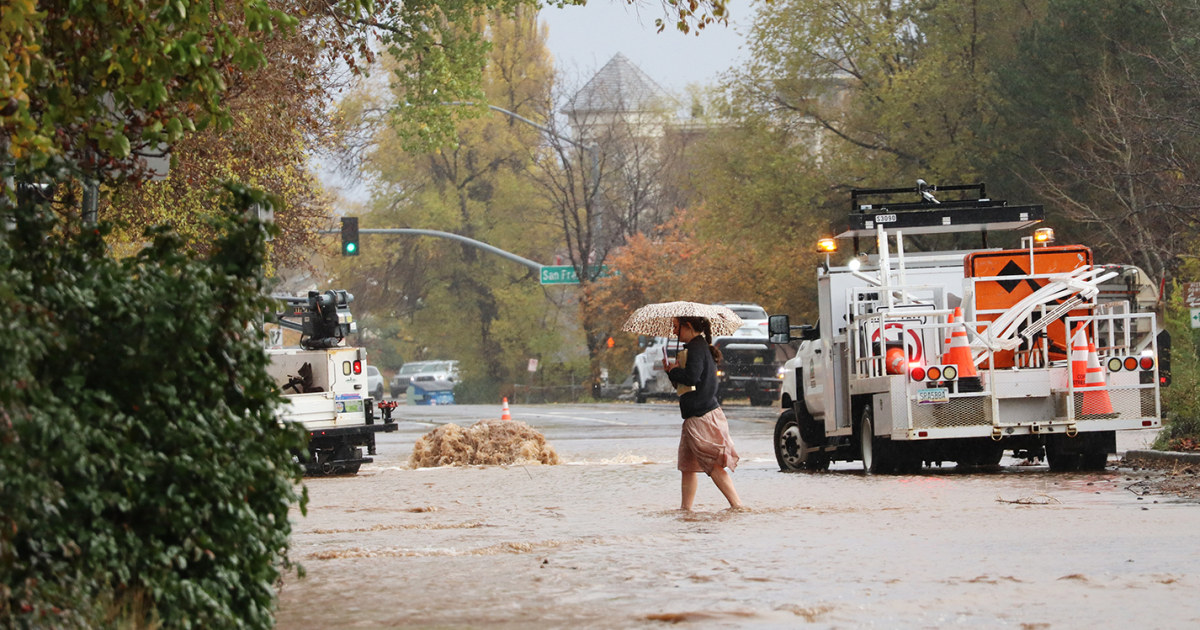
-
Centre1 article
-
Election Day Storms Could Complicate Voting in 4 Senate Battlegrounds
Neutral Service-style explainer built on an AccuWeather forecast, linking rain in Iowa, Texas, Michigan and Kansas to Senate battleground turnout; produced with Newsweek's AI assistant.
Right0 articles
No coverage yet.
- 29 Oct 13:52 First Raw StoryL Storm conditions threaten to upend turnout in battleground states: report
- 29 Oct 21:29 +7h 37m NBC NewsLC Stormy weather could hit key states on Election Day, forecasters predict
- 30 Oct 12:00 +22h 8m NewsweekN Election Day Storms Could Complicate Voting in 4 Senate Battlegrounds
- 2 Nov 18:06 +100h 14m NBC NewsLC Storms expected to hit parts of Texas and Kansas on election day
- 2 Nov 18:39 +100h 47m The IndependentLC Heading to the polls? Here is what you can expect from the weather on election day
Times are when each article was published, or when we first saw it if the outlet gave no time.
Ask about this story
Loading…