Colombia's president signs protest-security decree as nationwide marches begin
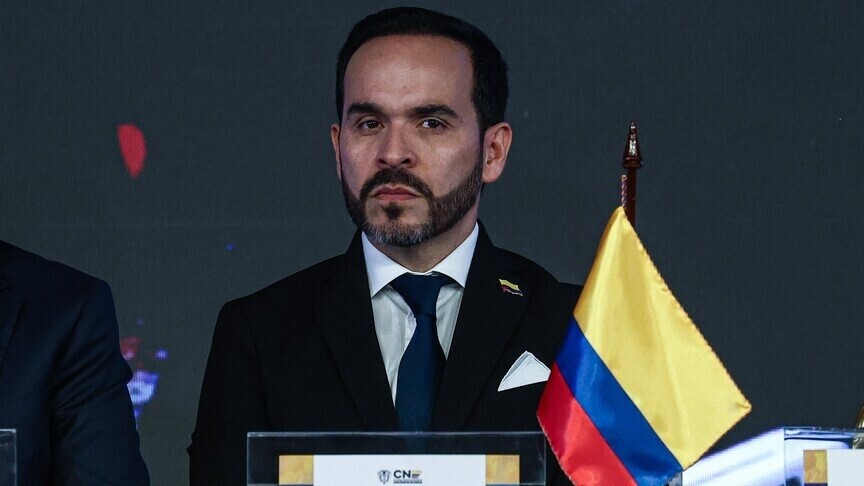
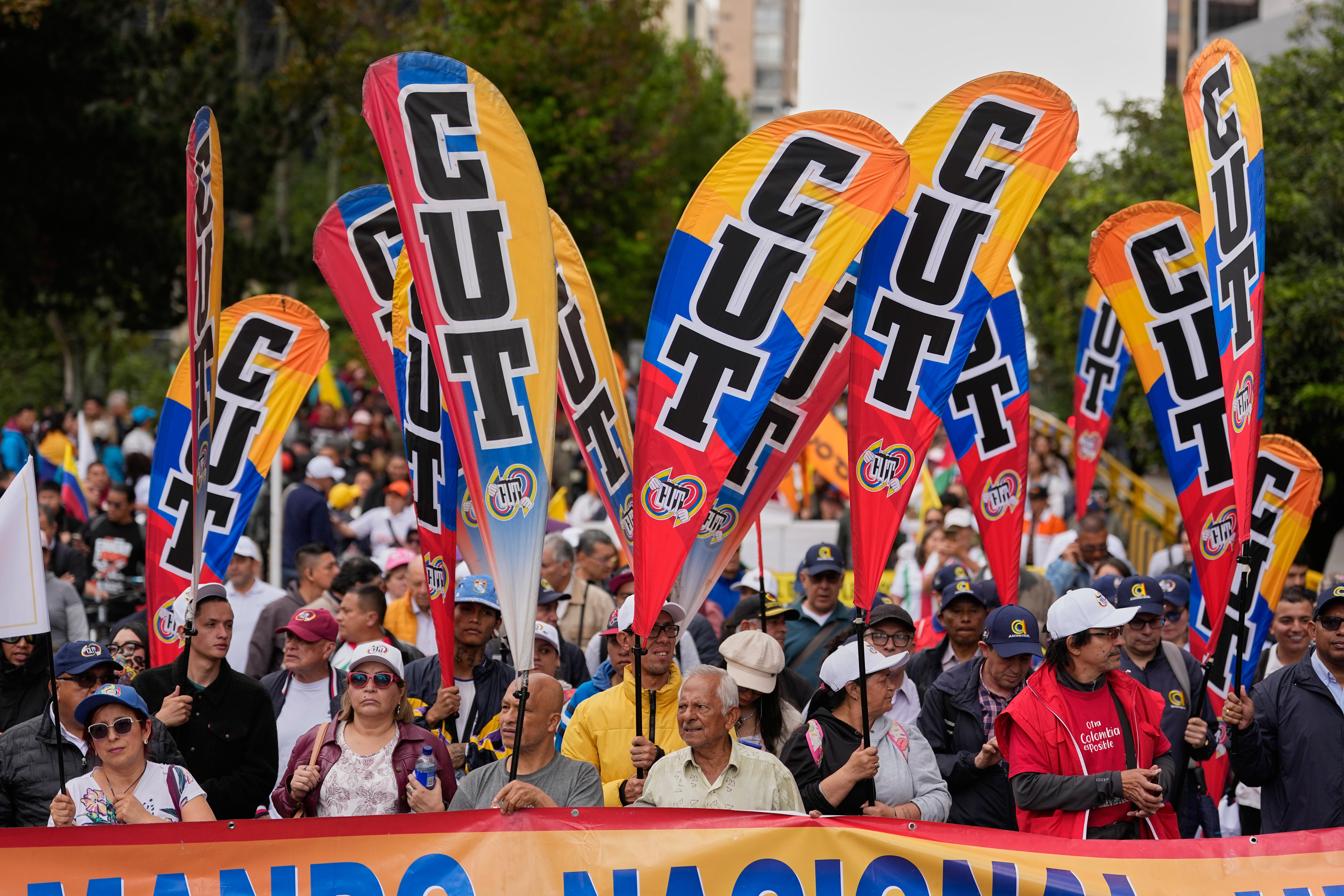
President Abelardo de la Espriella signed a decree empowering authorities to counter street blockades and disorder, and on 14 October unions, Indigenous groups, students and opposition figures marched in major cities against his government.
1 / 2
The story, neutrally told
Centre · 1Colombian President Abelardo de la Espriella signed a security decree empowering authorities to block street barricades, ban road closures and counter disorder ahead of nationwide demonstrations planned for Wednesday 14 October. Anadolu AgencyN “signed a security decree empowering authorities to block street barricades, ban road closures, and counter disorder ahead of planned nationwide demonstrations on Wednesday.” Read at Anadolu Agency ↗ Mixed · 2In a video address he said "the right to protest is respected, but there is no right to destroy, to block roads, to attack security forces, to commit assault, or, of course, to sow chaos", and that the measure gives the government "the teeth it needs" to combat "vandalism and urban terrorism disguised as protest". Anadolu AgencyN “combat vandalism and urban terrorism disguised as protest.” Read at Anadolu Agency ↗ Arab NewsRC “to attack urban terrorism disguised as protest.” Read at Arab News ↗ Centre · 1According to Anadolu Agency, the decree lets police intervene against violent protesters without completing all stages of dialogue and mediation, and sets up unified command posts to coordinate police, military and municipal leaders; security forces are to document disruptive acts and prevent protesters from stopping cargo transport or blocking emergency vehicles. Anadolu AgencyN “The decree allows police to intervene against violent protesters without completing all stages of dialogue and mediation.” Read at Anadolu Agency ↗ Anadolu AgencyN “authorities will establish unified command posts to coordinate police, military, and municipal leadership” Read at Anadolu Agency ↗
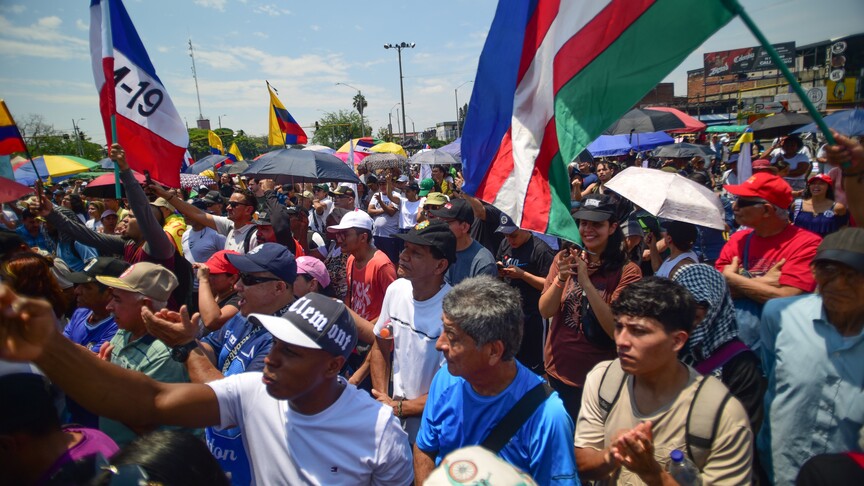
Mixed · 2It also creates an early-warning mechanism for social conflicts, under which local authorities must convene a dialogue meeting within five working days; Arab News reported that the order seeks to establish safe corridors for transportation, essential services and critical infrastructure. Anadolu AgencyN “local authorities must convene a dialogue meeting within five working days after an early warning is activated.” Read at Anadolu Agency ↗ Arab NewsRC “The executive order also seeks to establish corridors and safe zones and corridors for transportation, essential services and critical infrastructure.” Read at Arab News ↗ Centre · 1The marches were called by labor unions including the teachers' federation Fecode and the Central Union of Workers, with left-wing organisations, and were planned for Bogota, Medellin, Cali and Barranquilla. Anadolu AgencyN “including the teachers' federation Fecode and the Central Union of Workers, alongside left-wing organizations planning rallies across Bogota, Medellin, Cali, and Barranquilla.” Read at Anadolu Agency ↗ Mixed · 2On Wednesday, trade unionists, Indigenous people, students and feminists marched, with former president Gustavo Petro, who urged people to join, focusing on the minimum wage and rising food prices; Senator Ivan Cepeda, who lost the election to De la Espriella by less than a percentage point, also attended in Bogota. Arab NewsRC “Senator Ivan Cepeda, who lost elections to De la Espriella by less than a percentage point, also attended marches in Bogota.” Read at Arab News ↗ Anadolu AgencyN “Former President Gustavo Petro urged Colombians to join the demonstrations, focusing on the minimum wage and rising food prices.” Read at Anadolu Agency ↗
Mixed · 2Protesters demanded labor rights, better public education funding, health care, and guarantees for peaceful demonstrations, and some voiced opposition to the president's foreign policy, including restored relations with Israel and close ties to the United States; in Bogota some burned a US flag. Anadolu AgencyN “demand labor rights, better public education funding and guarantees for peaceful demonstrations.” Read at Anadolu Agency ↗ Arab NewsRC “protesters burned an American flag in the streets of the capital while others waved Palestinian flags.” Read at Arab News ↗ Mixed · 2Arab News, citing AFP interviews, quoted teachers who said the decree aimed to frighten people out of protesting; the government said it protects peaceful demonstrations while allowing a response to vandalism, assaults and disruption of essential services, and Anadolu noted critics questioning whether the rules adequately protect the right to peaceful protest. Arab NewsRC ““They’re trying to frighten the population so people don’t go out to protest, but it’s in the Constitution as a right,”” Read at Arab News ↗ Anadolu AgencyN “The government said the measure protects peaceful demonstrations while enabling authorities to respond to vandalism, assaults and disruptions to essential services.” Read at Anadolu Agency ↗ Mixed · 2Arab News said protests proceeded peacefully in other major cities and that traffic in Bogota was calmer than usual, with some companies asking staff to work from home and some schools suspending classes; Anadolu described the day as a major test of the opposition's ability to challenge the administration. Arab NewsRC “Protests proceeded peacefully in other major cities.” Read at Arab News ↗ Anadolu AgencyN “The mobilizations mark a major test of opposition groups' capacity to challenge De la Espriella's administration.” Read at Anadolu Agency ↗
Every sentence links to the reporting it rests on. The pill in front of each says where its sources sit: Left, Centre or Right when one side supplies at least half of them, Mixed when they are evenly split. The number is how many outlets it cites.
Left0 outlets
No left outlet in our sources has covered this story yet.
Centre1 outlet
- Framing
- Anadolu reports the decree and the protests in procedural terms, leading with the president's security measures and then the marches.
- Emphasis
- Decree mechanics (command posts, dialogue within five working days), union demands, and the government's stated rationale.
- Leaves out or plays down
- Little protester testimony, foreign-policy grievances or the US flag burning.
- Charged language
- “urban terrorism disguised as protest”
- For example
-
“combat vandalism and urban terrorism disguised as protest.” — Anadolu Agency
“The mobilizations mark a major test of opposition groups' capacity to challenge De la Espriella's administration.” — Anadolu Agency
Right1 outlet
- Framing
- Arab News leads with protesters and their fears for their rights under a 'right-wing' government, with the decree as a source of anger.
- Emphasis
- Protester voices, Petro's record, foreign policy toward Israel and the US, and the peaceful conduct of the marches.
- Leaves out or plays down
- Details of the decree's operational provisions such as command posts and the dialogue timeline.
- Charged language
- “right-wing govt”“US-backed millionaire”“hard-line policies”
What every side reports
- De la Espriella signed a decree on handling protests and blockades ahead of the 14 October marches.
- He said the right to protest is respected but not the right to destroy or sow chaos.
- Unions, Indigenous groups and students marched, and Gustavo Petro joined or urged participation.
Where accounts differ
-
Purpose and effect of the decree
- Centre
- Anadolu relays the government's view that it protects peaceful protest while enabling a response to vandalism, and notes critics' doubts.
- Right
- Arab News quotes protesters who say it aims to scare people from protesting, against a constitutional right.
-
Timing of the decree
- Centre
- Anadolu reported it as signed ahead of Wednesday's marches.
- Right
- Arab News said it was passed one day before the marches.
Abelardo de la Espriella person
Says the decree protects peaceful protest while stopping violence, vandalism and blockades, which he calls 'urban terrorism disguised as protest'.
“In Colombia, the right to protest is respected, but there is no right to destroy” — Anadolu Agency
““Violence, vandalism, and blockades that trample on the rights of millions of citizens will not be tolerated,” the president wrote on X.” — Arab News
Gustavo Petro person
Joined the marches and urged Colombians to protest, stressing the minimum wage and food prices.
““If the real minimum wage falls, what we have is a decline in the standard of living of all Colombians,” Petro said” — Anadolu Agency
Left0 articles
No coverage yet.
Centre2 articles
-
Colombian President Espriella signs decree barring street blockades ahead of mass protests
Neutral Straight report of the decree and the president's statement, with the planned marches as context.
-
Colombia sees nationwide protests against De la Espriella's government
Neutral Describes the protests and decree provisions, relaying government and critic views.
Right1 article
-
Colombians, fearing for rights, march against right-wing govt
Sympathetic Centres protesters' fears and criticism of a 'right-wing', US-backed president.
- 14 Oct 07:22 First Anadolu AgencyN Colombian President Espriella signs decree barring street blockades ahead of mass protests
- 14 Oct 17:44 +10h 22m Anadolu AgencyN Colombia sees nationwide protests against De la Espriella's government
- 14 Oct 19:37 +12h 15m Arab NewsRC Colombians, fearing for rights, march against right-wing govt
Times are when each article was published, or when we first saw it if the outlet gave no time.
Ask about this story
Loading…