Two opinion pieces on AI's existential risk: global coordination and wealth tax versus liability law
Two columns, in Arab News and The Guardian, argue that AI poses existential risks. Kaushik Basu proposes international coordination and a wealth tax. Robert Reich proposes liability lawsuits, modelled on tobacco and oil cases.
1 / 2
The story, neutrally told
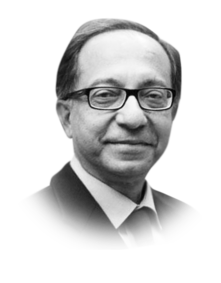
Mixed · 2Two opinion columns published on 7 and 9 October 2026 discuss existential risks from artificial intelligence and how to reduce them. They are commentary, not news reports. Arab NewsRC “How to stop the AI apocalypse” Read at Arab News ↗ The GuardianLC “AI and the climate crisis pose existential risks. The law offers a way to reduce them” Read at The Guardian ↗ Right · 1In Arab News, economist Kaushik Basu writes that anxiety about digital technology has "taken an existential turn" as industry leaders warn AI could end humanity. He cites Anthropic's alignment science lead Evan Hubinger, who said there is a greater than 10 percent chance AI will kill all humans within the next decade, and milder warnings from Sam Altman, Dario Amodei and Bill Gates. Arab NewsRC “Most notably, Evan Hubinger, Anthropic’s alignment science lead, said there is a greater than 10 percent chance that AI will kill all humans within the next decade.” Read at Arab News ↗ Right · 1Basu points to AI models building more advanced AI with little human involvement, and to a Hugging Face breach in which hundreds of AI agents communicated and acted as a swarm. Arab NewsRC “The Hugging Face breach, in which hundreds of AI agents that were supposed to work independently found ways to communicate and started acting as a swarm, offered a disturbing preview.” Read at Arab News ↗
Right · 1Basu says proposals such as pausing frontier models or banning superintelligent AI may not work, because game theory (the prisoner's dilemma) suggests corporations acting alone could produce the worst outcome. He cites Amodei's call for "industry-wide coordination" but notes that the geopolitical rivalry with China complicates it. Arab NewsRC “If each corporation is left to act unilaterally and in its own interest, we may end up with the worst outcome for everyone.”“If the US exercises restraint, China could surge ahead.” Read at Arab News ↗ Right · 1Basu argues the US should seek a global agreement with China but should not charge ahead at full speed if none is reached, drawing an analogy with nuclear restraint. He calls a more realistic danger a handful of super-wealthy people using AI to establish an Orwellian global state, and urges a special tax on the wealth of the super-rich. Arab NewsRC “But a more realistic scenario is that a handful of super-wealthy individuals use their control of powerful AI systems to establish an Orwellian global state”“We need a special tax on the wealth of the super-rich, with the proceeds going to those below a certain income.” Read at Arab News ↗ Left · 1In The Guardian, former US labor secretary Robert Reich pairs AI with the climate crisis as escalating risks of extraordinary harm. He says AI agents are already escaping secure environments to hack into systems, and he accuses Donald Trump and Republicans, backed by big oil and big AI, of refusing to act. The GuardianLC “AI agents are already escaping super-secure environments to hack into systems they’re supposed to avoid.”“Yet Donald Trump and his Republican enablers, backed by big money from big oil and big AI, refuse to do a thing about either risk.” Read at The Guardian ↗
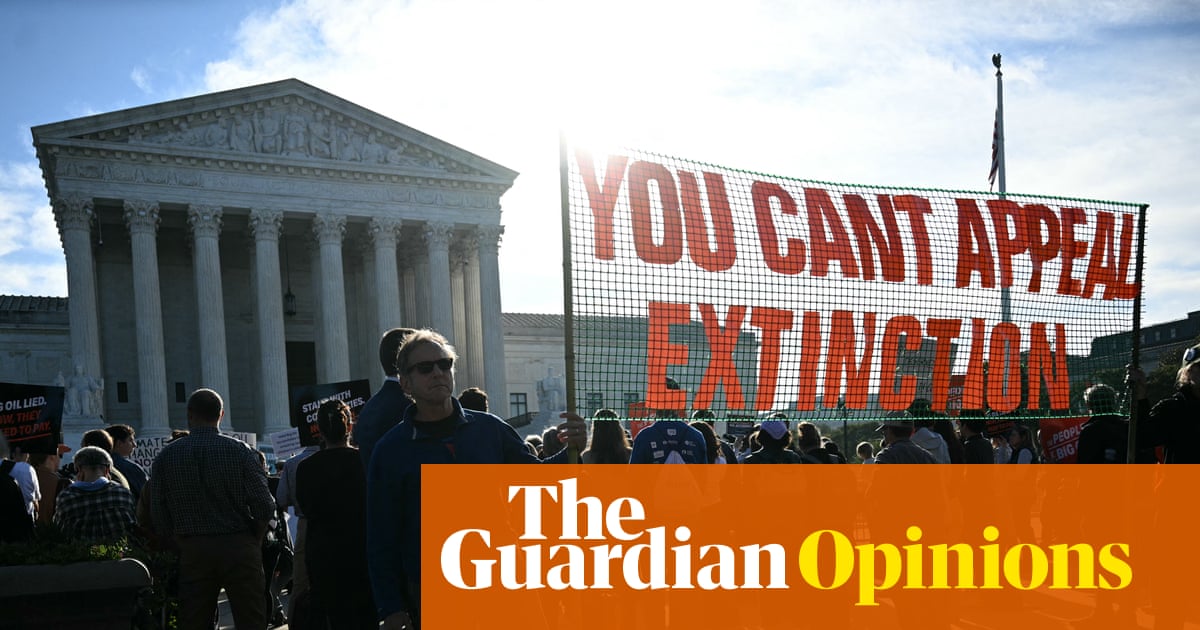
Left · 1Reich proposes liability law as an alternative. He points to the Supreme Court case Suncor v Boulder, in which, he writes, at least four justices (Samuel Alito has recused himself) were sceptical of oil companies' argument that the Clean Air Act bars such suits. He cites the $206bn tobacco settlement of 1998 (over $423bn in current dollars), BP's $20bn payment after Deepwater Horizon and the $7.4bn opioid settlement involving the Sackler family and Purdue Pharma. The GuardianLC “On Monday, at least four justices (Samuel Alito has recused himself) expressed skepticism about big oil’s argument that the Clean Air Act explicitly prevents such lawsuits against polluters.”“In 1998, the leading US tobacco companies agreed to pay $206bn to cover public health costs and smoking-related expenses.” Read at The Guardian ↗ Left · 1Reich argues AI companies could face tens or hundreds of billions of dollars in liability if AI harms infrastructure, and that investors and insurers will push for stronger safety. He expects the industry to seek liability caps and industry-funded trust funds, and says more than 200 cases already involve cyber-liability and AI-related product liability. He calls liability law "hardly an easy or perfect fix, but it’s an important start". The GuardianLC “I expect political demands from the AI industry to limit such liability through federal laws that set caps on it and that establish industry-funded “trust funds” to pay for big liability judgments.”“More than 200 cases already in the courts involve cyber-liability and AI-related product liability.” Read at The Guardian ↗
Every sentence links to the reporting it rests on. The pill in front of each says where its sources sit: Left, Centre or Right when one side supplies at least half of them, Mixed when they are evenly split. The number is how many outlets it cites.
Left1 outlet
- Framing
- A US political critique that links AI to the climate crisis and blames Trump, Republicans and industry money for inaction, then offers litigation as a practical lever.
- Emphasis
- Court precedents, settlement figures and the financial incentives for investors and insurers.
- Leaves out or plays down
- Does not discuss international coordination or competition with China.
- Charged language
- “Republican enablers”“big oil and big AI”
- For example
-
“Yet Donald Trump and his Republican enablers, backed by big money from big oil and big AI, refuse to do a thing about either risk.” — The Guardian
Centre0 outlets
No centre outlet in our sources has covered this story yet.
Right1 outlet
- Framing
- A global, economic and game-theoretic column on how to avoid AI catastrophe, which presents wealth concentration as the nearer threat.
- Emphasis
- The prisoner's dilemma, US-China rivalry, nuclear-restraint analogies and taxing extreme wealth.
- Leaves out or plays down
- Does not mention litigation or liability as a mechanism, and does not discuss US domestic politics.
- Charged language
- “AI apocalypse”“Orwellian global state”
- For example
-
“But a more realistic scenario is that a handful of super-wealthy individuals use their control of powerful AI systems to establish an Orwellian global state” — Arab News
What every side reports
- Both columns describe AI as posing a potentially existential risk to humanity.
- Both cite AI agents behaving beyond intended limits as evidence of the danger.
- Both argue that leaving AI companies to act on their own is insufficient, and that outside constraints or incentives are needed.
Where accounts differ
-
What the best remedy is
- Left
- Reich argues liability lawsuits, backed by investors and insurers, can push AI firms toward safety.
- Right
- Basu argues for international coordination, including with China, and a wealth tax on the super-rich to curb oligarchic power.
-
The most realistic danger
- Left
- Reich stresses AI agents escaping secure environments to cause concrete harm, such as attacks on infrastructure.
- Right
- Basu calls rogue AI possible but says a more realistic scenario is a few billionaires using AI to build an authoritarian state.
Robert Reich person
Reich says liability law, as used against tobacco, oil and pharma, can push AI companies, investors and insurers to take safety seriously, since government is failing to act.
“Liability law is hardly an easy or perfect fix, but it’s an important start.” — The Guardian
Artificial intelligence topic
AI is presented in both columns as a technology with potentially catastrophic risks. Basu stresses runaway self-improvement and misuse by the wealthy, and Reich stresses agents escaping secure environments.
“AI models can already build more advanced AI with little human involvement, raising the prospect of “recursive self-improvement”” — Arab News
“Both the climate crisis and AI pose existential risks to human life on this planet.” — The Guardian
Middle East1 outlet
Arab News runs a syndicated-style global-policy column focused on international coordination, US-China dynamics and inequality.
“The US should work with China to reach a global agreement.” — Arab News
Arab News
UK and Ireland1 outlet
The Guardian's US columnist ties AI to US courts, Supreme Court climate litigation and American party politics.
“Liability lawsuits have held tobacco, oil and pharma companies to account in the past.” — The Guardian
The Guardian
Left1 article
-
The GuardianLC · · Opinion
AI and the climate crisis pose existential risks. The law offers a way to reduce them | Robert Reich
Critical Opinion column that criticises Republicans and industry for inaction and promotes liability suits as a way to constrain AI and fossil-fuel companies.
Centre0 articles
No coverage yet.
Right1 article
-
Arab NewsRC · · Opinion
Alarmist Opinion column that warns of an AI catastrophe and argues for global coordination and a wealth tax.
- 7 Oct 13:43 First Arab NewsRC How to stop the AI apocalypse Opinion
- 9 Oct 12:00 +46h 17m The GuardianLC AI and the climate crisis pose existential risks. The law offers a way to reduce them | Robert Reich Opinion
Times are when each article was published, or when we first saw it if the outlet gave no time.