Op-eds on US-China ties ahead of Trump-Xi meetings: youth exchanges versus economic miscalculation
Two opinion pieces on US-China relations around the Trump-Xi meetings take different angles: one argues young Americans and academic exchanges are key to mutual understanding, the other says Washington misreads China as an ideological rather than an economic threat.
1 / 2
The story, neutrally told
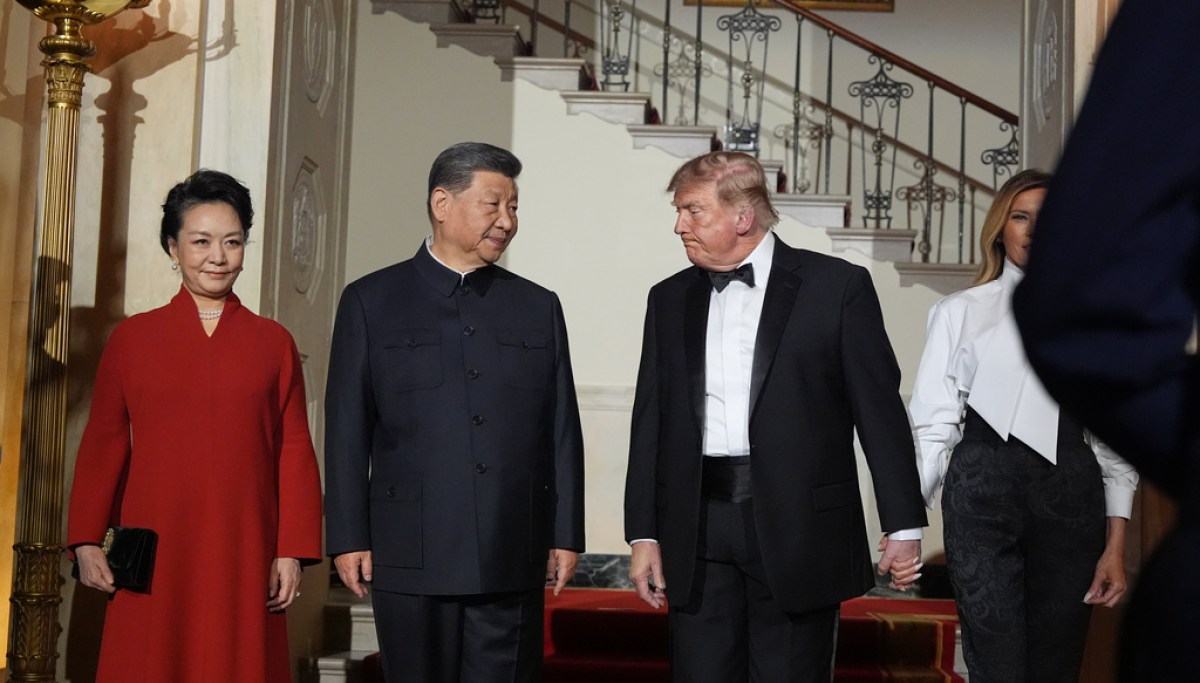
Mixed · 2Two opinion pieces published on 15 and 16 October 2026 discuss US-China relations around the meetings between President Donald Trump and President Xi Jinping. South China Morning PostN “When US President Donald Trump and Chinese President Xi Jinping meet again in Shenzhen next month, and then in Miami in December” Read at South China Morning Post ↗ Washington ExaminerR “Following the recent meeting between President Donald Trump and Chinese President Xi Jinping” Read at Washington Examiner ↗ Centre · 1In the South China Morning Post, Peter T. C. Chang writes that Trump and Xi are due to meet again in Shenzhen next month and in Miami in December, and that the relationship also depends on whether the two countries' young people can understand one another. South China Morning PostN “the future of the US-China relationship also depends on something less visible: whether their people, especially the young, can still understand one another.” Read at South China Morning Post ↗ Centre · 1Chang says academic exchanges and grass-roots engagement are under strain, citing former US ambassador Nicholas Burns for figures showing American students in China fell from nearly 15,000 in 2011 to 211 during the pandemic and had recovered to about 880 in 2024. South China Morning PostN “Numbers peaked at nearly 15,000 in 2011, fell to just 211 during the pandemic and have only recovered to about 880 in 2024, according to former US ambassador Nicholas Burns.” Read at South China Morning Post ↗
Centre · 1He also points to the discontinued Justice Department China Initiative, a September Council on Foreign Relations analysis warning that America's capacity to train China specialists is eroding, and this month's Trump administration investigations into nine universities, including Harvard, Yale and MIT, over alleged visa fraud. South China Morning PostN “This month, the Trump administration launched investigations into nine universities, including Harvard, Yale and the Massachusetts Institute of Technology, over alleged visa fraud”“America’s capacity to train China specialists is eroding just as the need for such expertise grows.” Read at South China Morning Post ↗ Centre · 1On the positive side, he notes that at the recent Washington summit Xi announced a plan to invite 100,000 young Americans to China over five years, building on a 2023 initiative for 50,000 that Chinese officials said was met two-and-a-half years early. South China Morning PostN “Xi announced a plan to invite 100,000 young Americans to China over the next five years.” Read at South China Morning Post ↗ Centre · 1He adds that Schwarzman Scholars at Tsinghua and Duke Kunshan University received record applications this year, and that a September Pew Research Centre survey found Americans under 50 view China more warmly than older Americans, though overall sentiment remains negative. South China Morning PostN “Americans under 50 view China notably more warmly than their older counterparts do, though overall sentiment remains negative.” Read at South China Morning Post ↗
Centre · 1Chang argues younger Americans, with fewer preconceptions than veteran sinologists shaped by the hopes of the Deng Xiaoping era, could break through decades of mistrust, and calls on Beijing to make academic engagement predictable and transparent and on Washington to avoid treating nationality as a proxy for espionage risk. South China Morning PostN “Washington, for its part, must carefully distinguish sensitive military research from ordinary educational pursuit, avoiding the trap of treating nationality as a proxy for espionage risk.” Read at South China Morning Post ↗ Right · 1In the Washington Examiner, Cheryl-Ann Lee-Llacer Wargotz and Eric Wargotz write that media coverage of the recent Trump-Xi meeting has focused on transactional outcomes such as the extension of the trade truce, artificial intelligence competition and Taiwan. Washington ExaminerR “the media have generally focused on immediate transactional outcomes such as the extension of the trade truce, high-tech competition in artificial intelligence, and the geopolitical flashpoint of Taiwan.” Read at Washington Examiner ↗ Right · 1They argue Washington has long mischaracterised the Chinese Communist Party as an ideological monolith bent on spreading Marxism, and that China is instead a centralised, nationalist dictatorship running a state-directed market economy that seeks to dominate the world economically. Washington ExaminerR “a centralized, nationalist dictatorship running a deeply integrated, state-directed market economy. China seeks to dominate the world economically.” Read at Washington Examiner ↗
Every sentence links to the reporting it rests on. The pill in front of each says where its sources sit: Left, Centre or Right when one side supplies at least half of them, Mixed when they are evenly split. The number is how many outlets it cites.
Left0 outlets
No left outlet in our sources has covered this story yet.
Centre1 outlet
- Framing
- A conciliatory opinion piece arguing that education, exchanges and youth contact can stabilise the relationship alongside summit diplomacy.
- Emphasis
- Student numbers, exchange programmes, Xi's 100,000-visitor plan, Pew polling on generational attitudes, and shared responsibility of Beijing and Washington.
- Leaves out or plays down
- Says little about China's economic ambitions or security concerns beyond academic-related scrutiny.
- Charged language
- “curated state narrative”
- For example
-
“Sometimes the road to a better relationship between two great powers begins not in a summit room, but in the eyes of the next generation.” — South China Morning Post
Right1 outlet
- Framing
- An opinion piece arguing that Washington miscalculates by misreading China's nature, framing it as a 'frenemy' and an economic challenge.
- Emphasis
- The Chinese Communist Party's character as a nationalist dictatorship and China's pursuit of economic dominance, over transactional summit outcomes.
- Leaves out or plays down
- Does not address exchanges, student numbers or youth attitudes.
- Charged language
- “hell-bent”“dictatorship”“frenemy”
- For example
-
“China seeks to dominate the world economically.” — Washington Examiner
“mischaracterized the Chinese Communist Party as an ideological monolith hell-bent on spreading global Marxism” — Washington Examiner
What every side reports
- Trump and Xi have met recently and are expected to meet again.
- Both pieces are opinion commentary, not news reports.
- Both say that understanding China accurately matters for US policy.
Where accounts differ
-
What the main US challenge in understanding China is
- Centre
- Reduced people-to-people contact and academic exchange; younger Americans with fewer preconceptions could help rebuild trust.
- Right
- A misdiagnosis of China as an ideological Marxist force rather than a nationalist dictatorship with a state-directed market economy seeking economic dominance.
Xi Jinping person
In the SCMP piece, Xi is cited as having announced a plan to invite 100,000 young Americans to China over five years; the Examiner piece portrays China's leadership as running a nationalist dictatorship seeking economic dominance.
“Xi announced a plan to invite 100,000 young Americans to China over the next five years.” — South China Morning Post
“China seeks to dominate the world economically.” — Washington Examiner
Donald Trump person
Trump's administration is described by the SCMP writer as investigating nine universities over alleged visa fraud; both pieces mention his meetings with Xi, with the Examiner noting a trade truce extension.
“the Trump administration launched investigations into nine universities” — South China Morning Post
“the extension of the trade truce” — Washington Examiner
Left0 articles
No coverage yet.
Centre2 articles
-
South China Morning PostN · · Opinion
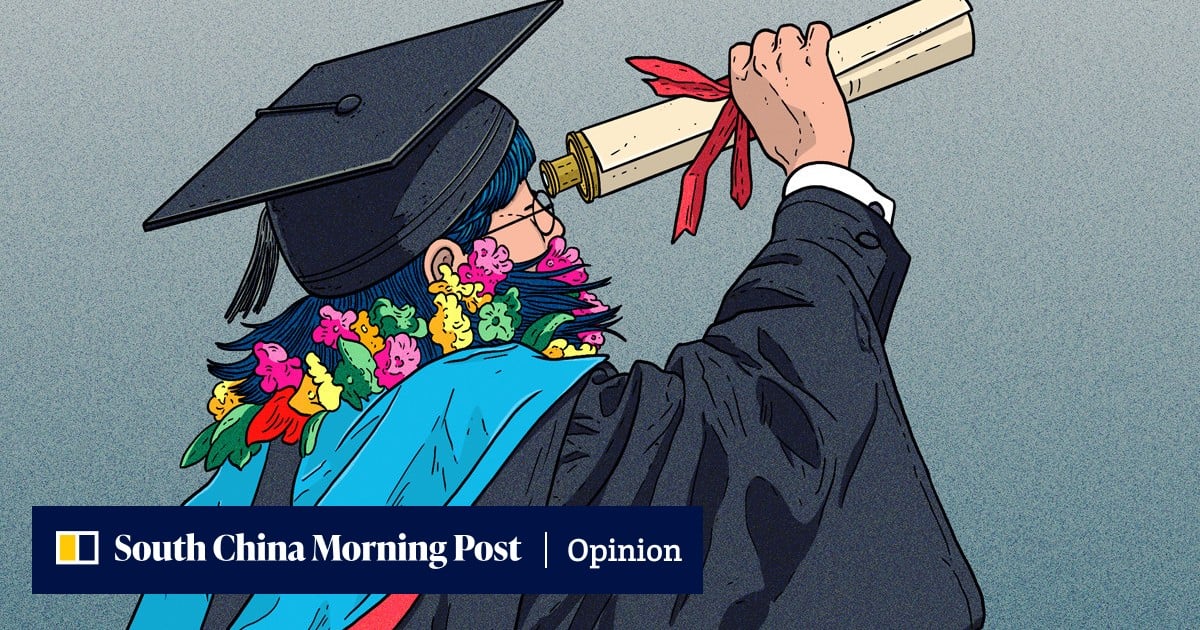
Young Americans are key for the US to better understand China
Sympathetic Opinion arguing that youth exchanges and mutual understanding complement summit diplomacy, with balanced calls on both capitals.
-
South China Morning PostN · · Opinion
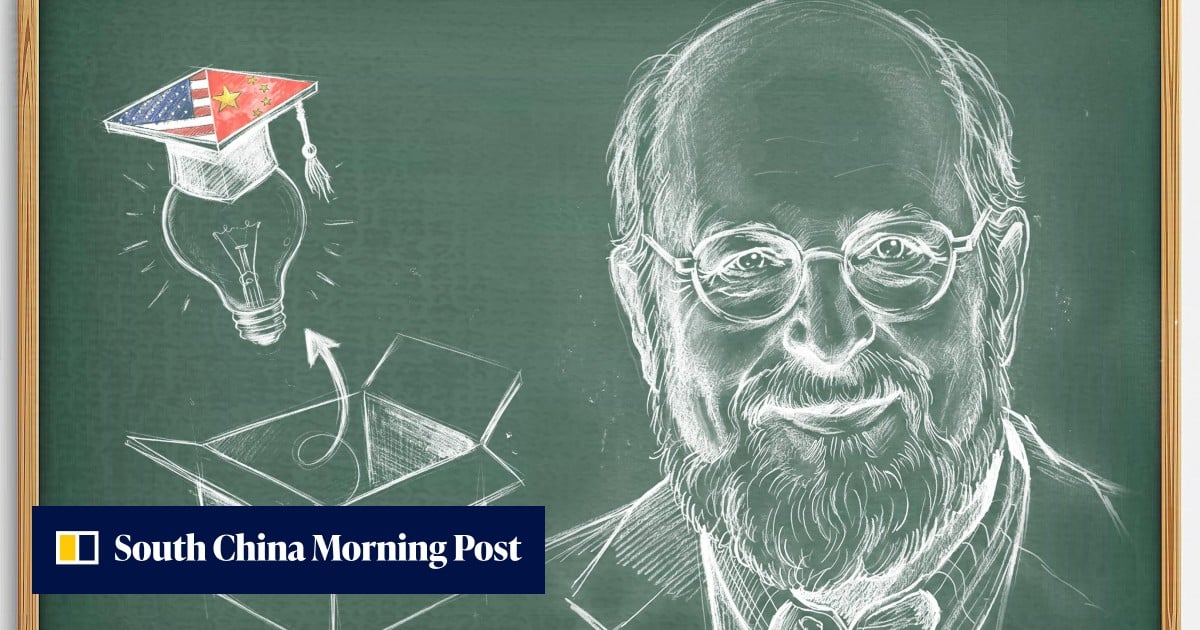
A US scholar’s take on how shifts in US-China relations are felt in a Tsinghua classroom
Right1 article
-
Washington ExaminerR · · Opinion
The ‘frenemy’ reality: Why America is miscalculating its greatest economic challenge
Critical Opinion arguing the US misdiagnoses China's nature and so miscalculates its response to an economic challenge.
- 15 Oct 13:30 First South China Morning PostN Young Americans are key for the US to better understand China Opinion
- 16 Oct 14:00 +24h 30m Washington ExaminerR The ‘frenemy’ reality: Why America is miscalculating its greatest economic challenge Opinion
- 16 Oct 16:00 +26h 30m South China Morning PostN A US scholar’s take on how shifts in US-China relations are felt in a Tsinghua classroom Opinion
Times are when each article was published, or when we first saw it if the outlet gave no time.
Ask about this story
Loading…