Nobel Literature Prize 2026: contenders and how the Swedish Academy chooses, ahead of 8 October
The Swedish Academy will announce the 2026 Nobel Literature laureate on 8 October. Critics name Jamaica Kincaid and Can Xue among the contenders, while coverage also explains the secretive selection process.
1 / 2
The story, neutrally told
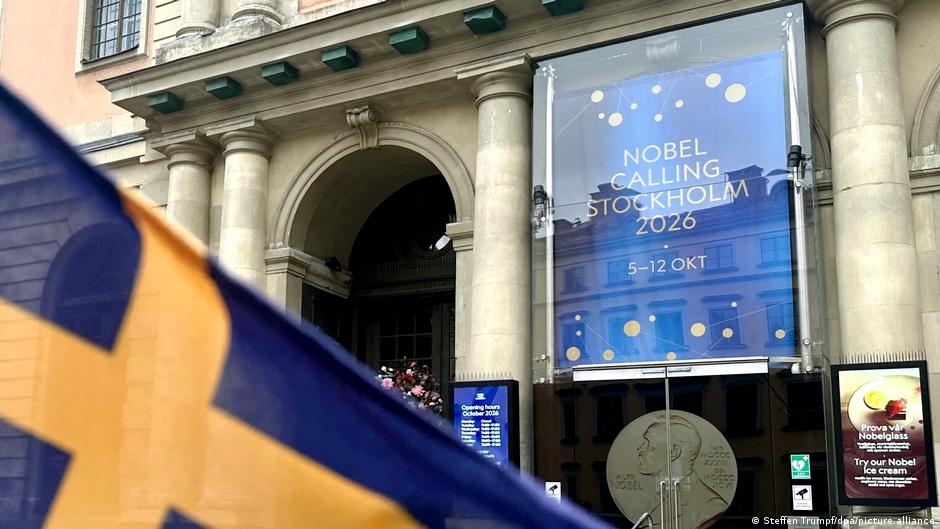
Mixed · 2The Swedish Academy will announce the 2026 Nobel Prize in Literature on Thursday 8 October at 1pm Swedish time (1100 GMT). The Straits TimesRC “The suspense will end on Oct 8 at 1pm (1100 GMT or 7pm SGT) when the 18-member Swedish Academy reveals its pick.” Read at The Straits Times ↗ Deutsche WelleN “On Thursday, October 8, at around 1 p.m. CEST, all eyes in the literary world will be set on Stockholm.” Read at Deutsche Welle ↗ Centre · 1The Academy's new permanent secretary, Ingrid Carlberg, will announce the winner at a press conference. Deutsche WelleN “the new permanent secretary of the Swedish Academy, Ingrid Carlberg, will hold a press conference to announce the winner of the 2026 Nobel Prize in Literature” Read at Deutsche Welle ↗ Right · 1There is no public shortlist, so speculation is guesswork. AFP quoted literary critics saying the prize could go to a Chinese or a Caribbean woman, in a bid to diversify an award that has mostly gone to Western male authors. The Straits TimesRC “The 2026 Nobel literature prize could go to a Chinese or a Caribbean woman when it is awarded later this week, literary critics say”“There is no public shortlist for the Nobel” Read at The Straits Times ↗
Right · 1The names most often mentioned are Antiguan-American author Jamaica Kincaid, 77, and China's Can Xue, whose avant-garde experimental writing has been compared to Kafka's. Expressen culture critic Victor Malm said it is "about time for Jamaica Kincaid to get it", and Dagens Nyheter culture editor Bjorn Wiman said she has been mentioned for a long time. The Straits TimesRC “Antiguan-American author Jamaica Kincaid, 77, whose work explores Caribbean culture, family and identity as well as colonialism and race, has often been mentioned in Nobel speculation”““It’s about time for Jamaica Kincaid to get it,” Victor Malm, culture critic at Swedish daily Expressen, told AFP.” Read at The Straits Times ↗ Centre · 1Deutsche Welle also calls Can Xue one of this year's favourites, with Margaret Atwood and Salman Rushdie as other strong contenders. Deutsche WelleN “Can Xue is considered one of this year's favorites; Margaret Atwood and Salman Rushdie are other strong contenders.” Read at Deutsche Welle ↗ Right · 1AFP adds that a Kincaid win could be read as political given her fierce criticism of US President Donald Trump. Wiman said the Academy should "distance itself a bit" from its 2025 choice of Hungary's Laszlo Krasznahorkai, a central European man. The Straits TimesRC “Giving her the nod could also be interpreted as a political choice, given her fierce criticism of US President Donald Trump.”“Hungary’s Laszlo Krasznahorkai took home the honour in 2025.” Read at The Straits Times ↗
Right · 1SR critic Lina Kalmteg said it was time for a Spanish-language author from Latin America and named Argentina's Samanta Schweblin, 48, as an interesting choice, though perhaps too young. The last South American laureate was Peru's Mario Vargas Llosa in 2010. The Straits TimesRC “Lina Kalmteg, literary critic for Swedish public broadcaster SR, meanwhile said it was time for a Spanish-language author from Latin America.”“The last writer from South America to be honoured was Peru’s Mario Vargas Llosa in 2010.” Read at The Straits Times ↗ Right · 1Other names regularly mentioned include Gerald Murnane, Alexis Wright, Thomas Pynchon and Cristina Rivera Garza, plus newer names Jenny Erpenbeck and Duong Thu Huong. The Straits TimesRC “Other “usual suspects” mentioned regularly in Nobel speculation include Australia’s Gerald Murnane, his Aboriginal compatriot Alexis Wright, American author Thomas Pynchon and Mexican writer Cristina Rivera Garza.” Read at The Straits Times ↗ Right · 1Since a 2018 sex assault scandal, which left the Academy in tatters and led to more than half its members being replaced, every other laureate has been a woman. The Academy insists its only consideration is the quality of a writer's work. The Straits TimesRC “Since then, every other literature laureate has been a woman – making it likely that the nod in 2026 could go to a woman.”“The Swedish Academy insists, however, that its only consideration is the quality of a writer’s work.” Read at The Straits Times ↗
Mixed · 2The record is skewed: AFP counts only 18 women among 122 laureates and no African languages represented, while DW says only 33 of the 122 laureates come from outside Europe and women's share is 14.9%. The Straits TimesRC “There are only 18 women among the 122 laureates” Read at The Straits Times ↗ Deutsche WelleN “So far, only 33 of the 122 laureates have come from outside Europe.” Read at Deutsche Welle ↗ Centre · 1DW describes the process: each September the Nobel Committee sends nomination forms to hundreds of eligible people and bodies, such as literature professors, past laureates and heads of writers' associations. Lists can reach 200 names a year, and in spring the committee picks five for the Academy to read over the summer. Deutsche WelleN “"The list can reach 200 names per year of nominated authors," explains Gisele Sapiro”“In the spring, the Nobel Committee then selects five names through a multistage process and presents them to the Academy.” Read at Deutsche Welle ↗ Centre · 1The nominee lists stay sealed for 50 years, and the Academy keeps its criteria to itself. Researcher Gisele Sapiro says it favours ambitious, influential work that is universal, that laureates since 1990 were nearly all translated into English, French and German, and that prior major prizes help. Alfred Nobel's will asks for "the most outstanding work in an idealistic direction". Deutsche WelleN “The public doesn't learn which nominees missed out until 50 years later”“all the laureates since 1990 had been translated into English, French and German”“the most outstanding work in an idealistic direction.” Read at Deutsche Welle ↗
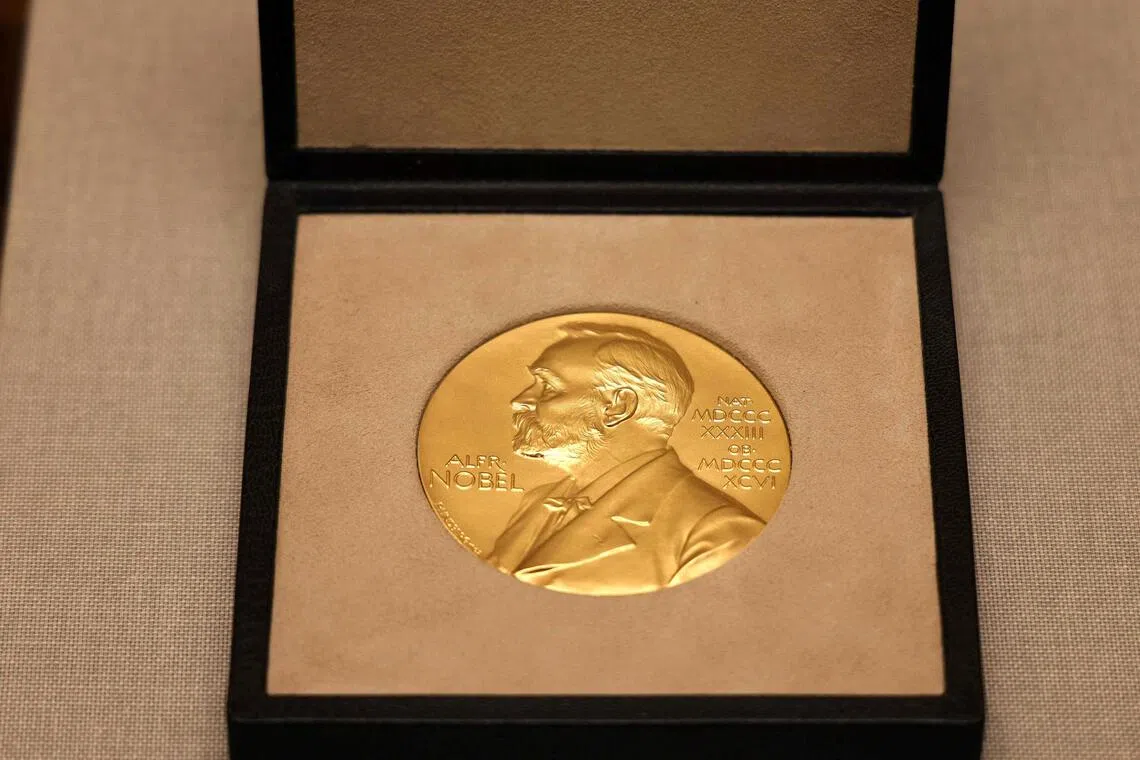
Mixed · 2The prize is for a body of work, in any genre, and the winner receives US$1.2 million, a gold medal and a diploma. The Straits TimesRC “The winner will take home a US$1.2 million (S$1.5 million) cheque, gold medal and diploma.” Read at The Straits Times ↗ Deutsche WelleN “Genre, on the other hand, does not matter.” Read at Deutsche Welle ↗
Every sentence links to the reporting it rests on. The pill in front of each says where its sources sit: Left, Centre or Right when one side supplies at least half of them, Mixed when they are evenly split. The number is how many outlets it cites.
Left0 outlets
No left outlet in our sources has covered this story yet.
Centre1 outlet
- Framing
- Explainer on how the secret selection process works, with favourites mentioned in the lede.
- Emphasis
- Nomination procedure, criteria, translation and prize track records, long waits, and the gender and geographic imbalance.
- Leaves out or plays down
- Does not name specific contenders beyond the lede, nor the Swedish critics' views on diversity.
- Charged language
- “secretly chosen”
- For example
-
“Nobel Literature Prize: How the winner is secretly chosen” — Deutsche Welle
“Politics can also influence the Swedish Academy's decisions.” — Deutsche Welle
Right1 outlet
- Framing
- AFP wire copy run by the Straits Times: a speculation piece centred on a possible Chinese or Caribbean woman winner and the push to diversify the prize.
- Emphasis
- Named contenders, critics' quotes, the Kincaid–Trump political angle, the 2018 scandal and the record of Western male laureates.
- Leaves out or plays down
- Says little about the nomination procedure, and does not mention Atwood or Rushdie.
- Charged language
- “frantic guessing”“over-representation of Western male authors”
- For example
-
“Stockholm’s literary circles engage in frantic guessing ahead of the announcement.” — The Straits Times
“The institution has long been criticised for the over-representation of Western male authors since the prize was first awarded in 1901.” — The Straits Times
What every side reports
- The announcement is on 8 October at about 1pm Swedish time.
- The Swedish Academy has 18 members and there are 122 laureates to date.
- Nominee lists stay sealed for 50 years.
- Women and non-European authors are under-represented among laureates.
Can Xue person
Named by AFP's sources and by DW as a leading contender; her experimental writing is compared to Kafka's. No statement from her is reported.
“China’s Can Xue, whose avant-garde experimental writing has been compared to that of Kafka.” — The Straits Times
“Can Xue is considered one of this year's favorites” — Deutsche Welle
Nobel Prize event
The Swedish Academy keeps deliberations and criteria secret and says it considers only the quality of a writer's work.
“The Swedish Academy insists, however, that its only consideration is the quality of a writer’s work.” — The Straits Times
“As for the criteria the Academy uses to make its decision — it prefers to keep them to itself.” — Deutsche Welle
Left0 articles
No coverage yet.
Centre1 article
-
Nobel Literature Prize: How the winner is secretly chosen
Neutral Explainer on the secretive selection process, with Can Xue, Atwood and Rushdie named as favourites.
Right1 article
-
The Straits TimesRC · · via AFP
Chinese, Caribbean women among contenders for Nobel literature prize
Neutral AFP speculation piece on diversifying the prize, led by Chinese and Caribbean women contenders.
- 6 Oct 03:25 First The Straits TimesRC Chinese, Caribbean women among contenders for Nobel literature prize via AFP
- 6 Oct 14:15 +10h 50m Deutsche WelleN Nobel Literature Prize: How the winner is secretly chosen
Times are when each article was published, or when we first saw it if the outlet gave no time.