Netflix's New Stanford Prison Experiment: creators explain finale as scholars revisit the 1971 study
Netflix released a six-episode reality series re-staging the 1971 Stanford prison experiment on 21 October. Its producers discussed the finale in Variety, while a psychologist in The Conversation asked why the original study still fascinates despite criticism.

1 / 3
The story, neutrally told
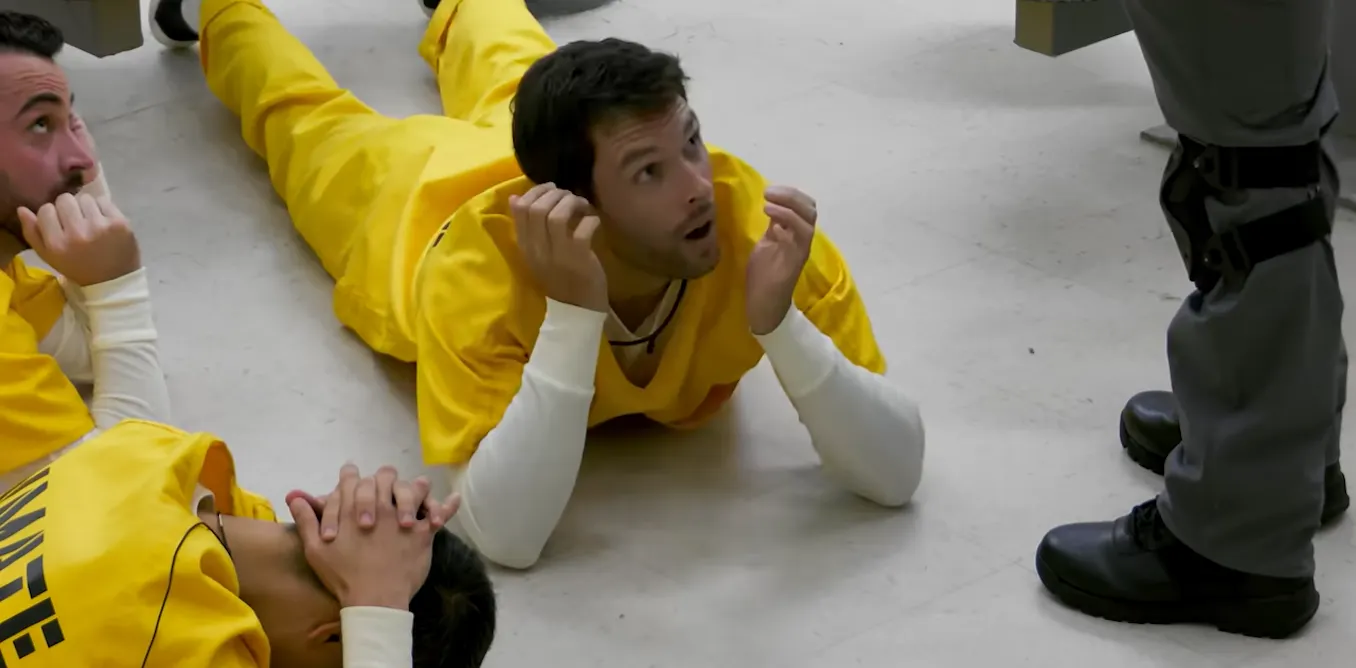
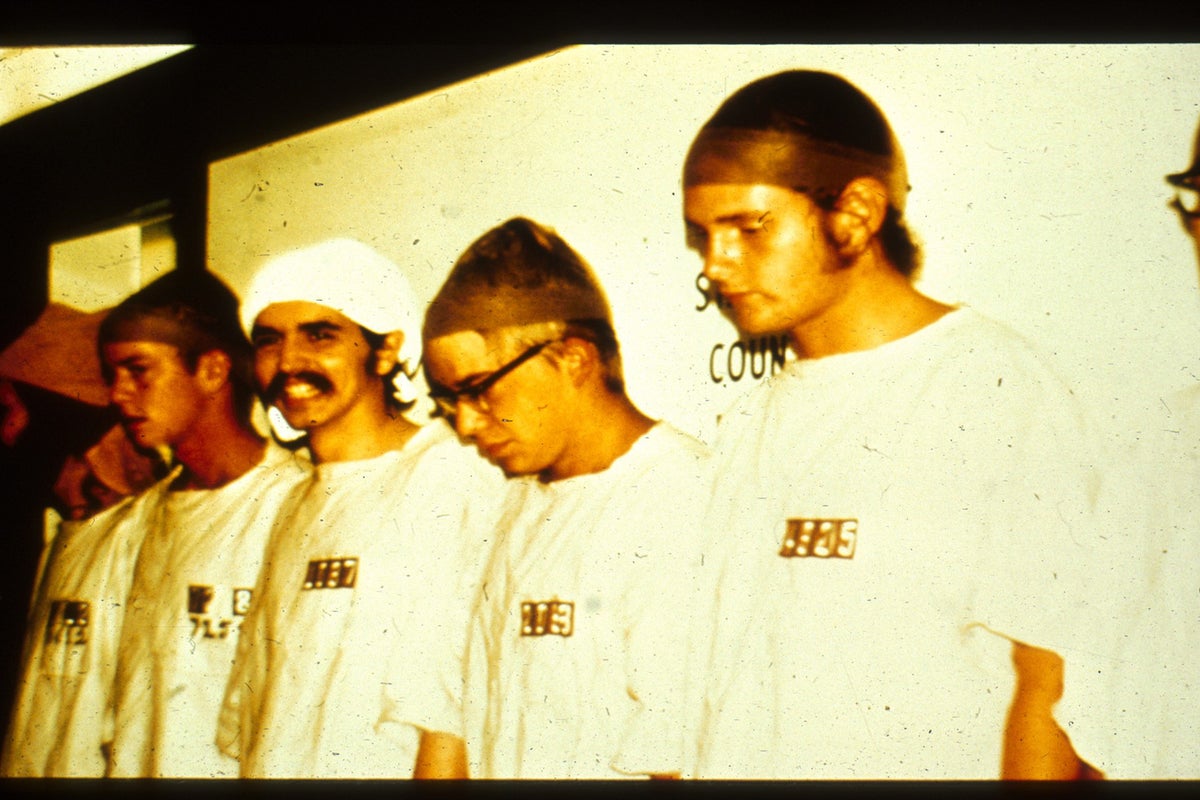
Left · 2Netflix debuted "The New Stanford Prison Experiment", a six-episode reality series, on 21 October, re-staging Philip Zimbardo's 1971 study. VarietyLC “on Oct. 21, Netflix debuted “The New Stanford Prison Experiment,” a six-episode reality-TV version” Read at Variety ↗ The ConversationLC “This month, Netflix released six episodes of The New Stanford Prison Experiment” Read at The Conversation ↗ Left · 2The original study, run in August 1971 at Stanford, randomly assigned 24 male students to play guards or prisoners in a mock prison; it was meant to last two weeks but was stopped after six days because some guards had become cruel and some prisoners had broken down. The ConversationLC “He randomly assigned 24 male students to play guards or prisoners in what was meant to be a two-week study.” Read at The Conversation ↗ VarietyLC “the experiment was ended on the sixth day” Read at Variety ↗ Left · 1The new version, from executive producers Jane Lipsitz and Dan Cutforth, put thirty participants of varied racial, geographical and economic backgrounds, including three women, into a decommissioned cell block of a working prison for a two-week simulation; eight were guards and 22 prisoners. VarietyLC “saw thirty entrants of various racial, geographical and economic backgrounds — including three women — partake in a two-week simulated prison environment” Read at Variety ↗
Left · 1Unlike in 1971, the show used safeguards: background checks and psychological testing, informed consent, medics, psychologists and off-duty guards on call 24/7, and a safe word, "pineapple". Three experts observed: Alison Wood Brooks, journalist Trymaine Lee and former federal corrections officer Michael Cantrell. VarietyLC “a safe word (“pineapple”) if participants ever felt they needed to leave or talk to a therapist and/or producer”“Alison Wood Brooks, a behavioral scientist who teaches at Harvard Business School; Trymaine Lee, a Pulitzer Prize-winning journalist; and Michael Cantrell, a former federal corrections officer” Read at Variety ↗ Left · 1Five participants left during the experiment, the first being Larry Foy, a former convict nicknamed "Scary Larry", who was severely triggered by the prison setting; Lipsitz said nobody expected that effect but that he could choose to leave. VarietyLC “Over the course of the experiment, five people bow out”“Nobody thought it would affect him in the way that it did, but we knew he could make the decision for himself” Read at Variety ↗ Left · 1By day six the experiment nearly unravelled when prisoners Pete and Brandon were put in "23 and 1" (23 hours locked in their cell, one hour outside) for conspiring against the guards; Brandon nearly quit but stayed after a phone call with his mother. Lipsitz said the producers had thought it would end on the same day as the original. VarietyLC ““We thought it would end on the same day that the original experiment did,” admits Lipsitz”“Brandon nearly bails, but decides to stay after an emotional phone call with his mother.” Read at Variety ↗
Left · 1Producers also introduced four phases: Transformation, Hierarchy, Role-Reversal and Self-Governance. In Role-Reversal, the most punished inmates became guards and the most power-obsessed guards became inmates; guard Chet Hudson quit after a day, and three female guards led by Laura Berens stepped in when inmates came close to attacking Pete and Brandon. VarietyLC “four “phases” were implemented by producers: Transformation, Hierarchy, Role-Reversal and Self-Governance.”“Chet, uncomfortable with being power-less, quits after a day” Read at Variety ↗ Left · 1In the final Self-Governance phase all rules were dropped; although some inmates wanted to stay, comedian Mike Paramore persuaded Chris Lee that the prisoners should walk out together arm-in-arm, ending the experiment on day 13. Lipsitz said the producers "did not see that coming at all". VarietyLC “it would be far more powerful if all the prisoners walked out of the facility together arm-in-arm”“ending the experiment on the thirteenth day” Read at Variety ↗ Left · 1Cutforth said he would hesitate to draw conclusions about race and gender but that the show "holds up a mirror" to those issues. Lipsitz said the men, without phones or alcohol, bonded and learned from each other. Both hope for a second season, possibly with women. VarietyLC “I would hesitate to come to any conclusions about race and gender, but I think it holds up a mirror to a lot of those issues”“I think it would be interesting to do it with women and ask some different questions or frame it differently.” Read at Variety ↗
Left · 1In The Conversation, psychologist David Kaposi of the Open University notes the Stanford and Milgram studies have been called a sham or fraud, and that Retraction Watch has hosted an argument for retracting the Stanford paper. The ConversationLC “have been called a sham, a lie and a fraud.”“Retraction Watch, a site that tracks withdrawn research papers, has hosted an argument for retracting the Stanford paper.” Read at The Conversation ↗ Left · 1He cites researcher Thibault Le Texier's 2019 analysis of the Stanford archive, which argued Zimbardo's team instructed the guards on how to behave and that some prisoners later said they exaggerated their distress, though he adds that Zimbardo disclosed some of this himself in his 2007 book The Lucifer Effect. The ConversationLC “Zimbardo’s team gave the guards instructions on how to behave, so they were not acting spontaneously.”“It also describes how he acted as the prison’s “superintendent” and briefed and coached the guards.” Read at The Conversation ↗ Left · 1Kaposi describes the rival "engaged followership" explanation from Alex Haslam and Stephen Reicher, who ran the 2002 BBC prison study in which guards did not spontaneously turn cruel; he says it has numerous critics. He argues the studies endure because they show ordinary people freely choosing evil when they could choose good. The ConversationLC “In 2002, they ran the BBC prison study, a televised re-run of Zimbardo’s idea, in which guards did not spontaneously turn cruel.”“That profound and deeply disturbing message is why people keep coming back to these decades-old studies.” Read at The Conversation ↗
Every sentence links to the reporting it rests on. The pill in front of each says where its sources sit: Left, Centre or Right when one side supplies at least half of them, Mixed when they are evenly split. The number is how many outlets it cites.
Left3 outlets
- Framing
- Variety presents an entertainment interview with the producers about a hopeful finale; The Conversation offers an academic essay on why the flawed original studies still fascinate.
- Emphasis
- Variety: safeguards, the phase structure, the walk-out and hopes for a second season. The Conversation: criticism of Zimbardo and Milgram and the unanswered question of why people choose evil.
- Leaves out or plays down
- Variety describes the 1971 study as ethically compromised but does not discuss the scholarly challenges to its findings. The Conversation mentions the Netflix series only in passing.
- Charged language
- “shocking finale”“far more hopeful note”“a sham, a lie and a fraud”
- For example
-
“ends on a far more hopeful note than Stanford psychology professor Philip Zimbardo’s original 1971 trial” — Variety
“have been called a sham, a lie and a fraud.” — The Conversation
Centre0 outlets
No centre outlet in our sources has covered this story yet.
Right0 outlets
No right outlet in our sources has covered this story yet.
What every side reports
- Netflix released the six-episode The New Stanford Prison Experiment in October 2026.
- The 1971 Stanford experiment used 24 male students and was stopped after six days.
- The original study is widely criticised on ethical and methodological grounds.
The New Stanford Prison Experiment other
Producers Lipsitz and Cutforth say the show added safeguards, produced a hopeful ending they did not expect, and hope to make more, perhaps with women.
“hope people watch, debate and think about what it means in modern society.” — Variety
Philip Zimbardo person
Zimbardo's 1971 study is described as notorious and ethically compromised, and as criticised for coached guards; Kaposi says Zimbardo disclosed his own role in his 2007 book.
“Zimbardo’s 2007 bestseller, The Lucifer Effect, credits his students with the original idea.” — The Conversation
Left3 articles
-
‘The New Stanford Prison Experiment’ Creators Break Down Its Shocking Finale
Sympathetic Interview with the producers that largely relays their account of the finale and safeguards.
-
Stanford prison experiment: why do controversial psychology studies still have such a hold on us?
Mixed Expert essay that weighs criticism of the classic experiments but concludes they reveal something grave about human nature.
-
The IndependentLC · · Opinion
Netflix's New Stanford Prison Experiment reveals 'something monstrous' in all of us
Centre0 articles
No coverage yet.
Right0 articles
No coverage yet.
- 25 Oct 15:00 First VarietyLC ‘The New Stanford Prison Experiment’ Creators Break Down Its Shocking Finale
- 26 Oct 15:46 +24h 46m The ConversationLC Stanford prison experiment: why do controversial psychology studies still have such a hold on us?
- 26 Oct 17:10 +26h 11m The IndependentLC Netflix's New Stanford Prison Experiment reveals 'something monstrous' in all of us Opinion
Times are when each article was published, or when we first saw it if the outlet gave no time.
Ask about this story
Loading…