Data centers cluster in Republican states, and voter backlash is straining the GOP before midterms
New data show most data centers under construction or planned are in Republican-leaning states, while opposition grows. CBS News stresses the split among Republicans; an Economist analysis, carried by Hindustan Times, finds voters near data centers shifting toward Democrats.
1 / 1
The story, neutrally told
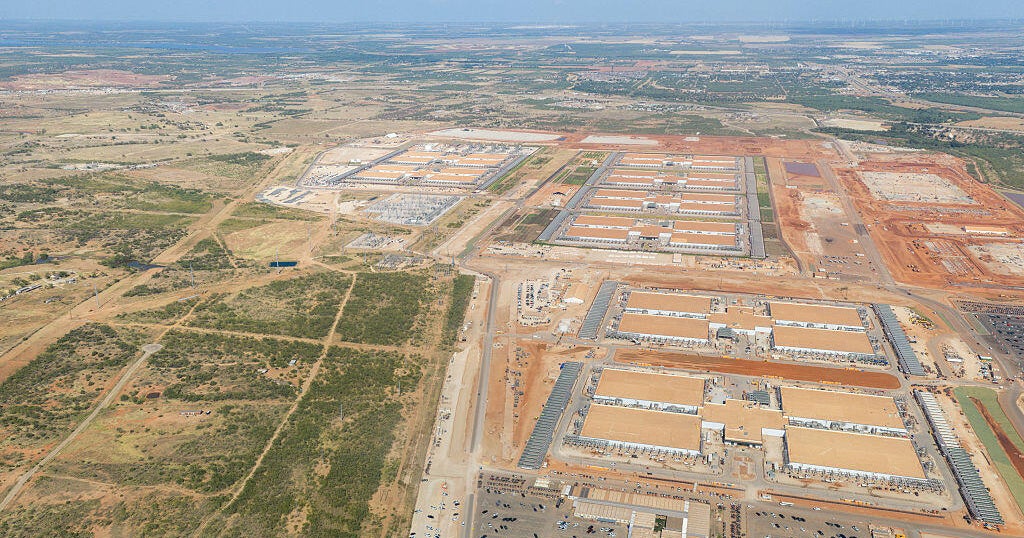
Left · 1Cleanview Research, an independent energy market intelligence company, found that 75% of data centers under construction and 80% of those in the planning stage are in predominantly Republican states. CBS NewsLC “Now, 75% of data centers under construction and 80% of data centers in the planning stage are in predominantly Republican states” Read at CBS News ↗ Left · 1The concentration has grown: when ChatGPT launched in late 2022 most data centers were being built in blue states, but by 2025, 68% of data centers online were in red states. CBS NewsLC “When ChatGPT launched in late 2022, most data centers were being built in blue states. But by 2025, 68% of data centers online were in red states.” Read at CBS News ↗ Left · 1Chris Millay, a data center analyst at the consultancy Greenmantle, attributed this to red states' history of accepting large energy-intensive projects, relatively little environmental regulation and available open land. CBS NewsLC “He also points to the relative lack of environmental regulation and the availability of open land as reasons rural states are receiving more investment.” Read at CBS News ↗
Left · 1Public opposition is rising. CBS News reports that opposition outweighs support by 30 points, that polls show a majority of Republicans oppose data centers near them, and that residents cite property values, noise, higher energy bills and resource depletion. CBS NewsLC “Overall, opposition to data centers outweighs support by 30 points, with polls showing the majority of Republicans oppose the construction of data centers near them.”“People who live near data centers have reported concerns about their property values, noise, higher energy bills and resource depletion.” Read at CBS News ↗ Mixed · 2President Donald Trump is one of data centers' biggest boosters, seeing the AI race as critical to the economy and national security. He has dismissed opposition, posting that communities should not want data centers only if they want to be "backwards and poor", though he has urged developers to give back to local communities. CBS NewsLC “President Trump sees the AI race as critical to the economy and national security, and he's one of data centers' biggest boosters.” Read at CBS News ↗ Hindustan TimesN “President Donald Trump has warned that places opposed to data centres risk becoming “backwards and poor”.” Read at Hindustan Times ↗ Left · 1Some Republican candidates are breaking with him. In Texas, Gov. Greg Abbott has paused environmental permits and grid connections for new data centers, and Senate nominee Ken Paxton wants to end the state's sales tax break for them. In Ohio, gubernatorial candidate Vivek Ramaswamy vowed an executive order halting approval of new projects, while Democrat Amy Acton calls for a conditional moratorium. CBS NewsLC “GOP Gov. Greg Abbott has paused environmental permits and grid connections for new data centers.”“He vowed to "issue an executive order on my first day in office to immediately halt the approval of any new data center project announcements in Ohio,"” Read at CBS News ↗
Left · 1In Georgia, Republican gubernatorial candidate Rick Jackson is sticking with Trump and says the decision should be left to local officials, while Democrat Keisha Lance Bottoms calls for a temporary moratorium. Candidates there have spent nearly $13 million on ads mentioning data centers, the most of any state; campaigns nationally have spent $45 million, mostly in opposition, according to AdImpact. CBS NewsLC “Campaigns have spent $45 million this year on ads that mention data centers — most of them in opposition — according to AdImpact.”“Jackson says the decision should be left up to local officials.” Read at CBS News ↗ Centre · 1An Economist analysis, published by Hindustan Times, matched almost 150,000 Economist/YouGov respondents to their nearest data centre. It found that among voters within 2km of one, the share planning to back a Democrat in November rose from 54% to 61% since May, against a national rise from 53% to 55%. Hindustan TimesN “Since then the share of voters planning to support a Democrat in November’s midterm elections has risen from 54% to 61% among those living within 2km of a data centre. Across the country the rise has been from 53% to just 55%.” Read at Hindustan Times ↗ Centre · 1About 17% of Trump's 2024 voters living within 2km of a data centre now say they would support a Democrat, versus 6% of his voters elsewhere. The Economist cautions the pattern could reflect who lives near data centres, and built a demographic model to account for that. Hindustan TimesN “Around 17% of people living within 2km of a data centre who voted for Mr Trump in 2024 now say they would support a Democrat, compared with 6% of his voters elsewhere”“This analysis could reflect who lives near data centres, rather than the effect of the centres themselves.” Read at Hindustan Times ↗
Mixed · 2Few Americans live near a data centre, but the Economist says the effect could be decisive in places such as Nevada's 2nd, Colorado's 4th (where Lauren Boebert is the Republican incumbent) and Ohio's 15th districts, where Democratic candidates are campaigning on the issue. CBS notes that because most of the next wave of projects is planned in states Trump won in 2024, Republican candidates' choices could decide whether projects are paused, made costlier or canceled. Hindustan TimesN “Relatively few Americans live near a data centre. But in some places the trend could be decisive.” Read at Hindustan Times ↗ CBS NewsLC “the choices Republican candidates make, siding with voters or with the president, could decide whether those projects are paused, made more expensive or even canceled.” Read at CBS News ↗
Every sentence links to the reporting it rests on. The pill in front of each says where its sources sit: Left, Centre or Right when one side supplies at least half of them, Mixed when they are evenly split. The number is how many outlets it cites.
Left1 outlet
- Framing
- Frames the boom as a dilemma for Republicans, pitting candidates against the Trump administration, backed by Cleanview data and campaign examples.
- Emphasis
- Geography of construction, GOP candidates' breaks with Trump, ad spending and bipartisan similarity of positions.
- Leaves out or plays down
- Gives no analysis of how voters near data centers are shifting their vote.
- Charged language
- “bind”“one of the most explosive issues”
- For example
-
“Data centers seem to be the single issue where Democratic and Republican candidates sound nearly identical.” — CBS News
Centre1 outlet
- Framing
- Presents a polling analysis arguing data centres are moving Trump voters toward Democrats, with a caveat about selection effects.
- Emphasis
- Proximity-based voter shift and specific competitive House districts.
- Leaves out or plays down
- Does not cover Republican officials such as Abbott, Paxton or Ramaswamy breaking with Trump, or the state-by-state build-out figures.
- Charged language
- “political bogeyman”“NIMBYish”
- For example
-
“Unlike the president, they are happy to embrace NIMBYish concerns.” — Hindustan Times
Right0 outlets
No right outlet in our sources has covered this story yet.
What every side reports
- Data center construction is a growing political issue ahead of the 2026 midterms.
- Trump has dismissed opposition to data centers as "backwards and poor".
- Public opposition to data centers is growing, including among Republican voters.
Where accounts differ
-
Main political effect of the backlash
- Left
- CBS News frames it as a bind for Republicans, with GOP candidates splitting from Trump and Democrats and Republicans sounding "nearly identical" on the issue.
- Centre
- The Economist (via Hindustan Times) frames it as shifting voters toward Democrats, with Democratic candidates, unlike Trump, embracing local concerns.
Republican Party party
Divided: Trump champions data centers, while candidates such as Abbott, Paxton and Ramaswamy back pauses or limits, and Georgia's Jackson defers to local officials.
“Some of the president's closest allies have begun to break with him on the issue.” — CBS News
2026 US midterm elections event
Data centers are an issue in races from governor to House seats; Democratic candidates are running ads and proposing moratoria or stricter siting rules.
“In Nevada’s second congressional district Teresa Benitez-Thompson, the Democratic candidate, is running advertisements on the topic.” — Hindustan Times
Data centers topic
Backers cite the AI race, jobs and local tax revenue; critics cite bills, noise, property values and resource use.
“Effingham County, where OpenAI plans a $20 billion data center, has pledged to use some of that revenue to cut homeowners' property taxes.” — CBS News
Left1 article
-
Data center boom puts GOP in a bind before midterm elections
Neutral Explanatory political report on a GOP dilemma, built on Cleanview data, analyst quotes and campaign examples.
Centre1 article
-
Data centres are turning Trump voters into Democrats
Mixed Economist data piece arguing data centres push Trump voters toward Democrats, while noting a selection caveat.
Right0 articles
No coverage yet.
- 13 Oct 00:28 First CBS NewsLC Data center boom puts GOP in a bind before midterm elections
- 14 Oct 12:00 +35h 32m Hindustan TimesN Data centres are turning Trump voters into Democrats
Times are when each article was published, or when we first saw it if the outlet gave no time.
Ask about this story
Loading…