Data center health concerns become a midterm campaign issue in Ohio and Arizona
Opposition to new data centers, driven partly by health worries, has become a campaign issue in Ohio, Arizona and other mostly Republican-leaning states ahead of the Nov. 3 midterms. An industry group says existing regulations limit emissions.
1 / 2
The story, neutrally told
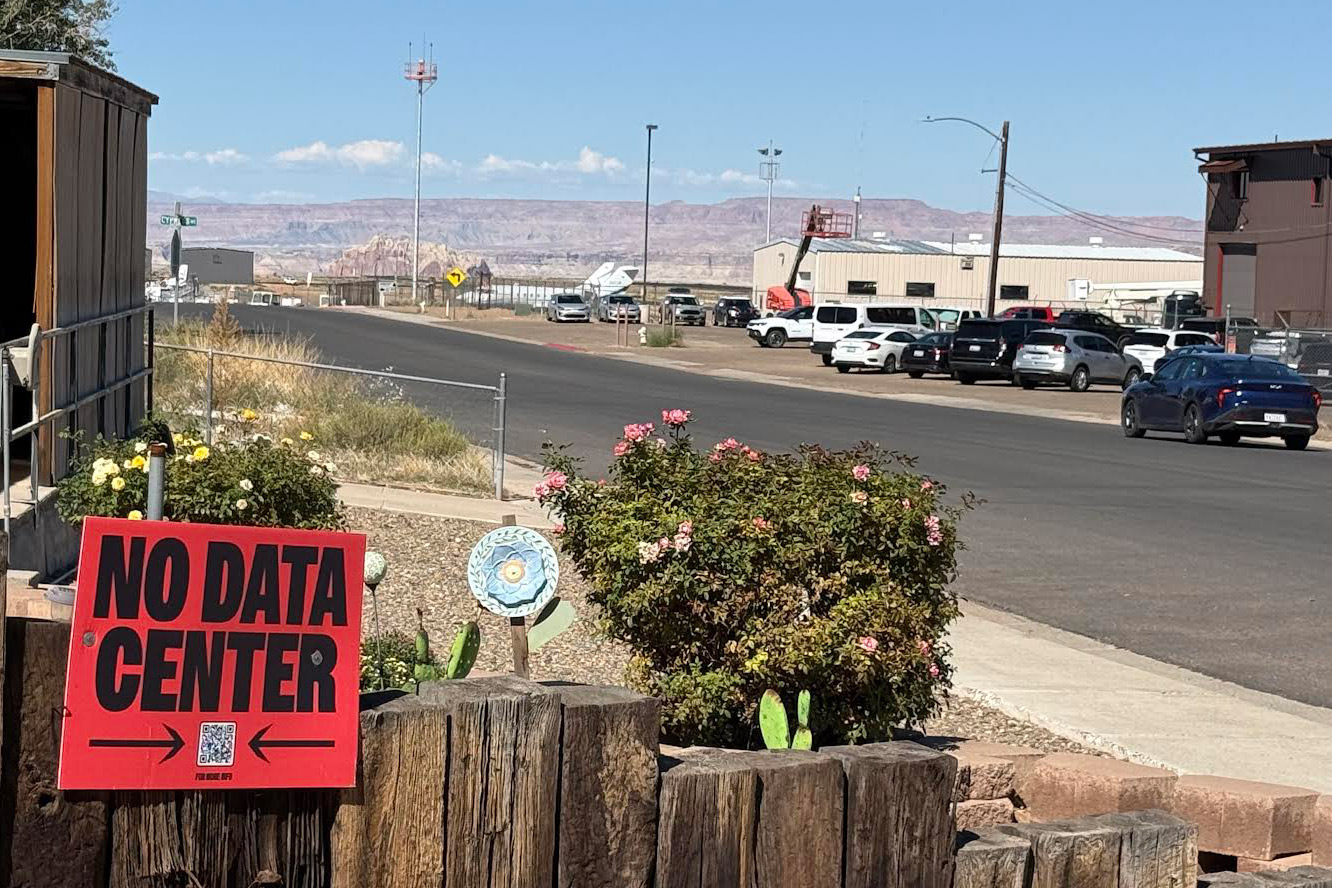
Mixed · 2Opposition to the rapid spread of data centers, partly driven by health worries, has become a flash point in the Nov. 3 midterm elections, particularly in Ohio and Arizona. KFF Health NewsN “The boom in data centers is dividing communities such as Page and turning future construction into a flash point in the midterm elections.” Read at KFF Health News ↗ CBS NewsLC “The boom in data centers is dividing communities such as Page and turning future construction into a flash point in the midterm elections.” Read at CBS News ↗ Mixed · 2In Page, Arizona, resident Doug Herrera, 64, opposes a proposed $10 billion data center, citing light pollution, sound pollution and rising temperatures. The City Council approved the sale of 500 acres, but the developer still needs zoning and other approvals, and residents have signed petitions against construction. KFF Health NewsN “While the City Council approved the sale of land for a data center, the developer needs zoning and other approvals.” Read at KFF Health News ↗ CBS NewsLC “The city of Page approved the sale of 500 acres for the proposed data center, though the location within that acreage hasn't been decided.” Read at CBS News ↗ Mixed · 2In Arizona's competitive 1st Congressional District, Republican Jay Feely, who won his primary with Donald Trump's endorsement, says data centers are key to keeping up with China. Democrat Amish Shah wants a pause on new construction there, and the state's attorney general has called for a pause on new approvals and building. KFF Health NewsN “Democratic opponent Amish Shah wants a pause on new construction in their district.” Read at KFF Health News ↗ CBS NewsLC “the state's attorney general has called for a pause on new approvals and building” Read at CBS News ↗
Mixed · 2In Ohio, more than a dozen local referendums or initiatives on data centers will be on ballots, the most of any state. In the U.S. Senate race, Democrat Sherrod Brown is running ads calling Republican Sen. Jon Husted "the face of data centers." KFF Health NewsN “more than a dozen local referendums or initiatives related to construction of the facilities will appear on ballots — the most of any state” Read at KFF Health News ↗ CBS NewsLC “Brown has pinned the blame on Husted directly with ads airing widely across Ohio that call him "the face of data centers."” Read at CBS News ↗ Mixed · 2Husted has called data centers a local issue and has said he wants the companies building them to pay for infrastructure costs, including energy. A spokesperson said the senator believes "data centers should remain a local decision." An Aug. 18 National Republican Senatorial Committee memo, obtained by Politico, called data centers "the anchor hanging around Husted's neck." KFF Health NewsN “Husted has rebuffed these critiques by framing the construction of data centers as a local issue.” Read at KFF Health News ↗ CBS NewsLC “"More than any other thing in this race, data centers are the anchor hanging around Husted's neck,"” Read at CBS News ↗ Mixed · 2Polls show broad opposition: a Washington Post-ABC News-Ipsos poll found two in three Americans oppose new data centers. An August opt-in poll in Arizona found 57% opposed, and an early-October opt-in survey in Ohio found 55% opposed. KFF Health NewsN “Two in 3 Americans oppose the construction of new data centers in the U.S., according to an October Washington Post-ABC News-Ipsos poll.” Read at KFF Health News ↗ CBS NewsLC “found that 55% were opposed to data center construction” Read at CBS News ↗
Mixed · 2Environmental studies have linked the air pollution from gas turbines and backup generators to heart, respiratory and cancer risks. Modeling led by University of California-Riverside researchers estimates emissions could cause nearly 1,300 deaths annually by 2030 and a public health burden above $20 billion a year in 2028. Advocacy and environmental groups also cite noise above 90 decibels, light pollution, heat islands and forever chemicals in cooling components. KFF Health NewsN “Emissions from the centers could cause nearly 1,300 deaths annually by 2030 and an annual public health burden of more than $20 billion in 2028” Read at KFF Health News ↗ CBS NewsLC “the hum and whir of generators and heating and air conditioning systems can exceed 90 decibels, which can harm hearing” Read at CBS News ↗ Mixed · 2Alison Steele of the Environmental Health Project says health research is only beginning and may arrive too late. The Data Center Coalition, an industry trade group, says a review of Virginia found backup power use is minimal and that state and federal regulations limit emissions and impacts. KFF Health NewsN “"We're just starting to see the very early edge of the wave of the research into health impacts of data centers,"” Read at KFF Health News ↗ CBS NewsLC “existing state and federal regulations limit potential emissions or impacts” Read at CBS News ↗ Mixed · 2The issue cuts across party lines and pits some Republicans against Trump, who supports data centers as vital for economic growth. About 1,400 data centers operate in the U.S. with more than 2,000 planned, and most new capacity is in states Trump won in 2024. Wright State University political scientist Lee Hannah says earlier approvals have become "career-ending" for some officials. KFF Health NewsN “About 1,400 data centers operate in the U.S., and an additional 2,000-plus are planned.” Read at KFF Health News ↗ CBS NewsLC “decisions made a year ago by local officials or state governments to get behind a data center are suddenly career-ending.” Read at CBS News ↗
Every sentence links to the reporting it rests on. The pill in front of each says where its sources sit: Left, Centre or Right when one side supplies at least half of them, Mixed when they are evenly split. The number is how many outlets it cites.
Left1 outlet
- Framing
- Presents the story as data center health worries reshaping the midterms, opening with a Page, Arizona resident's concerns. The text matches the KFF Health News report, with subheads such as "It cuts across politics" and "More than costs" and "Mr. Trump" style.
- Emphasis
- Health risks, grassroots opposition, political vulnerability of incumbents who backed data centers.
- Leaves out or plays down
- Nothing substantive relative to the centre report.
- For example
-
“Opposition to the rapid emergence of data centers in states such as Ohio and Arizona has ginned up activism and unified voters.” — CBS News
Centre1 outlet
- Framing
- KFF Health News (bylined Stephanie Armour and Amanda Seitz) frames the story as a health-driven political issue, leading with a resident's fears in Page, Arizona.
- Emphasis
- Health research, polling, and the strain on Republican candidates aligned with Trump.
- Leaves out or plays down
- Gives industry and Husted's responses but little detail on claimed economic benefits beyond Trump's and Feely's arguments.
- For example
-
“Opposition to the rapid emergence of data centers in states such as Ohio and Arizona has ginned up activism and unified voters.” — KFF Health News
Right0 outlets
No right outlet in our sources has covered this story yet.
What every side reports
- Both outlets carry essentially the same report, with the same reporting, quotes and figures.
- Data center opposition is a campaign issue in Ohio (Brown vs. Husted Senate race) and Arizona (1st District, Feely vs. Shah).
- Polls cited show majority opposition to new data centers, and the industry group says existing regulations limit emissions.
Where accounts differ
-
Health impacts of data centers
- Left
- Carries the same health findings and industry rebuttal; no difference in substance.
- Centre
- Reports environmental studies and modeling linking emissions to health risks, with the industry group's rebuttal and a researcher saying research is early.
Data centers topic
Opponents cite air, noise, light, heat and water concerns; the industry's Data Center Coalition says it is committed to being responsible partners and that regulations limit emissions.
“"Data centers are committed to being responsible partners where they operate,"” — KFF Health News
2026 US midterm elections event
Data centers are a campaign flash point, with Democrats and some Republicans opposing them and Trump-backed candidates defending them.
“giving ammunition to Democrats and some Republicans who've broken party ranks to oppose the sprawling complexes” — KFF Health News
Left1 article
-
Data center health worries animate midterm campaigns
Neutral Republication of the same reporting with added subheads; same framing of health worries as a political liability.
Centre1 article
-
Data Center Health Worries Animate Midterm Campaigns
Neutral Explanatory, reported feature tying health research and polling to campaign dynamics, with industry and candidate responses included.
Right0 articles
No coverage yet.
- 29 Oct 09:00 First KFF Health NewsN Data Center Health Worries Animate Midterm Campaigns
- 29 Oct 09:00 First CBS NewsLC Data center health worries animate midterm campaigns
Times are when each article was published, or when we first saw it if the outlet gave no time.
Ask about this story
Loading…