DeepSeek open-sources software tools for Huawei's Ascend AI chips
Chinese AI firm DeepSeek released six open-source software modules for Huawei's Ascend chips, developed with Huawei, in a push to reduce reliance on Nvidia.

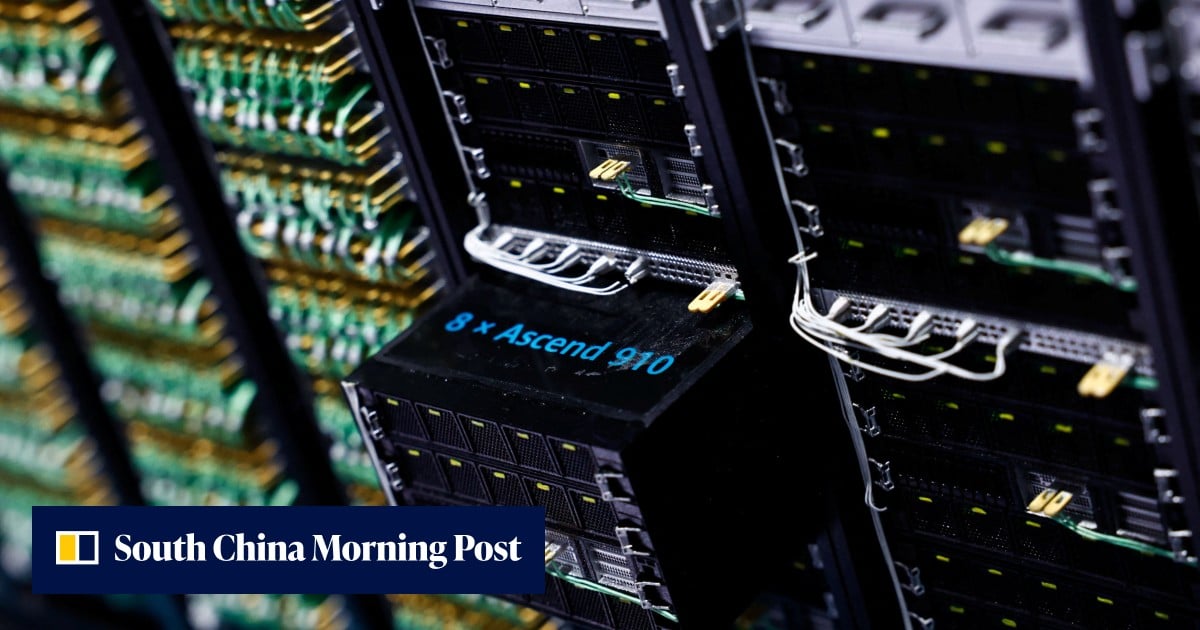
1 / 2
The story, neutrally told
DeepSeek, a Hangzhou-based AI start-up, open-sourced a suite of core tools for Huawei's Ascend AI chips on Wednesday 30 September. South China Morning PostN “Chinese artificial intelligence start-up DeepSeek on Wednesday open-sourced a suite of core tools tailored for Huawei Technologies’ Ascend AI chips” Read at South China Morning Post ↗ The release has six software modules that mirror DeepSeek's earlier open-source tools for Nvidia chips, according to a post on its WeChat account cited by the South China Morning Post. South China Morning PostN “released six software modules that mirror its prior open-source tools for Nvidia’s AI chips” Read at South China Morning Post ↗ They include an Ascend version of the TileLang programming language, which now officially supports Huawei's Ascend 950 accelerators, and libraries for matrix multiplication (DeepGEMM Ascend) and cross-device communication (DeepEP Ascend). South China Morning PostN “it now officially supports Huawei’s Ascend 950 accelerators” Read at South China Morning Post ↗
DeepSeek said the tools approached "the hardware limits" in several tests and were built in "close collaboration" with Huawei on a supernode of 128 Ascend 950 processors. South China Morning PostN “the two sides worked together on the optimisation of a supernode architecture powered by 128 Ascend 950 processors” Read at South China Morning Post ↗ Both the SCMP and The New York Times describe the move as part of China's push for self-reliance in AI, with the Times saying the two firms have teamed up on software tools for advanced chips. The New York TimesLC “In China’s push for self-reliance in artificial intelligence, DeepSeek and Huawei have teamed up to develop software tools for advanced chips.” Read at The New York Times ↗ South China Morning PostN “marking a step forward in the country’s push to end dependence on processors from US giant Nvidia amid US export curbs” Read at South China Morning Post ↗ The Times headline says the effort targets a key source of Nvidia's AI dominance, which it frames as the software tools around its chips. The New York TimesLC “DeepSeek and Huawei Target a Key Source of Nvidia’s A.I. Dominance” Read at The New York Times ↗
The SCMP noted that Huawei announced "full support" for DeepSeek's V4 model after its April launch, and that Cambricon, Moore Threads and Alibaba's T-Head confirmed compatibility. South China Morning PostN “Huawei soon announced “full support” with its chips to serve in inference” Read at South China Morning Post ↗ Huawei said earlier this month that its Ascend 960DT training chip would be ready in the first quarter of 2027, three quarters ahead of schedule; the performance claims are DeepSeek's own and were not independently verified in the coverage. South China Morning PostN “would be “ready in the first quarter of 2027”, three quarters ahead of schedule” Read at South China Morning Post ↗
Every sentence links to the reporting it rests on.
Left1 outlet
- Framing
- The New York Times frames the release as a strategic challenge to Nvidia's software-driven dominance within China's self-reliance drive.
- Emphasis
- The DeepSeek–Huawei partnership and Nvidia's dominance.
- Leaves out or plays down
- Technical details of the six modules and the Ascend 950 are not given in the available lede.
- For example
-
“DeepSeek and Huawei Target a Key Source of Nvidia’s A.I. Dominance” — The New York Times
Centre1 outlet
- Framing
- The SCMP reports it as a technical product release and a step toward ending dependence on Nvidia under US export curbs.
- Emphasis
- Module details, the Ascend 950 supernode, ecosystem support from other Chinese chipmakers and Huawei's chip timetable.
- Leaves out or plays down
- Little independent assessment of whether the tools can match Nvidia's software ecosystem.
- Charged language
- “supplant Nvidia”“independent and controllable”
- For example
-
“marking a step forward in the country’s push to end dependence on processors from US giant Nvidia amid US export curbs” — South China Morning Post
“Alibaba owns the South China Morning Post.” — South China Morning Post
Right0 outlets
No right outlet in our sources has covered this story yet.
What every side reports
- DeepSeek and Huawei collaborated on software tools for advanced chips.
- The move is part of China's push for self-reliance in AI.
- Nvidia is the incumbent whose dominance the effort targets.
DeepSeek organisation
Presents the release as an open-source example for building a software ecosystem for more AI chips, made with Huawei.
“the TileLang Ascend version aims to serve as an example for building a highly available software ecosystem for more AI chips” — South China Morning Post
Huawei organisation
Collaborated with DeepSeek on the supernode optimisation and has backed DeepSeek's V4 model on its chips.
“Huawei soon announced “full support” with its chips to serve in inference” — South China Morning Post
Nvidia organisation
The incumbent chipmaker whose dominance and software tools the effort targets; no comment from Nvidia is reported.
“DeepSeek and Huawei Target a Key Source of Nvidia’s A.I. Dominance” — The New York Times
Left1 article
-
DeepSeek and Huawei Target a Key Source of Nvidia’s A.I. Dominance
Neutral Strategic framing of a DeepSeek–Huawei team-up aimed at Nvidia's software advantage.
Centre1 article
-
China’s DeepSeek open-sources tools to help Huawei chips supplant Nvidia in AI
Neutral Detailed product-release report set in the context of Chinese self-reliance and US export curbs; discloses Alibaba owns the outlet.
Right0 articles
No coverage yet.
- 30 Sep 07:31 First South China Morning PostN China’s DeepSeek open-sources tools to help Huawei chips supplant Nvidia in AI
- 30 Sep 11:41 +4h 11m The New York TimesLC DeepSeek and Huawei Target a Key Source of Nvidia’s A.I. Dominance
Times are when each article was published, or when we first saw it if the outlet gave no time.