Democrats weigh Medicare for All and other healthcare fights after midterms
After the 3 November midterms, Democrats are preparing healthcare priorities for the January session. Progressives want a Medicare for All push, while party leaders stress restoring ACA subsidies and reversing Medicaid cuts.
Updated (version 4). New coverage since the last version from CBS News, Fox News.
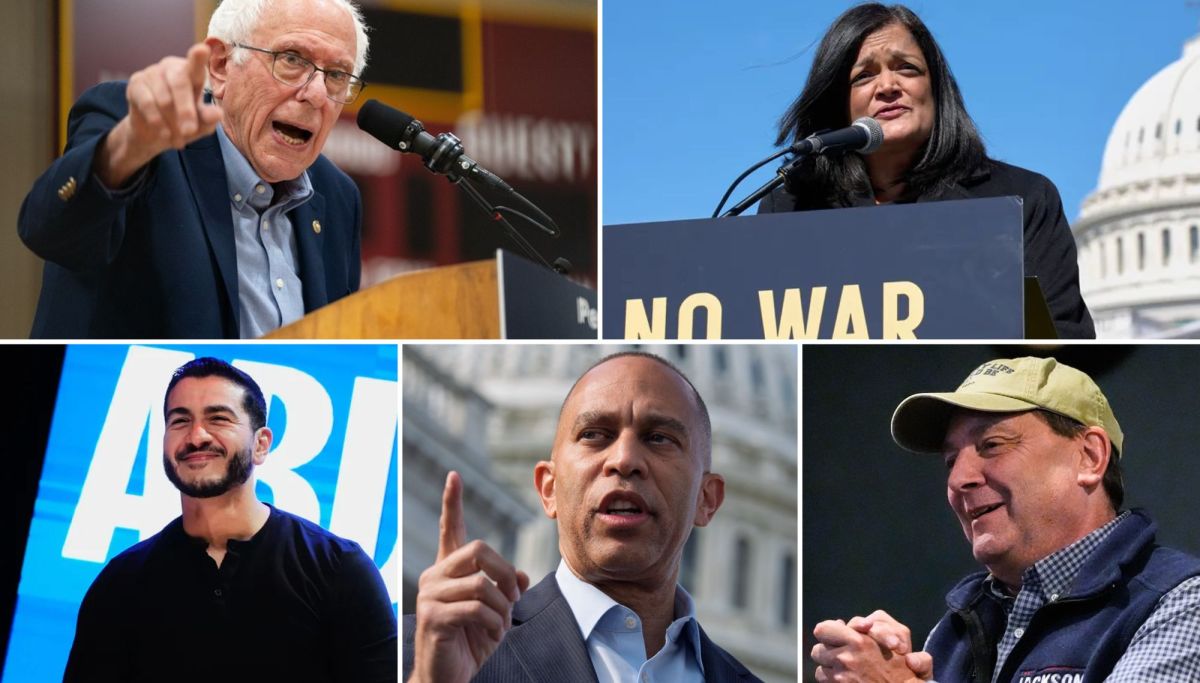



1 / 7
The story, neutrally told
Right · 1Democrats are preparing for an internal fight over Medicare for All as they organise their plans for the congressional session that starts in January. Washington ExaminerR “Democrats are bracing for a fight over Medicare for all as they begin to organize their plans for the next congressional session starting in January” Read at Washington Examiner ↗ Right · 1Rep. Pramila Jayapal (D-WA), primary sponsor of the current Medicare for All Act, told Punchbowl News she hopes to mark up the bill in 2027 and push for a House floor vote, and said she wants enough co-sponsors and help from party leadership; the Washington Examiner says the bill has 118 co-sponsors in the current Congress. Washington ExaminerR “Jayapal’s bill has 118 co-sponsors among the current congressional delegation.”“I want to make sure we have the requisite number of co-sponsors, and I’m hoping that our leadership is part of helping to make that happen,” Read at Washington Examiner ↗ Right · 1The Examiner reports that Jayapal's version would create a national system run by the Department of Health and Human Services and would effectively eliminate private health insurance. Washington ExaminerR “would establish a national healthcare system overseen by the Department of Health and Human Services and would effectively eliminate private health insurance coverage” Read at Washington Examiner ↗
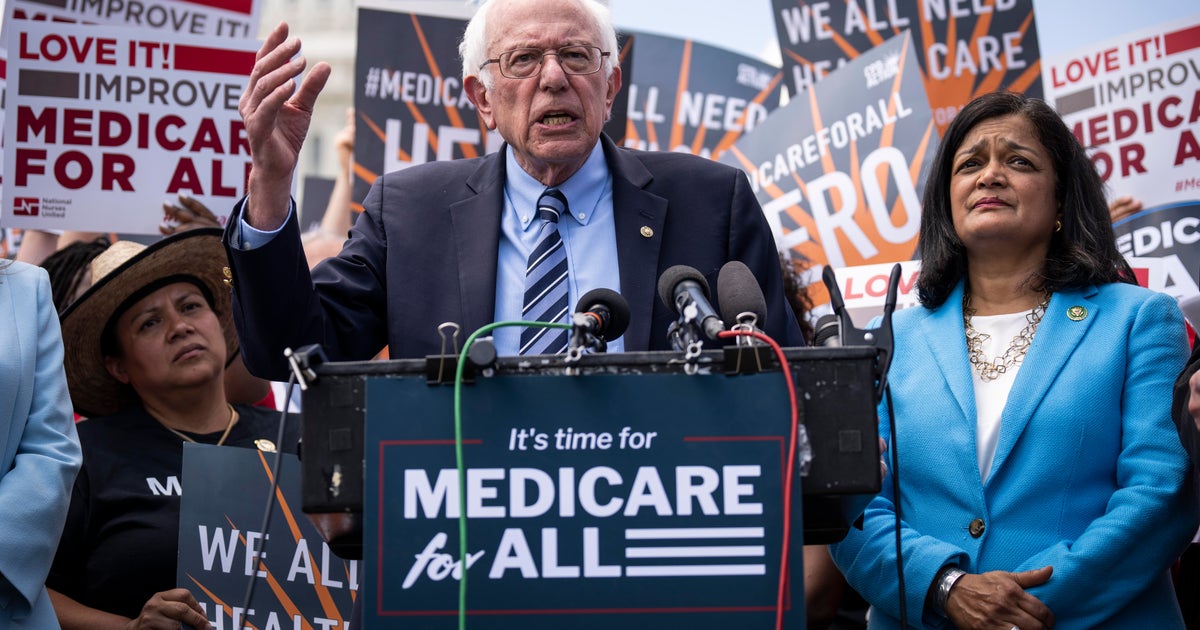
Mixed · 2House Minority Leader Hakeem Jeffries (D-NY) previously co-sponsored the bill but, according to the Examiner, has not backed it since becoming leader; Jeffries has instead named restoring the enhanced Affordable Care Act subsidies as a primary objective, and the Examiner adds reversing Medicare spending reductions from Republicans' 2025 spending bill. Washington ExaminerR “has not supported the legislation since taking on the leadership position within the party” Read at Washington Examiner ↗ NBC NewsLC “restoring the expired enhanced ACA tax credits would be a primary objective for Democrats if they took control of Congress in 2027” Read at NBC News ↗ Right · 1In the Senate, Bernie Sanders (I-VT), a Medicare for All proponent, was expected to chair the Health, Education, Labor, and Pensions committee if Democrats won control, while Ron Wyden (D-OR), the top Democrat on Finance, favours a federal public option over banning private coverage. Washington ExaminerR “Medicare for All proponent Sen. Bernie Sanders (I-VT) is expected to chair the Health, Education, Labor, and Pensions committee”“has expressed support for a federalized public option for health insurance rather than entirely prohibiting private health insurance coverage” Read at Washington Examiner ↗ Right · 1Working groups led by Wyden and Rep. Alexandria Ocasio-Cortez (D-NY) are developing healthcare proposals, and the Examiner says neither has wholeheartedly backed Medicare for All; health strategist Jessica Schubel said Democrats are "actually quite united" on moving toward universal coverage by different routes. Washington ExaminerR “Neither working group has wholeheartedly supported Medicare for all.”“actually quite united” Read at Washington Examiner ↗
Left · 1NBC News, writing after the election, says Democrats won control of the House and Senate and will have leverage on healthcare, but that any legislation needs President Donald Trump's signature, who before the vote said he would be "Mr. Veto" and afterwards said he would "probably" get along with Democrats. NBC NewsLC “With control of the House and Senate, Democrats will hold significant leverage to restore the enhanced Affordable Care Act subsidies”“Any legislation would still need Trump’s signature, setting up a potential clash over the future of healthcare.” Read at NBC News ↗ Left · 1NBC lists five areas: ACA subsidies, Medicaid cuts and work requirements, affordability and drug prices, investigations of the Trump administration including Health Secretary Robert F. Kennedy Jr., and Medicare for All. NBC NewsLC “Here are five ways Democrats could take on healthcare.” Read at NBC News ↗ Left · 1On Medicare for All, NBC says it will remain a central goal for many Democrats even though it is unlikely to become law under a Republican president; Ezekiel Emanuel, an Obama-era adviser, said he is not a big advocate but it is the only plan currently available and Democrats have until 2028 to develop others. NBC NewsLC ““Medicare for All” will remain a central goal for many Democrats, even if the proposal is unlikely to become law under a Republican president.”“We need to have more plans, and we have between now and the start of 2028 to have plans.” Read at NBC News ↗
Left · 1Experts quoted by NBC warn that Trump is likely to veto efforts to roll back Medicaid cuts, and Emanuel cautioned that big victories can lead parties to overreach and neglect what voters care about. NBC NewsLC “Levitt said Trump is bound to veto any bills rolling back Medicaid cuts.”“One of the dangers of big election victories is people get cocky and they overreach” Read at NBC News ↗ Centre · 1Newsweek, also writing after the election, says Democrats now control both chambers and can set committee hearings and floor votes, but that Senate rules (a 60-vote filibuster threshold for most legislation) and a presidential veto limit what can become law, so Medicare for All has "virtually no path into law without support from Trump." NewsweekN “Democratic control changes what Congress can debate and pass, but not necessarily what can become law.”“they’d still have virtually no path into law without support from Trump.” Read at Newsweek ↗ Centre · 1Newsweek describes a spectrum of Democratic plans: restoring enhanced ACA tax credits and reversing Medicaid changes in the 2025 One Big Beautiful Bill Act (which it says the Congressional Budget Office estimated would increase the uninsured by 10 million in 2034), expanding Medicare drug price negotiation, a public option under the Medicare-X Choice Act sponsored by Sen. Michael Bennet, and Medicare for All. NewsweekN “Democrats' plans fall along a spectrum, from relatively modest changes to the existing system to replacing much of private insurance with a national program.”“the Congressional Budget Office estimated that the coverage provisions would increase the number of uninsured Americans by 10 million in 2034” Read at Newsweek ↗
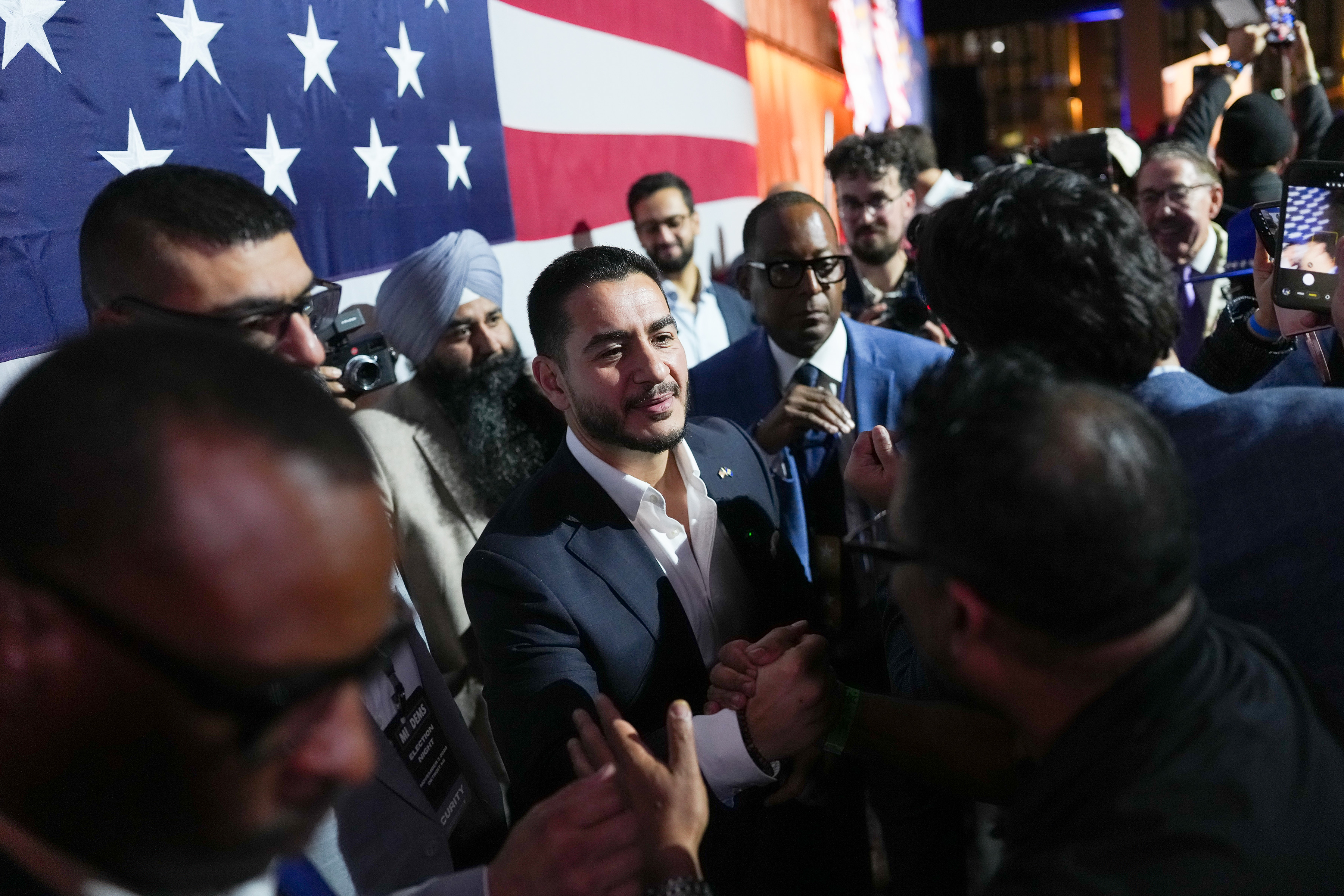
Centre · 1Newsweek says Medicare for All gained momentum in the midterms, citing Michigan Senator-elect Abdul El-Sayed and several incoming House Democrats, but that Chuck Schumer and Hakeem Jeffries do not sponsor the current bill and leadership has stopped short of endorsing it; Sen. Bernie Sanders argues single-payer would cost $1 trillion less than the current system. NewsweekN “Democratic leadership has stopped short of endorsing Medicare for All as the party's health care plan. Hakeem Jeffries and Chuck Schumer do not sponsor the current legislation”“Michigan Senator-elect Abdul El-Sayed campaigned as a Medicare for All supporter” Read at Newsweek ↗ Right · 1Just the News reported that Sanders, on Thursday 5 November, called on Democrats to pass Medicare for All after the party won a Senate majority, saying "Health care must be considered as a human right, not a privilege" and that the new majority "cannot continue the same old, same old establishment policies"; the outlet noted such a plan is unlikely to clear a 60-vote filibuster or be signed by Trump. Just the NewsRC “Sen. Bernie Sanders, I-Vt., on Thursday called for Democrats to approve a "Medicare for all" plan after the party won a clear majority in the upper chamber of Congress”“The new Democratic majority cannot continue the same old, same old establishment policies.” Read at Just the News ↗ Right · 1Fox News reported that Rep. Ayanna Pressley (D-MA), a member of the progressive group known as "The Squad", urged House Democrats in remarks on Tuesday to use their power, saying "don't just talk about health care justice, pass Medicare for All" and also calling for reparations and abolishing ICE; Fox noted that Trump can veto any legislation the Democratic-controlled Congress sends him in his final two years. Fox NewsR “Democrats, don't just talk about health care justice, pass Medicare for All.”“President Donald Trump can veto any legislation the Democratic-controlled Congress sends to his desk during his final two years.” Read at Fox News ↗
Centre · 1KFF Health News reported that progressive candidates campaigned on some form of the policy in states including Texas, Iowa, Maine and Michigan, where Abdul El-Sayed, who made Medicare for All a signature issue, is now a senator-elect; but it said Democratic control does not mean the policy will follow. KFF Health NewsN “the Democrat who made “Medicare for All” a signature issue in his congressional campaign and is now a senator-elect”“But Democratic control doesn’t mean “Medicare for All” will follow, as some hoped.” Read at KFF Health News ↗ Centre · 1Jonathan Oberlander of the University of North Carolina-Chapel Hill told KFF that voters angry about inflation, corruption and the Iran war "by and large didn’t vote to have the government take over health insurance," that the most vocal Medicare for All champions generally won by smaller margins than moderates, and that moderates holding seats in Iowa, Kansas and South Carolina may resist; he expects the idea to gain momentum in the 2028 presidential primaries and the midterm results to push the agenda further left. KFF Health NewsN “they by and large didn’t vote to have the government take over health insurance,” said Jonathan Oberlander”“the most vocal Medicare for All champions generally won by smaller margins than more moderate Democrats.”“the midterm results could push Democrats’ healthcare agenda further left, Oberlander said.” Read at KFF Health News ↗ Centre · 1KFF also cited a recent KFF poll finding support for Medicare for All is at its highest in nearly a decade but falters when respondents hear arguments such as higher taxes or treatment delays; Michael Cannon of the libertarian Cato Institute, an opponent, said the healthcare industry would "tear it to shreds" if it had the prices Sanders and El-Sayed envision. KFF Health NewsN “support falters when they’re presented with common arguments against it — like it could lead to higher taxes or delays in treatment — according to a recent KFF poll.”“the industry would tear it to shreds,” he said.” Read at KFF Health News ↗
Centre · 1Analysts told KFF that smaller bipartisan deals look more likely, such as reinstating the enhanced ACA subsidies that expired at the end of last year or curbing insurers' prior authorization; some Democrats could back a public option, and El-Sayed describes his plan as "guaranteed baseline government health insurance" that need not fully replace employer coverage. KFF Health NewsN “curbing insurance companies’ use of prior authorizations”“guaranteed baseline government health insurance,” as El-Sayed described his current plan in the campaign.” Read at KFF Health News ↗ Left · 1CBS News, carrying the KFF Health News report, adds that pressure for change is likely to grow, with ACA premiums set to rise by double digits again next year and Medicaid cuts projected to leave 7.5 million more people uninsured by 2034; it quotes Michigan resident Jaime Bardenhagen, whose monthly premiums rose from $700 to $1,300 after the enhanced subsidies expired and who supports Medicare for All. CBS NewsLC “Their monthly premiums went from $700 to $1,300, with a deductible of $7,500.”“massive cuts to Medicaid looming, which are projected to leave 7.5 million more people uninsured by 2034.” Read at CBS News ↗ Centre · 1KFF Health News chief Washington correspondent Julie Rovner said on WAMU's Health Hub on 4 November that healthcare costs, abortion access and Medicare for All helped drive the Democratic wins, but that with Trump still in office the blue wave is likely to hit legislative limits. KFF Health NewsN “with President Donald Trump still in office, this blue wave is likely to crash into legislative limits.” Read at KFF Health News ↗
Every sentence links to the reporting it rests on. The pill in front of each says where its sources sit: Left, Centre or Right when one side supplies at least half of them, Mixed when they are evenly split. The number is how many outlets it cites.
Left2 outlets
- Framing
- NBC News treats Medicare for All as one of five healthcare fights open to a Democratic majority, in an explainer built on health policy experts.
- Emphasis
- ACA subsidy restoration, Medicaid cuts, oversight of Kennedy, and the limits imposed by Trump's veto; Medicare for All placed fifth and described as unlikely to become law soon.
- Leaves out or plays down
- Gives little detail on Jayapal's bill, its co-sponsor count, or intra-party divisions among Sanders, Wyden and Jeffries.
- For example
-
““Medicare for All” will remain a central goal for many Democrats, even if the proposal is unlikely to become law under a Republican president.” — NBC News
Centre2 outlets
- Framing
- Newsweek asks whether Democrats can pass Medicare for All and answers that control of Congress does not mean it is coming, laying out five proposals on a spectrum from modest to sweeping.
- Emphasis
- Procedural limits (filibuster, veto), the Medicare-X public option as a middle ground, bipartisan prospects such as prior authorization limits and drug price negotiation, and leadership's focus on ACA subsidies.
- Leaves out or plays down
- Says little about oversight of the Trump administration or Jayapal's co-sponsor count.
- Charged language
- “One Big Beautiful Bill Act”“extraordinarily difficult”
Right3 outlets
- Framing
- The Washington Examiner, written before results were known, leads on a looming Democratic fight over Medicare for All, with progressives pressing a reluctant leadership.
- Emphasis
- Jayapal's plan, the elimination of private insurance, Jeffries' non-support, and differences with Wyden and Ocasio-Cortez.
- Leaves out or plays down
- Does not cover the election outcome, Trump's veto power, or other issues such as drug prices and oversight.
- For example
-
“Democrats are bracing for a fight over Medicare for all as they begin to organize their plans for the next congressional session” — Washington Examiner
What every side reports
- Medicare for All is expected to be pushed by Democrats in the Congress beginning in 2027.
- Hakeem Jeffries has named restoring the enhanced ACA subsidies as a top priority.
- Reversing Medicaid/Medicare cuts enacted by Republicans is a Democratic goal.
Where accounts differ
-
How central Medicare for All is to the Democratic agenda
- Left
- One of five possible fights, unlikely to become law under Trump, with ACA subsidies and Medicaid cuts more immediate.
- Right
- Framed as the coming fight, with progressives pressing leadership to advance it.
-
Democratic leaders are prioritising restoring the enhanced ACA subsidies rather than Medicare for All.
Reported- Supports 1
- Newsweek
- Reports 4
- CBS News, NBC News, KFF Health News, Washington Examiner
-
Medicare for All is unlikely to become law while Trump is president.
Supported- Supports 5
- CBS News, NBC News, KFF Health News, Newsweek, Just the News
- Reports 1
- Fox News
-
Democrats are divided over whether Medicare for All, rather than other routes such as a public option, should be the path to universal coverage.
Supported- Supports 3
- CBS News, KFF Health News, Newsweek
- Reports 2
- NBC News, Washington Examiner
Democratic Party party
Described as divided on method but aiming at wider coverage: progressives push Medicare for All, while leadership prioritises restoring ACA subsidies and reversing Medicaid cuts.
“We’re all moving towards achieving universal coverage,” — Washington Examiner
“restoring the expired enhanced ACA tax credits would be a primary objective for Democrats if they took control of Congress in 2027” — NBC News
Medicare for All topic
Backers such as Jayapal want a 2027 markup and floor vote; NBC says the proposal is unlikely to become law under a Republican president but a vote could build momentum.
“she hopes to mark up the legislation in 2027 and push for a vote on the House floor” — Washington Examiner
“unlikely to become law under a Republican president” — NBC News
Left2 articles
-
5 healthcare fights Democrats could take on after midterms sweep
Neutral Post-election explainer with expert voices on what a Democratic majority could do on healthcare, with Medicare for All as one item.
-
Midterm wave sets a course for "Medicare for All" fight
Mixed CBS runs a KFF Health News piece pairing voters hurt by healthcare costs with experts who doubt a Democratic majority means Medicare for All will pass.
Centre3 articles
-
Will Democrats Pass Medicare for All? 5 Ideas Proposed for New Congress
Neutral Explainer that tempers Medicare for All expectations, ranking it as the most sweeping of several Democratic ideas and stressing veto and filibuster constraints.
-
Midterm Wave Sets a Course for ‘Medicare for All’ Fight
Mixed Feature through voters and experts weighing Medicare for All's appeal against political risk, industry opposition and likelier incremental deals.
-
Healthcare Cuts Fuel Democrats’ Election Blowout
Neutral Brief podcast blurb saying healthcare costs fuelled Democratic wins but legislative limits loom under Trump.
Right4 articles
-
Democrats set for Medicare for all fight post-midterm elections
Neutral Pre-result report on progressive pressure for Medicare for All versus a more cautious leadership.
-
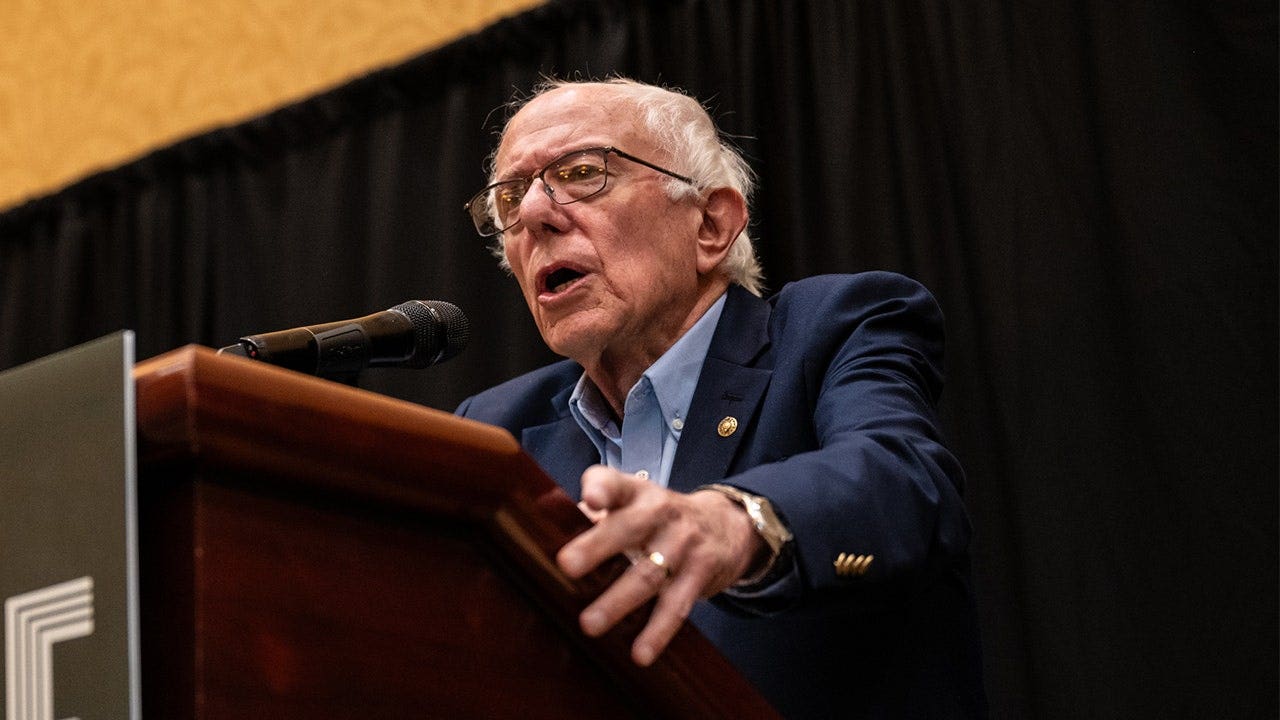
Bernie Sanders pushes 'Medicare for All' after Dem Senate landslide
Neutral Short item on Sanders' push, noting the plan is unlikely to clear the filibuster or win Trump's signature and that affordability and the Iran war topped voters' priorities.
-
'Squad' member urges Dems to take advantage of midterm sweep by passing far-left policies
Critical Fox presents Pressley's call as a push for 'far-left policies' by a 'Squad' member, noting Trump's veto power.
-
- 3 Nov 18:51 First Washington ExaminerR Democrats set for Medicare for all fight post-midterm elections
- 5 Nov 00:02 +29h 11m NBC NewsLC 5 healthcare fights Democrats could take on after midterms sweep
- 5 Nov 18:44 +47h 53m NewsweekN Will Democrats Pass Medicare for All? 5 Ideas Proposed for New Congress
- 5 Nov 20:04 +49h 13m Just the NewsRC Bernie Sanders pushes 'Medicare for All' after Dem Senate landslide
- 6 Nov 10:00 +63h 9m KFF Health NewsN Healthcare Cuts Fuel Democrats’ Election Blowout
- 6 Nov 10:00 +63h 9m KFF Health NewsN Midterm Wave Sets a Course for ‘Medicare for All’ Fight
- 6 Nov 10:00 +63h 9m CBS NewsLC Midterm wave sets a course for "Medicare for All" fight
- 6 Nov 10:23 +63h 32m Fox NewsR 'Squad' member urges Dems to take advantage of midterm sweep by passing far-left policies
- 7 Nov 01:00 +78h 9m Fox NewsR Bernie Sanders thinks Medicare-for-all bill could pass, 'not absolutely certain' Trump would veto
Times are when each article was published, or when we first saw it if the outlet gave no time.
Ask about this story
Loading…