Lake Koroneia in northern Greece shrinks to under a tenth of its size
Koroneia, once Greece's fifth-largest lake, has lost most of its surface after a decade of low rainfall and over-irrigation, according to National Observatory of Athens data.
1 / 2
The story, neutrally told
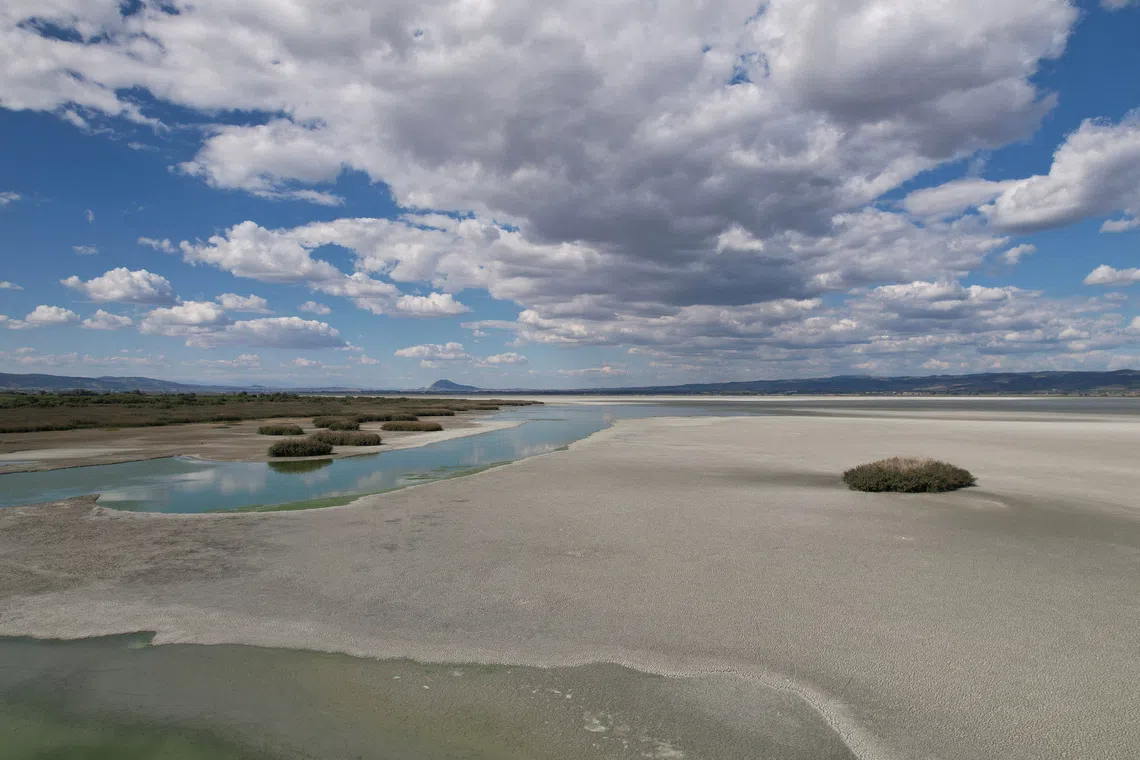
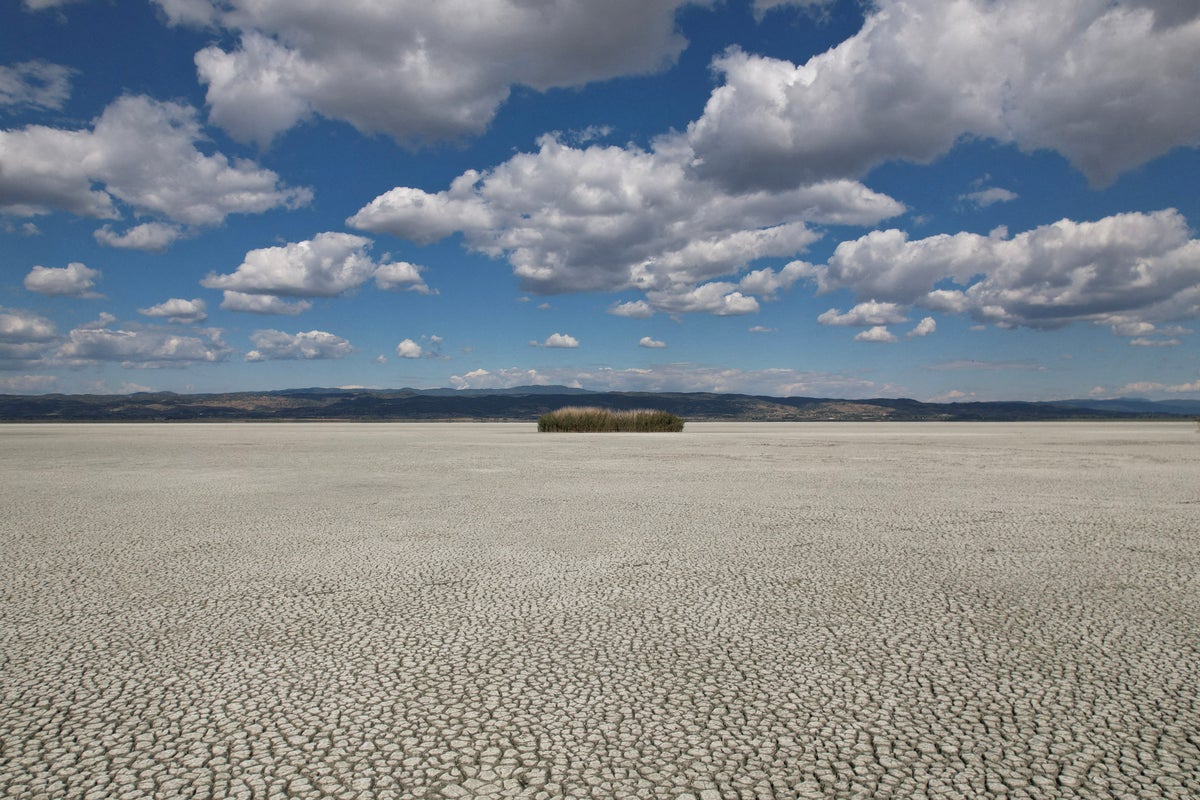
Lake Koroneia in northern Greece, once the fifth-largest lake in the country, has shrunk to less than a tenth of its original size, according to data from the National Observatory of Athens. The IndependentLC “has shrunk to less than a tenth of its original size, according to data from the National Observatory of Athens.” Read at The Independent ↗ The Straits TimesRC “once the fifth largest lake in Greece, has shrunk to less than a tenth of its original size” Read at The Straits Times ↗ Satellite images show its surface fell to 2.7 square kilometres from 34.4 square kilometres in 2016. The IndependentLC “its surface has shrunk to 2.7 square kilometres from 34.4 square kilometres in 2016.” Read at The Independent ↗ The lake was formerly a protected wetland sheltering thousands of migratory and water birds, including flamingos; what remains is a series of murky ponds beside a cracked mud plain. The IndependentLC “the lake was a protected wetland, a refuge for thousands of migratory and water birds, including flamingos” Read at The Independent ↗ The Straits TimesRC “the exposed lake bed is a vast mud plain cracked and bleached by years of baking sun.” Read at The Straits Times ↗
Scientists say the decline began after a rainy 2015-2016 season, with years of low rainfall and above-average heat evaporating the lake and the springs that fed it. The IndependentLC “Scientists say the lake's water resources started dwindling after a rainy 2015 to 2016 season.” Read at The Independent ↗ Dimitris Papadimos of the National Wetland Centre said catchment rainfall has averaged about 400 millimetres a year for at least five years, roughly 150 mm less than in earlier decades, while evaporation has risen by 100 to 150 mm a year. The IndependentLC “That is about 150 millimetres less than in previous decades,” Read at The Independent ↗ The Straits TimesRC “evaporation has increased by 100 to 150 millimeters a year, he said.” Read at The Straits Times ↗ The problem is also partly man-made: locals and officials say farmers have long drawn on the lake, and a Reuters reporter saw a farmer pumping water onto fields last month. The Straits TimesRC “When a Reuters reporter visited last month, a farmer was using a giant pump to suck water from what is left of the lake onto his fields.” Read at The Straits Times ↗ The IndependentLC “The problem is partly man-made.” Read at The Independent ↗
Authorities say they have acted since a 2013 European Union court ruling that Greece failed to protect the lake from over-irrigation, illegal drilling and pollution; Environment Ministry official Petros Varelidis said monitoring has increased to reduce irrigation. The IndependentLC “a European Union court ruled in 2013 that Greece had failed to protect Koroneia against over-irrigation, illegal water drilling and pollution.” Read at The Independent ↗ The Straits TimesRC “greater monitoring was now in place to reduce irrigation.” Read at The Straits Times ↗
Every sentence links to the reporting it rests on.
Left1 outlet
- Framing
- The Independent presents the lake's shrinkage as a symbol of climate change and drought in northern Greece, leading with the size loss.
- Emphasis
- The scale of the shrinkage and the loss of wetland and bird habitat.
- Leaves out or plays down
- Does not mention the wider European impact on goods delivery and energy output noted in the Reuters copy.
- Charged language
- “symbol of how climate change and drought”
- For example
-
“The area has become a symbol of how climate change and drought are impacting northern Greece” — The Independent
“One of Greece’s largest lakes shrinks to a tenth of its original size” — The Independent
Centre0 outlets
No centre outlet in our sources has covered this story yet.
Right1 outlet
- Framing
- The Straits Times runs Reuters copy that treats the lake as a case study of climate change's rapid impact, adding the wider European summer drought.
- Emphasis
- Climate change as the headline cause, plus European effects on goods delivery and energy output.
- Leaves out or plays down
- None significant; the text is the agency's, so it shows little of the outlet's own framing.
- Charged language
- “vanishing lake”
- For example
-
“Greece's vanishing lake exposes rapid impact of climate change” — The Straits Times
“impacting the delivery of goods and curtailing energy output.” — The Straits Times
What every side reports
- Koroneia has shrunk to less than a tenth of its original size, per the National Observatory of Athens.
- Surface area fell from 34.4 to 2.7 square kilometres since 2016.
- Low rainfall, heat and farm irrigation are cited as causes.
- An EU court ruled in 2013 that Greece failed to protect the lake.
Lake Koroneia place
The lake is described as a former protected wetland now reduced to ponds and a cracked mud plain, drained by drought and pumping.
“The water that remains now is collected in a series of murky ponds” — The Independent
Greece place
Greek authorities say they have acted since the 2013 EU court ruling, with the Environment Ministry saying monitoring now aims to curb irrigation.
“greater monitoring was now in place to reduce irrigation.” — The Independent
Left1 article
-
One of Greece’s largest lakes shrinks to a tenth of its original size
Sympathetic Near-identical account of the lake's decline, framed as a symbol of climate change and drought, with a local resident's lament.
Centre0 articles
No coverage yet.
Right1 article
-
The Straits TimesRC · · via Reuters
Greece's vanishing lake exposes rapid impact of climate change
Neutral Reuters copy carried by The Straits Times; a climate-change case study with scientific data, local voices and an official response.
- 1 Oct 08:43 First The Straits TimesRC Greece's vanishing lake exposes rapid impact of climate change via Reuters
- 1 Oct 09:34 +51m The IndependentLC One of Greece’s largest lakes shrinks to a tenth of its original size
Times are when each article was published, or when we first saw it if the outlet gave no time.