Drought and aid cuts push Afghan families in Badghis to marry off young daughters
A Guardian report, relayed by the Daily Mail, says repeated droughts and falling aid are leading families in north-west Afghanistan to engage or marry off daughters as young as two to repay debts and buy food or medicine.
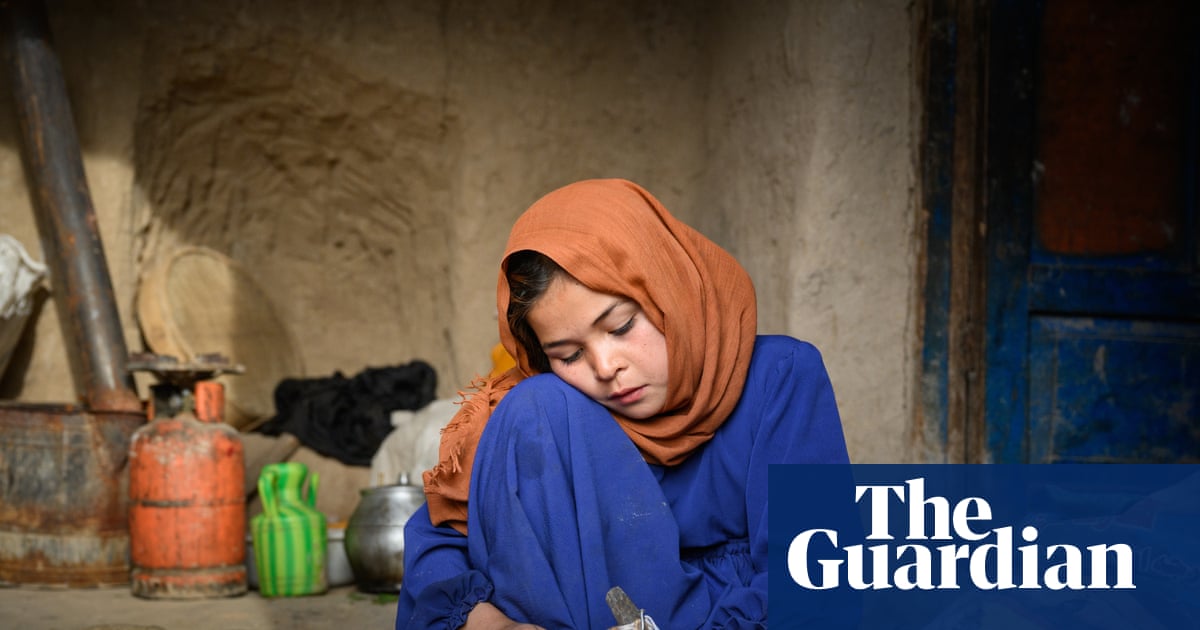

1 / 2
The story, neutrally told
Left · 1The Guardian reported on 15 October 2026, from interviews by photographer Elise Blanchard, that drought-hit families in Afghanistan, chiefly in Badghis province, are engaging or marrying off girls as young as two to repay debts, feed relatives or pay for medical treatment. The GuardianLC “selling young daughters into marriage to repay debts, feed the family or pay for medical treatment has become a common way to cope.” Read at The Guardian ↗ Mixed · 2In Badghis, 95% of people depend on rain-fed agriculture and livestock; the Guardian says droughts, made more frequent and extreme by climate breakdown, have destroyed incomes, with a historic drought in 2018 and ruined harvests every year since 2021. The GuardianLC “In Badghis, 95% of the population relies on rain-fed agriculture and livestock to live.” Read at The Guardian ↗ Daily MailR “2018 saw a historic drought, and since 2021 frequent water shortages have ruined crops and left livestock starving.” Read at Daily Mail ↗ Mixed · 2Gul Bobo, a mother in Tayz Nāwah, said her daughters aged two and five are engaged, that the family had 'no choice', and that she expects them to be beaten and to be pregnant at 14. The GuardianLC ““I know they are too young to be engaged but we had no choice – otherwise we would have waited until after 18,” says Gul Bobo.” Read at The Guardian ↗ Daily MailR “I expect them to be beaten, but there is nothing I can do about it. And at 14, they will be pregnant.'” Read at Daily Mail ↗
Mixed · 2Other cases include 11-year-old Gulalai, engaged to a shopkeeper in his late 40s to whom her parents owed money; her father, Niaz Mohammad, said 'We have to sacrifice a family member to save the others'. The GuardianLC ““We have to sacrifice a family member to save the others,” says Gulalai’s father, Niaz Mohammad” Read at The Guardian ↗ Daily MailR “Bana, the mother of 11-year-old Gulalai, told the newspaper that she has had to sell her young daughter to a shopkeeper in his late 40s” Read at Daily Mail ↗ Mixed · 2Abdul Aziz of Khoshkian, whose wheat harvest failed seven times in eight years, sold five daughters into marriage for 90,000 to 150,000 afghanis (£1,000-£1,750) to repay debts; one, Mazari, left home at 12 or 13 and now has two children, and said her husband and in-laws have been kind. The GuardianLC “he sold five of his daughters into marriage, for between 90,000 and 150,000 afghanis (£1,000-£1,750), to repay debts.” Read at The Guardian ↗ Daily MailR “Getting married at 12 was really hard; when I came to his home, I wasn't able to cook, but my husband and in-laws have been really kind.” Read at Daily Mail ↗ Mixed · 2Khomakha, displaced to the Shahrak-e-Sabz camp in Herat, said her husband agreed to marry off their two-year-old daughter Fatemah when she was three months old because they could not afford transport for their eight-year-old son's weekly blood-cancer transfusions. The GuardianLC “Her husband made a deal to marry off their two-year-old daughter Fatemah only three months after the girl was born.” Read at The Guardian ↗ Daily MailR “Khomakha, 30, revealed her husband made a deal to marry off their two-year-old daughter Fatemah just three months after she was born.” Read at Daily Mail ↗
Left · 1The Guardian also reports a father in the camp who sold his 10-year-old son's kidney for 100,000 afghanis, and says there is no law on the age at which girls can leave home for marriage, with bride prices paid in instalments before in-laws claim the bride. The GuardianLC “he sold his 10-year-old son Ziauddin’s kidney for 100,000 afghanis.”“There is no law regarding the age at which girls can leave home for marriage.” Read at The Guardian ↗ Mixed · 2Both outlets link the trend to falling aid: the Daily Mail says the US, once the biggest donor, has cut nearly all aid, other countries such as the UK have followed, and the UN says Afghanistan gets less than 70 per cent of last year's aid; World Vision's Mark Calder said clinics treating girls harmed by early marriage 'are disappearing as aid is cut'. Daily MailR “the UN says that Afghanistan now gets less than 70 per cent of the aid it did last year.”“Early marriage exposes girls to potentially deadly health risks, but the clinics treating them are disappearing as aid is cut.” Read at Daily Mail ↗ The GuardianLC “As foreign aid dries up, programmes that should provide support for these girls are disappearing.” Read at The Guardian ↗
Every sentence links to the reporting it rests on. The pill in front of each says where its sources sit: Left, Centre or Right when one side supplies at least half of them, Mixed when they are evenly split. The number is how many outlets it cites.
Left1 outlet
- Framing
- Original, first-person reporting by a photographer who travelled the country, framing child marriage as a consequence of climate breakdown and shrinking aid.
- Emphasis
- Girls' and parents' testimony, the climate link, displacement, aid cuts, and health risks.
- Leaves out or plays down
- Does not present parents as culpable; little on Taliban policy or wider causes beyond climate and aid.
- Charged language
- “climate breakdown”“sacrifice”
- For example
-
“As climate breakdown pushes families to starvation, many feel forced to ‘sacrifice’ daughters to save siblings.” — The Guardian
Centre0 outlets
No centre outlet in our sources has covered this story yet.
Right1 outlet
- Framing
- A shorter rewrite of the Guardian report, led by the two- and five-year-old brides and the parents' claim they had 'no choice', attributing material to The Guardian.
- Emphasis
- The most shocking individual cases, the parents' words, and US and UK aid cuts.
- Leaves out or plays down
- Omits the kidney sale, most of the girls' own accounts and the climate-breakdown framing; adds no independent reporting.
- Charged language
- “sell off”“tried to justify”“had no choice”
- For example
-
“An Afghan couple have tried to justify marrying off their daughters, two and five, for money by claiming they had 'no choice'.” — Daily Mail
What every side reports
- Families in Badghis province describe marrying off or engaging daughters, some aged two and five, to repay debts or cover food and medical costs.
- Droughts since 2018, and every year since 2021, have ruined harvests and livestock in Badghis.
- Humanitarian aid has declined and displaced families in Herat's Shahrak-e-Sabz camp are among those affected.
- Afghanistan has no law setting an age at which girls can leave home for marriage.
Where accounts differ
-
Whether parents are victims of circumstance or are 'justifying' selling daughters
- Left
- The Guardian presents the parents as families forced by starvation and debt to 'sacrifice' daughters, and lets girls and mothers describe the harm.
- Right
- The Daily Mail says a couple 'tried to justify' marrying off daughters 'for money' by claiming they had 'no choice', while repeating the same testimony.
Left1 article
-
Sympathetic Sympathetic, testimony-driven account of families driven by drought and lost aid to marry off daughters.
Centre0 articles
No coverage yet.
Right1 article
-
Critical Sensational, parent-focused retelling of the Guardian's reporting that casts the parents as justifying selling daughters.
- 15 Oct 05:00 First The GuardianLC ‘I am still a child, it cannot be good to be married’: how drought forces Afghan families to sell girls as brides
- 15 Oct 16:44 +11h 44m Daily MailR 'I expect them to be beaten… at 14, they will be pregnant': Afghan parents sell off their daughters, two and five, for marriage because they 'had no choice'
Times are when each article was published, or when we first saw it if the outlet gave no time.
Ask about this story
Loading…