After Democrats' 2026 Senate gains, early look at the 2028 map
Democrats are set for a 56-44 Senate majority after the 2026 midterms. NBC News and the Washington Examiner both assess what that means for 2028, when Republicans would need a net gain of at least six seats to retake control.
1 / 2
The story, neutrally told
Left · 1Democrats gained nine Senate seats in the 2026 midterms, putting them on course for a 56-44 majority, the largest for the party since 2009, according to NBC News. NBC NewsLC “Democrats are now on pace to gain nine seats”“That would give the party a 56-44 majority, which would be the largest since 2009.” Read at NBC News ↗ Mixed · 2NBC's Decision Desk characterised the Alaska race as a likely win for former Rep. Mary Pelotla. The Washington Examiner reported that Alaska, the last race of the cycle, was called on Tuesday evening, cementing the 56-44 majority after Republicans entered the election with a 53-47 majority. NBC NewsLC “NBC News Decision Desk characterizing the Alaska Senate race as a likely victory for former Rep. Mary Pelotla” Read at NBC News ↗ Washington ExaminerR “Alaska’s Senate race, the final of the 2026 cycle, was called Tuesday evening, cementing a 56-44 Democratic majority” Read at Washington Examiner ↗ Mixed · 2Both outlets say Republicans would need to flip at least six seats in 2028 to retake the majority. NBC adds that they would need seven if they do not control the vice presidency. NBC NewsLC “the GOP would need to pick up at least six seats to flip control of the chamber in 2028 (and seven if they don’t control the vice presidency)” Read at NBC News ↗ Washington ExaminerR “The GOP needs to flip at least six seats to reclaim a majority.” Read at Washington Examiner ↗
Right · 1The Examiner notes that Republicans will defend 19 seats in 2028 and Democrats 16. Washington ExaminerR “Republicans will have to defend 19 seats in 2028, compared with 16 Democratic-held seats.” Read at Washington Examiner ↗ Mixed · 2Both outlets name the core 2028 battlegrounds as four Democratic-held seats (Arizona's Mark Kelly, Nevada's Catherine Cortez Masto, Georgia's Raphael Warnock and Pennsylvania's John Fetterman) and two Republican-held seats (Wisconsin's Ron Johnson and North Carolina's Ted Budd). NBC says Republicans must win all four Democratic seats to have a realistic shot at the majority. NBC NewsLC “Republicans will need to capture all four of those seats to give themselves a realistic shot at the majority in 2028.” Read at NBC News ↗ Washington ExaminerR “Republicans will have to defend potentially competitive seats held by Sens. Ron Johnson (R-WI) and Ted Budd (R-NC).” Read at Washington Examiner ↗ Left · 1NBC reports that Fetterman is the Democrat most likely to face a primary challenger because his popularity with Democrats has fallen. It adds that Kelly and Warnock are in the early 2028 presidential conversation and will have to choose between re-election and a White House run. NBC NewsLC “Fetterman faces the greatest danger of getting a primary challenger after his popularity with Democrats has plummeted.”“Kelly and Warnock are in the early 2028 presidential conversation” Read at NBC News ↗
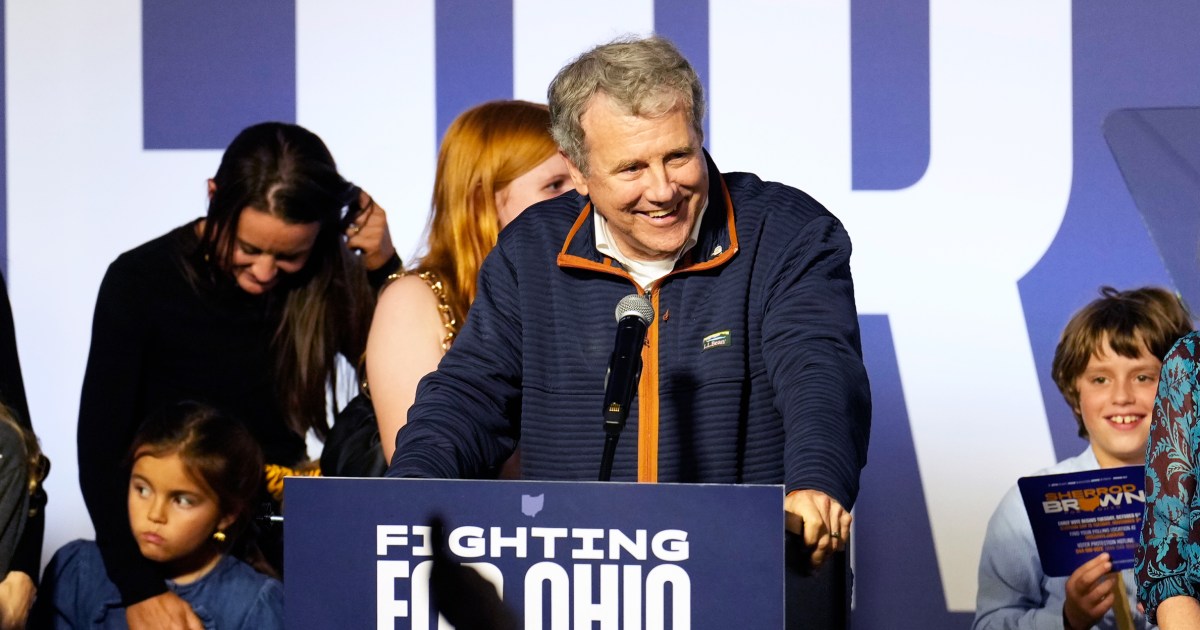
Mixed · 2NBC identifies six further states that Donald Trump won by double digits in 2024 and that became competitive in 2026. Ohio is a Democratic-held seat, where Sherrod Brown won a special election, and the other five are Republican-held seats: Iowa, Kansas, South Carolina, Alaska and Florida. In Florida, Sen. Ashley Moody beat progressive Democrat Angie Nixon by less than 3 points in a special election, so she must run again in 2028. The Examiner also reports Moody's narrow win over an underfunded opponent. NBC NewsLC “There are six states President Donald Trump carried by double digits two years ago that became highly competitive in 2026.”“Like Ohio, this was a special election, so Moody will have to run again in two years.” Read at NBC News ↗ Washington ExaminerR “Republican Sen. Ashley Moody (R-FL) defeated progressive Democrat Angie Nixon by fewer than 3 percentage points, despite facing an underfunded opponent.” Read at Washington Examiner ↗ Left · 1NBC says that if Republicans won every red and purple state, they would still need at least one blue-leaning seat. It names New Hampshire (Maggie Hassan) as their best chance and notes that Republicans lost Colorado and Washington by double digits in 2022 despite targeting them. NBC NewsLC “They ultimately lost both by double digits.”“New Hampshire (Maggie Hassan) is probably the GOP’s best chance.” Read at NBC News ↗ Right · 1The Examiner cites the Cook Political Report's six pre-election toss-ups (Alaska, Iowa, Kansas, Maine, Ohio and Texas), all of which Democrats won. It highlights Kansas, where Democrat Adam Hamilton beat Sen. Roger Marshall, a 21-point swing from 2024. It also highlights North Carolina, where former Gov. Roy Cooper won in a 22-point swing. Washington ExaminerR “Democrats emerged victorious in all of those contests”“The result represented a 21-point swing toward Democrats compared with the 2024 presidential election.”“Former Gov. Roy Cooper became the first Democrat elected to the state’s Senate delegation since 2008” Read at Washington Examiner ↗
Right · 1The Examiner attributes the Republican losses to voter concerns about affordability, opposition to the Iran war and dissatisfaction with Trump. It cites RealClearPolitics averages from Sept. 1 to Nov. 9 that put Republican favorability at 37.2% against 57.6% unfavorable. It adds that the Republican Senate campaign arm is looking for a new executive director. Washington ExaminerR “Voters’ concerns about affordability, opposition to the Iran war, and dissatisfaction with President Donald Trump appear to have undermined GOP candidates across a range of states.”“put the Republican Party’s favorability at 37.2%, compared with 57.6% unfavorable” Read at Washington Examiner ↗ Mixed · 2Both outlets say a 60-seat filibuster-proof Democratic majority could come within reach in 2028, but is far from assured. NBC says Democrats needed a dream environment and sometimes weak GOP candidates in 2026 and may not repeat it. The Examiner says the presidential race, the economy, inflation and approval ratings could change the picture. NBC NewsLC “a filibuster-proof majority of 60 seats could be within reach for Democrats”“It’s far from clear they can replicate that in two years.” Read at NBC News ↗ Washington ExaminerR “Such an outcome is far from guaranteed.” Read at Washington Examiner ↗ Left · 1NBC's newsletter also reports that higher Black turnout, in South Carolina and elsewhere, helped Democrats in Southern states. Activists linked it to anger over redistricting efforts and the Supreme Court's Louisiana v. Callais decision, which weakened the Voting Rights Act. NBC NewsLC “Black voters turned out in South Carolina at a level more similar to a presidential election year than a midterm year”“the Supreme Court’s Louisiana v. Callais decision, which weakened the Voting Rights Act” Read at NBC News ↗
Every sentence links to the reporting it rests on. The pill in front of each says where its sources sit: Left, Centre or Right when one side supplies at least half of them, Mixed when they are evenly split. The number is how many outlets it cites.
Left1 outlet
- Framing
- A newsletter analysis by Sahil Kapur that treats the 2026 result as a reversal of the Senate's structural map, with Democrats in an upper hand and Republicans needing to win blue states. It tours the 2028 map by tiers of competitiveness.
- Emphasis
- State-by-state battleground tiers, Republican seats that flipped or became competitive in red states, Democratic decisions such as Fetterman's primary risk and Kelly and Warnock's presidential prospects, and Black turnout.
- Leaves out or plays down
- Does not discuss the issues driving the vote, such as affordability, the Iran war or Trump's standing, or party favourability polling.
- Charged language
- “How the tables have turned”“Can lightning strike twice?”“dream environment”
Centre0 outlets
No centre outlet in our sources has covered this story yet.
Right1 outlet
- Framing
- Frames the 2026 results as a devastating reversal for Republicans that leaves them a difficult path back, and asks what Republicans must do to recover.
- Emphasis
- Scale of the swings (Kansas, North Carolina), Cook toss-ups all won by Democrats, Republican unpopularity, Republicans defending 19 seats, filibuster implications, and rebuilding the GOP Senate campaign operation.
- Leaves out or plays down
- Gives little state-by-state detail on 2028 targets beyond the core six and does not mention New Hampshire or the other red-state seats NBC lists; does not discuss Black turnout or redistricting.
- Charged language
- “devastating reversal”“difficult path back”
- For example
-
“The nine-seat swing is a devastating reversal for Republicans” — Washington Examiner
“Democrats have moved back the starting line for the GOP.” — Washington Examiner
What every side reports
- Democrats are headed for a 56-44 Senate majority after the 2026 midterms, a nine-seat gain.
- Republicans would need to flip at least six seats in 2028 to regain control.
- Arizona, Nevada, Georgia and Pennsylvania (Democratic-held) and Wisconsin and North Carolina (Republican-held) are core 2028 battlegrounds.
- Ashley Moody beat Angie Nixon by under 3 points in Florida and must run again in 2028.
- A 60-seat Democratic majority is possible in 2028 but not assured.
Where accounts differ
-
Status of the Alaska race
- Left
- NBC (Nov. 16) says its Decision Desk characterises Alaska as a likely Democratic win, with the result not yet official.
- Right
- The Examiner (Nov. 18) says the race was called Tuesday evening, cementing the 56-44 majority.
-
What drove the Democratic result and what it means for 2028
- Left
- NBC says Democrats needed a dream environment and sometimes weak GOP candidates, and it highlights Black turnout and redistricting anger.
- Right
- The Examiner points to affordability, the Iran war and dissatisfaction with Trump, and stresses Republican unpopularity and the GOP's difficult path back.
Democratic Party party
As described by both outlets, Democrats are in a strong position, with a 56-44 majority and a possible path to 60 seats in 2028 if the 2026 conditions hold. NBC cautions that this is far from clear.
“if they can, a filibuster-proof majority of 60 seats could be within reach for Democrats” — NBC News
“Democrats could have an opportunity to reach that threshold” — Washington Examiner
Republican Party party
Republicans are portrayed as facing a hard road, needing at least six net gains and defending 19 seats. The Examiner says they have two years to recalibrate their messaging and rebuild their Senate campaign operation.
“Republicans also have two years to recalibrate their messaging and attempt to regain voters’ confidence.” — Washington Examiner
“Now it’s Republicans who would need to win at least one blue state to give themselves a chance.” — NBC News
Left1 article
-
An early look at the 2028 Senate map: From the Politics Desk
Neutral Analytical newsletter piece mapping 2028 Senate battlegrounds by tier, with a Democratic-advantage framing and caution that 2026 conditions may not recur.
Centre0 articles
No coverage yet.
Right1 article
-
What do the 2026 elections mean for the 2028 Senate map?
Critical Presents the 2026 results as a rout for Republicans and examines their difficult path back, citing swings, polling and party unpopularity.
- 16 Nov 22:18 First NBC NewsLC An early look at the 2028 Senate map: From the Politics Desk
- 18 Nov 18:00 +43h 42m Washington ExaminerR What do the 2026 elections mean for the 2028 Senate map?
Times are when each article was published, or when we first saw it if the outlet gave no time.
Ask about this story
Loading…