Edinburgh's Botanic Garden Palm Houses reopen after multi-year restoration
The historic Palm Houses at Edinburgh's Royal Botanic Garden have reopened to the public after a restoration that outlets describe as lasting five or six years. The work replaced thousands of glass panes and returned hundreds of plants, but a 200-year-old Sabal palm could not be saved.

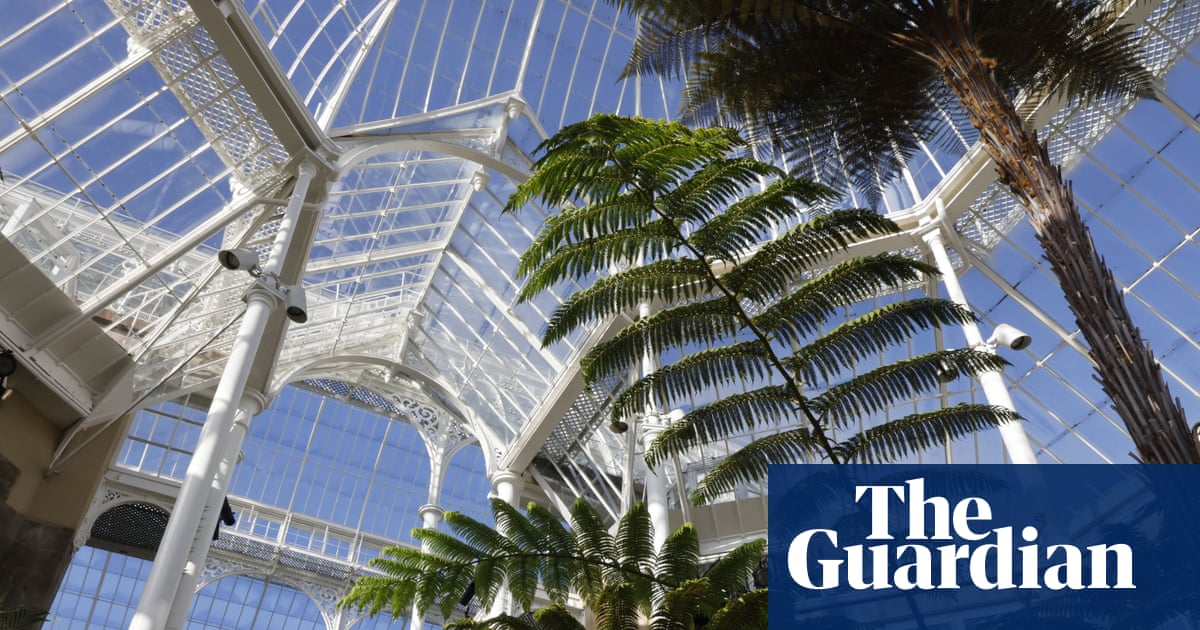
1 / 2
The story, neutrally told
The Palm Houses at the Royal Botanic Garden Edinburgh have reopened to the public after a long restoration. The Guardian says the reopening is on Friday 2 October. BBC NewsN “But members of the public are once again able to enjoy the redesigned space.” Read at BBC News ↗ The GuardianLC “On Friday, the palm houses are reopening after five years of painstaking restoration work” Read at The Guardian ↗ The BBC puts the closure at six years and the Guardian at five. The BBC says the 19th-century buildings had become leaky and rusty and needed a complete overhaul. BBC NewsN “After six years and an unprecedented botanical operation, Edinburgh's famous Palm Houses are back.”“The shutdown had to happen because the buildings had become leaky and rusty and needed a complete overhaul.” Read at BBC News ↗ The BBC reports that more than five thousand panes of glass were replaced. The Guardian gives the figure as 5,750 panels of toughened glass, which it says are not bulletproof but can resist a bird strike. BBC NewsN “More than five thousand panes of glass have been replaced” Read at BBC News ↗ The GuardianLC “The new ones are not bulletproof – but they are strong enough to resist a bird strike.” Read at The Guardian ↗
The BBC says the ironwork was repaired and repainted, the stonework renovated, and a partition wall between the two houses knocked down. The Guardian describes a £23.5m refurbishment that kept nearly all of the original sandstone and wrought iron shell, with temperature and humidity still controlled by the original pulleys and winches. BBC NewsN “a partition wall between the two houses has been knocked down to create a light and airy space” Read at BBC News ↗ The GuardianLC “the £23.5m refurbishment has kept nearly all of the original sandstone and wrought iron shell” Read at The Guardian ↗ Hundreds of plants were moved out to temporary homes and later returned. The BBC says the vast majority survived. The Guardian says more than 600 temperate plants are back in the building. BBC NewsN “the vast majority of them surviving the experience.” Read at BBC News ↗ The GuardianLC “more than 600 temperate plants have returned to the building” Read at The Guardian ↗ The one major casualty, according to the BBC, was a Sabal palm more than 200 years old. It had grown too tall for the glasshouse and had to be cut down, and it could not be stored. Seedlings were kept, and one descendant is now growing in its place in a taller house. David Knott, the director of horticulture, called the loss "one of the hardest, most poignant parts of the whole process". BBC NewsN “It had grown too tall for the glass house and had to be cut down and couldn't be stored.”“One of the Sabal palm's descendants is growing in its place.” Read at BBC News ↗
Glasshouse curator Sadie Barber told the BBC she was proud of the plants' recovery, citing new growth such as fern croziers. Prof Julia Knights, the Regius Keeper, said many of the species are extinct in the wild and that the houses help protect them. BBC NewsN “You can see new growth coming out of some of those plants that are now in the ground.”“many of them are extinct in the wild” Read at BBC News ↗ The Guardian focuses on the risk from Scottish winter storms. Barber said plants had been "essentially decapitated by falling bits of glass", and staff are not allowed inside when wind exceeds 30mph. Staff were shut out for 20 days last year and 15 times so far in 2026. The GuardianLC ““We’ve had plants that have essentially been decapitated by falling bits of glass,””“Last year, horticulturalists were not allowed inside the greenhouses for 20 days due to high winds. In 2026, they have been shut out 15 times.” Read at The Guardian ↗ The Guardian adds that many of the garden's other glasshouses are decades past their intended lifespan and await upgrades. It notes that leaks can rot plant rootstock and sometimes kill the plants. The GuardianLC “many of the glasshouses used to care for the plants are decades past their originally intended lifespan and are waiting for upgrades” Read at The Guardian ↗
Every sentence links to the reporting it rests on.
Left1 outlet
- Framing
- Frames the reopening as part of a wider race to protect plants from storm damage. It also notes that other glasshouses still need work.
- Emphasis
- Storm and glass hazards, the £23.5m cost, the garden's conservation role, and the unfinished upgrades elsewhere.
- Leaves out or plays down
- Does not mention the loss of the Sabal palm or the removal of the partition wall.
- Charged language
- “decapitated”“traumatic”
- For example
-
““You go into one of these tropical spaces in winter and there’s icy air coming in. It’s traumatic for those of us who put decades into caring for these plants.” — The Guardian
Centre1 outlet
- Framing
- A reopening story centred on the plants and the people who cared for them. It leads with the six-year operation and the loss of one old tree.
- Emphasis
- The plants' survival, the 200-year-old Sabal palm lost and its descendant, and the staff's pride and relief.
- Leaves out or plays down
- Does not give the cost or the winter storm risk that the Guardian reports.
- Charged language
- “unprecedented botanical operation”“poignant”
- For example
-
“After six years and an unprecedented botanical operation, Edinburgh's famous Palm Houses are back.” — BBC News
Right0 outlets
No right outlet in our sources has covered this story yet.
What every side reports
- The Palm Houses at the Royal Botanic Garden Edinburgh have reopened after a multi-year restoration.
- Thousands of glass panes were replaced and hundreds of plants were moved out and returned.
- Glasshouse curator Sadie Barber and Regius Keeper Prof Julia Knights are quoted by both outlets.
Where accounts differ
-
How long the restoration took
- Left
- The Guardian says five years.
- Centre
- The BBC says six years.
-
Number of glass panes replaced
- Left
- The Guardian says 5,750 panels of toughened glass.
- Centre
- The BBC says more than five thousand panes.
Left1 article
-
Falling glass and ‘decapitated’ plants: the race to protect Edinburgh botanic garden’s plants
Mixed Welcomes the reopening but stresses the dangers of falling glass and the need for further upgrades to other glasshouses.
Centre1 article
-
Six years, hundreds of plants and one tree casualty - Edinburgh's Palm House returns
Celebratory Upbeat account of the return of the Palm Houses, built around staff quotes and the story of the lost Sabal palm.
Right0 articles
No coverage yet.
- 1 Oct 23:08 First BBC NewsN Six years, hundreds of plants and one tree casualty - Edinburgh's Palm House returns
- 2 Oct 00:01 +52m The GuardianLC Falling glass and ‘decapitated’ plants: the race to protect Edinburgh botanic garden’s plants
Times are when each article was published, or when we first saw it if the outlet gave no time.