Egypt's Baha'i community is running out of burial space at its last Cairo cemetery
The last remaining Baha'i burial ground in Egypt, in Cairo, is nearly full, and community members say requests for new sites elsewhere have been refused. Egypt's government said last year that there are sufficient burial sites for all citizens.
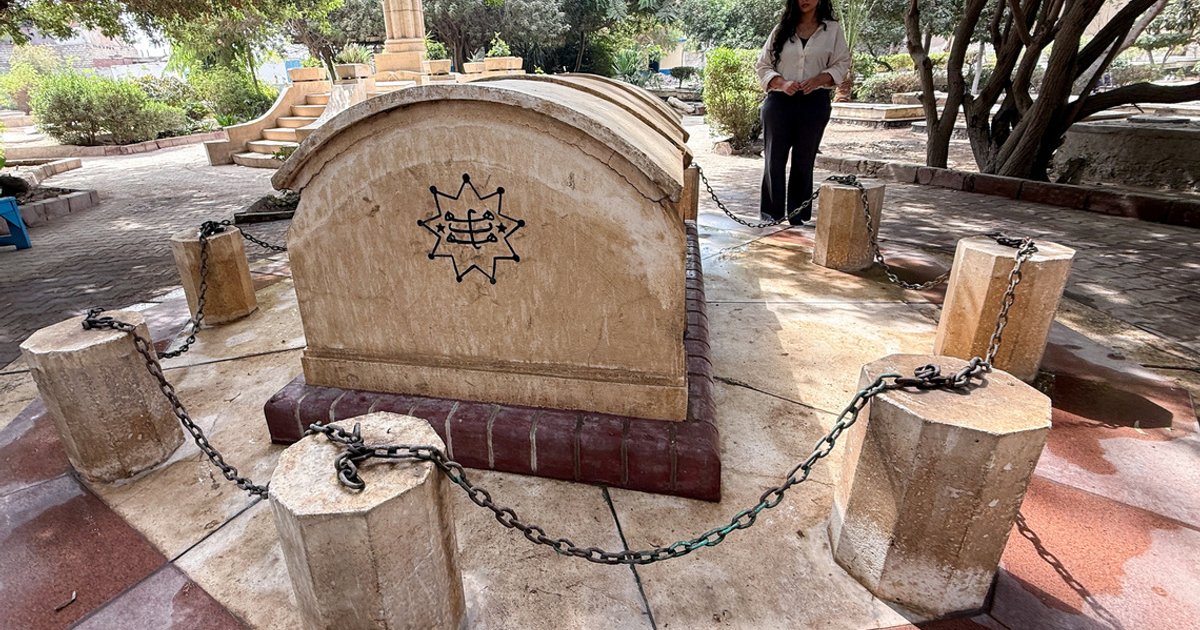
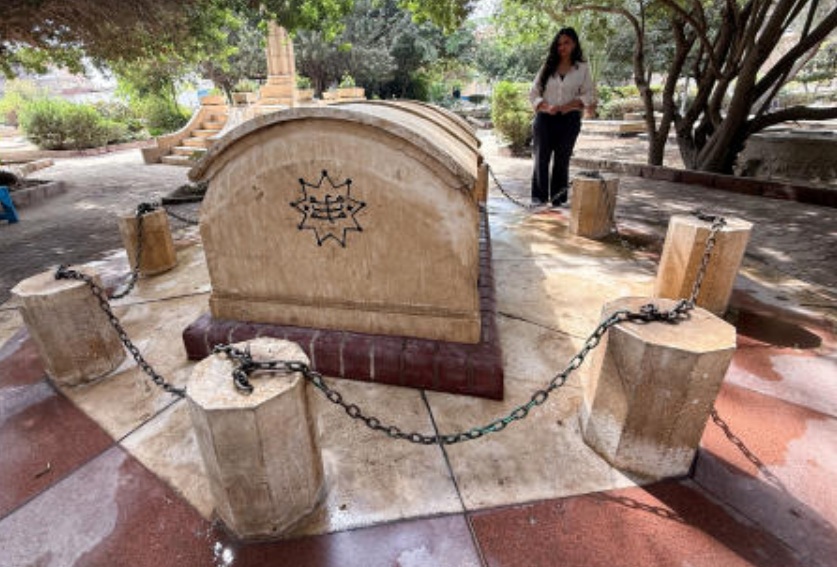
1 / 2
The story, neutrally told
Right · 2The last remaining burial place of Egypt's Baha'i community, a Cairo cemetery, is quickly running out of room, with graves packed so tightly that in places only narrow strips of sand and broken pavement separate one family's plot from the next. The Straits TimesRC “This is the last remaining burial place of Egypt's Baha'i community, a religious minority long on the margins of official life, and it is quickly running out of room.” Read at The Straits Times ↗ Arab NewsRC “This is the last remaining burial place of Egypt’s Baha’i community, a religious minority long on the margins of official life, and it is quickly running out of room.” Read at Arab News ↗ Right · 1Joumana Labib, a 25-year-old architect whose extended family is buried there, said that if the area fills completely the community would have nowhere else to bury its dead. The Straits TimesRC “"God forbid that this area becomes completely full. If that happens, we would have no other places where we can bury," said Joumana Labib” Read at The Straits Times ↗ Right · 1Baha'i practice allows a body to be moved no more than one hour from the place of death, whereas Islamic tradition requires burial within a day, which makes the shortage particularly acute. The Straits TimesRC “While Islamic tradition requires burial within a day, Baha'i practices allow a body to be moved no more than one hour from the place of death, creating particular challenges.” Read at The Straits Times ↗
Right · 2According to the Egyptian Initiative for Personal Rights (EIPR), a Cairo-based rights group, burial grounds once used by Baha'is in Alexandria and Port Said have been filled or reassigned over the years, leaving many families to transport bodies to Cairo. The Straits TimesRC “have been filled or reassigned over the years, leaving many families to transport bodies to Cairo, according to the Egyptian Initiative for Personal Rights (EIPR)” Read at The Straits Times ↗ Arab NewsRC “Burial grounds once used by Baha’is in the port cities of Alexandria and Port Said have been filled or reassigned over the years” Read at Arab News ↗ Right · 1Community members say requests for new burial grounds in Alexandria and Port Said, where much of the community lives, were rejected without clear written explanations, according to Marina Samir, who heads EIPR's freedom of religion and belief work. The Straits TimesRC “requests for new burial grounds in Alexandria and Port Said — where much of Egypt's Baha'i community lives — have been rejected without clear written explanations, said Marina Samir” Read at The Straits Times ↗ Right · 2Egypt's government information agency and the governorates of Alexandria and Port Said did not respond to requests for comment. The Straits TimesRC “Egypt's government information agency and the governorates of Alexandria and Port Said did not respond to requests for comment.” Read at The Straits Times ↗ Arab NewsRC “Egypt’s government information agency and the governorates of Alexandria and Port Said did not respond to requests for comment.” Read at Arab News ↗
Right · 2In a response to a UN human rights report last year, the government said it imposes no restrictions on personal belief or religious affiliation, including adherence to the Baha'i faith, and that based on government data there were sufficient burial sites for all citizens. The Straits TimesRC “"does not impose any restrictions on personal belief or religious affiliation, including adherence to the Baha’i faith"” Read at The Straits Times ↗ Arab NewsRC ““sufficient burial sites to meet the needs of all citizens,” it said” Read at Arab News ↗ Right · 2President Abdel Fattah al-Sisi has repeatedly stressed religious coexistence and said the state works tirelessly to fight discrimination and promote tolerance, and the constitution guarantees religious freedom, though mainstream Islamic scholars view the Baha'i faith as heretical and officials are often reluctant in practice to recognise religions outside the main Abrahamic faiths. The Straits TimesRC “President Abdel Fattah al-Sisi has repeatedly stressed the need for religious coexistence and said the state works tirelessly to fight discrimination and promote tolerance.” Read at The Straits Times ↗ Arab NewsRC “mainstream Islamic scholars view the Baha’i faith as heretical and officials are often reluctant in practice to recognize religions outside the main Abrahamic faiths” Read at Arab News ↗ Right · 2The faith was brought to Egypt by merchants in the 1860s, and its members, estimated in the thousands, are a tiny minority in a mainly Muslim country of about 110 million. The Straits TimesRC “was brought to Egypt by merchants in the 1860s, not long after it originated in Iran.” Read at The Straits Times ↗ Arab NewsRC “they are a tiny minority in a mainly Muslim country of about 110 million” Read at Arab News ↗
Right · 1A 2009 court ruling let people who follow neither Islam, Christianity nor Judaism leave a dash in the religion field of their identity documents, sparing Baha'is from declaring a faith they do not follow, but practical difficulties remain. The Straits TimesRC “A landmark 2009 court ruling allowed those who do not follow Islam, Christianity or Judaism to leave a dash in the religion field on their identity documents.” Read at The Straits Times ↗ Right · 1Baha'i couples are often registered as "single" even after decades together, which can complicate child registration, inheritance, pensions and health insurance. The Straits TimesRC “Baha'i couples are often registered as "single" even after decades together, which can complicate child registration, inheritance, pensions, health insurance and family records.” Read at The Straits Times ↗ Right · 1Hanan Kamal El-Din, 65, won an individual court ruling recognising her marriage in 2020, but a higher court overturned it in January this year, a ruling other couples fear could affect them; Ahmed Helmy, 49, who also won a ruling, said his wife has already been removed from the family section of his government digital services account. The Straits TimesRC “But that decision was overturned by a higher court in January this year, a ruling other Baha'i couples now fear could affect them as well.”“his wife has already been removed from the family section of his account on the government’s digital services platform.” Read at The Straits Times ↗
Every sentence links to the reporting it rests on. The pill in front of each says where its sources sit: Left, Centre or Right when one side supplies at least half of them, Mixed when they are evenly split. The number is how many outlets it cites.
Left0 outlets
No left outlet in our sources has covered this story yet.
Centre0 outlets
No centre outlet in our sources has covered this story yet.
Right2 outlets
- Framing
- Both outlets run the same human-interest account (the Straits Times credits Reuters; Arab News's text is near-identical), treating the cemetery as a symbol of the community's wider struggle for equal citizenship.
- Emphasis
- Personal testimony from Baha'i community members, the EIPR's account of refused burial requests, and the marriage-recognition problems.
- Leaves out or plays down
- No Baha'i institutional leadership, independent official or religious-authority voice appears; the government position is given only through its past UN response and Sisi's general statements.
- Charged language
- “long on the margins of official life”
- For example
-
“the cemetery has become a symbol for the community of the bureaucratic obstacles and restrictions they say complicate everything” — The Straits Times
“"I am not asking anyone to accept my religion," she said.” — Arab News
What every side reports
- The Cairo cemetery is the Baha'i community's last remaining burial ground in Egypt and is nearly full.
- Egypt's government told a UN report response last year that burial sites are sufficient for all citizens.
- Government bodies did not respond to requests for comment.
Where accounts differ
-
Whether burial provision for Baha'is is adequate
- Right
- Community members and EIPR say requests for new burial sites were rejected; the government said last year that sufficient sites exist for all citizens.
Egypt place
Egypt's government told a UN human rights process last year that it imposes no restrictions on belief and has sufficient burial sites; President Sisi stresses coexistence. Government bodies did not respond to requests for comment for this report.
“Egypt's government information agency and the governorates of Alexandria and Port Said did not respond to requests for comment.” — The Straits Times
Baha'i Faith in Egypt topic
Community members and EIPR say burial refusals and non-recognition of marriages reflect unequal treatment; Labib says the community asks to be accepted as equal citizens, not for acceptance of its religion.
“"I am not asking anyone to accept my religion," she said.” — The Straits Times
Left0 articles
No coverage yet.
Centre0 articles
No coverage yet.
Right2 articles
-
The Straits TimesRC · · via Reuters
Egypt's Baha'i minority is running out of space to bury their dead
Sympathetic Reuters copy run by the Straits Times; centres on community voices and rights-group claims, with the government's earlier denial for balance.
-
Egypt’s Baha’i minority is running out of space to bury their dead
Sympathetic Arab News carries the same account, centring community testimony and the demand to be treated as equal citizens.
- 13 Oct 13:45 First The Straits TimesRC Egypt's Baha'i minority is running out of space to bury their dead via Reuters
- 13 Oct 17:25 +3h 39m Arab NewsRC Egypt’s Baha’i minority is running out of space to bury their dead
Times are when each article was published, or when we first saw it if the outlet gave no time.
Ask about this story
Loading…