El Niño sets record Pacific sea surface temperature in September, Copernicus says
The EU's Copernicus service said sea surface temperatures in the Niño3.4 region of the Pacific hit a record 29.70C in September. It said it cannot yet say this is the strongest El Niño on record.
Updated (version 2). New coverage since the last version from CNA, The Straits Times.


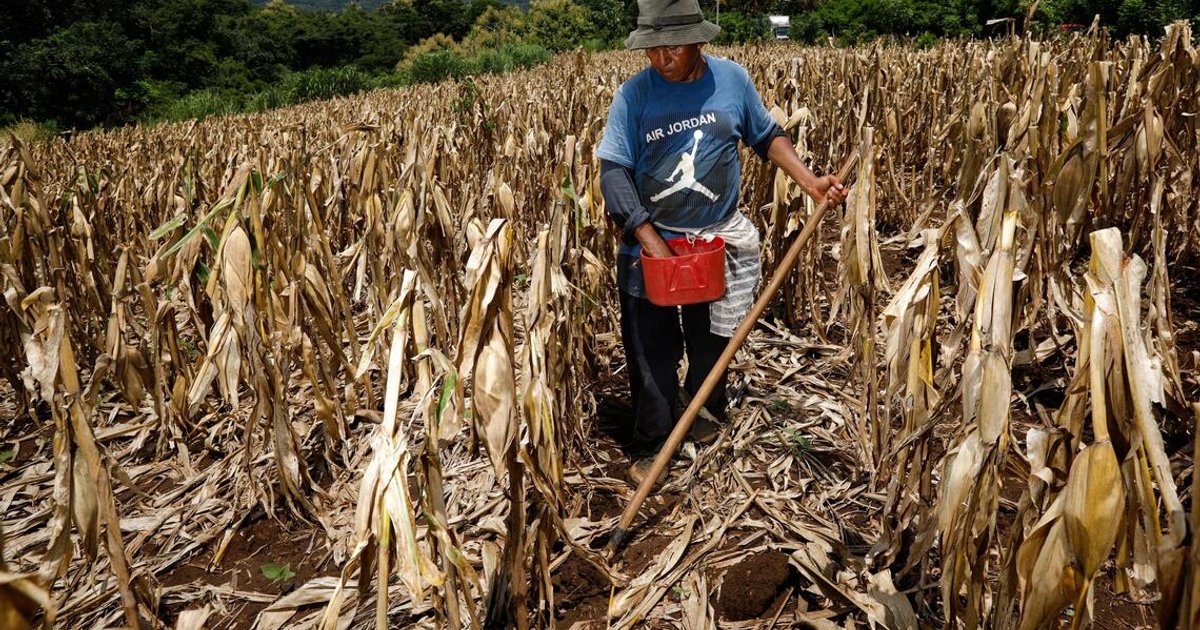
1 / 3
The story, neutrally told
Mixed · 2The EU's Copernicus Climate Change Service said on Monday 12 October 2026 that sea surface temperatures in the Niño3.4 monitoring region of the Pacific reached an "all-time high" of 29.70C in September. France 24N “had reached an "all-time high" of 29.70C last month.” Read at France 24 ↗ The HinduLC “had reached an “all-time high” of 29.70C last month.” Read at The Hindu ↗ Mixed · 2The reading exceeded the peaks of the strong El Niño events of 1982/1983, 1997/1998 and 2015/2016, which Copernicus said underscored "the exceptional intensity of the current El Nino", and it came before the event's expected peak later this year. France 24N “This exceeded the peak temperatures of previously strong El Nino events of 1982/1983, 1997/1998 and 2015/2016” Read at France 24 ↗ The HinduLC “the latest record has tumbled even before the episode’s expected peak later this year.” Read at The Hindu ↗ Mixed · 2Copernicus told AFP it "cannot yet say that the current El Nino is the strongest ever recorded". It said it had adopted a new index that accounts for the warming of tropical oceans, and that this index suggests the current event is not yet stronger than past ones, because climate change can make recent events look stronger than older ones. France 24N “Copernicus said it had adopted a new index, which accounts for the warming of tropical oceans, that suggested the current event is not yet stronger than past ones.” Read at France 24 ↗ The HinduLC “As climate change raises ocean temperatures, it can make recent El Nino events appear stronger than past ones, complicating historical comparisons.” Read at The Hindu ↗
Mixed · 2Copernicus also said the September values "point to an already exceptionally strong El Nino, especially given that the event has not yet reached its peak". Forecasters have warned for months that this El Niño could become the strongest ever observed. France 24N “point to an already exceptionally strong El Nino, especially given that the event has not yet reached its peak” Read at France 24 ↗ The HinduLC “Global forecasters have been warning for months that this El Nino would likely become the strongest ever observed” Read at The Hindu ↗ Centre · 1Forecasters do not all use the same scale. On the Friday before the report, Japan's weather agency said El Niño conditions had reached their "strongest intensity on record", with temperatures in the monitoring area 4C above normal. France 24N “Japan’s weather agency said that El Nino conditions had reached their “strongest intensity on record”, with temperatures in the phenomenon’s monitoring area 4C above normal.” Read at France 24 ↗ Mixed · 2Global average sea surface temperature hit a record 21.05C for September, above the previous September high of 20.92C in 2023. The world had its second-hottest September on record, with surface air temperatures averaging 16.27C, which was 1.63C above the 1850-1900 pre-industrial average. France 24N “global average sea surface temperatures hit a record 21.05C for September, topping the previous high of 20.92C for the same month in 2023” Read at France 24 ↗ The HinduLC “September was 1.63C hotter than the pre-industrial average, a period defined as 1850-1900.” Read at The Hindu ↗
Mixed · 2Copernicus director Carlo Buontempo said, "We are in a new run of months above 1.5C, and with a strong El Nino still intensifying it is likely to last into 2027." He added that crossing the Paris Agreement's long-term limit is "only a matter of time" and that how far and for how long the world overshoots is "still up to us". France 24N “"We are in a new run of months above 1.5C, and with a strong El Nino still intensifying it is likely to last into 2027," Copernicus director Carlo Buontempo said in a statement.” Read at France 24 ↗ The HinduLC ““Crossing the Paris Agreement’s long-term limit is only a matter of time. How far we overshoot, and for how long, is still up to us,” he said.” Read at The Hindu ↗ Mixed · 2The coverage adds that the UN declared in September that the 1.5C target would be missed within years, and that experts expect this El Niño to push global temperatures to a new record in 2027. El Niño typically occurs every two to seven years and lasts about nine to 12 months. France 24N “But the United Nations declared in September that the long-term 1.5C target would be missed in a matter of years.” Read at France 24 ↗ The HinduLC “It typically takes place every two to seven years and lasts around nine to 12 months.” Read at The Hindu ↗
Every sentence links to the reporting it rests on. The pill in front of each says where its sources sit: Left, Centre or Right when one side supplies at least half of them, Mixed when they are evenly split. The number is how many outlets it cites.
Left1 outlet
- Framing
- The Hindu runs the AFP-style account under a headline stressing the record in the key Pacific zone, dating it in its own style.
- Emphasis
- Record reading, Copernicus's caveat, and the Paris 1.5C overshoot warning.
- Leaves out or plays down
- None apparent against the other outlets; the text matches theirs.
- For example
-
“Global forecasters have been warning for months that this El Nino would likely become the strongest ever observed” — The Hindu
Centre2 outlets
- Framing
- France 24 and CNA lead on the record reading and the intensifying El Niño, then qualify it with Copernicus's caution about historical comparisons.
- Emphasis
- Record temperature, Copernicus's caveat, Japan's agency view, and the 1.5C warning.
- Leaves out or plays down
- None apparent; the text matches the other outlets'.
Right1 outlet
- Framing
- The Straits Times carries the AFP report, leading on the El Niño record and the forecasters' warning that 2026 would likely bring the strongest event ever observed.
- Emphasis
- Record reading, Copernicus's caveat, Japan's agency view, and the 1.5C overshoot warning.
- Leaves out or plays down
- None apparent; the wire text matches the other outlets'.
- For example
-
“Global forecasters have been warning for months that the El Nino in 2026 would likely become the strongest ever observed.” — The Straits Times
What every side reports
- Copernicus said Niño3.4 sea surface temperature reached a record 29.70C in September 2026.
- Copernicus said it cannot yet say this is the strongest El Niño on record.
- Global sea surface temperature hit a September record of 21.05C, and September was the second-hottest on record at 1.63C above pre-industrial levels.
- Copernicus director Carlo Buontempo said the 1.5C limit is likely to be crossed for months into 2027.
Where accounts differ
-
Whether this is the strongest El Niño on record
- Left
- The Hindu reports the same: Copernicus's new index suggests the event is not yet stronger than past ones, while Japan's agency says it is the strongest on record.
- Centre
- France 24 reports Copernicus saying it cannot yet say so, while Japan's weather agency called conditions the "strongest intensity on record".
-
Sea surface temperature in the Niño3.4 region reached a record 29.70C in September.
Reported- Reports 4
- The Hindu, CNA, France 24, The Straits Times
-
The current El Niño is not yet established as the strongest ever recorded.
Reported- Reports 4
- The Hindu, CNA, France 24, The Straits Times
-
Global average sea surface temperature hit a record 21.05C for September, above 20.92C in 2023.
Reported- Reports 4
- The Hindu, CNA, France 24, The Straits Times
Copernicus Climate Change Service organisation
Copernicus says the September reading is a record and shows exceptional intensity, but it cannot yet call this the strongest El Niño ever, and its new index suggests it is not yet stronger than past events.
“"cannot yet say that the current El Nino is the strongest ever recorded"” — France 24
““underscoring the exceptional intensity of the current El Nino”” — The Hindu
El Niño topic
The coverage describes El Niño as the warming phase of a natural climate cycle that raises drought and flood risks and adds to man-made warming. It is expected to peak later this year.
“The warming phase of a natural climate cycle, El Nino raises sea temperatures in the tropical Pacific” — France 24
Left1 article
-
El Nino sets temperature record in key Pacific zone: EU monitor
Neutral Near-identical report with the same caveat and the same Paris overshoot warning.
Centre2 articles
-
El Nino breaks Pacific temperature record as weather pattern intensifies
Neutral Factual report of the record, balanced by Copernicus's caveat about comparing events.
-
CNAN ·
El Nino sets temperature record in key Pacific zone: EU monitor
Neutral Reports the Copernicus record and its caution on historical comparisons, with the 1.5C overshoot warning.

Right1 article
-
The Straits TimesRC · · via AFP
El Nino sets temperature record in key Pacific zone: EU monitor
Neutral AFP copy run by the Straits Times, reporting the Copernicus record with the caveat that it is not yet the strongest El Niño on record.
- 12 Oct 03:12 First France 24N El Nino breaks Pacific temperature record as weather pattern intensifies
- 12 Oct 03:22 +10m The HinduLC El Nino sets temperature record in key Pacific zone: EU monitor
- 12 Oct 03:40 +28m The Straits TimesRC El Nino sets temperature record in key Pacific zone: EU monitor via AFP
- 12 Oct 04:02 +50m CNAN El Nino sets temperature record in key Pacific zone: EU monitor
Times are when each article was published, or when we first saw it if the outlet gave no time.