Environmental groups use AI while warning of data centre impacts
A Reuters survey of 15 major environmental and conservation groups found all use AI and all worry about the energy and water demands of the data centres behind it. Most say the benefits currently outweigh the costs, while Greenpeace questions the data centre build-out itself.

1 / 2
The story, neutrally told
Mixed · 2Environmental groups worldwide are using artificial intelligence to analyse climate data, track forest fires and count endangered wildlife, while warning that the technology is driving a surge in electricity demand, water use and greenhouse-gas emissions. CNAN “Environmental groups worldwide are using artificial intelligence to analyze climate data, track forest fires and count endangered wildlife” Read at CNA ↗ The Straits TimesRC “embracing a technology they also warn is driving a surge in electricity demand, water use and greenhouse-gas emissions.” Read at The Straits Times ↗ Mixed · 2Reuters interviewed 15 major environmental, conservation and development organisations; all said they used AI in some form and all expressed concern about the environmental impact of the data centres that power it. The Straits TimesRC “Reuters interviewed 15 major environmental, conservation and development organisations about their AI use.” Read at The Straits Times ↗ CNAN “All said they used the technology in some form and expressed concern about the environmental impact of the data centers powering it.” Read at CNA ↗ Mixed · 2Ali Swanson, AI lead at Conservation International, said the group recognises AI's environmental costs but that it can help organisations move faster; the group recently began using AI to assess satellite-detected hot spots and send real-time wildfire alerts to community forest patrols in Cambodia. The Straits TimesRC ““We recognise that AI can come with environmental costs, and we need to be thoughtful about how we use it,” said Ali Swanson” Read at The Straits Times ↗ CNAN “send real-time alerts to community forest patrols about potential wildfires in remote and environmentally sensitive parts of Cambodia.” Read at CNA ↗
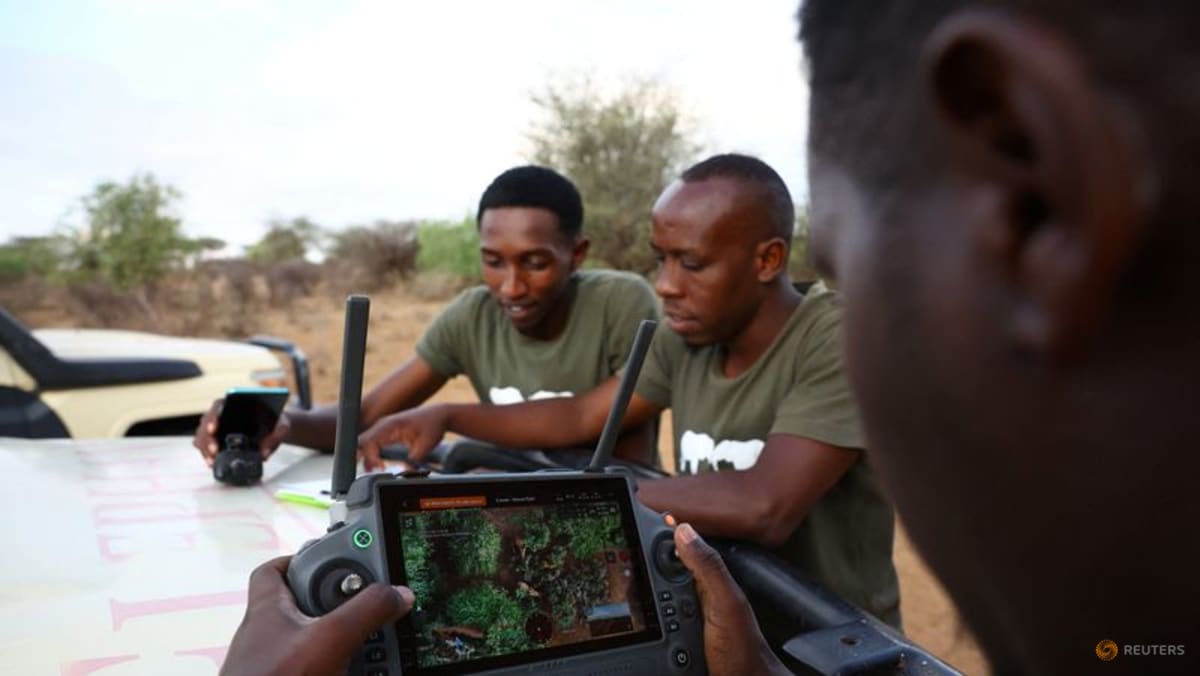
Mixed · 2Many of the organisations believe AI's benefits currently outweigh its costs because it enables work that was previously difficult, expensive or impossible. The Straits TimesRC “Many of the organisations that spoke to Reuters believe AI’s benefits currently outweigh its costs” Read at The Straits Times ↗ CNAN “enabling work that was previously difficult, expensive or impossible.” Read at CNA ↗ Mixed · 2Frank Pope, chief executive of Save the Elephants in Kenya, said an aerial survey of Kenya's largest protected area generated roughly 200,000 images that took nine people nine months to review manually, whereas AI models trained on Nvidia GeForce platforms can do similar analyses in hours; he said the AI results showed human surveys had missed about a third of elephants, roughly half of zebras and giraffes, and three-quarters of oryx. The Straits TimesRC “roughly 200,000 images that took nine people nine months to review manually” Read at The Straits Times ↗ CNAN “We found that human surveys were missing about a third of the elephants, roughly half of zebras and giraffes, and three-quarters of oryx populations.” Read at CNA ↗ Mixed · 2At the Jane Goodall Institute, a tool developed with Amazon Web Services can scan, translate and structure decades of handwritten chimpanzee field notes from Tanzania's Gombe National Park in minutes, cutting a project once expected to take 13-15 years to about two years, according to vice-president of conservation science Lilian Pintea, who said Goodall backed AI use provided people stayed firmly in control. The Straits TimesRC “the notes can now be scanned, translated and structured in minutes, slashing the time needed to about two years” Read at The Straits Times ↗ CNAN “The project was once expected to take 13-15 years” Read at CNA ↗
Mixed · 2Some groups are trying to limit AI's footprint: the World Resources Institute restricts video and image generation and caches query results, and The Nature Conservancy uses AI-powered cameras aboard commercial fishing vessels to process footage on the boats rather than uploading it to centralised data centres. CNAN “it limits resource-intensive applications such as generating videos and images, while caching AI query results” Read at CNA ↗ The Straits TimesRC “it has installed AI-powered digital cameras to process information aboard the vessels, reducing energy use and data-transfer requirements” Read at The Straits Times ↗ Mixed · 2Greenpeace International said it uses some AI tools mainly because software platforms it relies on include AI features, has set internal guidelines stressing transparency, human oversight and "intentional" use, and would prefer to avoid the technology; campaigner Katrin Xueying Wu said Greenpeace is asking whether it is necessary to build so many massive data centres at all. The Straits TimesRC “Greenpeace International said it, too, uses some AI tools, mainly because software platforms it relies upon include AI features.” Read at The Straits Times ↗ CNAN “Greenpeace is asking whether it’s necessary to build all these massive data centers in the first place” Read at CNA ↗ Mixed · 2BirdLife International chief scientist Stuart Butchart said that if environmental groups can work more effectively with AI they must seriously engage with it, and that not doing so would be derelict in their duty. The Straits TimesRC “then we have to seriously engage in that possibility,” said Stuart Butchart, chief scientist at UK-based BirdLife International.” Read at The Straits Times ↗ CNAN “If we don’t do it, then we’re sort of being derelict in our duty.” Read at CNA ↗
Mixed · 2The International Energy Agency estimates global data centres will use about 945 terawatt-hours of electricity a year by 2030, double current consumption and about equal to Japan's annual use, producing the equivalent of more than 300 million tonnes of carbon dioxide, and that their water consumption will rise from about 560 billion litres in 2023 to about 1.2 trillion litres. The Straits TimesRC “consume about 945 terawatt-hours of electricity annually by 2030” Read at The Straits Times ↗ CNAN “from about 560 billion liters (147.9 billion gallons) in 2023 to about 1.2 trillion liters (317 billion gallons) annually by 2030.” Read at CNA ↗ Right · 1Researchers at the United Nations University Institute for Water, Environment and Health estimate the global data-centre footprint could more than double by 2030, reaching about twice the size of Jakarta. The Straits TimesRC “the global data-centre footprint could more than double by 2030, reaching a size about twice that of Jakarta” Read at The Straits Times ↗ Mixed · 2Microsoft, Amazon and Google have reported rising emissions linked partly to data centre expansion, raising questions about their long-term climate goals; Amazon told Reuters its AI products were among the most sustainable given its low-carbon energy purchases and efficiency efforts, while Microsoft and Google did not respond to requests for comment. The Straits TimesRC “Amazon told Reuters its artificial-intelligence products were among the most sustainable” Read at The Straits Times ↗ CNAN “Microsoft and Google didn't respond to requests for comment.” Read at CNA ↗
Mixed · 2The trade-offs are likely to feature at the UN's COP31 climate conference in November, where host Turkey will ask governments, businesses and institutions to sign a pledge on sustainable AI principles, and UN Secretary-General Antonio Guterres wants major AI companies to publicly disclose their systems' environmental impacts. CNAN “host Turkey will call on governments, businesses and other institutions to sign a pledge outlining principles to ensure AI is developed and deployed sustainably.” Read at CNA ↗ The Straits TimesRC “UN Secretary-General Antonio Guterres wants major AI companies to publicly disclose their systems’ environmental impacts.” Read at The Straits Times ↗
Every sentence links to the reporting it rests on. The pill in front of each says where its sources sit: Left, Centre or Right when one side supplies at least half of them, Mixed when they are evenly split. The number is how many outlets it cites.
Left0 outlets
No left outlet in our sources has covered this story yet.
Centre1 outlet
- Framing
- Carries the Reuters report framing a dilemma: groups use AI for conservation while warning of its environmental costs.
- Emphasis
- The tension between AI's conservation benefits and data centre energy and water demand, with the full set of IEA and UN figures and group examples.
- Leaves out or plays down
- Nothing material relative to the other outlet; the text is the same Reuters report.
- Charged language
- “contradiction”“BREAKTHROUGHS ONCE THOUGHT IMPOSSIBLE”
Right1 outlet
- Framing
- Runs the same Reuters report (British spelling, with a photo caption of Save the Elephants drone operators) and frames it identically as a dilemma.
- Emphasis
- The same balance of AI benefits and data centre costs; adds the year 2025 for the Kenyan survey and says COP31 is 'in November'.
- Leaves out or plays down
- Drops the CNA copy's section subheadings and the gallon conversions; otherwise nothing material.
- Charged language
- “contradiction”“derelict in our duty”
- For example
-
“The contradiction is forcing these organisations to justify their AI use” — The Straits Times
“If we don’t do it, then we’re sort of being derelict in our duty.” REUTERS” — The Straits Times
What every side reports
- Reuters interviewed 15 major environmental, conservation and development organisations; all use AI and all are concerned about data centre impacts.
- The IEA projects data centres will use about 945 TWh of electricity a year by 2030.
- Amazon defended its AI's sustainability; Microsoft and Google did not respond to Reuters.
- Greenpeace is the most sceptical, questioning the data centre build-out.
Left0 articles
No coverage yet.
Centre1 article
-
CNAN ·
Environmental groups embrace AI, even as they warn of data center impacts
Neutral Reuters copy presenting AI use by environmental groups as a dilemma, with subheadings on benefits and limiting impact.
Right1 article
-
The Straits TimesRC · · via Reuters
Environmental groups embrace AI, even as they warn of data centre impacts
Neutral Reuters wire copy run by the Straits Times with British spelling, presenting the same balanced dilemma.
- 7 Nov 06:05 First CNAN Environmental groups embrace AI, even as they warn of data center impacts
- 7 Nov 09:05 +3h The Straits TimesRC Environmental groups embrace AI, even as they warn of data centre impacts via Reuters
Times are when each article was published, or when we first saw it if the outlet gave no time.
Ask about this story
Loading…