ESA's Hera probe reaches Didymos and Dimorphos, where NASA's DART tested asteroid deflection
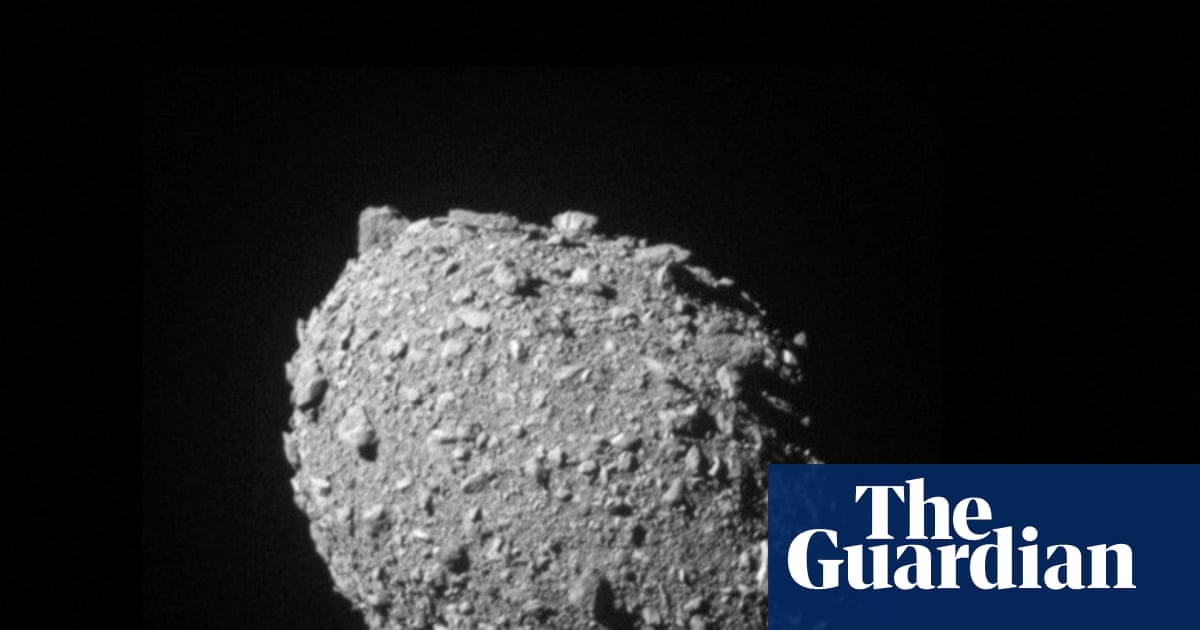
ESA's Hera spacecraft is at the Didymos asteroid system to study the aftermath of NASA's 2022 DART impact. ESA is due to release close-up images of Dimorphos on 25 November.
Updated (version 2). New coverage since the last version from BBC News, The Guardian.


1 / 4
The story, neutrally told
Mixed · 2The European Space Agency's Hera spacecraft has arrived at the Didymos binary asteroid system, the target NASA used in 2022 to test whether crashing a spacecraft into an asteroid can change its path. NewsweekN “The European Space Agency's (ESA) Hera spacecraft has arrived at the Didymos asteroid system after a journey of about two years.” Read at Newsweek ↗ WiredLC “Now, a probe from the European Space Agency is returning to the scene to investigate.” Read at Wired ↗ Centre · 1Newsweek reports that ESA is due to unveil Hera's first close-up images of Dimorphos on Wednesday, 25 November, in a livestream on ESA WebTV and YouTube. NewsweekN “ESA will reveal the first close-up images of Dimorphos during a livestream next week, on Wednesday, November 25.” Read at Newsweek ↗ Mixed · 2On the day of the release, the BBC said the first images were due later on Wednesday, and the Guardian said scientists were poised to publish them. The Guardian said Hera reached the asteroid pair this month and is surveying them from 15-18 miles (25-30km). BBC NewsN “with the first images set to be released later on Wednesday” Read at BBC News ↗ The GuardianLC “the car-sized spacecraft reached the asteroid pair this month and has been surveying them from a distance of 15-18 miles (25-30km)” Read at The Guardian ↗
Mixed · 2Hera launched on 7 October 2024. Wired says its arrival phase began in October, with a first image taken about 800 miles away and the first detailed image of Didymos published in early November. NewsweekN “Hera launched on October 7, 2024.” Read at Newsweek ↗ WiredLC “After a flyby of Mars, the probe began its arrival phase this past October. It took its first image about 800 miles away, and the first detailed image of Didymos was published in early November.” Read at Wired ↗ Mixed · 2Didymos is about 780 metres across and its moonlet Dimorphos about 151 metres. Dimorphos was the target of NASA's Double Asteroid Redirection Test (DART). NewsweekN “Didymos is about 780 meters across, roughly the same size as the Burj Khalifa, while Dimorphos measures about 151 meters across” Read at Newsweek ↗ WiredLC “Nearly a year later, the DART probe crashed into Dimorphos.” Read at Wired ↗ Centre · 3Outlets give slightly different sizes: the BBC says Didymos is about 730m wide and Dimorphos about 150m, while Wired and Newsweek (citing ESA) say 780m and 151m, and the Guardian calls Dimorphos roughly 160m wide. BBC NewsN “about 730m (2,400ft) wide” Read at BBC News ↗ The GuardianLC “a roughly 160-metre-wide asteroid called Dimorphos” Read at The Guardian ↗ NewsweekN “Didymos is about 780 meters across” Read at Newsweek ↗
Mixed · 2DART hit Dimorphos on 26 September 2022 at roughly 14,000 mph (Newsweek; Wired gives over 13,000 mph). The impact shortened Dimorphos's orbit around Didymos by about 33 minutes, far more than the minute or so scientists had hoped for. NewsweekN “On September 26, 2022, NASA deliberately smashed the DART spacecraft into Dimorphos at roughly 14,000 miles per hour.” Read at Newsweek ↗ WiredLC “Scientists had hoped that the impact of the probe—which was barreling toward the asteroids at over 13,000 miles per hour—could shorten the period of the mini-moon's orbit by a minute or more. In the end, it was slowed down by 33 minutes.” Read at Wired ↗ Mixed · 2Wired attributes the large change to ejected debris producing a much greater recoil than the impact itself. Newsweek, citing NASA, says about one million kilograms of rock was thrown into space. WiredLC “This major deviation was caused by the ejection of debris, leading to a much greater recoil than what was produced by the impact itself.” Read at Wired ↗ NewsweekN “NASA said the DART collision threw over two million pounds (one million kilograms) of the dusty rock into space” Read at Newsweek ↗ Mixed · 2The BBC says the debris trail, about 10,000km long, was spotted by telescopes on Earth and in space. The Guardian notes that NASA officials had said a change of 73 seconds or more would count as a success, and that computer simulations published in 2024 suggested DART may have reshaped the whole asteroid rather than digging a large crater. BBC NewsN “the trail of debris, measuring about 10,000km long (6,200 miles), was spotted by telescopes on Earth and in space” Read at BBC News ↗ The GuardianLC “Nasa officials had said a change of 73 seconds or more would be considered a success.”“Computer simulations published in 2024 suggested that rather than excavating a large crater, Dart may have reshaped the entire asteroid.” Read at The Guardian ↗
Mixed · 2Hera will study what the impact did to the asteroid, including the impact site and crater (ESA has said it may be around 20 metres across), the structure beneath the surface, and how efficiently DART transferred its momentum. It will also measure Dimorphos's exact mass, which Wired calls important for judging DART as a planetary-defence test. NewsweekN “ESA has previously said the collision may have created a crater around 20 meters across, although that’s one of the things Hera's observations will help to establish.” Read at Newsweek ↗ WiredLC “Hera will also determine the exact mass of Dimorphos, an important detail in assessing the effectiveness of the DART mission as a test of planetary defense technology.” Read at Wired ↗ Centre · 1Ian Carnelli, who oversees ESA's Hera mission, said DART and Hera were conceived as a coordinated pair, one to deflect and one to measure the result. ESA says the findings should help turn the DART experiment into a technique that could be repeated against a threatening asteroid. NewsweekN ““DART and Hera were originally conceived on a coordinated double-spacecraft basis, with one mission to perform the deflection and the other to perform precision measurements of the result.””“ESA says the findings should help turn the DART experiment into a technique that could be repeated” Read at Newsweek ↗ Mixed · 2Patrick Michel, principal investigator of Hera, likened it to "Inspector Columbo going back to the crash scene", and said that because DART was destroyed on impact, scientists lack information on the asteroid's final state. Simon Green of Hera's science team said the mass measurement would help plan any future deflection, while Nottingham Trent University's Ian Whittaker said the images should show whether any of the DART spacecraft remains on the surface and whether features such as the equatorial ridge survive. BBC NewsN “Hera is a sort of Inspector Columbo going back to the crash scene to investigate what is the outcome of this impact”“It would help us to predict what would happen if we had to hit another asteroid” Read at BBC News ↗ The GuardianLC “These images will allow us to see if anything of the Dart mission is still on the surface or if it was mostly debris that came off.” Read at The Guardian ↗
Left · 1Wired adds that Hera will make the first detailed exploration of a binary asteroid system, investigating how such pairs form and Didymos's 2.3-hour rotation. It carries a lidar, chemical-composition instruments and imaging at about 1 metre per pixel. WiredLC “this will be the first time a binary asteroid system will be explored in detail”“we can expect to see detailed images of the asteroids taken with a resolution of 1 meter per pixel.” Read at Wired ↗ Left · 1Hera will deploy two CubeSats, Juventas and Milani, in January 2027 and they will attempt to land on the surface. Wired says the main phase is expected to last until summer next year. WiredLC “which it will deploy in January 2027”“this main phase of the Hera probe's mission is expected to last until the summer of next year” Read at Wired ↗ Mixed · 2Wired places the mission in the context of the asteroid Apophis, which is predicted to pass Earth at about 19,000 miles in April 2029, and notes that known near-Earth asteroids have grown from about 300 in 2000 to over 43,000. Newsweek stresses that neither Didymos nor Dimorphos posed any danger to Earth. NewsweekN “Neither Didymos nor Dimorphos posed a danger to Earth” Read at Newsweek ↗ WiredLC “In the year 2000, we knew of only 300 near-Earth asteroids—those that approach Earth or directly cross its orbit. Today, we know of over 43,000.” Read at Wired ↗
Mixed · 2The BBC adds that NASA's NEO Surveyor telescope is due to launch in 2027, and that NASA's Osiris-Apex and the ESA-JAXA Ramses mission will head to Apophis. It puts Apophis's 2029 flyby at about 32,000km (20,000 miles), whereas Wired says 19,000 miles. BBC NewsN “A new mission is launching in 2027 to track potentially hazardous asteroids”“it will fly just 32,000km (20,000 miles) above our surface” Read at BBC News ↗ WiredLC “The 450-meter-wide body will miss us at a distance of only 19,000 miles.” Read at Wired ↗
Every sentence links to the reporting it rests on. The pill in front of each says where its sources sit: Left, Centre or Right when one side supplies at least half of them, Mixed when they are evenly split. The number is how many outlets it cites.
Left2 outlets
- Framing
- Wired ran an explanatory feature on planetary defence and Hera's science; the Guardian led on the imminent first close-up images, with an outside physicist and a Hitchhiker's Guide to the Galaxy opening.
- Emphasis
- Mission science and what the images may reveal about the aftermath, including whether DART reshaped the asteroid.
- Leaves out or plays down
- Wired does not mention the 25 November image release; the Guardian does not cover the CubeSats' landing or Apophis.
- For example
-
“The ultimate aim of these investigations is to transform asteroid deflection from a successful one-off experiment into a reliable means of planetary defence.” — The Guardian
“this will be the first time a binary asteroid system will be explored in detail” — Wired
Centre2 outlets
- Framing
- Newsweek previewed the release; the BBC reported Hera's arrival on the day, using the "Columbo" scientist quote and a planetary-defence rationale.
- Emphasis
- The release date, DART's result, expert quotes, the threat posed by mid-sized asteroids and upcoming missions to Apophis.
- Leaves out or plays down
- Newsweek says little about CubeSats or Apophis; the BBC leaves out the ejecta mass and crater estimate.
Right0 outlets
No right outlet in our sources has covered this story yet.
What every side reports
- Hera is an ESA mission now at the Didymos–Dimorphos system.
- NASA's DART struck Dimorphos in 2022 and shortened its orbit by about 33 minutes.
- Didymos is about 780 m across and Dimorphos about 151 m.
- Hera will study the impact's aftermath to help judge asteroid deflection as planetary defence.
Where accounts differ
-
Size of the asteroids
- Left
- Guardian: Dimorphos roughly 160m wide; Wired: Didymos 780m, Dimorphos 151m.
- Centre
- BBC: Didymos about 730m, Dimorphos about 150m; Newsweek (citing ESA): 780m and 151m.
-
Apophis flyby distance in 2029
- Left
- Wired: about 19,000 miles.
- Centre
- BBC: about 32,000km (20,000 miles).
-
The DART impact shortened Dimorphos's orbit around Didymos by about 33 minutes.
Supported- Supports 4
- The Guardian, Wired, BBC News, Newsweek
-
Neither Didymos nor Dimorphos poses a threat to Earth.
Supported- Supports 3
- The Guardian, BBC News, Newsweek
-
ESA's Hera spacecraft launched on 7 October 2024.
Supported- Supports 2
- The Guardian, Newsweek
- Reports 1
- Wired
European Space Agency organisation
ESA says Hera is meant to measure precisely what DART did and help turn the test into a repeatable deflection technique; it will unveil Dimorphos images on 25 November.
“ESA says the findings should help turn the DART experiment into a technique that could be repeated” — Newsweek
NASA organisation
NASA ran DART as a full-scale deflection test; Administrator Bill Nelson said it shows NASA is trying to be ready for whatever the universe throws at us.
““This mission shows that NASA is trying to be ready for whatever the universe throws at us,” NASA Administrator Bill Nelson said.” — Newsweek
Left2 articles
-
WiredLC ·
A Space Probe Returns to Asteroids Where NASA Tested Planetary Defense Systems
Neutral Translated explainer linking Hera's science to planetary defence and Apophis.
-
Nasa knocked an asteroid off course. New closeup photos may shed light on aftermath
Sympathetic Light, upbeat preview of the first images, with a physicist explaining what they could show.
Centre2 articles
-
First Close-Up Look at Asteroid NASA Knocked Off Course – This Week
Neutral AI-assisted news preview built around the imminent release of the first Dimorphos close-ups.
-
Four years after huge asteroid crash, a spacecraft has now returned to assess the damage
Neutral Accessible report on Hera's arrival, led by scientist quotes and the case for planetary defence.
Right0 articles
No coverage yet.
- 21 Nov 12:00 First WiredLC A Space Probe Returns to Asteroids Where NASA Tested Planetary Defense Systems
- 22 Nov 15:06 +27h 6m NewsweekN First Close-Up Look at Asteroid NASA Knocked Off Course – This Week
- 25 Nov 06:00 +90h 1m BBC NewsN Four years after huge asteroid crash, a spacecraft has now returned to assess the damage
- 25 Nov 16:49 +100h 50m The GuardianLC Nasa knocked an asteroid off course. New closeup photos may shed light on aftermath
Times are when each article was published, or when we first saw it if the outlet gave no time.
Ask about this story
Loading…