Estonia says Russia ordered August arson attack on Milrem Robotics; Kremlin denies
Estonian officials concluded that a mid-August arson attack on defence firm Milrem Robotics in Tallinn was ordered by Russian security services. The Kremlin called the claim baseless, and allies voiced solidarity with Estonia.
Updated (version 3). New coverage since the last version from CBC News, Meduza.


1 / 4
The story, neutrally told
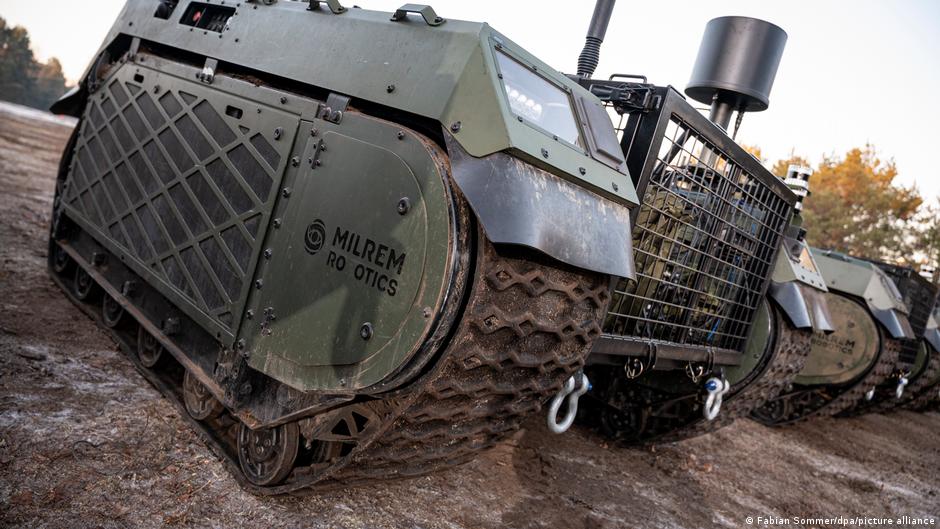
Estonian authorities said on 29 September that a mid-August arson attack on Milrem Robotics, a defence company supplying Ukraine, was sabotage commissioned by Russian security services. CBC NewsLC “an act of sabotage commissioned by Russian security services” Read at CBC News ↗ BBC NewsN “Russia was behind an arson attack on an Estonian defence company in the capital Tallinn last month, authorities say.” Read at BBC News ↗ Foreign Minister Margus Tsahkna, citing the Internal Security Service, said the conclusion was reached "with certainty". BBC NewsN “we can conclude with certainty that the arson attack... was an act of sabotage ordered by the special services of the Russian Federation” Read at BBC News ↗ A fire broke out overnight on 14–15 August at a Tallinn building used by Milrem, which has supplied THeMIS unmanned ground vehicles to Ukraine; it was quickly brought under control and no one was hurt. MeduzaLC “It was quickly extinguished, and no one was hurt.” Read at Meduza ↗ CBC NewsLC “Milrem has supplied THeMIS unmanned ground vehicles to Ukraine.” Read at CBC News ↗
Three Latvian suspects were detained in Latvia and handed over to Estonia; the BBC quotes the security service chief as saying they had lived in Russia and taken part in previous attacks. CBC NewsLC “On Aug. 17, two Latvian suspects were detained in neighbouring Latvia, and a third followed the next day.” Read at CBC News ↗ BBC NewsN “Palloson said they were Latvians who had been living in Russia and taken part in previous attacks” Read at BBC News ↗ The security service said the method matched other sabotage carried out in Europe on behalf of Russia, and Tsahkna called the attack part of a broader campaign to intimidate Europe and weaken support for Ukraine. CBC NewsLC “the modus operandi of the Milrem attack is consistent with other acts of sabotage carried out in Europe on behalf of Russia” Read at CBC News ↗ Al JazeeraLC ““This act of sabotage is part of Russia’s broader campaign across Europe, aimed at intimidating us and weakening our support for Ukraine,” he wrote.” Read at Al Jazeera ↗ Estonia summoned Russia's top diplomat in Tallinn, described as chargé d'affaires (AP, Meduza, which names Lenar Salimullin) or ambassador (Al Jazeera, DW). MeduzaLC “Estonia’s Foreign Ministry summoned Russia’s chargé d’affaires, Lenar Salimullin.” Read at Meduza ↗ Deutsche WelleN “Russia's ambassador had been summoned” Read at Deutsche Welle ↗
Kremlin spokesman Dmitry Peskov rejected the accusation as baseless and said Moscow would not take such statements seriously. Al JazeeraLC “we cannot and will not take such statements seriously” Read at Al Jazeera ↗ CBC NewsLC “not containing any substantiation whatsoever.” Read at CBC News ↗ NATO chief Mark Rutte, Macron, the EU, Germany, Lithuania, Latvia and Sweden backed Estonia and pledged continued support for Ukraine. Deutsche WelleN “NATO and EU leaders rallied behind Estonia on Tuesday” Read at Deutsche Welle ↗ Al JazeeraLC “The attack was condemned by several of Estonia’s allies, who also reaffirmed their support for Ukraine.” Read at Al Jazeera ↗ The case follows other incidents blamed on Russia, including a drone attack Germany says was attempted at Leipzig/Halle Airport; AP says it has tracked around 200 such incidents in Europe since 2022. CBC NewsLC “The Associated Press has tracked around 200 incidents of sabotage and malign activity across Europe blamed on Russia” Read at CBC News ↗
The reports cite no public evidence beyond the security service's assessment; the BBC notes the prime minister gave no details and that recruits may be misled about who is behind operations. BBC NewsN “was ordered by Russian special services, but gave no details.”“Individuals recruited for such operations may be misled or manipulated” Read at BBC News ↗
Every sentence links to the reporting it rests on.
Left3 outlets
- Framing
- Report Estonia's attribution alongside the Kremlin denial; Al Jazeera and Meduza lead on Tsahkna's statement, CBC on the AP account.
- Emphasis
- Tsahkna's quotes, allied solidarity (Al Jazeera), and Meduza's background on THeMIS robots and the Russian bounty.
- Leaves out or plays down
- Meduza and Al Jazeera omit the AP count of around 200 incidents; Al Jazeera omits the suspects' arrest details.
- Charged language
- “hybrid provocations”“staunch ally of Kyiv”
- For example
-
“Estonian Foreign Minister Margus Tsahkna has accused Russia of “sabotage” following an August arson attack on a defence company” — Al Jazeera
“In 2022, Russia offered military personnel a reward of two million rubles for capturing THeMIS robots” — Meduza
Centre3 outlets
- Framing
- Present the attribution as part of a wider pattern of Russian sabotage; BBC gives the most context and DW stresses allied backing.
- Emphasis
- BBC lists other August incidents and Kapo's warning about misled recruits; DW lists many allied statements.
- Leaves out or plays down
- SCMP (AP) omits allied reactions beyond Macron's; DW omits the Kapo chief's remarks and the pattern of other incidents.
- Charged language
- “reckless”“Russia always denies involvement in such attacks despite growing evidence to the contrary”
- For example
-
“Russia always denies involvement in such attacks despite growing evidence to the contrary.” — BBC News
“NATO and EU leaders rallied behind Estonia on Tuesday” — Deutsche Welle
Right0 outlets
No right outlet in our sources has covered this story yet.
What every side reports
- Estonia says Russian security services ordered the mid-August arson attack on Milrem Robotics in Tallinn.
- The Kremlin, through Dmitry Peskov, rejected the claim as baseless.
- Three suspects were detained in Latvia and handed to Estonia.
- Estonia summoned Russia's top diplomat in Tallinn.
- NATO, the EU, Macron and other leaders backed Estonia.
Where accounts differ
-
Rank of the summoned Russian diplomat
- Left
- Meduza and CBC (AP text) say chargé d'affaires; Al Jazeera says ambassador.
- Centre
- SCMP (AP) says chargé d'affaires; DW says ambassador.
-
The August arson attack on Milrem Robotics was ordered by Russian special services.
Reported- Reports 6
- Al Jazeera, CBC News, Meduza, BBC News, Deutsche Welle, South China Morning Post
-
The Kremlin rejects the accusation as baseless.
Reported- Reports 6
- Al Jazeera, CBC News, Meduza, BBC News, Deutsche Welle, South China Morning Post
-
Russia's top diplomat in Tallinn was summoned to the Estonian foreign ministry over the attack (AP and Meduza say chargé d'affaires; Al Jazeera and DW say ambassador).
Reported- Reports 5
- Al Jazeera, CBC News, Meduza, Deutsche Welle, South China Morning Post
Estonia place
Says Russian special services ordered the attack, calls it part of a campaign to intimidate Europe, and vows more support for Ukraine.
“We will increase our support for Ukraine and pressure on Russia to end its aggression.” — Meduza
“we will not be intimidated.” — CBC News
Russia place
The Kremlin calls the accusations baseless and refuses to take them seriously.
“we cannot and will not take such statements seriously” — Al Jazeera
Margus Tsahkna person
Says the conclusion is certain, based on Internal Security Service information, and that the perpetrators were apprehended.
“no longer pose a threat” — Al Jazeera
Milrem Robotics organisation
Described as the target and a supplier of unmanned ground vehicles to Ukraine; no company statement is quoted.
“Milrem Robotics makes uncrewed military ground vehicles.” — Meduza
Left3 articles
-
Estonia blames Russia for arson at defence factory that produces vehicles Ukraine has used
Neutral AP-style account of Estonia's attribution, the Kremlin denial and Macron's reaction, with wider context on sabotage in Europe.
-
Estonia says Russia ordered August arson attack on defence company
Neutral Leads on Tsahkna's accusation and Kremlin rejection, followed by a run of allied statements.
-
MeduzaLC ·
Neutral Short account with local detail and background on the THeMIS robots and the earlier Russian bounty.
Centre3 articles
-
South China Morning PostN · · via AP
Estonia blames Russia for arson attack on company supplying vehicles to Ukraine
Neutral AP copy carried by SCMP: factual report of attribution, suspects and the Kremlin denial.
-
Estonia blames Russia for arson at defence company supplying Ukraine
Mixed Places the attack in a pattern of Russian sabotage and says Russia denies such attacks despite growing evidence, while noting no details were given.
-
Estonia blames Russia for arson attack on defense company
Sympathetic Emphasises NATO and EU solidarity with Estonia, quoting many allied leaders.
Right0 articles
No coverage yet.
- 29 Sep 12:29 First CBC NewsLC Estonia blames Russia for arson at defence factory that produces vehicles Ukraine has used
- 29 Sep 13:07 +39m South China Morning PostN Estonia blames Russia for arson attack on company supplying vehicles to Ukraine via AP
- 29 Sep 14:15 +1h 47m BBC NewsN Estonia blames Russia for arson at defence company supplying Ukraine
- 29 Sep 14:26 +1h 57m Al JazeeraLC Estonia says Russia ordered August arson attack on defence company
- 29 Sep 17:45 +5h 16m MeduzaLC Estonia accuses Russian intelligence services of ordering arson at defense-robotics company supplying Ukraine
- 29 Sep 19:08 +6h 39m Deutsche WelleN Estonia blames Russia for arson attack on defense company
Times are when each article was published, or when we first saw it if the outlet gave no time.