Europe and the US step up civil emergency preparedness amid debate over the threat
Several European governments and the Pentagon are promoting household and infrastructure readiness for prolonged disruption. A Washington Examiner op-ed treats this as a response to a real Russian threat; Anadolu quotes a critic who warns of a cycle of fear.
Updated (version 2). New coverage since the last version from CBC News.

1 / 2
The story, neutrally told
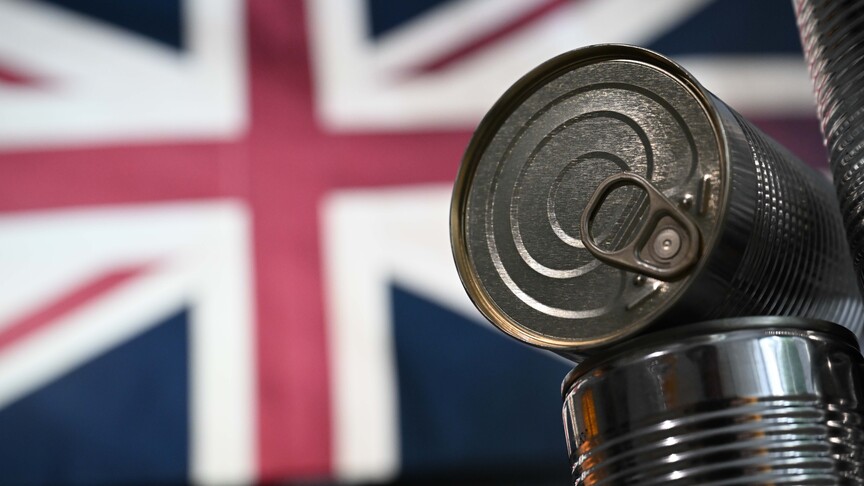
Mixed · 2Governments in Europe and the United States are putting more emphasis on preparing households, infrastructure and military sites for prolonged disruption. Anadolu AgencyN “Across the West, governments are placing growing emphasis on preparing households, essential infrastructure and military installations for prolonged disruptions.” Read at Anadolu Agency ↗ Washington ExaminerR “at least five European countries have undertaken significant civil-preparedness initiatives involving public warnings, operational measures, and changes to preparedness arrangements” Read at Washington Examiner ↗ Centre · 1Late in October, the British government launched a national resilience campaign advising households to keep bottled water, non-perishable food, flashlights and emergency cash to last at least 72 hours without power or internet access. Anadolu AgencyN “Households are advised to stock up on bottled water, non-perishable food, flashlights and emergency cash – enough to survive at least 72 hours without power or internet access.” Read at Anadolu Agency ↗ Centre · 1Anadolu Agency reports that the campaign came with a warning from UK Defense Secretary Wes Streeting that Britain must be ready to fight a major war within 1,000 days. Anadolu AgencyN “The advice came alongside a stark timeline from UK Defense Secretary Wes Streeting – Britain must be ready to fight a major war within 1,000 days.” Read at Anadolu Agency ↗
Left · 1CBC News also reports Streeting's October warning that Britain must be "ready for war in 1,000 days", quoting him as saying: "To prevent the worst, we have to prepare for it." CBC NewsLC “In October, British Defence Secretary Wes Streeting warned that the country needs to be “ready for war in 1,000 days,” flagging the potential of Russian aggression.” Read at CBC News ↗ Mixed · 2The European Commission's preparedness strategy, unveiled in March 2025, also calls for households to hold essential supplies for at least 72 hours, and covers threats from conflict and cyberattacks to natural disasters. Anadolu AgencyN “The European Commission's preparedness strategy, unveiled in March 2025, also called for households to maintain essential supplies for at least 72 hours.” Read at Anadolu Agency ↗ Washington ExaminerR “The European Union has encouraged households to maintain enough basic supplies to remain self-sufficient for at least 72 hours.” Read at Washington Examiner ↗ Left · 1CBC News says Britain's "Be Ready" campaign, a guide to 72 hours of self-sufficiency, was unveiled a week after the head of the British Army, Gen. Sir Roland Walker, told about 700 soldiers that political leaders would soon have a frank conversation with citizens about the risks; it was the first national public preparedness campaign since "Protect and Survive" in 1980, which backfired and was ridiculed. CBC NewsLC “Exactly one week later, Britain’s “Be Ready” campaign was unveiled, a guide on preparing for 72 hours of self-sufficiency in the event of an emergency”“The last time any British government launched a national public preparedness campaign was at the peak of the Cold War in 1980.” Read at CBC News ↗
Left · 1CBC adds that France, Ireland, Sweden, Norway, Germany and Poland have also introduced or updated guidance; Sweden advises seven days and Germany up to 10, while the UK, like Canada, has settled on three days. CBC NewsLC “Sweden is advising seven days, Germany up to 10, but the U.K., like Canada, has settled on three days' survival off-grid.” Read at CBC News ↗ Right · 1The Washington Examiner op-ed says Denmark's Defense Intelligence Service warned on Sept. 24 that Russia was likely to intensify hybrid warfare against NATO and the West, including cyberattacks, sabotage and attacks on critical infrastructure, and that there was a low but growing risk of a limited Russian attack on a NATO country bordering Russia. Washington ExaminerR “On Sept. 24, Denmark’s Defense Intelligence Service warned that Russia was likely to intensify its hybrid warfare against NATO and the West in the coming months.”“Danish intelligence also identified a low but growing risk of a limited Russian military attack against one or more NATO countries bordering Russia.” Read at Washington Examiner ↗ Right · 1The same op-ed says Lithuania held a national mobilization exercise from Sept. 25 to Oct. 3 involving 14 ministries, all 60 municipalities and about 150 institutions, testing evacuation, emergency communications, infrastructure protection and the reception of allied forces, and that Ireland, Belgium and the UK have expanded public preparedness messaging. Washington ExaminerR “Between Sept. 25 and Oct. 3, Lithuania conducted a national mobilization exercise involving 14 ministries, all 60 municipalities, and approximately 150 participating institutions.”“Ireland, Belgium, and the U.K. have also expanded public emergency-preparedness communications” Read at Washington Examiner ↗
Mixed · 2In the US, the Pentagon's FORTRESS initiative, reported by Fox News on Oct. 25, reportedly envisages major military bases operating at least 90 days without outside support, using microgrids, portable nuclear reactors and strategic stockpiles. Anadolu AgencyN “The FORTRESS initiative envisages microgrids, portable nuclear reactors and strategic stockpiles to sustain operations if civilian infrastructure and supply chains are disrupted.” Read at Anadolu Agency ↗ Washington ExaminerR “an Oct. 25 Fox News report described the Pentagon’s FORTRESS initiative, which reportedly includes a proposed requirement for major military installations to sustain essential operations for at least 90 days without outside support” Read at Washington Examiner ↗ Centre · 1Military planners present stronger preparedness as a way to deter attacks and reduce vulnerabilities, and Anadolu notes the push comes as NATO members pursue a 5% of GDP defense spending target by 2035. Anadolu AgencyN “While military planners present stronger preparedness measures as a way to deter attacks and reduce vulnerabilities”“including a commitment to reach 5% of gross domestic product by 2035” Read at Anadolu Agency ↗ Left · 1CBC cites Richard Horne, head of the UK's National Cyber Security Centre, who called this "a moment of urgency" and said Russian hybrid warfare campaigns are among the threats; the NCSC says AI-powered malicious software is "highly likely" to be used against UK power stations, airports and hospitals within two years. CBC also points to suspected hacking of supermarket freezers in several European countries and attempts to raise temperatures in French medical fridges holding blood stocks. CBC NewsLC “Richard Horne, the head of the U.K.’s National Cyber Security Centre (NCSC)”“The recent suspected hacking attacks on supermarket freezers in multiple European countries and attempts to raise temperatures in French medical fridges containing critical blood donation stocks” Read at CBC News ↗
Centre · 1Iain Overton, executive director of Action on Armed Violence, told Anadolu that warnings of war risk a self-reinforcing cycle of fear that is used to justify military spending, that portrayals of Russia as both an existential threat and a weak, struggling military are contradictory, and that governments gain political convenience from an external enemy. Overton said Britain should be better prepared for disruption from many causes, but that presenting every resilience measure as war preparation creates unnecessary fear. Anadolu AgencyN ““There is a real danger that we are witnessing a self-reinforcing cycle of fear,” Overton said.”“Presenting every resilience measure as preparation for an imminent war risks creating unnecessary fear.” Read at Anadolu Agency ↗ Left · 1CBC's reporting centres on public reaction in Britain: disaster-recovery specialist Lucy Easthope welcomed the campaign and said she was pleased the UK had not resorted to fear messaging, while a Hertfordshire family doctor, Nyari Matebwe, first thought it "scaremonger-y" before recent cyber incidents and bomb hoaxes made her reconsider; some Britons see a "nanny state" and others, such as Harrow parent Preyal Shah, are stockpiling food. CBC also notes the difficulty of staying connected given the planned switch of copper landlines to internet-only from the end of January 2027. CBC NewsLC ““I’m really pleased in the U.K. we haven’t resorted to fear messaging.””““I feel like it’s scaremonger-y, or the skeptic in me thinks maybe they’re hiding something from us”“Britain has long planned to switch all copper-wire landline phones to internet use-only from the end of January 2027.” Read at CBC News ↗ Right · 1The op-ed's author says none of this shows a European war is imminent and that preparing for contingencies is not a declaration of war, but argues the developments should not be dismissed. The author questions whether European publics would comply with emergency directives in a prolonged blackout and speculates that governments may also be raising awareness of Russia to build support for Ukraine aid and higher defense spending, while saying it is hard to determine whether that is intended. Washington ExaminerR “None of this establishes that a European war is imminent.”“Whether this is an intended objective or simply a consequence of greater public awareness is difficult to determine.” Read at Washington Examiner ↗
Every sentence links to the reporting it rests on. The pill in front of each says where its sources sit: Left, Centre or Right when one side supplies at least half of them, Mixed when they are evenly split. The number is how many outlets it cites.
Left1 outlet
- Framing
- A CBC feature on how Britons are reacting to the government's "Be Ready" campaign, set against a Europe-wide wave of guidance and cyber incidents, and Britain's cultural unfamiliarity with preparedness.
- Emphasis
- Personal voices (a doctor, parents, a stockpiling mother), the 1980 "Protect and Survive" precedent, cyber threats from the NCSC, and the reassurance-not-fear approach advocated by an emergency planner.
- Leaves out or plays down
- Does not mention Denmark's intelligence assessment, Lithuania's exercise, the Pentagon FORTRESS plan, or critics who link the push to arms spending.
- Charged language
- “nanny state”“scaremonger-y”
Centre1 outlet
- Framing
- A context piece asking whether the readiness push is genuine preparation or fearmongering, built around one critic's argument.
- Emphasis
- Household guidance, the 1,000-day warning, EU and NATO frameworks, FORTRESS, and Iain Overton's critique of fear cycles, arms-industry influence and political convenience.
- Leaves out or plays down
- Does not mention Denmark's intelligence assessment or Lithuania's exercise, and quotes no official defending the campaign beyond describing military planners' deterrence rationale.
- For example
-
“There is a real danger that we are witnessing a self-reinforcing cycle of fear” — Anadolu Agency
“While military planners present stronger preparedness measures as a way to deter attacks and reduce vulnerabilities” — Anadolu Agency
Right1 outlet
- Framing
- An opinion piece, opening with the Aesop fable, that treats European preparedness measures as a serious response to Russian hybrid threats and probes how fragile modern societies are.
- Emphasis
- Denmark's intelligence warning, Lithuania's exercise, the 72-hour household guidance, the Pentagon FORTRESS plan, and imagined blackouts in London, Paris or Brussels leading to unrest and possible martial law.
- Leaves out or plays down
- Offers no critics of the preparedness push and does not mention the UK Defense Secretary's 1,000-day warning or the NATO 5% spending target.
- For example
-
“Curfews, emergency restrictions, and perhaps even martial law might be imposed.” — Washington Examiner
“None of this establishes that a European war is imminent.” — Washington Examiner
What every side reports
- European governments are promoting household preparedness, with the EU recommending supplies for at least 72 hours.
- The Pentagon's FORTRESS initiative, as reported by Fox News, envisages bases sustaining operations for at least 90 days without outside support.
- The preparedness push is linked to concern over hybrid threats such as cyberattacks and sabotage, with Russia the main reference point.
Where accounts differ
-
Whether the preparedness push reflects a real threat or amplifies fear
- Left
- CBC reports officials' urgency (NCSC's Horne, Streeting) alongside sceptical citizens, and a planner who says the UK has avoided fear messaging.
- Centre
- Anadolu quotes Iain Overton, who says warnings feed a self-reinforcing cycle of fear that justifies military spending.
- Right
- The Washington Examiner op-ed treats the measures as a response to a hostile-state threat, while saying none of it shows a war is imminent.
-
European and UK official guidance advises households to be self-sufficient for at least 72 hours in an emergency.
Reported- Reports 3
- CBC News, Anadolu Agency, Washington Examiner
-
The European preparedness push responds to real hostile-state threats, notably from Russia, rather than to ordinary hazards alone.
Mixed- Supports 1
- Washington Examiner
- Disputes 1
- Anadolu Agency
- Reports 1
- CBC News
Europe place
European governments and the EU are described as encouraging household self-sufficiency of at least 72 hours and expanding public preparedness efforts against cyber, hybrid and military threats.
“The European Commission's preparedness strategy, unveiled in March 2025, also called for households to maintain essential supplies for at least 72 hours.” — Anadolu Agency
“They are joined by Ireland, Belgium, and the United Kingdom, which have expanded public emergency preparedness efforts.” — Washington Examiner
Emergency preparedness topic
Presented as a legitimate need by military planners and the op-ed, while a critic quoted by Anadolu says it should cover many causes of disruption and not be framed as preparation for imminent war.
“Britain should be far better prepared for disruptions to electricity, water, communications, food supplies and other essential services,” — Anadolu Agency
“Governments have an obligation to prepare for contingencies that may never occur.” — Washington Examiner
Left1 article
-
As Europe prepares for the worst, Britons get schooled in preparedness
Mixed Human-interest feature weighing public scepticism against official cyber and war warnings, treating the campaign as a cultural challenge for Britain.
Centre1 article
-
War preparedness or fearmongering? What's behind the West's emergency readiness push?
Critical Context piece that questions the West's readiness push, centring a critic's view that war warnings feed public anxiety and arms spending.
Right1 article
-
Washington ExaminerR · · Opinion
The ant and the grasshopper: Europe’s unfolding emergency preparedness plans
Alarmist Opinion essay using a fable and blackout scenarios to argue that preparedness reflects genuine vulnerability to Russian hostility, while acknowledging war is not shown to be imminent.
- 1 Nov 13:00 First Washington ExaminerR The ant and the grasshopper: Europe’s unfolding emergency preparedness plans Opinion
- 4 Nov 12:31 +71h 31m Anadolu AgencyN War preparedness or fearmongering? What's behind the West's emergency readiness push?
- 8 Nov 09:00 +164h CBC NewsLC As Europe prepares for the worst, Britons get schooled in preparedness
Times are when each article was published, or when we first saw it if the outlet gave no time.
Ask about this story
Loading…