Everest: The Other Side documentary draws critical reviews over ethics of the climb
Reviews of the National Geographic-backed documentary Everest: The Other Side, about Jim Morrison and Hilaree Nelson's bid to ski Everest's north face, praise its imagery but question its handling of risk and ethics.
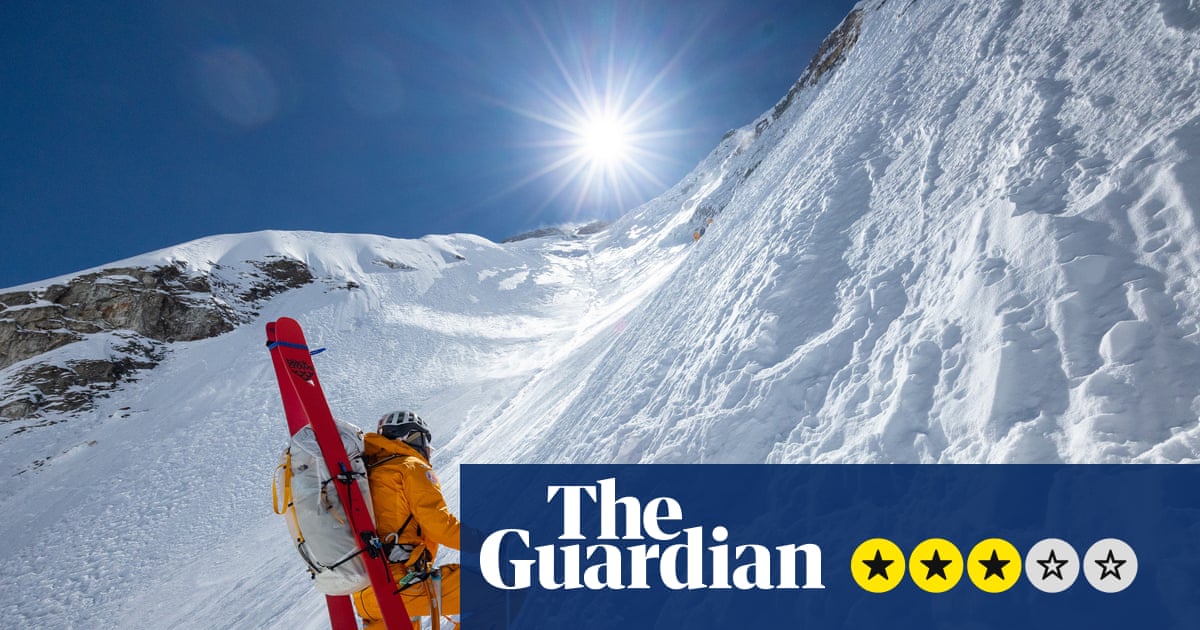
1 / 2
The story, neutrally told
Left · 2Everest: The Other Side is a National Geographic-backed documentary, with some showings in Imax, about mountaineers Jim Morrison and Hilaree Nelson, who set out to be the first people to ski down Everest's north face. The GuardianLC “Immersive portrait of mountaineers Jim Morrison and Hilaree Nelson as they seek to become the first people to ski down Everest’s north face” Read at The Guardian ↗ The A.V. ClubLC “Centered on climbers and romantic partners Jim Morrison and Hilaree Nelson” Read at The A.V. Club ↗ Left · 2It is co-directed by Jimmy Chin and Elizabeth Chai Vasarhelyi, the Free Solo directors, who appear on screen to discuss their own feelings on risk and reward. The GuardianLC “this is also a work co-directed by another couple, Jimmy Chin and Elizabeth Chai Vasarhelyi, who appear on screen to thrash out their own feelings on risk and reward” Read at The Guardian ↗ The A.V. ClubLC “a documentary, Everest: The Other Side, from Free Solo directors Elizabeth Chai Vasarhelyi and Jimmy Chin” Read at The A.V. Club ↗ Left · 1The A.V. Club's Corey Atad writes that the film is really about Nelson's death: in 2022, after the couple reached the summit of Manaslu in Nepal, Nelson skied off and set off a small avalanche that swept her away, and the footage is in the film. The A.V. ClubLC “Nelson got on her skis to make her way down the mountain, almost immediately causing a small avalanche that swept her away. The footage is in the film.” Read at The A.V. Club ↗
Left · 1According to the A.V. Club, the project continued, with Chin taking Nelson's place on the Everest climbing team; it notes that Chin and Vasarhelyi, who were married at the time, divorced in 2025, the year of the expedition. The A.V. ClubLC “with Chin himself stepping in to take Nelson’s place on the Everest climbing team”“the pair divorced in 2025, the year that Morrison and Chin made their expedition” Read at The A.V. Club ↗ Left · 1The Guardian's Leslie Felperin says neither climber adequately explains why they take such risks, and that the film leaves moral questions hanging over Nelson's two teenage sons and Morrison, who is not their biological father. The GuardianLC “Neither seems able to adequately explain why they’ve chosen to take such a risk”“her two teenage sons should simply accept as her choice to make” Read at The Guardian ↗ Left · 2Both reviewers praise the visuals: the Guardian calls the cinematography "pin-sharp" thanks to advanced lenses and drones, though it finds the fluorescent gear distracting, and the A.V. Club cites the film's "staggering images". The GuardianLC “it is pin-sharp thanks to the most advanced kinds of lenses and drone technology” Read at The Guardian ↗ The A.V. ClubLC “its staggering images aside” Read at The A.V. Club ↗
Left · 1The A.V. Club is more critical of the film's honesty, saying Morrison's self-justifications are never seriously interrogated, that a late reveal that Morrison had earlier lost his wife and two children in a plane crash is "unseemly", and that the film does not seriously address Everest's crowding, treatment of Sherpa or environmental damage. The A.V. ClubLC “Its deployment is unseemly, a narrative strategy to paint Morrison in a more generous light”“None of this is addressed seriously in the documentary.” Read at The A.V. Club ↗ Left · 1The Guardian also notes the film's footage of Nepalese guides, who it says have far fewer career choices than the western tourists they assist. The GuardianLC “local men who have been climbing these mountains all their lives because they have far fewer career choices than the western tourists” Read at The Guardian ↗ Left · 1The A.V. Club review sets the film beside Tenzing, a biopic of the 1953 Everest expedition arriving the same month, which it views more favourably. The A.V. ClubLC “two major films about climbing Everest arriving the same month. Tenzing, starring Genden Phuntsok and Tom Hiddleston, is a biopic about the 1953 Everest expedition” Read at The A.V. Club ↗
Every sentence links to the reporting it rests on. The pill in front of each says where its sources sit: Left, Centre or Right when one side supplies at least half of them, Mixed when they are evenly split. The number is how many outlets it cites.
Left2 outlets
- Framing
- Both left-leaning outlets run critical reviews that praise the spectacle but focus on the ethics of risking life and family for an Everest ski descent.
- Emphasis
- Moral questions about risk, family and the lack of explanation; the A.V. Club adds Nelson's death, the film's candour and Everest's commercial and Sherpa issues.
- Leaves out or plays down
- Neither gives the film's release details or the filmmakers' or Morrison's responses to the criticism.
- Charged language
- “unseemly”“tricky moral questions”“murkier affair”
- For example
-
“But it’s safe to say the ethics aired here are a far murkier affair.” — The Guardian
“Its deployment is unseemly” — The A.V. Club
Centre0 outlets
No centre outlet in our sources has covered this story yet.
Right0 outlets
No right outlet in our sources has covered this story yet.
What every side reports
- The film follows Jim Morrison and Hilaree Nelson's plan to ski down Everest's north face.
- It is co-directed by Jimmy Chin and Elizabeth Chai Vasarhelyi.
- Both reviews praise the cinematography and question the ethics of the climbers' choices.
Left2 articles
-
The GuardianLC · · Opinion
Mixed Review admiring the immersive large-format imagery while arguing the film never explains its subjects' motives and leaves murky ethics.
-
The A.V. ClubLC · · Opinion
When climbing Everest stops being the story, dying for it takes over
Critical Essay-review arguing the film is really about Nelson's death and evades hard questions about Morrison's justifications, contrasting it with Tenzing.
Centre0 articles
No coverage yet.
Right0 articles
No coverage yet.
- 28 Oct 09:00 First The GuardianLC Everest: The Other Side review – couple’s climb on the mountain’s toughest face comes with tricky moral questions loom over couple’s lofty ambitions Opinion
- 28 Oct 16:00 +7h The A.V. ClubLC When climbing Everest stops being the story, dying for it takes over Opinion
Times are when each article was published, or when we first saw it if the outlet gave no time.
Ask about this story
Loading…